Lilian Pizzichini

The Osnabrück witch trials echo down the centuries

From our UK edition

Absent mothers resonate in the latest offerings from two heavyweights of French literature. Getting Lost is the diary kept by the prize-winning novelist Annie Ernaux while she was having an affair with a married man in 1989. Ernaux has already written a novel about this relationship. Now we have a more immediate and intimate account. Meanwhile, the octogenarian feminist and literary theorist Hélène Cixous continues her own brand of écriture féminine in Well-Kept Ruins. For the uninitiated, Cixous’s stream of consciousness is like reading Molly Bloom with a PhD from the Sorbonne, a raft of awards and a keen eye for cognitive dissonance.

The sweet life turns sour

From our UK edition

Shawn Levy specialises in chronicling 20th-century hotspots such as London in the Sixties and Sinatra’s Vegas. Here, he turns his attention to the regeneration of post-war Rome. How did the Eternal City erase the memory of its defeat? The answer is as layered as a Cassata cake. The sponge is the commitment that saw new film-makers bringing the struggling proletariat to the screen; the cannoli cream is the cultural flowering that emerged; the rum syrup the intoxicating beauty of frankly erotic leading ladies; and the whipped froth on top the frenzy of the new media stars, the paparazzi. The whole makes for a palatable and stimulating engagement with an era that still functions as a powerful marketing tool for Italian exports. There is, however, a story that clouds the scene.

Girls about town

From our UK edition

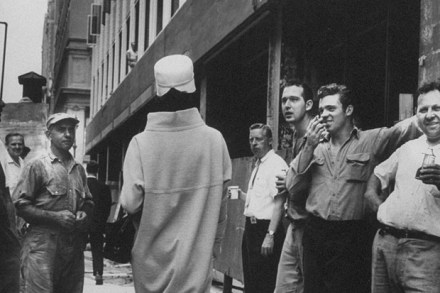
On 8 June 1920 an old beggar woman sat against a wall in Kingsway holding a mongrel in her arms and singing aloud. Virginia Woolf noted in her diary that there was a recklessness to her. She was singing for her own amusement, shrilly, and then fire engines came by singing shrilly, too. ‘Sometimes everything gets into the same mood; how to define this one I don’t know.’ In the mid-1980s, on my daily journey to Charing Cross Road, I would get off the 38 bus on the corner with New Oxford Street. Every morning I would see an old woman huddled in the doorway of what is now a building site. Enthroned on her rags, oblivious to her surroundings, she had stopped caring. In her diary that day, Woolf said she was overwhelmed by the dead walking the city streets.

In the grip of yellow fever

From our UK edition

In late Victorian south London a ‘lower-middle-class’ boy, Arthur Ward, is lingering over his copy of The Arabian Nights. The book falls open at a colour illustration of Scheherazade, mysteriously pictured with a white peacock. Twenty years later, she materialises as Kâramanèh, the dazzling female sidekick of Fu Manchu. Young Arthur, who by now had reinvented himself as Sax Rohmer, was the author of the Fu Manchu novels, and Arthur had faded so far into the background that it seems even Sax Rohmer forgot him. He conjured his pen name from the Saxon, ‘Sax’ for ‘blade’ and ‘rohmer’ which means ‘roamer’. He was in essence the original bladerunner.