Culture

Culture

The good, the bad and the ugly in books, exhibitions, cinema, TV, dance, music, podcasts and theatre.

There’s no escape

More from Books

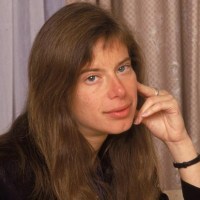
Patricia Highsmith was an accretion of oddities — a woman who doted on her pet snails and carried a selection of them in her handbag, who abandoned her native America for a restless life in Europe, and who turned a habitual paranoia into literature. Now, 20 years after her death, her reputation has been substantially increased by film versions of her Ripley novels and, most recently, Carol (an adaptation of The Price of Salt, her extraordinarily bold novel of a lesbian love affair). For all that, she is generally classed as a crime writer, albeit a very superior one. As one contemporary reviewer commented, ‘Patricia Highsmith is often called a mystery or crime writer, which is a bit like calling Picasso a draftsman.

Great halls, last balls

More from Books

Contrary to popular myth, the exuberant flame of life in the English country house was not extinguished by tears at the end of the Great War. And in his deliciously jaunty and wonderfully knowledgeable book, Adrian Tinniswood, social historian and country house authority, also upturns the story that huge numbers of Britain’s loveliest houses disappeared in the 1920s and 1930s, either through lack of heirs, despair, neglect or the stranglehold of taxation. He describes how instead, with ‘new aesthetics and new social structures’, the clubby, elitist, joyful prewar way of life adapted and became even more vibrant after the Armistice. In part, the yearning for a sense of rootedness had become more urgent than ever.

The elegiac and the exuberant

More from Books

Discussions about the short story too often fall into a false dichotomy that can be characterised, in essence, by a quibble over a consonant. Carver or Carter? On the surface, it would be easy to present Philip Hensher as the Raymond Carver-like elegiac naturalist, giving glimpses of disappointed lives and misunderstood epiphanies, and Helen Oyeyemi as the Angela Carter-ish exuberant fabulist, all giddy metamorphoses and yarns within tales within stories. It would be a disservice to both collections to read them in such a manner. All the stories in Tales of Persuasion have an exquisitely tweezer-y feel to them.

Principles of heredity

Lead book review

Darwin came tantalisingly close to understanding them, 20th-century eugenicists obsessed over them, and with modern science, we are poised to control them as never before. Genes are a constant source of fascination, yet ignorance and misunderstanding plague almost every public discussion of their effects on our health and behaviour. How useful it would be, then, if there was a clear, accurate, and up-to-date pop science book on genetics, a book that recounted the history of genetic science and reflected on its implications for the future of medicine and society. This is the goal of the new book by oncologist-biologist Siddhartha Mukherjee. It is a lofty goal, and Mukherjee attempts it with lofty language.

The wunderkind disappoints – but Cassel may take Best Actor: Xavier Dolan’s It’s Only the End of the World reviewed

'This day fucking sucks,' remark several characters over the course of Xavier Dolan’s It's Only the End of the World. It’s hard to argue with them. Recriminations, ugly behaviour and shitty attitudes are par for the course in this dysfunctional family drama. A young, gay playwright named Louis returns home after 12 years to his family to announce that he is dying, probably of AIDS, although that word is never mentioned. His emotional roller coaster of a homecoming lasts a grand total of five hours, as he tries to reconnect with his nervous, oblivious mother, the younger sister whose adolescence he missed and takes heaps of abuse from his brutish older brother.

Dumbed-down ‘accessible’ writing is just as bad as obscurantist art-speak

When the art critic Robert Hughes died in 2012, someone from the Times turned up on Channel 4 News to sing his praises. The journalist burbled on for a few flailing, hapless minutes and you were left wondering whether she’d actually ever read him. The great critic’s strength was apparently his, wait for it, 'accessibility'. Eschewing obscurantist art-speak – the desiccated argot of the art establishment – it seemed Hughes’ critical gifts lay in not being difficult to read. But who familiar with Hughes’ robust and sinuous prose would ever call it 'accessible'? It wasn’t. His facility with language was underpinned by a ferocious intellect, and it showed. Acuity and insight made him a tremendously exciting critic, not accessibility.

The feast before the famine

More from Books

If you had the resources, Georgian Ireland must have been a very agreeable place in which to live. It was certainly more prosperous and peaceful than it would be after the 1848 famine. This idyllic world is captured in Patricia McCarthy’s scholarly and highly entertaining work, which stretches from the start of the building of Castletown House, Co. Kildare, in 1722, to the 1848 famine.

The Feelgood factor

More from Books

When I wrote for the NME as a schoolgirl in the 1980s, it was recognised that there were musicians who deserve derision — those whose egos and clothes’ bills dwarfed their talent — and those who commanded respect. Wilko Johnson, one-time guitarist of Dr Feelgood, was of the latter. Whether pacing moodily on stage, hammering out choppy refrains on Feelgood classics such as ‘Roxette’, or touring and recording with subsequent bandmates, he was a dedicated grafter with attitude and ability in spades. More recently, Johnson has been in the news for very different reasons. In 2012, he was diagnosed as having inoperable terminal pancreatic cancer.

Fleeing Mother Russia

More from Books

‘Ah! Scrubbing the deck! My childhood dream! As a child I had once seen a sailor hosing the deck with a large hose while another sailor scrubbed away with a stiff, long-handled brush with bristles cut at an angle. I had thought at the time that nothing in the world could be jollier.’ This is Russian writer Teffi accepting her enforced labour on board a refugee ship fleeing Bolshevik Russia. Moments before, a dispossessed landowner has proclaimed his right to idleness — ‘Hire someone! Do whatever is necessary! If you prefer all this socialist nonsense, then what are you doing on this ship?

… and sense and sensibility

More from Books

Book reviews, John Updike once wrote, ‘perform a clear and desired social service: they excuse us from reading the books themselves’. It’s a theory, I’m afraid, that doesn’t apply to this review — but it certainly does to this book: an impeccably wide-ranging collection of Ferdinand Mount’s own non-fiction reviews, including for The Spectator, over three decades. Find yourself unaccountably vague on the premiership of Lord Rosebery? A little rusty on the life of George Gissing? Embarrassingly patchy on the history of Methodism? Thanks to Mount, there’s no need to plough through 500 pages on any of them — nor the more than 50 other subjects he covers.

Elizabeth alone

More from Books

If you’ve been watching Game of Thrones recently, you’ll have seen an old folkloric fantasy in which a bewitching young prophetess, a charismatic war leader, slips alone into her private chambers and removes an enchanted necklace. Beneath it, she’s just one more withered crone. We, the viewers, having happily feasted on her naked body, now congratulate ourselves on seeing it for what it is: another whore’s trick. This moralistic antipathy towards the over-preserved female body haunts popular studies of the last years of Queen Eliza-beth I. Nearly a century ago, Lytton Strachey kick-started the grotesquerie genre with Elizabeth and Essex: ‘As her charms grew less, her insistence on their presence grew stronger.

Wars on drugs

More from Books

‘Of all civilisation’s occupational categories, that of soldier may be the most conducive to regular drug use.’ The problem with this statement — the first words of this book — is the problem with the book as a whole: it may be correct, and there again it may not be. Even the captionless cover photograph is ambiguous: of an American soldier, in Vietnam perhaps, with a corncob pipe which may or may not contain a banned substance, though we are obviously meant to infer that it does. Then there is the inconclusiveness: ‘One may say that to a lesser or greater degree drugs shaped warfare.’ Yes, one may; but to a lesser or greater degree one may say that about almost everything.

The cryonics game

More from Books

Cults, the desert, natural disasters. Artists, bankers, terrorists. Cash machines, food packaging, secret installations. Mediaspeak and scientific jargon. Crowds and capital. Language and death. Just as it used to be possible to play Ballard Bingo with the work of the late 20th century’s other great literary monomaniac, so Don DeLillo’s themes have remained astonishingly consistent in the 45 years since Americana, his first novel, appeared.

Strategies for seduction

More from Books

The rough English translation of Kamasutra is pleasure (kama) treatise (sutra). In the West, since it was first (rather surreptitiously) translated and published back in 1883, the book has generally been associated with a series of beautiful, ancient illustrations of a couple determinedly coupling in a variety of fascinating — and often utterly improbable — positions; as essentially ‘the erotic counterpart to the ascetic asanas of yoga’. But there is so much more to it than that, as Wendy Doniger doggedly contends in this, her fine collection of frank, brief, clear-eyed essays.

Wishful thinking | 19 May 2016

More from Books

Deirdre McCloskey has been at work for many years on a huge project: to explain why the world has become so much richer in the past two centuries, and at an accelerating rate since 1945. This is the third and final volume in the series. In it she argues that ‘our riches were not made by piling brick on brick, bank balance on bank balance, but by piling idea on idea’. The Great Enrichment, which she dates from 1800 to the present, depends on the spread of ideas of liberty, seeded in a series of ‘egalitarian accidents’ in European politics between 1517 and 1789.

Recent children’s books | 19 May 2016

More from Books

Martin Stewart’s Riverkeep (Penguin, £7.99) has a list of books and writers on the cover: Moby-Dick, The Wizard of Oz, Ursula Le Guin, Charles Dickens and, less ambitiously, Neil Gaiman, Philip Pullman and Skellig. And, right in the middle, Riverkeep. Pff, you think: they wish! But you know what? Having read the book, there are elements of all these authors in it: Moby-Dick for the quest for a great sea monster; The Wizard of Oz for a homunculus who retains his self, even when he loses his stuffing; Ursula Le Guin for the creation of a coherent other world where magic is part and parcel of things; and perhaps Dickens for a dank, watery atmosphere.

Laws that changed the world

Lead book review

One of the things Philippe Sands clearly remembers from his grandparents’ Paris apartment — a rather sombre, silent place — is the lack of family photographs. There’s a single, framed, unsmiling wedding photo, and that’s all. There is no mood of bittersweet nostalgia, there are no nods to memory or history. Where did his grandparents come from? How did they end up as these people, whom he knew only towards the end of their lives? Retrieving that history, that deliberately unremembered story, is the beginning of Sands’s task in this remarkable book. Generically speaking, the story is familiar enough. Leon Buchholtz — Sands’s grandfather — was born in what was then Lemberg, in the very heart of Europe.

Timothy Garton Ash’s concept of courage knows no bounds

In Timothy Garton Ash's new book Free Speech: Ten Principles for a Connected World, the historian examines present challenges and threats to free speech. However, it's the book's final chapter -- titled 'Courage' -- which is of the most intrigue to Mr S. In the May issue of the Literary Review, Douglas Murray reviews the book. Murray recalls an incident that occurred ten years ago when Ayaan Hirsi Ali -- a vocal critic of misogyny in the Muslim world -- appeared alongside Garton Ash at an event -- after he had 'written a decidedly sniffy article about Hirsi Ali, dismissing her as, among other things, a "slightly simplistic Enlightenment fundamentalist"'. In the end, Garton Ash backed down and declared that he 'had not meant to compare Hirsi Ali to the Islamists'.

Jeremy Thorpe’s acquittal was a triumph for the jury system

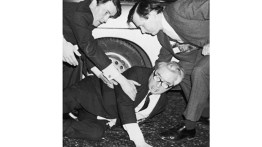
John Preston has just published a gripping account of the Jeremy Thorpe case, A Very English Scandal (Penguin). Sometimes the details make one laugh out loud or gasp with amazement at the tale of the shooting of Rinka, the Alsatian dog, and all that followed. But although I was completely carried along by the narrative, I found myself resisting the book’s implied conclusion that Thorpe’s acquittal of conspiracy to murder Norman Scott was a disgrace. Possibly I am biased, because my father worked for Thorpe over some of the period involved, writing his speeches and giving him political advice (luckily the personal and constituency sides of things never fell to him).

Nothing quite adds up

More from Books

Whimsy, satire and deadpan humour: welcome to the world of Andrey Kurkov. If you know Kurkov’s work, The Bickford Fuse will be no surprise and need no introduction. It’s not Death and the Penguin or A Matter of Death and Life (read them first), but it’s certainly Kurkov in welcome and familiar mode. For newcomers and to summarise: he’s really a kind of Ukrainian Kurt Vonnegut, a serious writer never more serious than when he’s being funny about unfunny things, and with a whole lifetime of unfunny things to be serious about. As the second world war was to Vonnegut, so the Soviet Union is to Kurkov. If — as Oscar Wilde believed — our duty towards history is to rewrite it, then Kurkov has long been working overtime.

Everyone’s favourite dinosaur

More from Books

Tyrannosaurus rex is the greatest celebrity of all time. The 68–66 million-year-old carnivore is far older than any actor or musician, including Keith Richards, and yet is still must-have talent for Hollywood blockbusters, comics, museum displays and more. But all that fame comes at a cost. There seems to be as much mythology as science surrounding the ‘tyrant lizard king’. The paleontologist David Hone seeks to slice through fiction and chew over fact in his new book The Tyrannosaur Chronicles. From the title, you can be forgiven for thinking that this is the journal of an angsty T. rex. Rather, Hone has written a handbook to almost everything you’d want to know about the celebrated dinosaur and its various kin.

The bane of Albania

More from Books

In his final public appearance, the Albanian dictator Enver Hoxha addressed a Tirana crowd to commemorate the capital’s liberation from German invaders on the 28 November 1944. The Hoxha who had entered the city as a communist partisan was now a weak old man. He was often confined to a wheelchair, had to be hoisted on to his podium using a custom-built lift and was only prevented from falling by camouflaged safety rails. The dictator was deeply vulnerable but still formidably powerful.

Goodbye to all that | 12 May 2016

More from Books

Glimpsing the title of Lynsey Hanley’s absorbing new book as it fell out of the jiffy bag, I found myself thinking of my grandmother, Mrs Lilian Taylor. This lady, who died in 1957, spent the first part of her married life inhabiting a couple of furnished rooms on the western side of Norwich and the second part of it living in a white stucco council house on the newly built Earlham estate. She was an intensely respectable woman, implacably opposed to strong drink and strong language, but of what, materially, did her respectability consist? On the one hand it meant goading my father through the scholarship exam to a place at the local minor public school.

One day, two lonely people

More from Books

Twenty-four long hours, two lonely people, one city in decline. This is the premise of A.L. Kennedy’s new novel Serious Sweet, a work full of anger at what has happened to London since the Thatcher revolution and concern for the city’s isolated, impotent inhabitants. Kennedy’s representative Londoners are Jon, a divorced and fusty civil servant, a ‘passed over man’ plagued by failure, and Meg, a bankrupt accountant and recovering alcoholic who jokes at her own expense that she is ‘Fine: Fucked-up Insecure Neurotic and Emotional’.

The grit in the oyster

More from Books

Richard Dorment doesn’t do whimsy. Or Stanley Spencer. He’s a fan of Cy Twombly and Brice Marden, Gilbert and George and Mark Wallinger, Rachel Whiteread and Susan Hiller. He loves writing about contemporary art. And he worked as art critic of the Daily Telegraph for 25 years. Like the grit in the oyster he irritated the establishment, producing pearl after pearl that occasionally had even his own paper distancing itself from his opinions. ‘I looked edgy and transgressive,’ he says, ‘when in reality my taste in art was fairly cautious.’ Born in America, Dorment studied art history at Princeton and was assistant curator in European painting at the Philadelphia Museum of Art before moving to London and working as an exhibition organiser and writer on art.

The dog it was that died

More from Books

Appropriately for the dog days of British politics, there’s plenty of canine activity in this neatly groomed account of the bizarre circumstances behind the murder plot which cost the Liberal party leader Jeremy Thorpe his job and his debonair reputation in the 1970s. First yelps from the kennel came from the Honourable Brecht Van de Vater’s five springer spaniels. Ostensibly they added a veneer of respectability to their owner’s comfortable Cotswolds existence. But like many of the characters involved, appearances were illusory. His real name was Norman Vater, the son of a Welsh miner and an undisclosed bankrupt.

Throned on her hundred isles

Lead book review

Approximately 500 new books on Venice are published every year and this is not the first literary anthology devoted to the city. But Marie-Jose Gransard lectures in Venice about Venice to Venetians, and conducts her students on guided tours of the city. Her selection draws on sources going back over 800 years and across six languages. So the text, based on very wide reading, is crowded with unfamiliar observations and includes the impressions of artists, musicians and diplomats as well as writers. This is not a guide book for the first-time visitor, but for anyone who knows Venice, and cannot keep away, it provides a delightful change. We are given Ruskin, Byron, Goethe, Henry James, Thomas Mann and Hemingway.