Mark Amory

The bad boys of the Hypocrites Club

From our UK edition

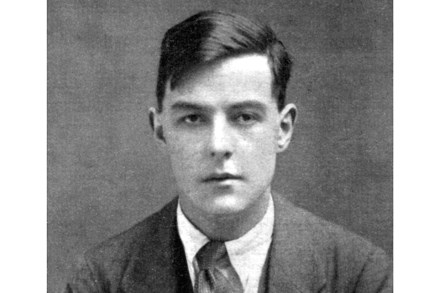
Members of the Hypocrites Club were Oxford undergraduates, and those with whom David Fleming’s book is chiefly concerned were born between 1903-5. It had originally been a respectable club, founded in 1921, its two most mentioned members being L.P. Hartley, the novelist, and David Cecil, the biographer and historian. But all that changed when Harold Acton arrived, closely followed by many of his fellow Etonians. Acton himself was always fastidiously polite, and spoke in a curiously hesitant way; but his friends were not, and shouted. Soon the club became celebrated for drunkenness and homosexuality, and closed in 1924. It would be impossible to depict the whole circle, and Fleming does not try.

A definition of glamour

From our UK edition

‘Dark Star’ is a suitable enough title in itself, but the definition makes it a brilliant one: ‘A Dark Star’, we are told in this book, ‘is shadowed, often detectable by its gravitational effect on other bodies. It is often a component of a binary star and can cause the brightness of its visible partner to vary periodically.’ That is to say, Vivien Leigh was bipolar and married Laurence Olivier, and these things dominated her life. She was born in Darjeeling in 1913, her father, Ernest Hartley, a stockbroker. When she was six, she was sent to school in England. This was not unusual, but that does not mean that she did not feel abandoned. She was educated by Roman Catholic nuns and read a lot, including Rudyard Kipling. Vivien had a gift for prophecy.

Spectator Books of the Year: The version of ‘The Taming of the Shrew’ that’s funnier than the original

From our UK edition

Anne Tyler’s Vinegar Girl (Hogarth, £16.99), her modern version of The Taming of the Shrew, came as a surprise: the funniest book she has written, much funnier than Shakespeare. Private Eye considers that I should not praise Ferdinand Mount because I was at Eton with him but we never spoke to each other there, so perhaps it is acceptable to mention his English Voices: Lives, Landscapes and Laments 1985–2015 (Chatto, £15.99): a large volume of his reviews, I think literally without a dull page. Otherwise, I have been catching up on good books I have never got round to.

A familiar life (revisited)

From our UK edition

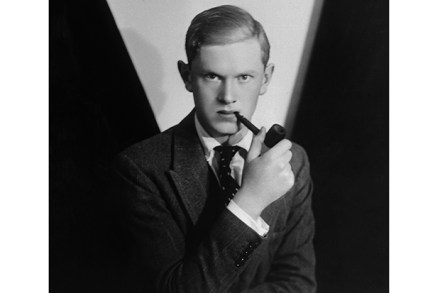
A Life Revisited, as the modest, almost nervous, title suggests, mainly concerns Evelyn Waugh’s life with comments on but no analysis of his books. There have been at least three major biographies already, as well as large volumes of diaries, letters and journalism and many slighter volumes. There is more to come. Waugh’s grandson, Alexander, who has defied current trends by writing a fine book on the males of the family, is editor-in-chief of The Complete Works of Evelyn Waugh, with the first of 43 volumes coming out next year. He has also collected an unrivalled archive containing unpublished notes, letters and interviews, and commissioned this book for the 50th anniversary of his grandfather’s death. All of which presents Philip Eade with a problem.

Spectator books of the year: Mark Amory finds Anne Tyler’s latest ‘pure pleasure’

From our UK edition

Since retiring from coping with new books I have found it a pleasure not to have to glance at any of them. One, however, Anne Tyler’s 20th novel A Spool of Blue Thread (Vintage, £7.99), was pure pleasure. A quiet family drama over four generations, set in Baltimore as usual, it was never obvious which way it was going. but patterns emerged in the end. My interest in India is matched only by my ignorance, so almost everything in Ferdinand Mount’s Tears of the Rajas (Simon & Schuster, £25) came as a surprise to me. Through the careers of various enterprising relations, he tells the story of the British in the years leading up to the mutiny — or first war of independence as I now know it should be called.

Behaving badly

From our UK edition

There has never been a film of The Merchant of Venice before. This is not surprising. Different Shakespeare plays give trouble to different ages: we are not at ease with Measure for Measure, The Taming of the Shrew or The Merchant because we do not share his views on, respectively, chastity, feminism and anti-Semitism. Also, the star part is neither large nor sympathetic. This is very much Michael Radford’s version. The director, whose work includes White Mischief and Il Postino, has adapted and cut, introducing nothing eccentric but successfully injecting a pace and thrust more suited to a film. Also, much can be done with a glance or a gesture in close-up that would be lost on the stage. All this is immediately apparent.

Juliet Townsend (1941-2014)

From our UK edition

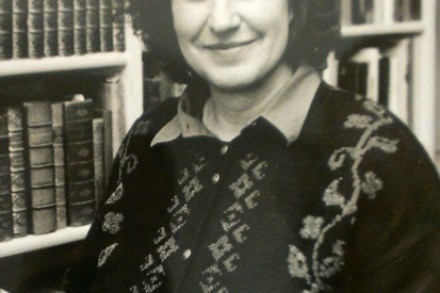
A new literary editor looks among his acquaintance for potential reviewers. There was no one I approached more confidently in 1985 than Juliet Townsend (who died on 29 November). She had been a friend for 25 years and run a bookshop since 1977 with her husband John. They had looked over my own books to see what could and should be sold and sighed heavily when The Ingoldsby Legends appeared — apparently there is a copy in almost every English country house and no demand at all. Townsend (pictured left in 1991) wrote an excellent children’s book on the Indian Mutiny, Escape from Meerut, and this neatly combined her two main subjects. On India, and in particular Rudyard Kipling, she had long been an expert (her father wrote his biography).

Spectator books of the year: Mark Amory on the joy of short books and Colm Tóibín

From our UK edition

Being a slow reader, I first try the shortest, or anyway shorter, works of famous novelists unknown to me. This year, with many misgivings, I read The Confusions of Young Törless by Robert Musil (Penguin, £8.99) and was shocked and impressed by the intensity of the sex and violence he describes at a military boarding school in Austria. But do I really want to continue to the great works? Nagasaki, by the prize-winning French journalist Eric Faye (Gallic Books, £7.99), describes in 112 pages a middle-aged Japanese man who suspects that someone is secretly living in his house. It is as gripping as a thriller, but sad and serious. I shall try another short one. More confidently, I took Nora Webster (Viking, £18.

Mark Amory’s diary: Confessions of a literary editor

From our UK edition

Until recently I used to claim that I had been literary editor of The Spectator for over 25 years; now I say almost 30. The trouble is I am not quite sure and it is curiously difficult to find out. Dot Wordsworth arrived on the same day as me but she cannot remember either. Each of us assumed that the other was an established figure and so our superior. A similar imprecision may undermine other memories. In the early Eighties then, when Alexander Chancellor had reinvented the magazine after a bad patch, and it seemed daring, anarchic and slightly amateurish, I wrote theatre reviews and one late afternoon went round to Doughty Street, where The Spectator then was. I could find no one sober in the building. How did it manage to come out so promptly each week?

The View from 22 podcast books special: World War I and grave hunting

From our UK edition

I'm delighted to present the first View from 22 books podcast. We begin with Allan Mallinson’s new book 1914: Fight the Good Fight (reviewed here by Peter J. Conradi), which argues that the Great War might have been won in 1915 if the British Expeditionary Force had been used as a strategic reserve in 1914. Mallinson and Charlotte Moore (who has reviewed Great Britain’s Great War by Jeremy Paxman and Fighting on the Home Front by Kate Adie in the latest issue of the Spectator) imagine what modern Britain would look like if the war had ended earlier. Ann Treneman has written Finding the Plot: 100 Graves You Must See Before You Die.

Bookends: Musical bumps

From our UK edition

In the Christmas issue of The Spectator there was a review of Showtime: A History of Broadway Musicals, a book which ran to 785 pages. Ruth Leon, in The Sound of Musicals (Oberon Books, £9.99), deals with the whole lot, well perhaps 20 in practice, in 128 much smaller ones; so she has to be selective. The top three, in her view, select themselves: Guys and Dolls (1950), My Fair Lady (1954) and West Side Story (1957) — ‘almost everyone agrees on this’. In the Christmas issue of The Spectator there was a review of Showtime: A History of Broadway Musicals, a book which ran to 785 pages. Ruth Leon, in The Sound of Musicals (Oberon Books, £9.99), deals with the whole lot, well perhaps 20 in practice, in 128 much smaller ones; so she has to be selective.

Bookends: Musical bumps | 14 January 2011

From our UK edition

Mark Amory has written the Bookend column in this week's magazine. Here it is as a blog exclusive In the Christmas issue of The Spectator there was a review of Showtime: A History of Broadway Musicals, a book which ran to 785 pages. Ruth Leon, in The Sound of Musicals, deals with the whole lot, well perhaps 20 in practice, in 128 much smaller ones; so she has to be selective. The top three, in her view, select themselves: Guys and Dolls (1950), My Fair Lady (1954) and West Side Story (1957) - 'almost everyone agrees on this'. She finds respectable reasons for her enthusiasm: Guys and Dolls has an extraordinary sense of place, My Fair Lady deals with 'social injustice, and the struggle for personal freedom' and West Side Story is about 'alienation and belonging'.

The Half

From our UK edition

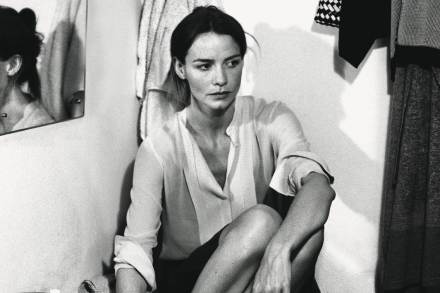
‘The Half’ is how actors refer to the half hour before their play begins, when they ready themselves, steady themselves, for their performance. For 25 years Simon Annand has been allowed to catch these vulnerable moments and the result is a series of intimate, revealing and beautiful portraits. Many of the subjects are famous, a few are not. Some do exercises like athletes, pulling their limbs into unlikely positions — sometimes sitting beside a wash-basin, like Saffron Burrows (above). Others lie on the floor; Derek Jacobi before ‘The Tempest’ may be asleep. Julia Stiles looks defiant. Glenda Jackson and Max von Sydow, surprisingly, roar with laughter.

Isn’t saying The Brothers Karamazov rather idiotic?

From our UK edition

On holiday I read (not reread I am afraid in my case, as people tend to claim about great classics) The Karamazov Brothers, in a new translation from Penguin. The moment I saw the title I wondered how we had all been persuaded to call it The Brothers Karamazov all these years. Talking about the Brothers Smith sounds very affected. Though the Arts Editor here now informs me that it is acceptable to say The Brothers Grimm.

Have the Angry Young Men won out?

From our UK edition

Proofs of The Letters of Noel Coward and a new book about the Royal Court Theatre arrived at The Spectator together and their conjunction made me wonder, who is winning? In 1956 Look Back in Anger arrived in Sloane Square and is supposed to have blasted the genteel primness from the London stage forever. A motley group were roped together as Angry Young Men (Iris Murdoch? Angus Wilson?) and stood for the future. Naturally this could not quite be true overnight but the new playwrights flourished and multiplied, new actors with new accents became stars, the plays transferred to the West End and Broadway. Soon the Royal Court directors made films and money, they joined the National Theatre. They seemed to have won.

The balloon goes up

From our UK edition

Enduring Love by Ian McEwan has the most memorable opening of any modern novel. This might be thought to be a virtue but it is more of a problem. It is intensely visual, which again might seem to be helpful but again is not. Every reader, and there were many, carries a vivid version of how it should look and will be irritated by any variation. It is a perfect summer day in the country. Birds twitter, the sun shines on the fields and woods, sheep graze. As the man is opening champagne, the woman actually says, ‘This is bliss.’ Then a hot-air balloon suddenly bumps to the ground, drags, is clearly in trouble. The man runs to help, as do others we have not seen before.

Weirdness in Washington

From our UK edition

They don’t make ’em like The Manchurian Candidate of 1962 any more. That weird, creepy, paranoid thriller of the Cold War flopped at first, was given retrospective topicality by the assassination of President Kennedy, and became a cult. Though it is, like Citizen Kane, a brilliant film rather than a profound or serious one, those virtues, too, have been ascribed to it. It dealt with an important topic — the ruthless manipulation of power in America then — but it did not deal with it in a convincing way. For years Tina Sinatra (her father Frank had the rights) has been trying to launch an updated remake and she was lucky; she failed. Now she has succeeded just when war and elections, though not yet assassinations, are back in the news.

Blood-brother and king-maker

From our UK edition

At a garden party in Kampala, Uganda, in 1994 I overheard Tom Stacey, a tall elegant figure, saying with some urgency, ‘The Bakonjo when I first met them 40 years ago in the west of your beautiful country …’ and later noted, ‘Tom is fascinating for quite a long time about Rwenzori, their king Charles Wesley, who must be made to come back from America, 14 of his people killed yesterday, how he loves the people; but then he goes on for longer than that.

Diary – 17 May 2003

From our UK edition

The trouble with holidays is that when you return there is the same work to do and that much less time in which to do it; as well as no time at all, in my case, to acquire a birthday present for my wife or take the limping, mewing cat to the vet. My immediate problem as literary editor here was to decide which reviews to print and which to hold. As a general theory I feel that enthusiasm remains interesting, while contempt had better be dished out immediately. My own first book received friendly reviews and then a month later one that only in the last paragraph committed itself with 'This deadly biography....' I had thought the ordeal was over.