Dorian Lynskey

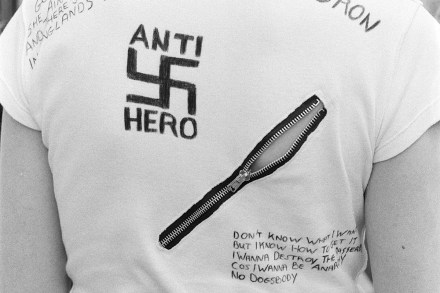
What triggered punk rock’s swastika fetish?

From our UK edition

When she was an 11-year-old schoolgirl, the writer Gitta Sereny passed through Nuremburg while a Nazi rally was in full swing. She recalled being awed by ‘the joyful faces all around, the rhythm of the sounds, the solemnity of the silences, the colours of the flags, the magic of the lights’. She understood nothing of the political message. Nor, of course, could she have known where it would all lead. It was pure showbusiness. Reading her words in Daniel Rachel’s survey of certain musicians’ thorny fascination with the iconography of the Third Reich, two thoughts occur. One: it is no wonder that as early as the 1950s, rock’n’roll shows reminded some observers of Nuremburg.
John Connolly, Gavin Mortimer, Dorian Lynskey, Steve Morris and Lloyd Evans

From our UK edition

26 min listen

On this week’s Spectator Out Loud: John Connolly argues that Labour should look to Andy Burnham for inspiration (1:51); Gavin Mortimer asks if Britain is ready for France’s most controversial novel – Jean Raspail’s The Camp of the Saints (4:55); Dorian Lynskey looks at the race to build the first nuclear weapons, as he reviews Frank Close’s Destroyer of Worlds (11:23); Steve Morris provides his notes on postcards (16:44); and, Lloyd Evans reflects on British and Irish history as he travels around Dublin (20:44).  Produced and presented by Patrick Gibbons.

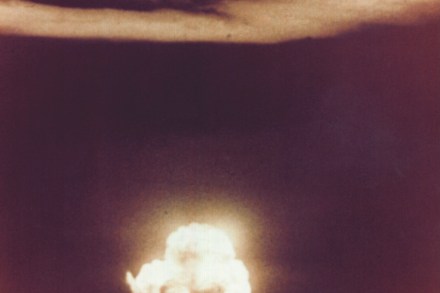
The race against Hitler to build the first nuclear bomb

From our UK edition

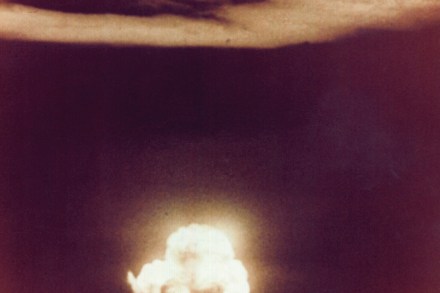
Ettore Majorana vanished in March 1938. According to Frank Close in Destroyer of Worlds, the 31-year-old Sicilian physicist ‘probably understood more nuclear physics theory than anyone in the world’, and was hailed by Enrico Fermi as a ‘magician’, in the elevated company of Newton and Galileo. Majorana was also an ardent fascist; yet he was haunted by the destructive potential of his work on mapping the nucleus. His disappearance – perhaps a suicide; more likely a new, incognito life in South America – has been related to an anguished remark he made to a colleague: ‘Physics has taken a bad turn. We have all taken a bad turn.

When it comes to krautrock, it’s impossible not to mention the war

From our UK edition

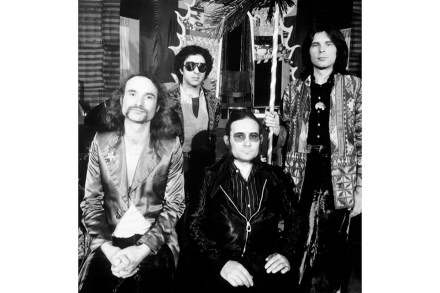
In recent years, sensitive music critics have attempted to replace krautrock with kosmiche as the consensus term for the wild and wonderful music that exploded out of West Germany during the 1970s: Can, Neu!, Cluster, Faust. A word that literally translates as herb-rock, cooked up by glib Brits who had read too many war comics, lacks a certain gravitas, and nobody would describe Tangerine Dream or Kraftwerk as rock anyway. The Hamburg journalist Christoph Dallach opens his invigorating oral history with a spirited argument about the label, but sticks with it anyway. So krautrock it remains. In this story, it is impossible not to mention the war because no country in the world has been less at ease with its recent past than Germany.

Dorian Lynskey: Everything Must Go

From our UK edition

40 min listen

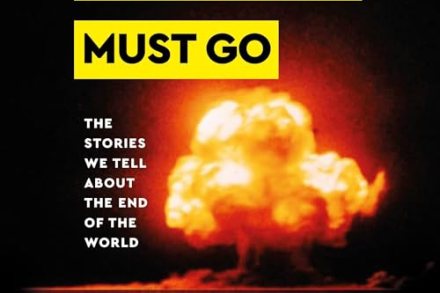
In this week’s Book Club podcast my guest is Dorian Lynskey. In his new book Everything Must Go, Dorian looks at the way humans have imagined the end of the world from the Book of Revelations to the present day. He tells me how old fears find new forms, why Dr Strangelove divides critics, and why there’s always a few people who anticipate global annihilation with something that looks like longing.

The Starmer supremacy

From our UK edition

40 min listen

On the podcast this week: what could achieving a large majority at the next election mean for Labour; how much should parents worry about picky eating; and why are humans fascinated with the apocalypse?  First up: The Starmer supremacy. If the polls are correct, Labour could be on to a record landslide at the next general election. Any political leader would relish such a win. But can achieving such a large majority present internal problems of its own? Labour MP Harriet Harman joins The Spectator’s political editor Katy Balls to discuss. (1:32) Then: Lara and Gus discuss some of their favourite pieces from the magazine, from Charles Moore’s column to Christopher Matthew’s piece on A. A. Milne’s time at Punch magazine.

The data-spew about Bob Dylan never ends

From our UK edition

When it comes to Bob Dylan, Clinton Heylin is The Man Who Knows Too Much. Since publishing his first biography, 1991’s Behind the Shades, he has become the world’s most committed Dylanologist, doggedly untwining the facts from the artist’s self-serving fictions. When he describes Dylan’s wildly unreliable 2004 memoir Chronicles: Volume One as ‘all a put-on... all a lie’, he has the receipts. As he never tires of pointing out, scholars and diehards are in his debt, but amassing data from sessions, setlists and now 130 boxes of Dylan’s formerly private papers is not the same as telling a good story. For someone innocently hoping to understand one of the cultural giants of the last century, the reading experience might resemble drinking from a firehose.

How Withnail and I became a cult classic

From our UK edition

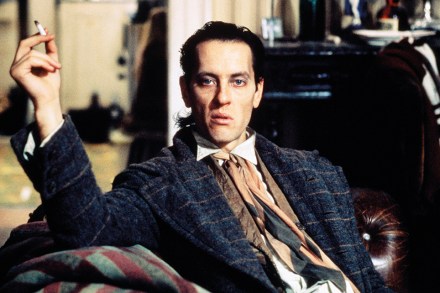
There is an apocryphal story about a woman leaving a performance of Hamlet and complaining that it was nothing but a bunch of quotations strung together. Bruce Robinson’s 1987 movie Withnail & I can also feel like a caravan of famous lines: ‘I’ve only had a few ales’; ‘We’ve gone on holiday by mistake’; ‘We want the finest wines available to humanity!’ In the 1990s, when the men’s magazine Loaded canonised the film in its launch issue and Chris Evans paid £5,000 for Withnail’s tweed coat, its swift elevation from box office failure to cult set text came at the price of reducing it to a boozy lark. A film about ruinous alcoholism thus inspired a student drinking game, although most players stopped short of Withnail’s last resort tipple, lighter fluid.

Russia’s long history of smears, sabotage and barefaced lies

From our UK edition

Russian politicians often refer to something called the Dulles Plan. This document purports to capture the future CIA chief Allen Dulles explaining, in 1948, the US strategy to destroy the moral foundations of the USSR and bring about ‘the death of the most intractable people on Earth... the definitive, irreversible dying out of its self-consciousness’. If this sounds like a fictional villain’s expository monologue then that’s because it is. The text was taken from an antagonist’s speech in a 1971 novel, Eternal Call, which itself recalled a much earlier Russian forgery, the anti-Semitic Protocols of the Elders of Zion.

The true superhero is Douglas Wolk – who has read through 27,000 Marvel comics

From our UK edition

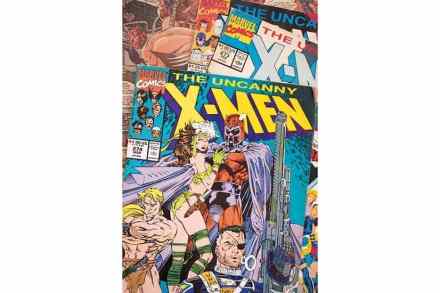
In March 1963, the Fantastic Four had a fractious encounter with Spider-Man and a dust-up with the Hulk — a busy month which effectively launched the Marvel Universe as an ecosystem of characters whose individual stories all contributed to one giant narrative. There is nothing quite like it: an endless, collaborative roman-fleuve of wildly variable quality, constructed over several decades by hundreds of writers, artists and editors, driven by a combination of personnel changes, marketing schemes and hasty improvisations. As a 14-year-old Marvel nut, I had a decent handle on it; but now, if I nostalgically check out a character’s Wikipedia page, I’m swamped by an unfathomable splurge of deaths, resurrections, shifting alliances and parallel universes.

The serious rows at Marvel Comics

From our UK edition

In August 1961, two middle-aged Jewish New Yorkers, Stan Lee and Jack Kirby, launched a new superhero comic book for the company that would become Marvel Comics and called it The Fantastic Four. In less than two years, working with either Kirby or Steve Ditko, Lee also co-created Hulk, Thor, Spider-Man, Iron Man, Ant-Man, Wasp, Doctor Strange, Nick Fury, the X-Men and the Avengers. Over the past 20 years, movies based on those characters alone have grossed more than $30 billion (three times more than the Star Wars franchise) and Lee made jovial cameo appearances in all of them. When he died in 2018, millions of children born in the 21st century mourned a man born during the Harding administration.

What would Orwell be without Nineteen Eighty-Four?

From our UK edition

43 min listen

In the first Book Club podcast of the year, we’re marking the moment that George Orwell comes out of copyright. I’m joined by two distinguished Orwellians — D. J. Taylor and Dorian Lynskey — to talk about how the left’s favourite Old Etonian speaks to us now, and how his reputation has weathered. Was he secretly a conservative? Was he a McCarthyite snitch? How would he be remembered had he died before writing Nineteen Eighty-Four? And does 'Orwellian' mean anything much at all?

The last days of Sodom

From our UK edition

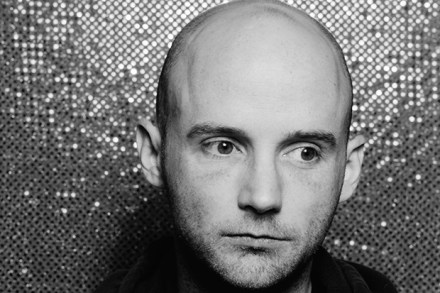
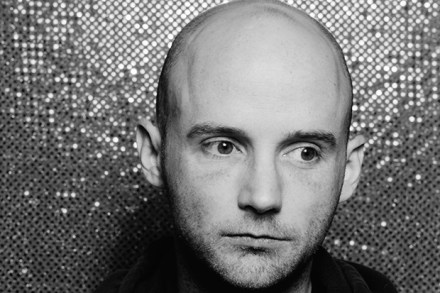
In 2002 I flew to New York to interview the dance music producer whose 1999 release Play remains the bestselling electronica album of all time. A few years earlier, Moby had been known as a teetotal Christian vegan, an ascetic anomaly in a scene built on hedonism, so there was something comic about his new-found reputation as a promiscuous party monster. The photo-shoot paid homage to Jimi Hendrix’s Electric Ladyland, with Moby posing in a cardigan, reading a magazine, oblivious to the 18 naked women surrounding him. (No, this concept wouldn’t fly in 2019.) The headline was ‘Death of a Ladies’ Man’.

Music and revolt

From our UK edition

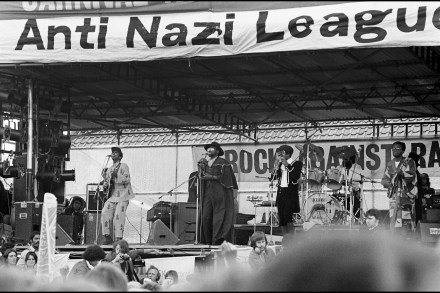
On 13 August 1977, a demonstration by the National Front was routed in the streets of Lewisham by thousands of anti-fascist activists. The latter’s elation palled, however, when they saw the evening news frame the event as a battle between rival extremists. Among the critical voices were Labour’s deputy leader Michael Foot and the Daily Mirror, which branded the anti-fascists ‘as bad as the National Front’. The NF’s opponents learned a valuable lesson at remarkable speed. Just weeks later, they launched the Anti-Nazi League at the House of Commons, with Neil Kinnock and Peter Hain on the steering committee and a medley of celebrity supporters that included Iris Murdoch, Brian Clough, Melvyn Bragg, Dave Allen, Warren Mitchell and Prunella Scales.

Trading crime for rhyme

I’ve interviewed a lot of rappers over the years and always feel a little grimy when I find myself nudging them to repackage a horrendous experience as a juicy anecdote with which to promote an album. Some natural raconteurs are happy to play that game — 50 Cent can now tell the story of the day he was shot nine times with the fluency of Peter Ustinov on Parkinson — but many rappers are understandably coy, at least outside the recording studio, about sharing the gory details of their previous lives. In that respect, this memoir by one of the nine original members of the Wu-Tang Clan lives up to its title, being so brutally frank that it is hard to believe a single story remains untold.

A countercultural upheaval

From our UK edition

‘New York stories in a way are always real estate stories,’ says the journalist Alan Light in Lizzy Goodman’s bustling oral history of the city’s music scene at the dawn of the century. The same goes for all music scenes. Talent clusters and thrives only where there are cheap places to live, hang out, play shows and, crucially, fail. New York in 2001 was such a location. The Lower East Side was still affordably sketchy and Brooklyn far from hip. When Dave Sitek from TV on the Radio moved to Williamsburg and invited his Manhattan friends to visit, ‘It was like I was asking them to go to China on a single--engine prop plane.’ Now Williamsburg, like Manhattan, belongs to the well-heeled.

Escape into pop

From our UK edition

‘How can you come into this room and ask me “What is the purpose of life?”,’ wails Massive Attack’s laconic DJ Mushroom after a typically searching interrogation by the veteran music journalist Sylvia Patterson. In this powerful, enjoyable memoir she fares better with Spike Milligan (‘I wake up every morning and think, “Thank God, another day” ’) and gleans further nuggets of wisdom from the likes of Bono, Diana Ross and David Attenborough. Patterson, primarily an interviewer rather than a critic, isn’t interested in the mechanics of music-making or the record industry but in the fundamental question of why people do what they do. In her hands, music journalism becomes a philosophical investigation, with jokes. Always jokes.

The clean and the unclean

From our UK edition

In 1991, Moby folded the theme from Twin Peaks into a remix of his dance track ‘Go’ and a diminutive, teetotal, vegan Christian abruptly became the American rave scene’s first pop star. He was not the obvious candidate: one critic dubbed him ‘techno’s crazed youth minister’. As a showboating entertainer in a culture sceptical of stardom, and a somewhat sanctimonious puritan surrounded by hedonists, he put a lot of noses out of joint. On one early online rave forum the phrase ‘Go away Moby’ became a mantra. In his first memoir, Richard Melville Hall (nicknamed Moby due to his famous ancestor Herman) unpicks this paradox with an unusual degree of self-awareness and deadpan humour.

Tainted love | 23 March 2016

From our UK edition

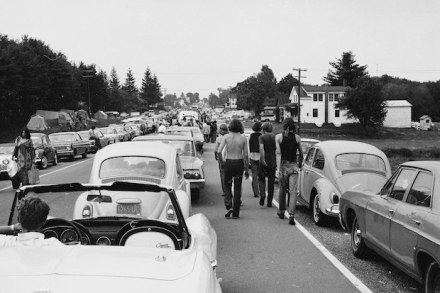
In 1963, when the bloom was still on the rose, Bob Dylan described Woodstock as a place where ‘we stop the clouds, turn time back and inside out, make the sun turn on and off… the greatest place’. Six years later, he wrote in Chronicles: Volume One, ‘Woodstock had turned into a nightmare, a place of chaos.’ Barney Hoskyns, who lived there in the 1990s, marshals plenty of evidence to support both assessments. This Catskills hamlet has been at various times a blue-collar small town, a bohemian enclave, a tourist trap, a hotbed of creativity, a cauldron of hedonism, a madhouse and ‘a counter-cultural touchstone’. In its heyday it attracted such luminaries as Janis Joplin, Van Morrison, Todd Rundgren, George Harrison and The Band.

It happened one summer | 27 August 2015

From our UK edition

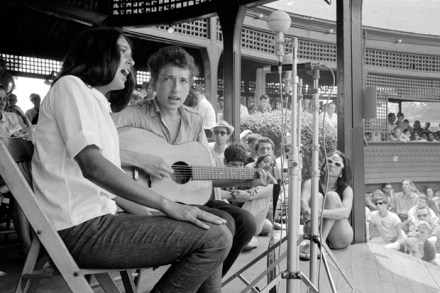
Five songs, only three of which were amplified. Thirty-five minutes, including interruptions. That’s how long Bob Dylan played for at Newport Folk Festival on Sunday 25 July 1965. Even on its own merits, it was a messy, halting set with an inadequate sound system. ‘Why did that matter?’ Elijah Wald rightly asks. ‘Why does what one musician played on one evening continue to resonate half a century later?’ Cameras documented only the stage, and memories are unreliable, so nobody can say how many in the 17,000-strong crowd booed Dylan’s noisy rock’n’roll rebirth, but one eyewitness’s claim that it ‘electrified one half of his audience and electrocuted the other’ is broadly true.