Sam Byers

Rough justice

From our UK edition

Asked how he achieves the distinctive realism for which his novels and screenplays are famous, Richard Price, that sharp chronicler of the American underbelly, tends to cite Damon Runyon’s biographer Jimmy Breslin, who said that Runyon ‘did what all good journalists do — he hung out’. Set in the brutal confines of the Stanville Women’s Correctional Facility, and, through flashback, in the equally unforgiving milieu of San Francisco’s Tenderloin, Rachel Kushner’s third, extraordinarily accomplished novel, The Mars Room, glows with the kind of authentic hyper-detail only a good deal of hanging out can capture. Whether she’s describing the ‘clammy fingers of fog...

The writer behind the brand

From our UK edition

Few publishing phenomena in recent years have been as gratifying as Chris Kraus’s cult 1997 masterpiece I Love Dick becoming a signifier of Twitter and Instagram chic. The ‘lonely girl phenomenology’ it exemplified has now attained cultural status, with first person, inventive writing by women often enjoying centre stage. It’s interesting, then, that just as the wider culture has caught up with her, Kraus has pivoted away, delivering ‘what may or may not be a biography of Kathy Acker’ — the underground punk novelist who is still, even 20 years after her death, awaiting the recognition she deserves.

Night of the living dead

From our UK edition

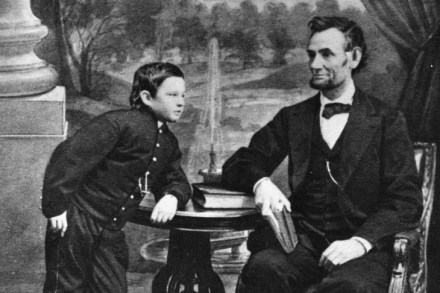
On 5 February 1862, the night Abraham Lincoln and his wife gave a lavish reception in the White House, with the civil war swelling outside and their 11-year-old son Willie dying of typhoid fever upstairs, what was the state of the moon? Was it a ‘fat green crescent’? Or was it ‘yellow-red, as if reflecting the light of some earthly fire’? According to George Saunders’s hugely ambitious Lincoln in the Bardo, his first novel after four peerless collections of short stories, neither of the above descriptions might be true, but when read in their tragic context, either can impart symbolic meaning. And meaning, as this novel so cleverly demonstrates, is not the same as truth. Lincoln takes place on a single night, 17 days after the party.

The wonder of knowledge

From our UK edition

‘Transparency,’ remarks Eliade Jenks, narrator of Joanna Kavenna’s fourth novel, A Field Guide to Reality, ‘is an aspiration. But wouldn’t it be strange, if you could see all things clearly?’ It’s an apposite question. For a novel with illumination and the quest for knowledge at its heart, clarity is in beguilingly short supply. Set in a distorted contemporary Oxford smothered by an eldritch mist, peopled not only by modern-day academics but by the spectres of thinkers past, and illustrated in gloomy monochrome by Oly Ralfe, A Field Guide to Reality is a work of cunning misdirection and trickery — a mystery in thrall to mystery’s beauty. When the scholar Solete dies, he leaves his friend Eliade a message.