Robert Douglas-Fairhurst

The young Tennyson reaches for the stars

From our UK edition

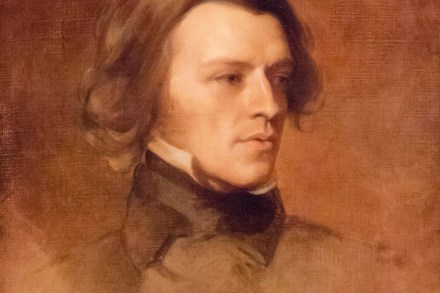
Edward FitzGerald had a good story about rowing across Lake Windermere at the end of May 1835 with his old friend Alfred Tennyson. As they rested on their oars and gazed into the clear, still water, Tennyson recited some lines from his work in progress, ‘Morte d’Arthur’, describing how the Lady of the Lake fashioned Excalibur out of sight: ‘Nine years she wrought it, sitting in the deeps/ Upon the hidden bases of the hills.’ Then he gave himself a little pat on the back: ‘Not bad that, Fitz, is it?’ The lines are better than not bad, as they imagine an invisible process of creation by incorporating several fragments of earlier writing.

The odd couple: Austen and Turner at 250

From our UK edition

History is full of odd couples: famous but unrelated people who happen to have been born in the same year. 1809: Charles Darwin and Abraham Lincoln. 1926: Queen Elizabeth II and Marilyn Monroe. Yet few historical pairings are as unlikely as the novelist Jane Austen and the painter J.M.W. Turner, born within a few months of each other in 1775. Usually the only time these two cultural icons encounter one another is in our purses or wallets: Turner depicted as a dashing young Romantic on the £20 note, Austen looking demure and doe-eyed (a heavily airbrushed version of the portrait originally sketched by her sister Cassandra) on the £10 note. Otherwise they might appear to have little in common.

The supreme conjuror Charles Dickens weaves his magic spell

From our UK edition

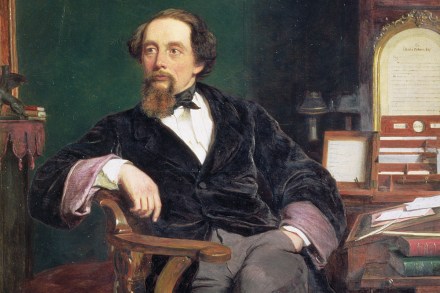
As Charles Dickens lay in his coffin, his will was read out to the assembled mourners. ‘I conjure my friends,’ he sternly instructed them, ‘on no account to make me the subject of any monument, memorial or testimonial whatever.’ It’s an appeal that later generations have studiously ignored, as can be seen in the piles of commemorative merchandise that are available to purchase online. These range from a fully poseable Dickens action figure (‘with quill pen and removable hat’) to a T-shirt featuring his face and the slogan ‘I put the lit in literature’. They can also be seen in the shelfloads of biographies and critical works published every year.

How cartomania captivated even Queen Victoria

From our UK edition

The wife of the Victorian photography pioneer Henry Fox Talbot called his first cameras ‘mousetraps’: little wooden boxes that were designed to capture anything placed before them. Yet most of Fox Talbot’s earliest photographs do not show living bodies at all. Long exposure times meant that the faintest twitch on a sitter’s face would dissolve it into a foggy blur, so instead he trained his lens on objects like shells and books, creating whole new collections he could reproduce in ghostly black and white. Preserving the images of dead children in an album, like dried flowers, meant that they could remain little forever Within a few years numerous other photography enthusiasts would follow his lead.

‘We are stuck like chicken feathers to tar’: Elizabeth Taylor’s description of the fabled romance

From our UK edition

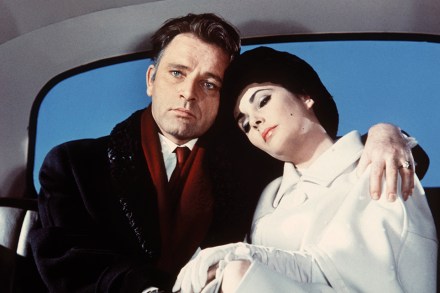
‘To begin at the beginning,’ intones Richard Burton with a voice like warm treacle at the start of the 1971 film Under Milk Wood. It’s hard to imagine an actor more obviously influenced by his own beginnings. The epigraph to this double biography is ‘The damp, dark prison of eternal love’, a line borrowed from Quentin Crisp. And if that’s an accurate assessment of Burton’s on-off-on-again relationship with the actress Elizabeth Taylor, it’s an even better summary of his childhood in Wales. Born Richard Walter Jenkins to a barmaid mother and a coal miner father (a ‘12-pints-a-day man’ who sometimes disappeared for weeks on end to drink and gamble), as a teenager he attempted a fresh start by moving in with a teacher named Philip Burton.

The triumphs and disasters of 1845

From our UK edition

It was the best of times, it was the worst of times: not France in 1789, convulsed by revolution, but Britain in 1845, when the period Dickens referred to as ‘the moving age’ was in danger of spinning out of control. It was the year when the SS Great Britain, designed by Isambard Kingdom Brunel, left Liverpool docks on the first transatlantic crossing by an iron-built steamship; the Hungerford suspension bridge (another Brunel design) opened, and a Birmingham manufacturer obtained a patent ‘for Improvements in Springs to be applied to Girths, Belts and Bandages, and Improvements in the Manufacture of Elastic Bands’: the birth of the modern rubber band.

The Browning version

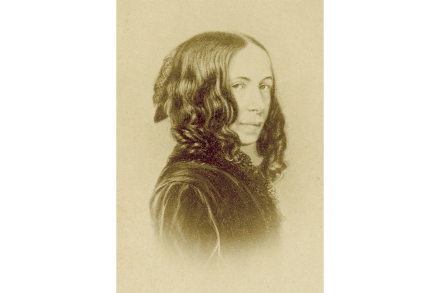
‘Ah, did you once see Shelley plain?’ asks the speaker in Robert Browning’s poem ‘Memorabilia’. Yet few of Browning’s contemporaries are as hard to see plain as his own wife: the poet who was known to her family as ‘Ba’, signed herself ‘EBB’ and published a number of popular works under her married name, Elizabeth Barrett Browning. During her lifetime she was one of the most admired poets of the age: a framed portrait of her hung in the bedroom of Emily Dickinson, and when Wordsworth died in 1850 there was serious talk of her becoming the first female poet laureate. Since her death in 1861, however, her reputation has sunk like a bad soufflé.

browning

Rescuing Elizabeth Barrett Browning from her wax-doll image

From our UK edition

‘Ah, did you once see Shelley plain?’ asks the speaker in Robert Browning’s poem ‘Memorabilia’ — a line which recognises how easy it is to misread a writer once they’ve passed into a hazy afterlife of fame, neglect or simple misunderstanding. Yet few of Browning’s contemporaries are as hard to see plain as his own wife: the poet who was known to her family as Ba, signed herself EBB, and published a number of popular works under her married name of Elizabeth Barrett Browning. During her lifetime she was one of the most admired poets of the age; a framed portrait of her hung in the bedroom of Emily Dickinson, and when Wordsworth died in 1850 there was serious talk of her becoming the first female poet laureate.

The many rival identities of Charles Dickens

From our UK edition

Until the age of ten I lived in a street of mock-Georgian houses called Dickens Drive. Copperfield Way and Pickwick Close were just around the corner. Even now I regularly pass the Pickwick Guest House on the main road out of Oxford. None of this is especially surprising. Go online and you can buy a ribbed tank top for your dog emblazoned ‘I love Charles Dickens’ or a flexible Dickens action figure ‘with quill pen and detachable hat’. Visit Rochester or Chatham, the Kent towns where he spent the happiest years of his childhood, and it’s hard to turn a corner without bumping into a Dickensian ghost — Little Dorrit body piercing, or A Taste of Two Cities Indian restaurant.

The other half of Wham!

From our UK edition

Have you heard the story about the time that Andrew Ridgeley, the 1980s heart-throb, refused to answer the door to Andy Warhol after John Lennon hissed at him: ‘Do you want him coming in here taking photos when you’ve got icicles of coke hanging out of your nose?’? How about Ridgeley’s fondness for orgies, during which he used to watch couples having sex on his snooker table while yelling: ‘Make sure you don’t come on the baize!’? No? Well, that’s probably because these are taken from Elton John’s gloriously filthy memoir Me, in which he describes the many successes and wild excesses of his life in eye-popping, thigh-clenching detail.

From fame to shame

From our UK edition

Biographers are a shady lot. For all their claims about immortalising someone in print, as if their ink were a kind of embalming fluid, it has long been suspected that they enjoy wielding their pens more like a cosh or a scalpel. Victorian writers were especially nervous about the prospect of a biographer prodding and slashing away at their reputations. Tennyson worried that he would be ‘ripped up like a pig’ after his death, and many of his contemporaries did all they could to present their best face to posterity: hand-picking an authorised biographer; making a bonfire out of any embarrassing letters; discreetly muzzling friends who might be tempted into unflattering reminiscences.

In the bedroom, with a carving-knife

From our UK edition

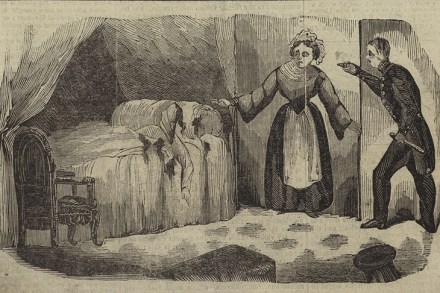
Early on the morning of 6 May 1840, a young housemaid in a respectable Mayfair street discovered that her master, the elderly and mildly eccentric peer Lord William Russell, had been murdered in his bed. His throat had been hacked at like a joint of meat, slicing through the windpipe and almost severing his head. It turned out not to be much of a whodunit. Within a few days, a young Swiss-born valet in the house named François Courvoisier was taken away for questioning, and faced by a pile of circumstantial evidence eventually he confessed to the crime. The real question is why he did it.

Trigger-happy madcap

From our UK edition

This is a biography that begins with a bang, swiftly followed by puddles of blood, shrieks of ‘Murder!’ and a chase through the foggy streets of Victorian London. On 8 December 1854, a French émigré was walking through Fitzrovia, close to the heart of radical London, having recently left a pistol-shooting range in Westminster. He had a companion: a mysterious woman with a letter in her pocket and unknown intentions in her heart. It was a cold, wet night. At just past eight o’clock, they arrived at 73 Warren Street, a narrow town house near Tottenham Court Road, where George Moore (a soda water manufacturer who had employed the émigré as an engineer) lived, and were shown into the plush parlour to wait for him.

A flawed and dangerous theory

From our UK edition

If there were a prize awarded to the book with the best opening line, A. N. Wilson would be clearing a space on his mantelpiece. ‘Darwin was wrong’, he announces at the start of this hugely enjoyable revisionist biography, which will be read in certain scientific circles to the background noise of teeth being ground and knives being sharpened. A brilliant Victorian naturalist, certainly, and still an inescapable cultural presence — think of Darwin staring out benignly from the £10 note — but according to Wilson, also a passive aggressive racist whose evolutionary theories no longer stand up to scrutiny. If that doesn’t put the felis catus among the columbidae it’s hard to know what will.

Behind the fringe

From our UK edition

‘Sexual intercourse began / In nineteen sixty-three,’ Philip Larkin famously announced in his poem ‘Annus Mirabilis’, ‘Between the end of the Chatterley ban / And the Beatles’ first LP.’ But the key line is a far more private confession, caught in parentheses like a gloomy thought bubble: ‘(which was rather late for me)’. Few of Larkin’s contemporaries would have been more sympathetic than Alan Bennett.

Hit and miss | 15 September 2016

From our UK edition

A few years ago, a reporter from the Chicago Tribune stumbled upon what was widely reported as ‘the Holy Grail of chicken’: a version of Colonel Sanders’s secret recipe that his second wife had scribbled in an album. Anyone hoping that it would contain exotic ingredients such as powdered lark’s tongue or virgin snow from Kilimanjaro was in for a disappointment. Those famous 11 herbs and spices turned out to be sadly humdrum: salt, pepper, oregano, thyme, and so on. It sounded like the kind of thing someone might come up with by dropping a spice rack on the floor and then adding a bag of flour. But none of that mattered to modern fans of KFC. Now they could recreate their favourite fast food much more slowly at home.

The laureate of repression

From our UK edition

In 1927, while delivering the lectures that would later be published as Aspects of the Novel, E.M. Forster made a shy attempt to get to know his Cambridge neighbour, the classical scholar A.E. Housman. At first all appeared to be going well. After one lecture the two men dined together, and Housman told Forster ‘with a twinkle’ that he enjoyed visiting Paris ‘to be in unrespectable company’. Emboldened by this confession, Forster ‘ventured to climb the forbidding staircase’ that led to Housman’s rooms in Trinity College. The door was firmly closed against him. He left a visiting card; it was equally firmly ignored. What might have been the start of a long and happy friendship turned out to be the academic equivalent of a one-night stand.

‘Mother says I look like a sick ostrich’

From our UK edition

Most modern biographers feed off celebrity like vampires let loose in a blood bank. That is why their books sell: they give readers the illusion of intimacy with people they will never know. Alexander Masters is different. He specialises in what one might call ‘marginal biography’, devoting hundreds of pages to individuals who live on the frayed edges of society, and often seem to be on the edge in other ways besides. In Stuart: A Life Backwards, he wrote about a sharp-witted down-and-out whose life had been damaged beyond repair; with Simon: The Genius in My Basement, his focus switched to a dropout mathematician who spent his days eating tinned kippers in a basement stuffed with old maps and plastic bags.

From the Big Smoke to the Big Choke

From our UK edition

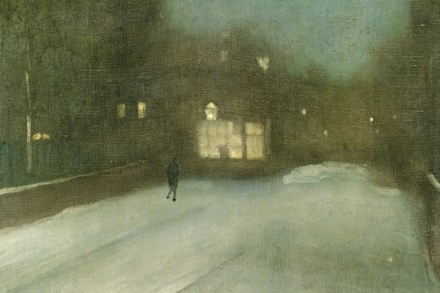
‘A foggy day in London town,’ croons Fred Astaire in the 1937 musical comedy A Damsel in Distress, puffing nonchalantly on a cigar as he wanders through a wood that has already been half obliterated by belching Hollywood smoke machines. Today Gershwin’s lyrics conjure up a nostalgic vision of life in the city, involving pale fingers of fog wrapping themselves around lamp posts and the muffled clop of hooves on cobbles. Actually, for many years the reality of a London fog was far less appealing. It clogged your lungs and made your eyes smart; it turned the air into a murky kaleidoscope of colours (yellow, grey, blue) that appeared to be on the verge of turning into a solid.

A misery memoir from Alan Cumming that’s surprisingly thoughtful

From our UK edition

Misery loves company. Anyone who doubts this old adage should pop into their local bookshop, because besides celebrity chefs and Fifty-Shades-of-Grey-style erotica, what keep the tills ringing are misery memoirs. The shelves are groaning with them. Their titles can vary from the merely toe-curling (Cry Silent Tears) to the queasily exploitative (Please, Daddy, No), but even if the names of the characters vary, all these books share the same basic plot. A child is horribly abused in some way, but eventually manages to break free from its upbringing, like a chick hatching from an egg. Good comes out of bad.