Harry Mount

Harry Mount is a barrister, editor of The Oldie and author of How England Made the English (Penguin) and Et Tu, Brute? The Best Latin Lines Ever (Bloomsbury).

The National Trust’s Pokémon hunt is a new low

From our UK edition

The catastrophic dumbing-down of the National Trust has plumbed new depths. The latest initiative by the infantilised morons who run what was once the world’s greatest conservation charity? ‘Pokémon in Partnership with National Trust.’ ‘Are you ready for an adventure?’ the Trust’s website declares. ‘Get outdoors with our Pokémon Trading Card Game Mega Evolution Trails. Complete the trails to find Mega Evolution Pokémon, discover their powers and complete fun challenges.’ From 23 May, 15 of the Trust’s sublime houses, with their Elysian landscapes, will become a playground for a vast Japanese media franchise. Those heavenly landscapes, carved out by man at his aesthetic heights, will be blighted by man at his trashy, commercial low.

The decline and fall of ancient Greek

From our UK edition

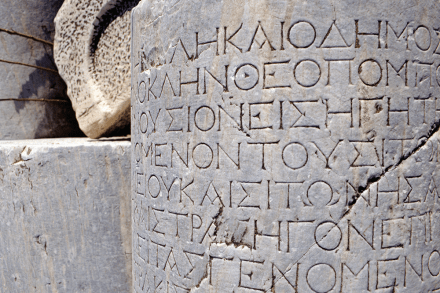
Ancient Greek, once central to a western European education, is on life support. Last summer, 206 pupils sat an A-level in ancient Greek. Of those, only a handful were state-educated. So it’s farewell to the language taught in our schools since the 16th century. Farewell to the language of the New Testament; the language Roman nobles revered and the emperors spoke. Julius Caesar’s last words weren’t ‘Et tu, Brute?’ They were ‘Kai su, teknon?’ – ‘You too, my child?’ As A.N. Wilson recently wrote: ‘Someone once said that all western philosophy is just footnotes to Plato. All western literature is just footnotes to Aeschylus, Sophocles, Euripides and Homer.

The BBC will regret jettisoning the Oxford vs Cambridge Boat Race

From our UK edition

And so, slowly but regularly, the BBC loses touch with British national life. The BBC has just lost the radio broadcast rights to the Oxford vs. Cambridge Boat Race to Times Radio, which will cover the event for three years. It comes after Channel 4 won the deal last year for TV rights for the next five years, meaning it will cover the 200th anniversary of the first boat race in 1829. What was once the finest broadcaster in the world becomes a navel-gazing, self-obsessed purveyor of frivolous rubbish Until now, the BBC had broadcast the radio commentary of the race since 1927, except for a brief spell from 2005 to 2010, when LBC had the radio rights. The BBC had televised it (with interruption between 2005 and 2009) since 1938.

How much will Mandelson pay for a good barrister?

From our UK edition

When the cops came calling to arrest Peter Mandelson this week, he was already lawyered up. And he’s secured the services of the best – and most expensive – lawyers in town. Mandelson is now staring down the barrel of a legal bill running into the hundreds of thousands of pounds – very possibly the millions, given the mammoth number of documents in the Epstein Files his lawyers will have to trawl through. Add in the forensic examination of government emails swapped in the build-up to Mandelson’s catastrophic appointment as British Ambassador to Washington – and the lawyers’ tills will be cheerfully ringing away.

Why Oxford needs entrance exams

From our UK edition

Here comes yet another blow to the rigour of Oxford’s entrance exams. Last December, they got rid of the in-person interview, replaced by less discerning Zoom interviews. And now the university has dropped lots of its subject-specific exams, to be replaced by more generic tests. There will still be some tailoring to particular degrees. Humanities candidates will sit the Test of Academic Reasoning for Admissions (TARA), while maths and science applicants will take the Engineering and Science Admissions Test (ESAT) or the Test of Mathematics for University Admission (TMUA). But those exams are still more generalised, less subject-specific than the old ones.

What happened to the Oxford interview?

From our UK edition

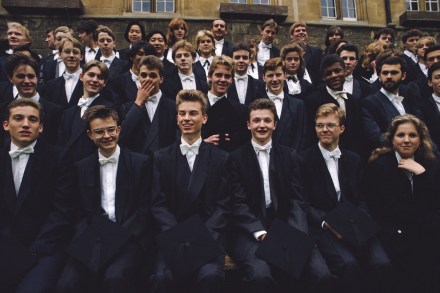
This week, there’s a strange absence in Oxford. For years, in December, you’d suddenly see a strange invasion of the streets of the university town. White-faced, terrified 17-and 18-year-olds, preparing for their university interviews. Colleges, tea rooms and restaurants were haunted by these poor, clever souls, mumbling equations and gerundives to themselves. Well, no more. If candidates clam up on screen, it’s much harder to respond to even the kindest don, hundreds of miles away The teenage geniuses are still applying to Oxford – but from the comfort of their bedrooms at home. In-person interview was temporarily halted, quite understandably, in 2020 because of Covid. But Covid came and went.

Oxford’s decline and fall is no surprise

From our UK edition

What’s the quickest way to make the two most famous universities in the world go wrong? Make it easier to get in. That’s exactly what Oxford and Cambridge appear to have done in recent years. And so – no surprise – it’s just been announced that neither university was in the top three British universities for the first time since the records, produced by the Times, began 32 years ago. Oxford's slipping standards don't just apply to those trying to win a place This decline must at least partly be blamed on the universities offering ‘contextual offers’ or using ‘contextual data’ in assessing applicants who may have lower grades.

Vivat the Latin motto

From our UK edition

In the strange, arcane world of school mottoes, it’s fitting that the most famous one of all belongs to a fictional school. Draco dormiens nunquam titillandus – ‘Never tickle a sleeping dragon’ – is the motto of the Hogwarts School of Witchcraft and Wizardry. J.K. Rowling brilliantly realised that children aren’t put off by boarding schools and the ancient rituals that go with them. They’re gripped by these peculiar places, their roots twisting back through the mists of time. And no school custom is as ancient or beguiling as the Latin motto. My motto, at Westminster School, was Dat deus incrementum – ‘God gives the increase’.

It was drug addiction that killed Elvis, not his greedy manager

From our UK edition

Colonel Tom Parker (1909-97) was the man who ripped Elvis Presley off and worked him to death. That’s the received wisdom about the person who managed the King from 1955 until his premature death, aged 42, in 1977. Peter Guralnick’s book, written with full access to Parker’s unpublished, witty, clever letters, now owned by the Elvis Archives, gives a more nuanced, sympathetic picture. The author is no biased sensationalist. His Elvis biography, Last Train to Memphis (1995), is one of the most serious and reliable. So, yes, Parker was a serial liar, not least when it came to his identity. Born Andreas Cornelis van Kuijk in humble circumstances in Holland, he fled, aged 16, to America and was then kicked out. He returned three years later, changing his name to Tom Parker.

The Odyssey is more real than we thought

From our UK edition

Odysseus is back on his eternal journey to Ithaca – and he’s sailing towards your cinema screen. Ralph Fiennes is playing Odysseus in The Return, released last week. And Christopher Nolan’s Odyssey, starring Matt Damon as the cleverest of the Greeks at Troy, should be out next year. I criss-crossed the Mediterranean for three years, in the wake of Odysseus, for a book – and I’m convinced The Odyssey is true. OK, the monsters, like man-eating Scylla and the one-eyed Cyclops, might not have existed. And you’d have to be a Zeus-fearing type to believe in the gods toying with Odysseus’s fate on Mount Olympus. But the catastrophic storms that tossed Odysseus back and forth across the Med are certainly true.

Anxiety is good for you

From our UK edition

These are some of the things I worried about this morning. Should I brush my teeth while drawing the curtains, to save time? Should I get out of the bath at 7.40 a.m. or 7.45 a.m. to be fully clothed for the Tesco home delivery between 8 a.m. and 9 a.m.? Should I instantly pick up the coat hanger that fell off the door handle as I left my bedroom or wait till I return this evening? These are mind-staggeringly boring things to think about. They’re even more boring to write down. That is the life of the worrier: a new worry dropping into the brain roughly every five seconds. Life is one huge to-do list for us worriers.

My great-grandfather gave his name to Grenfell Tower

From our UK edition

In Dad’s Army, Lance Corporal Jones, played by Clive Dunn, fought in six campaigns, from the Sudan in 1884 to the second world war. Well, my great-grandfather, Field Marshal Francis Grenfell, 1st Baron Grenfell, can beat that. He joined up at 18 in 1859 and stayed in the army for 65 years, until his death at 83, 100 years ago, on 27 January 1925. And then, in a tragic coda to his extraordinary life, he gave his name to Grenfell Tower, where 72 lives were lost in a fire in 2017. This week, Angela Rayner told bereaved families that the tower is to be demolished. Lord Grenfell was the ultimate Colonel Blimp – he even looked like him, handlebar moustache and all. The Zelig of the British Empire, he saw everything.

You should feel disappointed if you don’t get into Oxbridge

From our UK edition

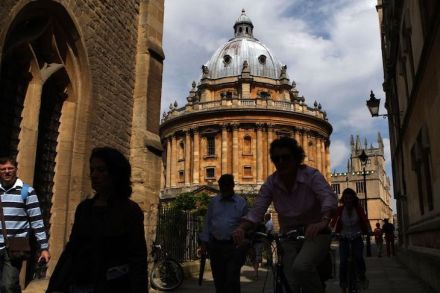
When I was at Magdalen College, Oxford, in the early 1990s, I’d often read ‘Bogsheets’ in the loos by the college bar. They were single pages of anonymous college gossip, cheaply printed off in those pre-internet days. I remember one bogsheet clearly. The headline said, ‘Cheer up!’ And the standfirst said, ‘You’re at the most beautiful college at the most beautiful, most famous university in the world. This is the closest you’ll ever get to living in a country house in your life. Why are you so bloody miserable?’ I was feeling a little sorry for myself at the time. The bogsheet cheered me up instantly – it was spot on. Whenever I go back to Oxford now, I think, ‘Why on earth did you take this all for granted?

Wealth and hedonism are a fatal combination

From our UK edition

Why do the cool die young? I don’t mean famous, cool people like Jimi Hendrix or Jim Morrison. They are members of the 27 Club – the pop stars who died at 27. I mean the schoolboy gods of my youth, the marvellous-looking, self-assured ones, effortlessly going out with the prettiest girls. And now seven of them – friends and contemporaries from school and university – are dead by the age of 50, either by their own hand or thanks to drink or drugs. The majority of my wild contemporaries have transformed into sober professionals None of the femmes fatales I know have died. Why is it only the cool men who’ve gone? As the cliché has it, they had it all. Take Alex Mosley, who died of a heroin overdose in 2009, aged 39.

Streeting vs Starmer, medical misinformation & the surprising history of phallic graffiti

From our UK edition

43 min listen

This week: Wild Wes. Ahead of next week’s vote on whether to legalise assisted dying, Health Secretary Wes Streeting is causing trouble for Keir Starmer, writes Katy Balls in the magazine this week. Starmer has been clear that he doesn’t want government ministers to be too outspoken on the issue ahead of a free vote in Parliament. But Streeting’s opposition is well-known. How much of a headache is this for Starmer? And does this speak to wider ambitions that Wes might have? Katy joins the podcast to discuss, alongside Labour MP Steve Race. Steve explains why he plans to vote in favour of the change in the law next week (00:57). Then: how concerned should we be about medical misinformation? President-elect Donald Trump has announced vaccine sceptic Robert F. Kennedy Jr.

The Roman roots of the Dulwich Wood Penis Gang

From our UK edition

If you go down to the woods today, you’re sure of a big surprise… in Dulwich Wood – a charming fragment of the medieval Great North Wood in south London – the self-dubbed ‘Penis Gang’ have been at work. The gang have been daubing huge penises, in red, black and green, on ancient tree trunks and branches. Sophia Money-Coutts, author and etiquette expert of our times, recently discovered the drawings as she walked her dog, Dennis, in the woods. We prudish 21st-century westerners struggle to understand how relaxed the Romans were about genitalia It’s all disgusting, of course. But the dog walkers of Dulwich can comfort themselves with the fact that penis graffiti has an ancient lineage.

All human life – and death – is here: the British parish church

From our UK edition

In ‘Church Going’, the poem that gives this charming book its title, Philip Larkin talks about ‘one of the crew that tap and jot and know what rood-lofts were... Some ruin-bibber, randy for antique’. Well, Andrew Ziminski is king of the ruin-bibbers, randy for antique churches. He doesn’t just know what a rood-loft is; he’s also repaired loads of them. For 35 years, he has been a church conservator. In his first book, The Stonemason, he brilliantly explained his job. In this sequel, he takes us all round the church, from gravestones to altar cloths, and explains every conceivable aspect of the great parish church. Guides like this have been done before, but not by someone who actually repairs churches.

From the archives: An atheist goes on a Christian pilgrimage. Why?

From our UK edition

23 min listen

Writer Guy Stagg threw in his job to undertake a pilgrimage to Jerusalem via Rome - choosing a hazardous medieval route across the Alps. It nearly killed him: at one stage, trying to cross a broken bridge in Switzerland, he ended up partially submerged in the water, held up only by his rucksack.  On this episode of Holy Smoke, from the archives, Guy explains why his journey was a pilgrimage, not just travels. And Damian Thompson talks to Harry Mount, editor of The Oldie, about why he’s irresistibly drawn to church buildings while remaining an unbeliever - albeit an agnostic rather than an atheist.

The fury of the Med

From our UK edition

Scylla and Charybdis are said to have sat off the Sicilian coast, where Mike Lynch’s boat foundered, and where 3,200 years before, Odysseus navigated between the monster and the whirlpool. Many think of the Med as a gentle sea, more like an oversized eternity pool, unbothered by the killer storms and cliff-high waves that rage beyond Gibraltar. The howling wind had ripped along the coast, whisking the beach away overnight I thought that, too, before I was bashed up by wild tempests in the two years I criss-crossed the Mediterranean in Odysseus’s wake. One morning, I turned up at a hotel on Mykonos. As I made my way to the breakfast table, the agitated maître d’ shimmered up and said, ‘I’m so sorry, sir, the beach has been washed away overnight.

No wonder the National Trust is bowing to climate activists

From our UK edition

Just like the Anglo-Saxons disastrously paying off the Viking marauders with Danegeld, so the National Trust has attempted to do the same with its desperate virtue-signalling. For the last decade, the Trust has fallen on its knees in deference to every fashionable cause. But, again like the Anglo-Saxons with the Vikings, they can never do enough to appease the insatiable demands of the zealots.  The latest eco-craze is for climate activists to hold protests at over 40 National Trust sites this week to stop the charity banking with Barclays because of its links to the fossil fuel industry.