Allan Mallinson

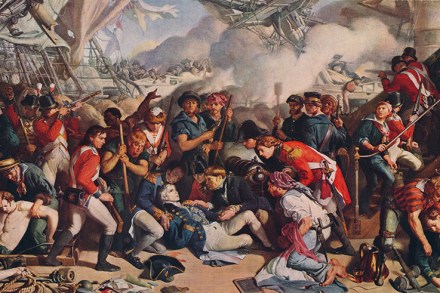
The glory and tragedy of Trafalgar

From our UK edition

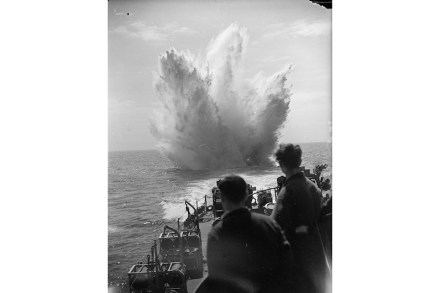
The historian of naval warfare is to be envied by his land counterpart. The Duke of Wellington wrote to a confidant after Waterloo: The history of a [land] battle is not unlike the history of a ball. Some individuals may recollect all the little events of which the great result is the battle won or lost, but no individual can recollect the order in which, or the exact moment at which, they occurred, which makes all the difference as to their value or importance.

The army is too woke for war

From our UK edition

Last month, in a two-page letter to colonels of corps and regiments, the Deputy Chief of the General Staff, Lieutenant-General David Eastman, inadvertently exposed the moral confusion, panic even, possessing parts of the British Army. Invited to dine by retired and serving officer members of the private London club Boodle’s, Eastman was dismayed to discover that there were ‘restrictions on the rooms that can be accessed’ by women. In his subsequent letter, he expresses concern that, even in mixed clubs, ‘rules, policies or cultural practices may not align with the army’s commitment to inclusivity’.

When, why and how came the fall – the success and sorry decline of the British Army

From our UK edition

I wonder how many people appreciate what a remarkably capable army we had for the first three decades of this book’s range – and how incapable that army has become. Forward defence in Germany during the Cold War (56,000 troops); keeping the peace in Northern Ireland; bringing Rhodesia/Zimbabwe back into the fold; liberating the hostages at the Iranian embassy in London; retaking the Falkland Islands; ejecting the Iraqis from Kuwait; bringing order to the Balkans; halting the civil war in Sierra Leone – the ‘rise’ part of Ben Barry’s book is indeed inspiring.

The greatest military folly of modern times

From our UK edition

I don’t want to rain on the new Entente Amicale’s parade; it’s just that whenever we get cosy with the French, military disaster seems to follow. In 1914, a decade after the signing of the Entente Cordiale, the War Office fell hook, line and sinker for the Conseil Supérieur de la Guerre’s doctrine of Attaque à outrance (attack to the extreme limits) and ludicrous Plan XVII. By April the following year we’d lost most of the regular army. In 1939 we again sent an expeditionary force to France and in May 1940 we fell for the Conseil’s ‘Dyle Plan’.

The importance of honouring the enemy war dead

From our UK edition

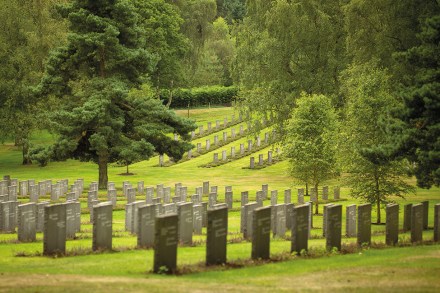
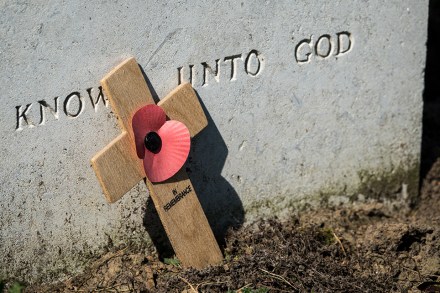
There are several dozen graves from the second world war (and some from the first) in churchyards near my village on Salisbury Plain, but all of them British or Commonwealth ones. Nor have I seen any enemy graves elsewhere, although some 4,500 Germans died on British soil during the last world war, and a far smaller number in the Great War. Until 1962 they lay in many hundreds of cemeteries throughout Britain, Northern Ireland, the Isle of Man and the Channel Islands. But in 1959 the German equivalent of the Imperial (later Commonwealth) War Graves Commission (IWGC), the Volksbund Deutsche Kriegsgräberfürsorge (VDK), was given leave to rebury the dead of both wars collectively at Cannock Chase in Staffordshire, at what was to be the German Military Cemetery.

The good soldier Maczek – a war hero betrayed

From our UK edition

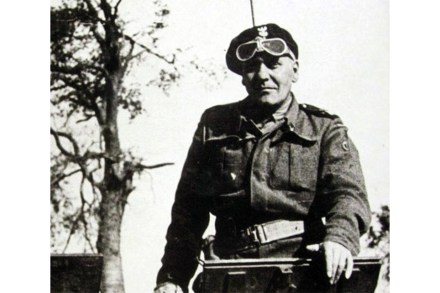
Who could forget the Polish squadrons in RAF Fighter Command when, in the 1969 film The Battle of Britain, a British squadron leader, frustrated by the excited radio chatter on being allowed into action at last, orders ‘Silence! In Polish!’ Or the Polish Parachute Brigade at Arnhem, whose commander, Stanislaw Sosabowski, played by Gene Hackman in A Bridge Too Far (1977), thinking the venture disastrous, growls ‘God Bless Field Marshal Montgomery’ as he jumps from his Dakota? Commander Eugeniusz Plawski, the captain of the Polish destroyer Piorun which first spotted the Bismarck and charged at her to draw fire, might be better known if he had featured in the 1960 film Sink the Bismarck! – but that wasn’t expedient, with the honours going instead to a Royal Navy officer.

Eighty years on, the planning of Operation Neptune remains awesome

From our UK edition

In December last year, the last surviving D-Day veteran of my old regiment, the 13th/18th Royal Hussars, died peacefully in his care home. On 6 June 1944, 20-year-old Trooper Lawrence Burn had been the gunner in a specially adapted Sherman tank which, along with others of the regiment, had driven down the ramps of their landing craft 5,000 yards off Sword Beach and swum for almost an hour through the high swell to land a few minutes ahead of the assaulting infantry in order to suppress the defenders’ fire. Years later, Burn was still in awe of the scale and execution of the Normandy landings: ‘I don’t know who planned it – a committee, I suppose,’ he told a journalist on his 90th birthday, ‘but it was wonderfully, wonderfully done.

Why was the British army so ill-prepared to fight the second world war?

From our UK edition

Conflict comes highly recommended. Two former chiefs of the defence staff, Generals David Richards and Nicholas Carter, praise it for identifying key lessons from the past appropriate to the future. A former MoD strategic adviser, Sir Hew Strachan, says it will ‘challenge the professional and enlighten the generalist’. The US marine corps general and former secretary of defense James Mattis, ‘the warrior monk’, says it is ‘a clear-sighted assessment of war’s future’. And the late Henry Kissinger called it ‘an exceptional book, written by two absolute masters of their profession’.

An ancient stalemate may provide lessons today

From our UK edition

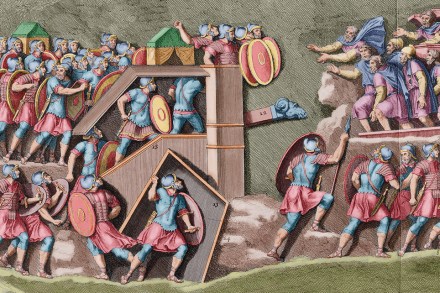
History doesn’t have to be ‘useful’ to be compelling – witness, say, Henry VIII and his six wives. Adrian Goldsworthy, however, a considerable historian of ancient Rome as well as a prolific novelist of those times and the Napoleonic (of which there is obvious connection), is at pains to emphasise the profit to be derived from his massive, magnificent account of the 700-year conflict between Rome and Persia. Early on, the Romans realised that Parthia-Persia had to be treated with more respect than other nations History is valuable, he writes, because it helps us understand our own world a little better.

Did the sinking of the Blücher in 1940 affect the outcome of the war?

From our UK edition

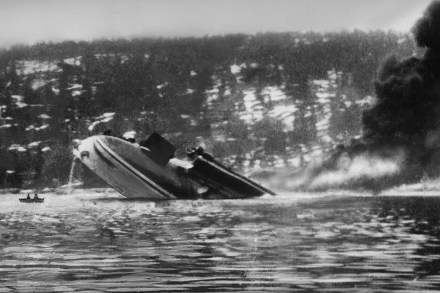
In the conclusion to this forensically detailed book, the authors, one a naval historian, the other a retired naval officer who served in the Oscarsborg fortress outside Oslo – the cornerstone of the story – during the Cold War, ask: ‘What would have happened if Hitler had not unleashed his dogs of war on Norway in April 1940, or if Blücher had not been sunk?’ To which of course they reply that we shall never know. They do, however, posit that in the worst case, Churchill might not have become prime minister, and the evacuation from Dunkirk would not have been the success it was. That’s not entirely new, but it’s not always remembered – Dunkirk especially – or at least not outside the authors’ Norway. The Christmas tree in Trafalgar Square isn’t merely a thank you.

A young soldier’s noble vision: creating the Western Front Way 

From our UK edition

This profound and emotion-laden book ends, as did the first world war, in hope, and no little catharsis. It begins, though, in overpowering grief, not just that of the Western Front’s bereaved, but the author’s. In 2016 Sir Anthony Seldon’s wife died of cancer, diagnosed five years earlier. They had met at Oxford, she was ‘dark-eyed and beautiful, preternaturally clever and knowing’, and when they married, his father, whose own people had been refugees from the pogroms in Ukraine, was delighted that he’d found a Jewish girl. After her death, which ‘ripped me in two’, writes Seldon, he threw himself into his work – his prodigious writing and the vice-chancellorship of Buckingham University, which his father had helped found.

The pacifists of the 1930s deserve greater understanding

From our UK edition

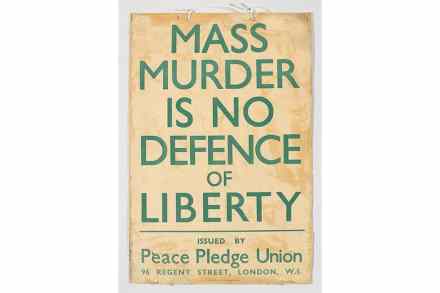
As I’ve occasionally come to think is the case with The Spectator, this book is perhaps best begun at the back. Otherwise it might be taken for niche history – applied historical moral philosophy, say, or an aspect of ‘the people’s war’ usually overshadowed by the manifest imperative to defeat the unparalleled evil of Nazism. That evil, concludes Tobias Kelly, professor of political and legal anthropology at Edinburgh, has indeed ‘become the frame through which we seem to assess all evils’; but ‘the spectre of appeasement has also reared its head too often’.

What I really said to Gordon Brown: Field Marshal Lord Guthrie sets the record straight

From our UK edition

A headline in the Mail on Sunday, taken up eagerly by the BBC’s Today programme, claimed recently: ‘The SAS is getting worried that not enough posh officers are applying for jobs.’ Having hooked those shocked by the thought that the SAS should draw such distinctions, as well as those appalled that oiks are applying at all, the piece actually went on to explain that one officer failed the selection because he ‘lacked the sophistication’ to be able to brief cabinet ministers on operations. No lack of sophistication ever attached to Charles Guthrie.

Can the fiasco of the Dieppe Raid really be excused?

From our UK edition

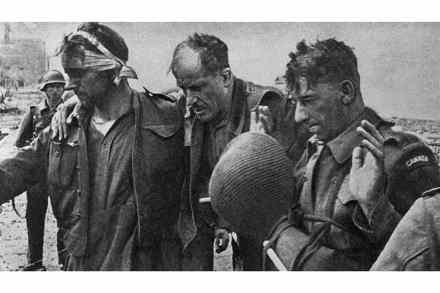
In my mother’s final days we had a long conversation about the second world war. I asked if she’d ever thought we might lose. ‘No,’ she snapped. ‘I knew we were too clever for them.’ The chief of the imperial general staff, Sir Alan Brooke, had been less sanguine. On 31 March 1942 he confided to his diary: ‘During the last fortnight I have had, for the first time since the war started, a growing conviction that we are going to lose.’ His concern, besides the army not fighting very well — witness Hong Kong and Singapore — was that Britain’s new allies, the Soviet Union and the United States, were for different reasons clamouring for a second front.

Why did Hitler’s imperial dreams take Stalin by surprise?

From our UK edition

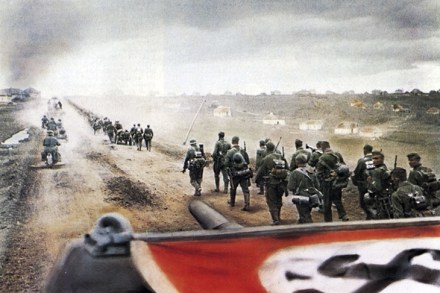
The most extraordinary thing, still, about Operation Barbarossa is the complete surprise the Wehrmacht achieved. In the early hours of 22 June 1941 the largest invasion force in history, ultimately some three million men, struck at the Soviet Union on a front of nearly 2,000 miles. When Stalin was woken with the news, he wouldn’t believe it. It couldn’t be Hitler’s doing, he insisted; surely just sabre-rattling by Wehrmacht generals? Hours passed before he would accept his calamitous misjudgments and issue a general order to fight back by every means. Hitler’s strategic challenge in the late 1930s had been essentially the same as the Kaiser’s in 1914: how to make war simultaneously on two fronts.

Old men remember: reliving the horror of Tobruk

From our UK edition

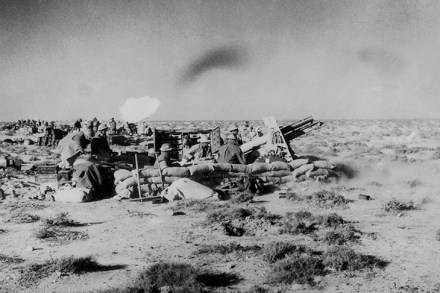
‘Old men forget; yet all shall be forgot,/ But he’ll remember, with advantages,/ What feats he did that day.’ Peter Hart quotes the St Crispin’s Day speech aptly, for as an oral historian at the Imperial War Museum, he’s done his bit over the years to record memories. By the 1980s the IWM’s sound archive had amassed an impressive collection of interviews with veterans of the first world war, and so began on those of the second.

Break-out and betrayal in Occupied Europe

From our UK edition

Für dich, Tommy, ist der Krieg vorbei. However, many British servicemen, officers especially, didn’t want their war to be over. Or, at least, didn’t want to spend it in a PoW camp. One of the enduring myths of the second world war is that officers had a statutory obligation to escape, but nothing in King’s Regulations required it. Most just saw it as their duty to rejoin their units. The German military courts that tried escaping officers generally viewed it that way too. Besides escapers, there were those evading capture, particularly downed airmen. In December 1939 a special meeting of the Joint Intelligence Committee discussed how to help them.

The Far East Campaign of 1941-5 is the new focus of Daniel Todman’s comprehensive history

From our UK edition

To begin not at the beginning but at the end of the beginning. Or rather, to begin at another beginning, where Daniel Todman’s book ends. In January 1948, Clement Attlee’s foreign secretary, Ernest Bevin, told the Commons that ‘the free nations of western Europe must now draw more closely together’, for western Europe was not just a geographic entity but a global presence: If we are to preserve peace and our own safety at the same time we can only do so by the mobilisation of such moral and material force as will create confidence and energy in the West and inspire respect elsewhere, and this means that Britain cannot stand outside Europe and regard her problems as quite separate from those of her European neighbours.

In praise of Thomas Graham, unsung hero of the Peninsular War

From our UK edition

Why does a man join the army? The answer was probably more obvious in the 18th century than now, but in 1793 Thomas Graham was 45. The son of a Perthshire laird and of a daughter of the Earl of Hopetoun, and having inherited a good fortune, in 1774, he had married the beautiful Mary Cathcart, daughter of Baron Cathcart and of Jane Hamilton, herself the daughter of Lord Archibald Hamilton, all scions of Scots whiggery. It was evidently a love match. On the same day, Mary’s elder sister, Jane, had wed too. Their father wrote: ‘Jane has married, to please herself, John, Duke of Atholl, a peer of the realm; Mary has married Thomas Graham of Balgowan, the man of her heart, and a peer among princes.’ And so he proved.

Their finest hour

From our UK edition

On 22 January last year, the entrance whiteboard at London Underground’s Dollis Hill carried a brief factual statement: On this day in history On the 22–23 January 1879 in Natal, South Africa, a small British garrison named Rorke’s Drift was attacked by 4,000 Zulu warriors. The garrison was successfully defended by just over 150 British and colonial troops. Following the battle, 11 men were awarded the Victoria Cross. A female passenger complained that it was ‘celebrating colonialism’. The board was wiped clean and a suitably opaque quote from Martin Luther King substituted: ‘We are not the makers of history. We are made by history.