Richard Francis

Mass hysteria in Massachusetts: the 17th-century witch crisis in America

From our UK edition

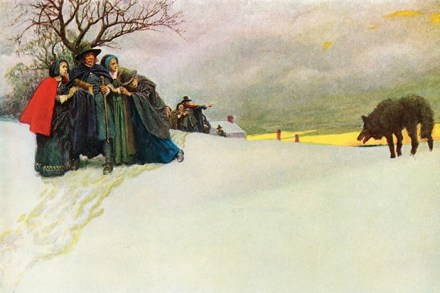
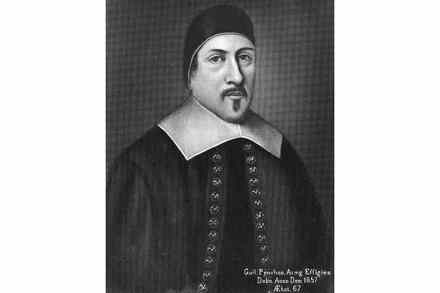
One September day in 1649, in the frontier town of Springfield, Massachusetts, Anthony Dorchester returned from church to the house he and his wife shared with a couple called Hugh and Mary Parsons. He went to check on a cow’s tongue he was boiling for dinner but to his surprise it wasn’t in the pot. He searched high and low but couldn’t find it. Mary told him that her husband had sneaked off mysteriously on the way to the meeting house and was now nowhere to be seen. Given that the two men had argued about possession of the tongue, the obvious conclusion would surely be that Hugh had stolen it. But for Dorchester and his neighbours a more plausible explanation was that Hugh had made it disappear through the ‘juggling’ of witchcraft.
From persecuted to persecutors: The Mayflower Pilgrims fall out

From our UK edition

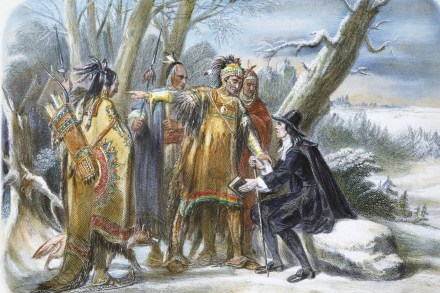
The Mayflower’s journey did not simply end with landfall at Plymouth Rock, if indeed it ever arrived there in the first place — John Turner points out that no mention was made of the rock for 150 years after the Pilgrims disembarked; but the little ship has continued its voyage into mythology ever since. At the end of The Great Gatsby, Scott Fitzgerald writes of that ‘transitory enchanted moment’ when human beings came face to face with something commensurate with their capacity for wonder. The Pilgrims gave substance and longevity to that transitory vision when they set up their community in the wilderness.

A single man of no fortune must be in want of a job: younger sons in Jane Austen’s England

From our UK edition

Readers of Jane Austen gain a clear idea of the task facing the daughters of gentlemen. They need to secure a husband who can enable them to keep or even improve their social and economic status. But what about their opposite numbers? How did the younger sons of gentlemen face up to the challenges and responsibilities of adulthood? Primogeniture meant that even those from a wealthy background often had to earn their living. While for girls marriage and career tended to be synonymous, for many of their brothers a profession came first, and then with luck a marriage would follow, since ‘a single man in possession of a good fortune must be in want of a wife’. How young single men went about achieving such good fortune is the question that Rory Muir sets out to answer.

With Friends like these…

From our UK edition

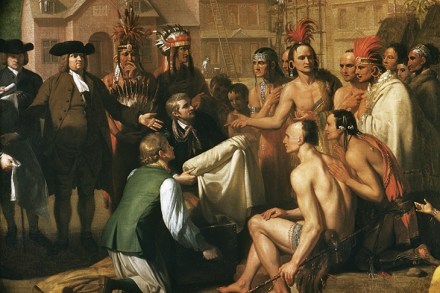
The ultimate driving force of William Penn’s adult life is inaccessible, as the Quaker phrase ‘Inner Light’ suggests. While a young man administering the family estates in Ireland, Penn experienced ‘convincement’, another Quaker term for what other Dissenters called conversion. But while these experiences were inward and personal, they had public consequences. Since they were potentially available to anyone, they brought in their wake a tendency towards egalitarianism, manifested in plain speaking, pacifism, and a refusal to swear oaths or doff one’s hat. These outward manifestations of private experience inevitably caused ructions in the hierarchical social structure of 17th-century England.

The best sort of magic realism

From our UK edition

Michael Fishwick’s new novel tells the story of a young man called Robbie, who has been uprooted from his London home after his mother’s death. He finds himself in rural Dorset, where he inhabits a capacious present that has ample room for the intrusions of the mythic past. Struggling with his loss, Robbie has taken to using arson to express his rage — which is why his father, having rapidly acquired a new partner and a couple of stepdaughters, has moved the family to his old childhood home to make a new start. But it’s an ancient start that this landscape has on offer.

Back from the front

From our UK edition

In his preface Sebastian Junger tells us that this book grew out of an earlier article. It obviously didn’t grow much, since the main text is still only 138 (small) pages long, less than half the length of its predecessors The Perfect Storm and War, though it comes armed with a list of sources amounting to another 30 pages. Junger is attempting to explore the relationship between two ‘impulses’, as he oddly terms them. The first is that certain white captives of American Indian tribes chose to stay with their new communities even after release was possible, while the second is the disappointment felt by many American soldiers when returning home from war.

A chronic case of mass hysteria

From our UK edition

There have been many books devoted to the terrible events that took place in the small rural community of Salem Village and its larger sister, Salem Town, between February 1692 and May 1693. As Stacy Schiff points out, most of them are shaped by particular theses — she lists 13 in all. This approach doesn’t just offer readers the consolation of an overriding explanation, but gives authors built-in filters, enabling them to concentrate on what proves their particular case. Such a strategy is tempting because of the unruly complexity of the Salem phenomenon, with its hundreds of accusers, accused, magistrates, ministers and fearful bystanders. Schiff’s own selective cast of characters runs to six closely printed pages and lists 88 names.