Jonathan Steinberg

The experience of a lifetime

From our UK edition

Robert Caro, at the age of 83, continues to work full-time on his grand inquiry into the nature of political power. He has studied two figures in particular: Robert Moses and Lyndon B. Johnson. Moses — the subject of Caro’s first book The Power Broker — was the man who, over several decades, built the transportation system of the greater New York City urban area. Johnson was a Texan politician who grew up in a very different world and became president of the United States. Working offers a reflection on the biographical craft that has engaged Caro for most of his life. His technique is to discover the motives, the strengths and weaknesses of those who enter political office.

Life, death and everything in between

From our UK edition

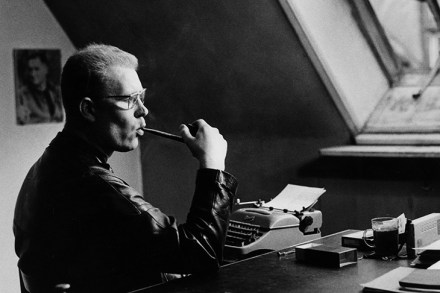
The most striking and difficult aspect of this novel is its incredible scale. How can a reviewer best discuss an enterprise containing a vast survey of life in Germany, Britain and the United States and the transformations of these societies from the end of the 19th century to the 1980s? Two volumes cover the experience of age and youth, the rise of the Nazis in Mecklenburg, the second world war, life and death in a small German town, the evolution of East German communities and the emergence of a Soviet state after the war. The New York Times appears in more or less every chapter, as the conveyer of the story of the Vietnam war and events in the city of New York itself. There are accounts of Mafia dealings and other street crimes.

Coming of age in Nazi Germany

From our UK edition

The distinguished historian Konrad Jarausch’s new book is a German narrative, told through the stories of ordinary people who lived through his chosen period. Six dozen Germans — mostly from the generation born in the 1920s — testify through their memoirs to how it was to be Christian or Jewish, working-class or upper- middle-class, a young Nazi or a young anti-Nazi. The main characters constitute, as Jarausch explains it, ‘a stratified sample of individuals who represent a broad range of personal and collective experiences’ seen from the bottom. The book begins with the grand-parents of this generation, and the stability of Wilhelmine Germany with its pre-1914 confidence and prosperity.

Massacre of the innocents

From our UK edition

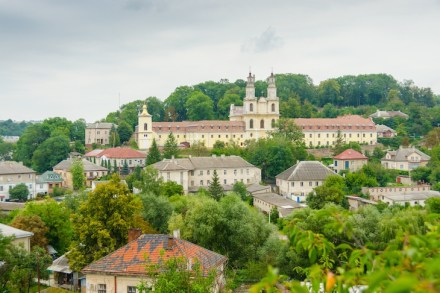
I thought I knew the history of the years 1914 to 1945: the first world war and the terrible casualties in the trenches; the second world war and the German conquest of Europe; day and night bombing; Stalingrad and the Holocaust. But I’m embarrassed to say that I knew nothing about the tragedy in Galicia in Eastern Europe. Unlike the Nazi genocide, much of the killing took place between neighbour and neighbour: Jews, Poles and Ukrainians destroyed each other with increasing ferocity and brutality between 1914 and the 1940s. The beautiful city of Buczacz in Eastern Galicia, with its Roman Catholic, Greek Orthodox and Jewish shrines, ended as a gigantic ruin.

The appeal of mysticism

From our UK edition

This extraordinary book has two main characters: Gershom Scholem (1897–1982), an early Zionist and the founder of the modern study of traditional Jewish mysticism, and the author George Prochnik, who was 28 when he first moved with his then wife to make a new life in Israel. Stranger in a Strange Land has as subtitle ‘Searching for Gershom Scholem and Jerusalem’; but it also tells the story of Prochnik’s search for his own identity. If this sounds complicated, it is. The reader needs to pay attention to the shifts from one period and place to another. Scholem went to Palestine in 1923 when hardly anybody from the German bourgeoisie made that move.

Look back in anger | 19 January 2017

From our UK edition

Pankaj Mishra’s Age of Anger wants to explain how we got to a world in ‘a pervasive panic... that anything can happen anywhere to anybody at any time’. Everything seems to be spinning out of control, and hatred, racism, violence and lies have become common currency everywhere. Facts have become irrelevant and ‘individuals with very different pasts find themselves herded by capitalism and technology into a common present’. Mishra, an accomplished and well known Indian/English writer, comes from semi-rural India. He is ‘a late comer to modernisation... a step-child of the West’. He explains to his readers the less familiar crisis of ideas in non-western states. He argues that Ayatollah Khomeini was an entirely modern leader.

Two little boys, one little toy

From our UK edition

Rose Tremain sets the true story of Police Captain Paul Grüninger, commander of the Swiss border force in Canton Saint Gallen, at the core of this powerful novel. Grüninger helped hundreds — some sources say thousands — of Austrian Jews fleeing the Nazis in 1938–1939 to enter Switzerland illegally. After a long trial he was dismissed in disgrace, deprived of his pension and forced to pay court fees. His family was destitute and treated as traitors. He died in 1972, penniless and forgotten. Tremain’s fictional Grüninger, Erich Perle, marries a simple peasant girl, who suffers a miscarriage and cannot forgive her husband for ruining her life for the Jews. He dies before the end of the war.

Wishful thinking | 19 May 2016

From our UK edition

Deirdre McCloskey has been at work for many years on a huge project: to explain why the world has become so much richer in the past two centuries, and at an accelerating rate since 1945. This is the third and final volume in the series. In it she argues that ‘our riches were not made by piling brick on brick, bank balance on bank balance, but by piling idea on idea’. The Great Enrichment, which she dates from 1800 to the present, depends on the spread of ideas of liberty, seeded in a series of ‘egalitarian accidents’ in European politics between 1517 and 1789.

No end to the Final Solution

From our UK edition

David Cesarani, Research Professor of History at Royal Holloway University of London, died at the age of 58 on 25 October 2015. The book now appears without its author, a kind of huge mausoleum for an astonishing enterprise. Cesarani wants to change our view of the Holocaust and to close the yawning gap between popular understanding of this history and current scholarship on the subject… to challenge the traditional concepts and periodisations … the term itself. He substitutes the ‘Final Solution’ for the Holocaust, but that Nazi term has become an alternative name for the Holocaust, which remains after 900 pages entirely unchallenged.

Charlemagne’s legacy

From our UK edition

Last month in the Financial Times, Tony Barber closed a gloomy summary of the European Union’s future with this comparison: Like the Holy Roman Empire which lasted for 1,000 years before Napoleon put it out of its misery in 1806, the EU may not disintegrate but slip into a glacial decline, its political and bureaucratic elites continuing faithfully to observe the rites of a confederacy bereft of power and relevance. This vivid comparison has much to commend it. Both institutions defy definition. As Voltaire sneered in 1756, ‘it’s not holy, not Roman and not an empire’.