Culture

Culture

The good, the bad and the ugly in books, exhibitions, cinema, TV, dance, music, podcasts and theatre.

We are not all in this together

More from Books

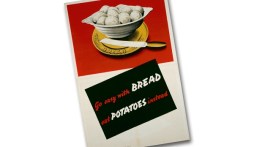
Not so long ago I stumbled into a little pop-up in Hoxton: a delightful tearoom hardly bigger than a walk-in wardrobe, all 1940s home-craft ‘boutique’ style. Nice table linen, a ‘make-do-and-mend’ tea service with artfully mix-matched china, victoria sponge slices, and the strains of some popular bygone tune in the background. I’m not sure I

The making of a legend

More from Books

For one week in July 2010, the aspiring spree killer Raoul Moat was the only news. ‘Aspiring’ because he didn’t actually achieve his violent ambitions: by the time he died, he’d only managed to shoot three people (four if you include himself) and murder one (two if you count PC David Rathband, who was blinded

Humboldt’s gift

More from Books

The Prussian naturalist Alexander von Humboldt was once the most famous man in Europe bar Napoleon. And if you judge a man by his friends (as you should), how about Goethe, Schiller, Simon Bolivar, Cuvier, Lamarck, Laplace, Guy-Lussac and Jefferson? And that is only the start of the supper list. So what happened? Why is

Down and out in Park Lane and Plaistow

More from Books

‘I was born in London,’ Ben Judah tells us early in this vivid portrait of Britain’s capital, ‘but I no longer recognise the city.’ London has become a building site where dirty money is converted into gleaming blocks of bullion. The smartest parts of town are lined with empty houses owned by foreign plutocrats, and

Odi et amo

More from Books

Reading Daisy Dunn’s ambitious first book, a biography of the salty (in more ways than one) Roman poet Catullus, it struck me how lucky we are: only one copy of his collection of poems survived the ages, hidden under a bushel in Verona. Catullus might have gone the way of his contemporaries, such as Cinna,

Roaming in the gloaming

More from Books

One of the epigraphs to Peter Davidson’s nocturne on Europe’s arts of twilight is from Hegel: ‘The owl of Minerva begins to fly only at dusk’, an image of philosophy as posthumous, able to explain things only after we have experienced them. Or an image of dusk as threshold, the blue hour when light transforms

No end to the Final Solution

More from Books

David Cesarani, Research Professor of History at Royal Holloway University of London, died at the age of 58 on 25 October 2015. The book now appears without its author, a kind of huge mausoleum for an astonishing enterprise. Cesarani wants to change our view of the Holocaust and to close the yawning gap between popular

‘Crazy mixed-up Yid’

More from Books

Even David Litvinoff’s surname was a concoction. It was really Levy. Wanting something ‘more romantic’, he appropriated that of his mother’s first husband. So his elder half-brother, the respected writer Emanuel Litvinoff, informed Keiron Pim, adding that David was ‘an unfortunate character altogether’, prone to ‘inventing roles for himself that didn’t have any reality’. Yet

Tawdry tales of Tinseltown

Lead book review

This is a very odd book that Jean Stein has compiled — about the evanescent splendour of Los Angeles, which only occasionally touches on the film industry. Its setting’s most memorable landmark appears to be the name of one of its districts, written in enormous white letters on a hillside. That, and various opulent houses,

A legend in her own time

More from Books

I usually dread the final 15 minutes of a celebrity interview: the awkward section during which the writer must steer the conversation away from the polite, mutually enjoyable discussion of whatever the star is currently promoting toward the juicy personal details that your readers really want to know and your subject really (and justifiably) wants

Recent crime fiction | 28 January 2016

More from Books

We fully expect con artists to be caught in a sting themselves, but even with that thought constantly in mind I was still hoodwinked by Nicholas Searle’s The Good Liar (Viking, £12.99, pp. 288). The surprises start on page one: Roy Courtnay is in his nineties, with a longstanding pedigree of swindles behind him, and

Very much like a whale

More from Books

In principle, freediving is simple and perilous: divers take one breath, then dive as deep as they can, with no tanks or air, and come back up again. Watch a video of this — or Luc Besson’s 1988 film The Big Blue — and you have to hold your own breath, because it is beautiful,

Tricks of the trade | 28 January 2016

More from Books

This book, the blurb warns us, was written by ‘an established voice in popular psychology, with a regular column on the New Yorker online’. Maria Konnikova is also the ‘bestselling author of Mastermind’, a book which explains how we can train our minds to see the world as Sherlock Holmes saw it. The Confidence Game

Rewriting the merchant’s tale

More from Books

Howard Jacobson’s novelistic riff on The Merchant of Venice for the Hogarth Shakespeare project turns, unsurprisingly, on what makes some people (in Jonathan Miller’s memorable self-describing formulation) Jew-ish. Is it the gentile’s anti-Semitism, with its manifestations varying from relatively polite social snubs to persecutions down the centuries, culminating in the Holocaust, that defines Jew-ishness? Or

A country in crisis

More from Books

Jack Shenker is a throwback to an older, more romantic age when foreign correspondents were angry, partisan and half-crazed with frustration at the stupidity of the powerful. He made his name in Egypt, arriving with nothing more than a desire to be a reporter. As the revolution began, he moved to Tahrir Square and started

Poverty + anarchy + drug dollars = Mexico

More from Books

You may not have heard of the Maras. Or Barrio 18. Or the Jalisco New Generation Cartel, or the Zatas, or the Knights Templar, or the Shower Posse. But you should have heard about them, says Ioan Grillo in his new book about transnational drug and crime gangs, because any one of them may have

Not so happy valley

More from Books

Simon Barnes opens with a presumably true idea, that we are all in search of our own versions of paradise — a special place presented here as the sacred ‘combe’ of the title, being a word with Celtic origins that describes a steep hollow or hidden valley. These paradises might be real or imagined, exist

Autocracy tempered by strangulation

Lead book review

‘It was hard to be a tsar,’ Simon Sebag Montefiore writes in his opening sentence, and what follows fully bears this out. In his thought-provoking introduction, he stresses the unique nature of Russian autocracy and its perverse contradictions; the tsar was absolute ruler, yet he was bound by a tangle of restrictions. His subjects were

The medium is the message

More from Books

Molly Crabapple is an American artist and Drawing Blood is the story of her life. That life has only been going on since 1983, but despite its author’s relative youth Drawing Blood is a valuable political document. It tells of a life lived in struggle — against the prospect of going dead broke, against gross

Girl about town

More from Books

The old ditty got it wrong: it should have been ‘Maybe it’s because I’m not a Londoner that I love London so’. The capital’s biggest fans, I tend to find, are those who weren’t born there, and Emily Chappell is yet another example. Originally from Wales, she has written more than just an engaging account

Drying out in the Orkneys

More from Books

‘If I were to go mad,’ Amy Liptrot writes in her memoir of alcoholism and the Orkneys, ‘It would come as no surprise at all.’ One surprise of this book is its sanity, which is remarkable, given Liptrot’s beginnings. We open, unforgettably, with her parents passing each other on an island runway. Her mother is

Age cannot wither her

More from Books

There’s something reassuring about 98-year-old Diana Athill. She’s stately and well-ordered, like the gardens at Ditchingham Hall in Norfolk, her grandparents’ Georgian house where she spent long periods of her childhood. Yes, she really is of that class, though she doesn’t trumpet it (she was presented at court in the brief reign of King Edward

Tracking the super cats

More from Books

Of all charismatic animals, tigers are surely the most filmed, televised, documented, noisily cherished and, paradoxically, the most persecuted on Earth. It is also probably the one wild mammal more people wish to see than any other. In Asia, images of striped cats are indivisible from the modern tourist industries of several countries, especially India

Revolution now and then

More from Books

Maxim Gorky was trumpeted as ‘the great proletarian writer’ by Soviet critics, who considered his novel The Mother one of the most significant books of the 20th century. Completed in 1906, after Gorky had already been recognised internationally, it is based on the events of 1902, when the workers of Sormovo, a factory settlement near

A pitiful wreck

More from Books

When I look at the black-and-white photograph of Julian Barnes on the flap of his latest book, the voice of Kenneth Clark floats up from memories of the black-and-white television of my childhood: ‘He is smiling — the smile of reason.’ Supremely ‘civilised’, thin-lipped, faintly superior, temperamentally given to aphorism, it is no surprise to