Spectator Life

Spectator Life

An intelligent mix of culture, style, travel, food and property, as well as where to go and what to see.

Give Baltimore a chance

You saw Homicide: Life on the Street, right? You know, that gritty TV police drama set in Baltimore. What? Ah, no, you’re thinking of The Wire, that other gritty TV police drama set in Baltimore, the one with Idris Elba and Dominic West. Homicide predates The Wire and was filmed largely around Fells Point and along Baltimore’s historic waterfront. The former City Recreation Pier, which stood in for the police department, is now a swanky hotel, the Sagamore Pendry Baltimore, in whose comfortable embrace I have just wallowed. Baltimore doesn’t have a great reputation. Whenever I tell American friends I’ve been there they affect horror and ask what on earth I was thinking. Couldn’t I have gone to Boston, New Orleans, New York, Washington D.C.


The secret of Hungary’s genius

Hungary, the country of my birth, takes a lot of flak these days – and with good reason. How nauseating that the nation which suffered Soviet oppression for nearly half a century – and whose 1956 Revolution was so savagely crushed by the Soviet army – now cosies up to a Russian president who reveres Stalin and bemoans the dissolution of the USSR. The maverick Hungarian prime minister, Viktor Orbán, once his country’s outspoken champion of freedom, is emphatically not on the side of Ukraine in its existential fight against Vladimir Putin’s invasion.

The children of Hitler’s henchmen

As a historian who studies and writes about Nazi Germany, I have occasionally met the descendants of the criminals who ruled the Third Reich. I’ve always wondered how they can possibly bear the burden of carrying the genes that wrought so much evil. The answer is curious and reminds me of the saying of German philosopher Immanuel Kant that nothing straight will ever be made from the crooked timber of humanity. The Daily Telegraph carried an interview this week with one such unwitting victim: a 49-year-old psychotherapist named Henrik Lenkeit, who lives in Spain and recently discovered by chance that he is the grandson of one of the most notorious Nazis of them all: SS overlord and Holocaust architect Heinrich Himmler.

How to endure November

Grey rain slants down over the brown heather of the Lochaber hills, falling relentlessly into Loch Linnhe, and drenching the Caledonian Sleeper idling beneath my window on the platform at Fort William. November is technically still autumn, but already the long evenings of British Summer Time seem to belong to a different world. Pleasant as it is to wrap up in a coat, to feel invigorated by stepping out into a chill, or delighted by returning to the warmth within, the dying year is no cause for celebration. Christmas, the adopted pagan festival, is like Halloween – not put there because the days are joyous, but so we can thumb our nose at the downcast season. Defiance is the right attitude.

Three bets for the weekend and beyond

The results of last weekend’s races provided a reminder that it is impossible to know which horses are fit enough to do themselves justice on their first runs of the season. Several trainers sent their horses to Cheltenham thinking they would run well on their seasonal debut only to be disappointed. Three horses tipped in this column a week ago were among those to under-perform first time out. So this weekend I am going to be more cautious. One horse that has already had a run this season, and a winning one at that, is INDEMNITY in the 12-runner Lavazza Handicap Hurdle (Ascot, tomorrow 3.10 p.m.). This improving five-year-old gelding is a consistent performer and he is now on a hat-trick.

Trick or treating is vital life experience

I first got a door slammed in my face in 1987. Looking back, I can’t help but feel that moment, at the age of eight, was my first bit of training as a journalist. I wasn’t seeking a scoop back then, of course. For eight-year-olds a scoop is something you get two of with your cornet from the ice cream van. Rather I was after a Chomp bar or a bag of Bensons crisps, and all the while hoping beyond hope that I (and my accompanying gaggle of friends) wouldn’t be palmed off with a satsuma. Such was the freewheeling Friedman-esque world of trick or treating – a custom that has dwindled into what, these days, is considered by many parents to be either rude, dangerous, immoral, paganistic or a combination of all four. The ritual clings on in diminished form.

The salad dressing wars

I was recently in a café that promoted its salads as being served with ‘low-fat dressing’. I couldn’t possibly imagine what that might be: no olive oil? That stuff you spray on the pan when on some god-awful calorie-controlled diet? It turned out to be bottled – bought in from a supermarket – and contained lots of yoghurt, vegetable oil and dried herbs. I ordered a ham sandwich. The very basis of any salad dressing is a good-quality, fruity, preferably first-press or at least virgin olive oil. All the other ingredients are up for grabs, and can even be the subject of fairly robust arguments – at least in my house. My partner Harriet was first taught how to dress a salad by her father, during a holiday in Italy.

How to drink sake

There is a fellow called Anthony Newman who is fascinated by drink, as a consumer, a producer and an intellectual. That said, he spent some years supplying Australians with craft beer, which does not sound very intellectual. But he insists he paid for his own passage and was able to return without a ticket of leave. While living in Oz he visited Japan, and found himself captivated by many aspects – not least sake, the rice wine which is its national drink. Nearly 90 per cent of sake is consumed locally. Anthony decided the potential export market was enormous. I have heard it persuasively argued that Japan is the most complex of all the world’s great countries.

Cullen skink is comfort in a bowl

They say not to judge a book by its cover – but what about judging a recipe by its name? Some sound like a disease or worse. Spotted dick, toad in the hole, lady’s fingers, Dutch baby, I’m looking at all of you. Cullen skink is one that has been accused of having an off-putting name. But in its defence, Cullen skink is descriptive. There’s a suggestion that the word ‘skink’ comes from an Old German word for ‘beer’ or ‘essence’, but given that Cullen skink is a creamy, thick soup, with no beer constituent and no obvious German connection, this seems an unlikely origin.

My father married a murderer

I have a distant cousin in Australia whom I have never met. This lady – her name is Moya – has a hobby researching our family’s history, and our paths first crossed virtually via Ancestry.com. This week, Moya told me an astonishing story she had uncovered about my late father’s second marriage to a dying woman convicted of murdering her own, beloved daughter. It is a truly tragic tale of Dickensian pathos and misery, but one that amazingly my dad never mentioned to me. I only learned the brutal facts from Moya thanks to the wonders of the internet. My father was in his sixties when I was born in the 1950s and died when I was 19.

The tragedy of Starmer’s breakfast

Sometimes a small detail in a news story tells you more than a months-long investigation splashed across the front page. ‘Starmer appears to realise that he needs to do more to connect with his party and has begun a new charm offensive,’ the Sunday Times reported. Some MPs have been invited for breakfast and ‘No. 10 has apparently purchased a new toaster to cater for the demand.’ There we have it, ladies and gentlemen. Keir Starmer’s secret weapon in his war against British decline: a few slices of Hovis and an awkward offer of jam. ‘Aerrr, are you planning to, um, support our Borders Bill? Oh, so sorry, we’ve got some Utterly Butterly somewhere. Morgan, would you mind looking in the kitchen?

The sanctimony of Steve Coogan

About 20 years ago, the actor and comedian Steve Coogan did a tour called, with typical self-deprecation, Steve Coogan as Alan Partridge and Other Less Successful Characters. I saw the show and it was, as you’d expect from Coogan, amusing and cleverly performed. Yet it ended strangely; Coogan sang a self-lacerating song called ‘Everyone’s a Bit of a Cunt Sometimes’. It was oddly bitter and angry, but clearly Coogan stood by its sentiments, because he attempted to reprise the number in a dream sequence from his restaurant-review comedy The Trip several years later. The song, given full production values, was, perhaps wisely, deleted from the programme’s final cut. (Although you can still find it on YouTube.

Daylight savings is anti-feminist

It is, officially, ‘cosy’ season. My social-media feeds have suddenly become very homely and wholesome: full of pictures of chunky knitwear, crisp leaves, soft blankets, flickering candles and crackling fires. I want to embrace this romanticisation of winter, I really do. I want to enjoy this slower routine of fluffy pyjamas, Christmas movies and aesthetically pleasing pumpkin lattes. I want to say that I love coming home from work, drawing the curtains and snuggling on the sofa with a glass of red and a paperback. I want to laugh that it doesn’t matter if I don’t see direct sunlight for the next four months because I can wear cashmere socks or buy new fragranced bubble bath. The problem is that I have a toddler.

Films aren’t art

My late son took film seriously, a taste I was delighted to see him develop, and regret not being able to see him grow out of. When he was little we watched the Pixar films, and they gave us great joy. The first 20 minutes of Up and the last 20 of Toy Story 3 have been called the only perfect bits of cinema, a formulation with a high quotient of truth. After our son’s death, my wife commented that she had never before seen me cry. I had always wondered if she’d spotted my tears at the end of Coco, or those I shed during Guardians of the Galaxy 3, during a Sicilian family holiday, but I don’t cry easily. We watched Coco, which is about remembering the dead, shortly after my mother’s funeral. In Sicily, I wonder if it was a reaction to being uncomplicatedly happy.

A love letter to Ronda

‘I have searched everywhere for the “city of dreams” and found it here, in Ronda,’ Rilke wrote. Hemingway was more practical: ‘[Ronda] is where you should go if you ever go to Spain on a honeymoon or if you ever bolt with anyone. The entire town and as far as you can see in any direction is romantic background…’ Sixty miles inland from Málaga, encircled by mountains, Ronda stands on a plateau cut by a steep, narrow gorge some two hundred yards deep. Eroded over a period of five million years by the river that runs through it, this ravine divides the town in two and ends in a sheer cliff drop to the plain below. Cacti and fig trees grow out of its sides; birds wheel and swoop down the chasm to their nests on the rock face.

The infantilising cult of comfort

I thought that maybe being in a wheelchair would stop my louche lunching ways, but somewhat to my own surprise (though not that of my mates, I’d wager), this isn’t the case. ‘You push – I’ll pay!’ has become my battle cry. But as I am wheeled about at this time of year, a pucker of irritation repeatedly flickers across my features. Pumpkin this, pumpkin that – all leading inevitably to the monstrosity that is pumpkin spiced latte. The final straw in my deciding that pumpkin spiced lattes are utterly, well, deplorable was when the ghastly Hillary Clinton described herself as a fan – ‘until I saw how many calories there are in them’. Soz, Hills, but it’ll take more than losing a bit of weight to keep a dog like yours on the porch.

Admit it: ‘Bohemian Rhapsody’ is terrible

Queen’s ascendency began at around the same time as the first residents were moving their Axminster carpets and Party Sevens into Tower Hamlets’ Robin Hood Gardens, the Smithson-designed Brutalist estate that would go on to become a typical example of how post-war ‘streets in the sky’ concepts were almost always doomed to fail. Five decades on, just one small section of Robin Hood Gardens has survived for posterity. It’s been acquired by the Victoria and Albert Museum to, presumably, warn future generations of what can happen to a neighbourhood when you combine too much cheap concrete with not enough public consultation. Thanks to Freddie Mercury and co., one solitary example of the very worst excesses of overblown 1970s musical bad ideas persists, too.

The rise of ridiculous doctorates

To a certain extent, all doctoral theses are a bit ridiculous – and therein lies their genius. I am allowed to say this because I spent four years of my life researching French Catholicism’s engagement with the first world war for my doctoral thesis, which I nattily entitled Calvary or Catastrophe? Back then, I was a baby academic hoping for critical acclaim and my own office. I’ve long since been disabused of this dream and have left academia’s dreaming spires behind to become a journalist – a profession that offers me neither my own office nor critical acclaim, but a great deal of online abuse. And while I don’t expect anyone ever to read my PhD (although you can DM me any time for a copy), I believe that it had some slim critical justification.

The fantasy of fantasy football

Football has a problem: there isn’t enough football. The world’s most popular thing is too popular. Fans seem to find it ludicrous that our entertainment is constrained by flesh and blood, that we can’t – like with everything else – just watch live football when we feel like it. It started to get like this when Sky bought the Premier League rights and set up the Sky Sports channels. They had realised people really like this stuff. People like it enough for you to air football content endlessly. Throughout the 2000s came Premier League Years, where people could watch football that happened ten years ago.

Penworthy punters celebrate massive win

The time seems right to move from the flat to the jumps for tipping purposes. Qipco-sponsored Champions Day at Ascot is not the end of the flat season and the first day of racing at Cheltenham today does not mark the start of the National Hunt season but there is no more appropriate moment to switch. There have been highs and lows on the betting front this flat season but overall the former have outweighed the latter. In fact, it has been my most successful season yet as a tipster under the Penworthy pseudonym, with a profit of more than 84 points. It was certainly satisfying to tip the winners of the Derby, Ascot Gold Cup and the Arc, all at decent prices, plus to land two other Royal Ascot winners at 25-1 and 16-1.

All hail the driverless taxi

No one is quite sure who invented the phrase ‘the shock of the new’. It may have been the American writer Harold Rosenberg back in the 1960s. Alternatively, it may have been the late, great Australian intellectual Robert Hughes, who used it as a title for a TV series. Whatever the answer, the phrase aptly captures a very human moment: when you encounter something so strangely and profoundly innovative you experience a visceral, emotional jolt. Those two thinkers applied the phrase to modern art, to the first jarring encounter with impressionism, Cubism, abstract expressionism. But it can also be applied, perhaps more appositely, to the first encounter with remarkable technology. Technology, in the famous vision of Arthur C.

The lettuce test of civilisation

Our economy is stagnating, our borders and our welfare state flung open to those who despise us. We once threw railway lines around the world and now struggle to build one to Birmingham. Free speech is under threat, and it’s almost impossible to get hold of a decent lettuce. I do not mean to be too gloomy. I hate those who think themselves virtuous for always looking on the glum side of life. I accept there is much to celebrate. We live longer and healthier lives. Children rarely die. People can read and books are cheap. In the veg aisle of the little Sainsbury’s Local on the new housing estate you find tarragon and pak choi and sourdough, and tomatoes raised somewhere better than Holland.

The sheer joy of nighties

One of the many problems with the internet is that it’s increasingly difficult to know if something has become ubiquitous overnight, or if your algorithm is just serving you the sort of slop it thinks you’re stupid enough to buy. Case in point: nightdresses. Previously the preserve of pioneer women, convalescents and Victorian ghost children, nightdresses suddenly seem to be everywhere. I can’t open my phone without seeing a glamorous woman going about her morning wearing a beautiful and expensive nightgown. ‘Retailers have informed me that sales of nightdresses are higher than ever at present,’ Hannah Banks-Walker, a commissioning editor at Harper’s Bazaar, tells me. Delicious news. I am not alone.

Would you spend £30 on a Charlie Bigham’s ready meal?

Ready meals: the after-work time-saver, the dinner-party cheat – or a poor imitation of proper, cooked food? The proto-ready meal – an entire meal that can be cooked in its packaging, with little or no preparation – was invented in 1945 and called the Strato-Plate, but used only in aviation and military settings. The first mainstream ready meal was the TV dinner. The story goes that in 1953, an American company, Swanson, who produced frozen, oven-ready poultry and pies, had 260 tons of turkey left over after lacklustre Thanksgiving sales.

Almost too interesting for Notting Hill: Speedboat Bar reviewed

When you are old enough, you can measure your life in restaurants. I remember, for instance, when the Electric Diner on Portobello Road (named for a long ago and far away war) was a place to eat brunch, a meal that shouldn’t exist and doesn’t really, though if it belongs anywhere it belongs here. It was fine but glib – Notting Hill is either a place with no imagination or too much of it, I’m still not sure. How it can tolerate the truth of Grenfell Tower across the way I don’t know either, but I don’t live here. The diner is gone, replaced by a Thai restaurant that is too interesting for Notting Hill The diner is gone, replaced by a Thai restaurant – the Speedboat Bar, twin to a branch in Soho – that is almost too interesting for Notting Hill.

From South Africa to Saracens, two rugby stars are born

Moments when a 24-carat superstar bursts on the scene are few and far between, but always something to cherish. And we rugby fans have had two in the past few weeks. First came the dazzling performance by Sacha Feinberg-Mngomezulu, the Springbok No 10 who tore apart a powerful Argentina side in Durban in September, scoring a record 37 points with three tries, eight conversions and two penalties. With his effortless running and velvet touches all over the field, he suddenly gives the traditional raw power of the Boks an explosive new dimension. He is compellingly watchable, only 23, and will soon be as much of a benchmark of rugby excellence as the French scrum-half Antoine Dupont.

Why are American sports so boring?

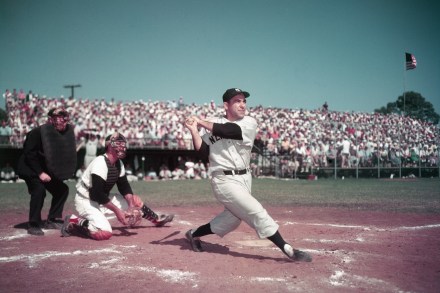
I’m in an urban park surrounded by fast-food outlets: Taco Bell, the Golden Arches, KFC, Starbucks. The sound system is blasting out raucous rap music; all the men are in blingy sportswear, baseball caps, Nike shoes. I can see big shiny billboards advertising iPhones, Pepsi Max or the latest Marvel movies. In short, I could be almost anywhere in the world – Australia, Brazil, Germany – such is the power of American exports: soft and hard, cultural and consumerist, Coke to Tesla to Friends. And yet I know I’m in America, specifically in the SoFi Stadium, Los Angeles, because I’m about to encounter the one thing America has, peculiarly, not been able to export, not with any great success: American sport. And I want to work out why.

Down with freshers

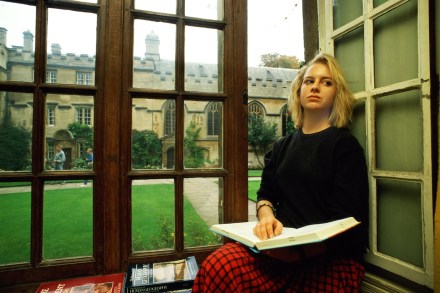
Now that the autumn term is well underway at universities and freshers’ week has removed its leering, spotty face from the calendar for another year, may I talk about how ghastly it is? Impressionable young people who believe they are completely mature adults but still have another decade or so of brain remodelling to go arrive at an unfamiliar place for the first time. Once any relatives who lugged their bulging suitcases packed with stuff to make them seem grown-up have disgorged the final single sock from the family car and driven off, hiding their tears, the young person is on their own. I remember being 19 and arriving at Edinburgh University. I took the train up from London and hauled my suitcase to the taxi line at Waverley.

Why piano competitions strike a controversial note

The USA’s Eric Lu has beaten more than 600 other pianists to win the 19th International Chopin Piano Competition. Held every five years in Warsaw around the anniversary of the Polish composer’s death on 17 October, this is one of several piano tournaments that often launch major careers, along with Moscow’s Tchaikovsky Competition, the Van Cliburn in Texas and the Leeds International. Unlike any of those, however, the Chopin competition requires contestants to perform the music of just one composer. Lu, 27, didn’t exactly need this win. He took first prize at the Leeds International in 2018 and has already released two records on the Warner Classics label. After his victory in Warsaw, he will take home a cash prize of €60,000 (£52,000).