Gus Carter

Gus Carter

Gus Carter is the deputy editor of The Spectator’s US edition.

How did Hollywood fall so far?

From our UK edition

Gus Carter is joined by Peachy Keenan to talk about the end of Hollywood as we know it. They discuss how the traditional Hollywood business model is faltering, overtaken by the rise of streaming giants. They also highlight how these platforms, initially seen as the new frontier for film, are now grappling with their own economic challenges. Gus and Peachy also talk about how these challenging times are offering opportunity to new upstarts and directors looking to make their mark on the film industry. Learn how to earn yield on gold, paid in gold, at Monetary-Metals.
How did Hollywood fall so far?

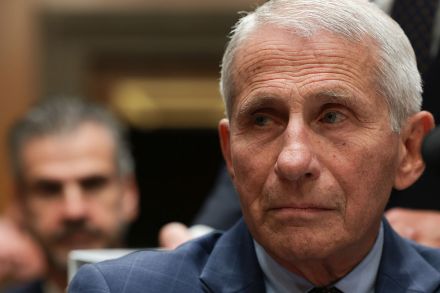
Dr. Fauci’s damning silence

Dr. Fauci won’t see you now. The man who served as America’s top medical adviser during Covid had to be subpoenaed to appear before the Senate this week. Wanted to hear his expert opinion? Too bad. Almost every question received the same response. "On the advice of counsel, I respectfully decline to answer based upon my rights under the Fifth Amendment of the Constitution." Anthony Fauci’s silence is the perfect coda to the madness of the Covid era. We were told, again and again, to "trust the science." But the science establishment didn’t trust us. Information was withheld, facts were twisted and opinions suppressed. Fauci was given a sweeping presidential pardon by Joe Biden. Yet even now, years later and immune from consequences, Dr. Fauci doesn’t want to talk.

Is China winning the AI race now?

Is China winning the AI race now?

Gus Carter is joined by Geoffrey Cain to speak about the ongoing developments in Chinese AI, and how it stacks up to its American rivals. Gus and Geoffrey talk about the emergence of Kimi K3, and how Chinese models will become inherently more competitive to global audiences, not just those the United States. They also discuss the OpenAI model that went rogue, and how other US models refused to undertake research to prevent the same from happening again. Learn how to earn yield on gold, paid in gold, at Monetary-Metals.

The trouble with Israel’s Argentina taunts

From our UK edition

Israel armed Argentina during the Falklands. That is a fact. Between the 2 April and 14 June 1982, Israel sold Argentina air-to-air missiles, anti-personnel mines, anti-tank weapons, replacement parts for jets, radar and communications equipment and fuel. Nesher fighter jets, supplied by Israel, were part of the air attack that destroyed the RFA Sir Galahad in Bluff Cove. Fifty-six British sailors and soldiers died in that raid. So when Israel’s foreign minister Gideon Sa’ar taunted England for our 2-1 World Cup defeat, that was a continuation of traditional Israeli foreign policy. ‘How does the song go?’ Sa’ar posted. ‘It’s coming home. Yes it is. It’s coming home to Argentina. Vamos Argentina!

Has Farage lost control? – and the battle for Britain’s pubs

From our UK edition

30 min listen

For this week’s Edition, Lara Prendergast is joined by The Spectator’s political editor Tim Shipman, deputy editor of the US edition Gus Carter and the Mail on Sunday’s restaurant critic Tom Parker Bowles. This week: Nigel Farage’s greatest gamble. After resigning as MP for Clacton to trigger a by-election, Farage has tried to turn questions over his finances into a referendum on the establishment. Tim explains why the move may already have backfired, with the main parties refusing to stand against him and leaving him to spend the summer ‘arguing with a bin’. But he also argues that Farage is returning to what he does best: insurgency, grievance and campaigning against the political class.

Has Farage lost control? – and the battle for Britain's pubs

Who really runs Manchester?

From our UK edition

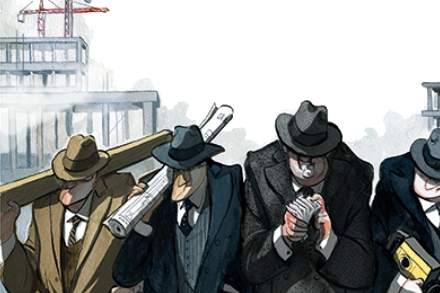
‘It’s basically a dictatorship,’ one insider tells me. If you want to build anything in Britain’s second city, you have to get permission from the so-called ‘Manchester mafia’. These are the officials who have overseen the city’s extraordinary redevelopment. The number of towers in Manchester has increased sevenfold since Andy Burnham became mayor in 2017. You might assume that Burnham is the boss of this mafia family. But you’d be wrong. ‘He just appears at the meetings and says, “Yes, yes, that’s fine”,’ explains a source. ‘His political involvement is minimal,’ confirms Andrew Teacher, a real estate adviser who’s worked in the city. ‘The ship was motoring along well before he arrived.’ The vast redevelopment had almost nothing to do with Burnham.

Elon Musk should buy Xbox. Yes, really

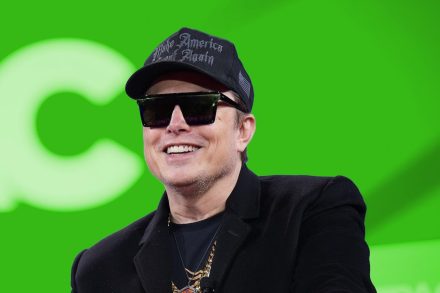
Elon Musk is hardly lacking for toys. He can spend the morning digging vast tunnels with Hyperloop, the afternoon launching rockets with SpaceX and spend the evening posting on his very own X social media network. Even so, there is one gadget that could still tempt Musk: Microsoft’s increasingly error-prone Xbox. It was reported this week that the Xbox division would be axing 3,200 jobs, the equivalent of a fifth of its workforce. The company is also selling four of its game development studios. Xbox has suffered from slim profit margins, spiraling hardware costs and sluggish growth for Xbox’s Game Pass subscription service. And Xbox fans have been outraged at leaks suggesting the company may remove the disc drive in its upcoming machine.

elon musk

Richard Madeley, Michael Simmons, Gus Carter & Arabella Byrne

From our UK edition

24 min listen

On this week’s Spectator Out Loud: Richard Madeley wonders if anyone in the media still drinks; Michael Simmons asks if the UK is ready for Andy Burnham’s first Budget; Gus Carter explains the Spectator’s role in the birth of America; and finally, Arabella Byrne provides her notes on coconut water. Produced and presented by Patrick Gibbons.

Richard Madeley, Michael Simmons, Gus Carter & Arabella Byrne

The Spectator’s role in the birth of America

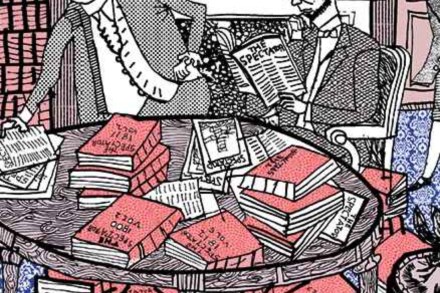
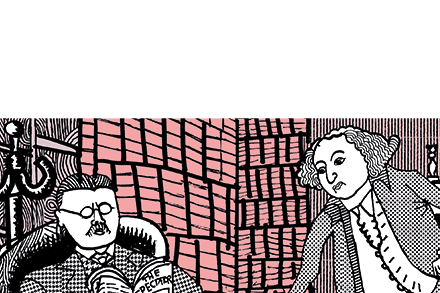
The Spectator was there at the founding of America. George Washington had six copies of the original 18th-century Spectator at his Mount Vernon estate and read them often. He shared with Joseph Addison, The Spectator’s co-publisher, an interest in how to educate ideal citizens: men and women with wit and grit. Young Washington read The Spectator in the hope of bettering himself, too. Both of his older half-brothers had been educated in England and he wished also for the manners and polish of an English gentleman. For the pioneering, self-improving men who would go on to create an independent America, the 18th-century Spectator was both an education and a guide. ‘I bought it, read it over and over, and was much delighted with it,’ wrote Benjamin Franklin in his autobiography.

The treatment of Henry Nowak’s killer was all about race

‘How can you say they’re not racist?’ a young Asian woman shouted from the public gallery. Vickrum Digwa had just been led down to the cells to serve a life sentence and an elderly man in a turban was calling his lawyer ‘a fucking bean head’. The tatty pinewood interior of Southampton Crown Court was descending, once again, into allegations of racism.  Vickrum Digwa will serve at least 21 years in prison for the murder of Henry Nowak. Last December, Digwa repeatedly stabbed the 18-year-old student with a ceremonial Sikh dagger. He then filmed Henry as he bled out, goading him.  When police arrived, Digwa claimed that Henry had been racially abusive and had knocked his turban off.

Trump falls back on ‘you’re fired!’ as midterms loom

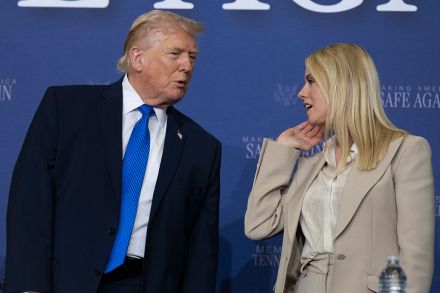
Pam Bondi’s departure as attorney general has prompted the usual Kremlinologist speculation. One theory has it that Donald Trump was furious that she may have warned Democrat Eric Swalwell about a planned FBI release of documents detailing his past relationship with a Chinese spy. Bondi’s replacement, Todd Blanche, dismissed these claims as false. Another theory is that the President had finally had enough of her errors over the handling of the Epstein files, given Bondi was recently subpoenaed in a bipartisan effort by the House. And Trump is widely reported to be frustrated at her failure to indict his archenemies, former FBI director James Comey and New York Attorney General Letitia James. Those who are sympathetic to MAGA will have their own reasons for being unhappy with Bondi.

fired

The Boring Twenties: good British fun is being strangled

From our UK edition

A century ago, Britain had reason to despair. A generation had been lost to war, influenza was killing those who survived and revolution was sweeping across Europe. A strange new movement called the Blackshirts was marching on Rome just as Russia’s civil war was ending in Soviet victory. Yet Britons were out having fun. The original Bright Young People cavorted across the country, holding scandalous parties. ‘Please wear a bathing suit and bring a bath towel and a bottle,’ read one invitation. The Metropolitan Police filled Bow Street’s cells with hundreds of nightclub revellers, mainly girls in fancy dress. Dancing, according to one clergyman, was a ‘very grave disease which is infecting the country’.

Inside the world of Reform’s mystery money man

From our UK edition

Nigel Farage keeps eclectic company. Reform is not a party of slick spin doctors or career politicians. Instead, it is staffed by people like George Cottrell, the minor aristocrat and former convict, who acts as Farage’s fixer. He is, according to Farage, ‘like a son to me’. I’m told that Cottrell is often seen in the Reform offices in Millbank helping the party, although he is still described by party staff as a simple ‘unpaid volunteer’.  Cottrell, 32, has always had an air of dodginess about him. In 2016 he spent eight months in an American maximum security prison for wire fraud relating to an international money laundering conspiracy. He plans to publish a book called How to Launder Money early next year (the man has a sense of humour).

I’m the heir to Manhattan

From our UK edition

I’m owed around $680 billion. Some 77 acres of downtown Manhattan belong to the Carter family, according to a letter written in 1894. Wall Street, Broadway and One World Trade Center – they all sit on a plot that is, by rights, mine. Yet here I am, grumbling about what ought to be in the pages of The Spectator. What went wrong? The story goes something like this. Shortly before independence, a pirate called Robert Edwards was licensed by the British to hunt down Spanish ships. He was so successful that the Crown gave him a slice of Manhattan as a reward. Edwards leased the land for 99 years to two brothers and subsequently died, lost at sea. That lease expired in 1877 and was supposed to be apportioned off to Edwards’s heirs. But that never happened.

John Power, Madeline Grant, Ysenda Maxtone-Graham, Calvin Po & Gus Carter

From our UK edition

33 min listen

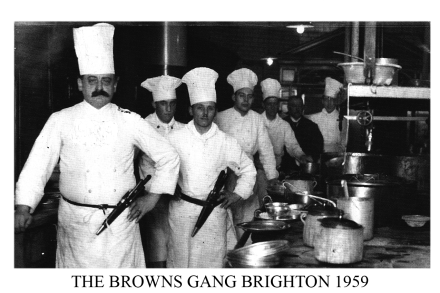
On this week’s Spectator Out Loud: John Power examines the rise in drug abuse and homelessness on British streets; Madeline Grant explains the allure of Hollywood radical Sydney Sweeney; Ysenda Maxtone Graham laments the rise of the on-the-day party flake; Calvin Po warns of a war on Britain’s historic architecture; and Gus Carter reads his Notes on the brasserie chain Browns.

How Browns lost the battle of the brasseries

From our UK edition

Last month, the founder of the Browns restaurant chain was charged with killing his mother. Shocking news, but it feels somehow appropriate. Browns is the traditional lunch spot for families looking to feed their student child, the place where 2.2s are revealed and doomed university girlfriends introduced. Many parents have found themselves spending hundreds on lunch only to be told their far greater investment has been wasted on dreams of becoming a club promoter. Steak frites, please, with a side order of murderous intent. Browns began in Brighton, but only really got going when it spread to Oxford and Cambridge in the 1980s. Bristol got one in the early 1990s, decking out a neo-Byzantine library next to the Wills Memorial Building.

The tragedy of Starmer’s breakfast

From our UK edition

Sometimes a small detail in a news story tells you more than a months-long investigation splashed across the front page. ‘Starmer appears to realise that he needs to do more to connect with his party and has begun a new charm offensive,’ the Sunday Times reported. Some MPs have been invited for breakfast and ‘No. 10 has apparently purchased a new toaster to cater for the demand.’ There we have it, ladies and gentlemen. Keir Starmer’s secret weapon in his war against British decline: a few slices of Hovis and an awkward offer of jam. ‘Aerrr, are you planning to, um, support our Borders Bill? Oh, so sorry, we’ve got some Utterly Butterly somewhere. Morgan, would you mind looking in the kitchen?

Very pretty and pretty gruesome: Ballad of a Small Player reviewed

From our UK edition

Ballad of a Small Player opens with Lord Doyle, played by Colin Farrell, hiding from security in his trashed casino suite in Macau. After they’re gone, he slips into the corridor and sees a trolley holding a bouquet of flowers and a knife. I kept my eyes on the knife, expecting the jittery, paranoid gambling addict to grab the weapon. Instead he places a white rose in his green velvet lapel. Director Edward Berger (All Quiet on the Western Front, Conclave) enjoys playing these games of misdirection. It feels appropriate. Casinos – with their chandeliers, gaudy frescoes and croupiers in black tie – are contradictory places. Opulence in these temples of luck is both a way of hiding the brutality of emptying bank accounts, and a show of deference to the gods of fortune.

Meet Britain’s new RoboCops

From our UK edition

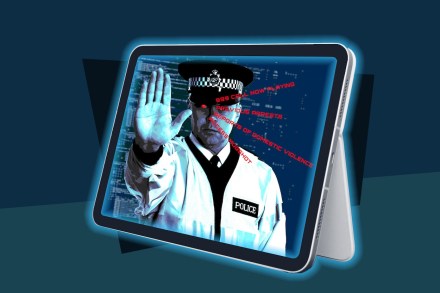
‘Small but mighty,’ is how Baroness Casey described Bedfordshire Police when she released her report on grooming gangs over the summer. She told MPs that most forces had failed to properly record child abuse. ‘A bloody disaster, frankly’. But Bedfordshire is different. They’re using artificial intelligence so police can spend more time hunting criminals.  ‘I didn’t know about Louise Casey’s comments until you contacted us,’ says Trevor Rodenhurst, the chief constable of the county. That’s unsurprising. Rodenhurst is a busy man. We meet in his office on the outskirts of Bedford, under an official portrait of the King; behind his computer is his ceremonial tipstaff and photographs of his children.

Welcome to the age of reluctant socialism

From our UK edition

There are no revolutionaries in Europe’s streets. No communists marching on parliament buildings. If anything, the continent has seen a rightward shift over the past decade. And yet Europe is becoming the home of a reluctant, greying socialism.  In France, the new Sébastien Lecornu regime is considering a wealth tax on entrepreneurs and the rich rather than slash its gargantuan social security bill. ‘France has not known a balanced budget for 51 years,’ said the former prime minister François Bayrou last week as he was voted into political oblivion. He, like many of his predecessors, had failed to reform the pension system. ‘You can get rid of the government, but you can’t get rid of reality.’ France’s MPs disagreed.