Spectator Life

Spectator Life

An intelligent mix of culture, style, travel, food and property, as well as where to go and what to see.

Sober October and the hangover of wellness

By now, you have probably given up on Sober October. I’ve never done it, mainly because I’ve been sober for 15 years. There’s two things, however, that I’m truly thankful for. The first is that I gave up drinking before Instagram stories became a widespread means of social documentary. The second is that I had been sober for four years by the time the absurd country-wide rehab that is Sober October was established as a charity initiative by Macmillan Cancer Research in 2014. But if I had still been drinking, I would never have thought it might apply to me. In fact, I would have relished the opportunity to loudly denigrate it, probably from a pub or while staggering around public places, as I often did. Such is the active alcoholic predicament. Dry January?


At last, a council is taking on SUV drivers

I’m not usually in favour of money-grasping councils, but I will make one exception: I’m afraid I am not on the side of the SUV drivers of Cardiff who are bleating about having to pay higher parking charges. Under new rules introduced by the Labour-run council – and likely to be copied elsewhere – drivers of vehicles which weigh more than 2.4 tonnes will have to pay extra for a parking permit, and drivers of cars weighing more than 3.6 tonnes will be refused parking permits altogether. How much extra has yet to be decided – the council has so far voted in favour of the principle of charging more – but the cost of a parking permit in Cardiff is currently just £35 a year. Compared with the cost of renting somewhere to live, that is a ludicrously good deal.

Let the Hard Rock Café die

‘Live fast, die old’ ran the strapline to the David Brent: Life On The Road film a decade ago. The movie itself was a textbook example of how unwise it is to attempt to cash in on the earlier (read: much funnier) successes of your career. Not that Ricky Gervais gives a damn while residing in his Hampstead mansion, of course. As increasingly pompous as his persona now is, I’ve finally reached a place where I know I’d rather have a night out with Brent than with his creator. There would be pathos. But there would at least be lager. Although I’m certain that a 2025 London ‘big’ night out with Slough’s finest former paper salesman would almost certainly take place at the Hard Rock Café.

How bad do things have to get before the police show up?

Earlier this year, I wrote here about the arsonist who'd left our neighbourhood looking post-apocalyptic. In the months that followed, the pyromaniac grew ever more reckless. Initially, he'd stuck to torching vehicles on the road, which was bad enough. But then he took it a step further. He set fire to a car on a driveway, which in turn set the house alight. The young family, who were asleep upstairs, escaped with their lives, but their home was destroyed. A collection was started, and we dropped in some cash. The organiser said that in 20 years in the area, he'd never seen things as bad as they were now. He'd installed CCTV after burglars had smashed their way through the bifold doors – now it might come in handy for identifying the pyro.

Gen Z’s obsession with ageing is making us look older

Turning 24 came with more than just cake and candles. Alongside the celebrations came a barrage of life-determining questions: when are you getting married? Where do you see yourself living? When will your job become a career? With a single step into my mid-twenties, I felt suddenly catapulted into a new world of adult expectations. And nothing captured this shift more than my birthday presents. I love my new pilates ring and am curious to see what collagen will do to my complexion, but there was something unnerving about receiving an entire haul of health-inspired gifts. When my friends arrived that evening to celebrate my ‘achievement’ of turning 24 – still unemployed and still at home – the wellness theme continued.

Banish the B-word!

The SS Californian deserves more than mere footnote status when it comes to its role in the story of the RMS Titanic. For that was the name of the ship that sent repeated messages to the crew of the doomed cruise liner, all of them warning of ice ahead. But the Titanic’s wireless operators weren’t interested – to the point where one employee dismissed the Californian’s communications with a reply that read: ‘Shut up, I’m busy.’ Of course, the Titanic wireless crew weren’t really busy at all. They were simply spending their time sending private telegrams on behalf of the first-class passengers on board. A few hours later, well, we all know what happened. But we haven’t yet gone public enough with the overuse of what was, back in 1912, an absolutely deadly adjective.

Confessions of an unmanly man

There’s a certain sort of chap who, when he hears you mention football, gets all earnest and starts talking about flat back fours. You try to stop him, attempting to steer the conversation away from tedious tactics and back on to the important stuff, such as the fact that there’s only one team in the top four English divisions whose name, when spelled in capital letters, contains no curves. He’ll look confused, disorientated, maybe even a little bit angry. Either he’ll persist with his talk of formations, or walk away completely. The correct reaction, of course, is to say: ‘Really? That’s brilliant. Let me try to work it out.’ This is when you know you’ve found a kindred spirit: an unmanly man.

Never put your pots and pans in the dishwasher

I don’t know how many teenagers are given a frying pan for their 18th birthday. Perhaps my friends managed to intuit my food-writing future, despite my party piece back then being an extremely tomato-heavy bolognaise. Twenty-five years on, having somehow survived university halls of residence and flatmates using – the horror – metal utensils in it, that beautifully thick-bottomed frying plan lives at the bottom of an excessively large pile of frying pans, well past its best. But even as the pile threatens to get taller than the cupboard, I can’t bear the idea of throwing it away. I’ve loved and lost too many pans to count. I had a little milk pan, perfect for a single portion of porridge, until the surface started flaking off.

Five bets for Champions Day at Ascot

As a general betting principle, the idea of ‘horses for courses’ is a good one. It is indisputable that some horses run better at one course than another. This may be because of the nature of the track – undulating or flat, sharp bends or straight – or simply the make-up of the ground itself, particularly if the difference is as striking as between grass and an all-weather artificial surface. I have no idea why DOCKLANDS runs so well at Ascot but there is no doubt he is several lengths better at the Berkshire track than anywhere else in the country. His form figures from seven runs at Ascot now reads: 1132221. Two of his three wins at Ascot came at the royal meeting, no less.

Celebrity sex isn’t what it used to be

Reading about the break-up of the 19-year marriage of Nicole Kidman and Keith Urban, I was interested in some comments from our old mate ‘A. Source’ about the possible cause. According to the Sun: ‘Keith put a brave face on Nicole’s raunchy screen roles and all the comments she’d make about her sexuality. But he didn’t react well when people teased him about Nicole getting it on with hunky younger guys, albeit only on camera, and it was a sensitive topic that became a real issue as time wore on.

Am I the last man in Europe still wearing a beret?

I first wore a beret for a fancy dress competition at my infant school summer fete in June 1975. My mother had entered me in the ‘topical’ category and tapped into the media furore around the nationwide referendum a week earlier over whether or not the UK should join what would become the EU – an issue that has managed to remain topical. My costume consisted of said beret (borrowed) paired with a stripy top, an extravagant moustache drawn on with charcoal from a burned cork and a string of onions hung around my neck. And I was pushing a bicycle.

The secrets of sachertorte

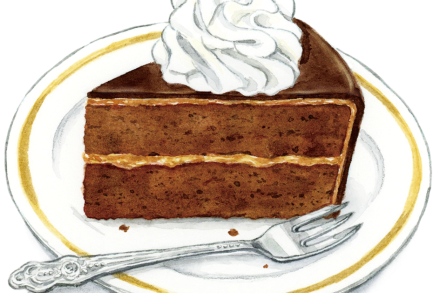
My theory is that sachertorte is a victim of its own success. Over the past 150 years, it has become an Austrian icon and, as such, can be found throughout Vienna. And that’s the problem: its ubiquity means that inferior versions abound. It has developed an unfortunate reputation for being dry, dull, tasteless – a pale imitation of a chocolate cake. It is often described – even by its supporters – as a ‘grown-up’ chocolate cake or an ‘elegant’ chocolate cake, but I feel like this does it a disservice. Both feel a little like euphemisms for ‘not that nice’, but this couldn’t be further from the truth.

A sip of Israeli history

We were drinking Israeli wine as the talk ranged from frivolity to seriousness: from Donald Trump to the tragic paradoxes of the human condition. Some would claim we were discussing the same topic, yet this may not be the time to disrespect the US President. I once described Ariel Sharon as a bulldozer with a Ferrari engine. It was one of the many tragedies to have afflicted Israel/Palestine that just when he had decided to bulldoze for peace, he should have been stricken with a massive stroke. One reason I love being in Israel is that one is never more than 50 yards from an argument Now a new and mighty piece of earth-moving equipment is dominating the landscape.

Real British values

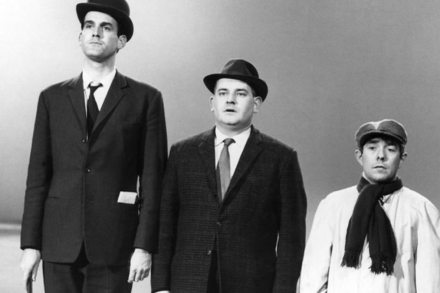
An upper-middle-class former banker friend recently attended a Reform UK selection meeting for council candidates in a decaying southern coastal town. Although he is a man of the world who once worked on oil rigs and in a shoe shop, my banker friend professed himself ‘shocked’ by the standards of dress and deportment of the other would-be candidates. Naturally all were overweight and tattooed, and all were dressed in shorts, baseball caps and hooded tracksuit tops – the standard everyday uniform of most British men under the age of 60. They were, it is fair to say, an average representation of the male members of what was once called ‘the working class’. The story reminded me of that classic TV sketch from the early 1960s.

The consolation of the quince

My quince tree thrives – proof that nature can overcome adversity. I planted it, and I am a bad gardener. Childhood hours spent waiting for my mother to finish watching Gardeners’ World left me with fond memories of Percy Thrower, but in place of horticultural skill I inherited indolent incompetence. Our garden did not seem so big when we moved from a flat a decade ago. But for most of the second half of the 20th century, the former occupant of our house had been a keen gardener. Carefully planted beds, it turns out, need care, which I have failed to provide. Each spring I wage a blood feud with ground elder, to the point where I hallucinate its leaves.

The eccentric who turned a village into a kingdom of books

My wife put it in her usual succinct way: ‘Why do you want to write a book about such a sleazeball?’ I couldn’t really say. The late Richard Booth, second-hand bookseller and former self-crowned king of Hay-on-Wye, was not instantly lovable. Some found him the essence of unlovability. He was scruffy, disorganised, egocentric, impetuous, hopeless with money and capricious. At times he was rude, promiscuous, bad-tempered, small-minded, boring, bombastic, unscrupulous and unaware of the upset he could cause. Yet most of his staff – those who survived the whim of iron – loved him for his good heart, his childlike enthusiasm, his humour, ingenuousness, irreverence, shyness and kindness.

Canterbury Cathedral’s graffiti heresy

There was confusion in Canterbury Cathedral this week as the Dean and Chapter gave permission for this most venerable shrine of world Christendom to be redecorated in the manner of the M4 Chiswick flyover. Photographs appeared of the cathedral’s ancient walls and columns irregularly plastered in jagged and bulbous graffiti, picked out in the sort of gaudy palette you might see in an amusement arcade. Even vice president J.D. Vance has questioned whether this is the right way to treat the house of God, saying the graffiti made a ‘beautiful historical building really ugly’. It soon transpired that this graffiti spattered over the site of Becket’s martyrdom was in fact a temporary art installation.

The scourge of the blurb

‘Books are a load of crap’, wrote Larkin the librarian, for a bit of fun. But some books are not very good, no matter what guff they put on the cover. Those promotional blurbs, where adverbs and adjectives jostle for supremacy, are often as false as Judas. Shami Chakrabarti, for instance, plugs With the Law on Our Side, the new book by Lady Hale, as ‘accessible, forensic, and breathtakingly humane’. Line-and-length humanity is clearly for those poor souls below the salt. Her ladyship is a grandee with a natty brooch, and must therefore be breathtakingly humane. It’s verbal sludge. Also, do the publishers really think that Little Bo Peep’s approval will shift a single copy?

The madness and myth of the Faroe Islands

I am five minutes out of the Faroe Islands’ windy, stomach-churning airport when the world twists into legend. It looks like Lord of the Rings but more menacing. Ten minutes later it’s a nightmare of single-track tunnels – go slooooow – carved into the earth by crazed dwarfs with too much time on their hands. Five minutes after that it’s Tolkien again, but redrafted by a boozed-up Norse god: dramatic buttes crumble into the Atlantic, mad farmers are ploughing near-vertical slopes, and waterfalls leap joyously from enormous cliffs to dissolve into lacy surf 300 yards below. The land here feels tormented, as if the sky and the sea endured a bitter divorce and the cliffs are their broken children: jagged, furious and full of vengeance.

Bring back elitism

Elitism has had a bad press in recent years. The concept has, alas, been tainted by its association with the numerous elites who have corrupted it by allowing self-interest and prejudice to become self-perpetuating. It’s been sullied by its association with old school ties and masonic-style handshakes – by closed networks which work to exclude those who happen to fall outside the pre-determined in-group. So no wonder we don’t like it any more. Who would? But its gravest sin of all has been its role in pulling up the drawbridge to protect privilege in general, through a kind of unspoken fish-knife test. If you don’t know what it’s for, you don’t get in. One way people used to storm the castle of privilege was through grammar schools, of course.

I left my heart – and my dignity – in Belfast

Call me crazy, but I’ve always loved Belfast. Even when it was grim, scary and unlovable, I loved Belfast. It doubtless helped that when I came to know it, I was courting a local girl. I loved it because she loved it and, well, I loved it even after she chucked me. The people, the bars, the craic – gosh, the very air – invariably get under my skin. I’ve always felt at home in the city’s embrace. And now that Belfast is no longer grim, scary and unlovable – and long since my Colleen came to love another and long since I came to love another too – I love Belfast even more. The craic is just as hilarious as that in Cork, Dublin or Galway. And today it’s even more so thanks to a swank and a pride (and a peace) that was absent before.

Motherhood is tougher and lovelier than I could imagine

My son’s first birthday has arrived, which feels like a much bigger milestone for us than it is for him. I had to let go of any expectations around motherhood early. At eight months pregnant I learnt that I could not have the calm, candlelit water birth I had planned (does anyone actually have one of those?). It transpired that I had a condition called placenta previa, and so would need a planned caesarean. The midwife cheerily told me not to worry about him ‘coming out the sunroof’ – a rather grating expression as it implies an easy way out, when I am, as it happens, a car without a sunroof. Then came the rather startling announcement from the surgeon that my baby was ginger (my husband and I are more Draco Malfoy than Ron Weasley).

Why now is the time to (re)visit Chartwell

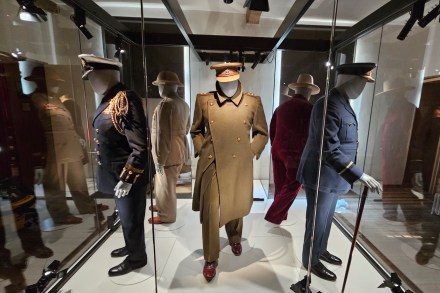
There has always been something really rather magnificent about Chartwell, Winston Churchill’s beloved country home in the Weald of Kent. Sure, it’s no Blenheim or Chatsworth; in fact – say it quietly – from certain vantage points this redbrick Tudor house is verging on unremarkable. It’s even, at a pinch, conceivably the sort of place that Kirsty or Phil might claim lacks kerb appeal. But they, just as any visitor does, would immediately recognise that the true appeal of Chartwell is not in its architecture (although all those walls Churchill built when he modernised it are handsome). No, it’s in the property’s connection to its former owner, and the view – over a seemingly unspoiled Kent arcadia which stretches for as far as the eye can see for some 40 miles.

When is a drink not a drink?

How do you drink a £37,000 whisky? That’s what I’m wondering as I make my way to Speyside to try the Glenrothes estate’s latest release, the Glenrothes 51. I don’t mean physically; I assume they’re going to pour it into an appropriately expensive glass for me, and I haven’t yet met a whisky I don’t enjoy in some way. I mean: how do you get your head around consuming something so expensive? I’m the sort of person who squirrels nice things away for a rainy day, and doesn’t eat the expensive chocolate bar because it seems like a waste. How do I square this with drinking a dram that must cost £1,300?

What could be worse than property porn? Well…

I’m of the opinion that an overriding interest in ‘porn’ of any kind (I love the way we use the affectionate diminutive about something which ruins so many lives – like calling him ‘Fred’ West) isn’t especially good for the long-term happiness of people. But of course some sorts are worse than others. At the top, you’d have child pornography; at the bottom, property porn. The two find an odd union in the life of India Knight, the un-cancellable Sunday Times nepo-baby hack (her stepfather was editor of the Economist) who has been delighting us for decades, though not perhaps in the way she believes.

Three bets for the weekend and beyond

Newmarket trainer Harry Eustace is a master at targeting his best horses at big races. If there were those who did not know it before this year’s Royal Ascot, they certainly knew it afterwards. He landed two winners at the five-day meeting from his relatively-small string: Docklands (put up at 25-1 in this blog) at 14-1 and Time for Sandals at 25-1. One of his near misses at the meeting was Divine Comedy who was a close fifth in the Ascot Stakes over two and a half miles despite a troubled run in the home straight. Ever since that run, tomorrow’s Club Godolphin Cesarewitch (Newmarket 3.40 p.m.) has been the end-of-season target for this seven-year-old mare.

The Princess of Wales is wrong about phones

I am not sure about the protocol for arguing with a royal essay, but at the possible cost of my head I will respectfully disagree with the Princess of Wales’s call for parents to ban smartphones from family mealtimes, written with Professor Robert Waldinger of Harvard Medical School. ‘Our smartphones, tablets and computers have become sources of constant distraction,’ she writes, ‘fragmenting our focus and preventing us from giving others the undivided attention that relationships require.’ She instead appeals to us to ‘look the people you care about in the eye and be fully there’. I know what she means. She is thinking of surly teenagers scrolling through social media over dinner while their parents try to engage them in conversation.

My toxic affair with my Land Rover

For the past decade I’ve been in a toxic relationship. Sure, there were red flags – most of them on the dashboard – but it was love, or at least lust, on my part. My Land Rover seduced me with its size and strength, its rugged interior, how safe it made me feel when I was behind the wheel. I was love-bombed with promises of passing the 300,000-mile mark, manipulated by the ease with which three Isofix booster seats slotted into the back. Yet my Land Rover has cost me dear, both in terms of friendships – my left-leaning, EV-driving neighbours sneered when we lived in London – and in the money I’ve lavished on it: thousands of pounds a year to keep our relationship on the road. It also drank heavily.

So boring it’s mesmerising: The Place to Eat at John Lewis reviewed

I am, like a strain of Withnail, in the John Lewis café by mistake. I meant to review the new Jamie Oliver café and cooking school on the third floor of John Lewis Oxford Street, but they have run out of food beyond pink cake. We have no choice but to go upwards to the fifth floor and the electricals. I have always felt safe in John Lewis, a despicable thing to think, let alone type, but that is done now. It is called The Place to Eat, which echoes, though unconsciously, Ecclesiastes 3. It is preeningly ugly. I wonder if this is another strain of common British humble-brag, like our teeth, our town centres and our clothes. Because this is ugliness by design: it’s too ugly to be anything else.