Jim Lawley

Jim Lawley is a former university lecturer who has lived and worked in Spain for 40 years.

Ceuta’s migrant problem shows no signs of ending

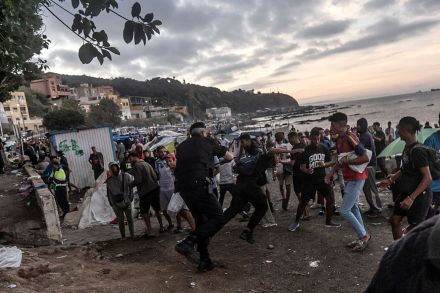
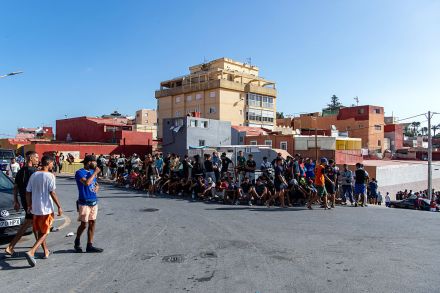
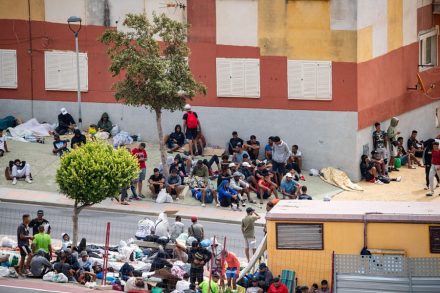
Just under a month has passed since the sudden, mass arrival of approximately 80,000 mostly Moroccans and sub-Saharan Africans in the Spanish exclave of Ceuta (population 83,000) on 30 and 31 July. Some 8,000 remain in the city on the North African coast.  The government’s most immediate problem is where to accommodate them. At the moment thousands of migrants are still sleeping rough on the streets or in the surrounding countryside.  Ceuta’s local newspaper, El Faro, reports that the Education Ministry announced last night that when pupils return on 8 September, there will be uniformed security on school routes, at entrances and exits, during break times, and around schools in the afternoons and overnight.

The Ceuta crisis isn’t over

On 30 and 31 July around 80,000 migrants entered Ceuta from Morocco, according to the Spanish government’s latest estimate. Roughly 90 per cent have since gone back. But, according to the government’s estimate, somewhere between 7,000 and 9,000 remain in the Spanish city whose normal population is 83,000. Ceuta’s authorities believe the figure may be as high as 11,000. At least 83 bodies connected with the crossing have been recovered on the Spanish side of the border. Morocco officially acknowledges another 14 deaths but humanitarian organisations have estimated that in total more than 140 people have died since the border was breached.

Pedro Sanchez is stubbornly clinging on to power

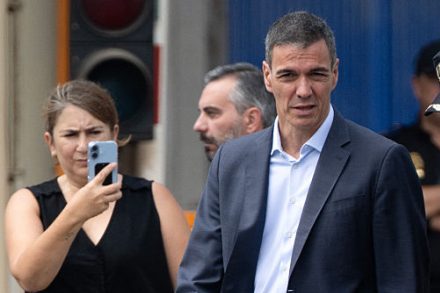
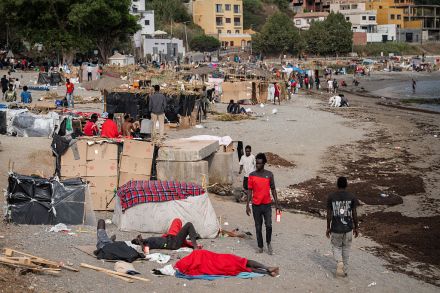
With Spain still reeling from the extraordinary scenes in Ceuta, the country's Socialist prime minister Pedro Sánchez has decamped to La Mareta, the government’s palatial retreat on Lanzarote. Before beginning his holiday, he made a brief visit to the exclave, where, according to Madrid, some 72,000 migrants crossed from Morocco and the local authorities say 88 bodies were recovered. Nearly a week later, Ceuta’s government says 3,000 to 5,000 migrants remain; Madrid puts the figure at 2,500. Around 400 are still living on El Trampolín beach, sheltering under blankets and makeshift structures. Food and water are now being distributed, but provision has been patchy: some say they went up to five days without food. Sanitation remains rudimentary.

The Ceuta border has become a European emergency

From our UK edition

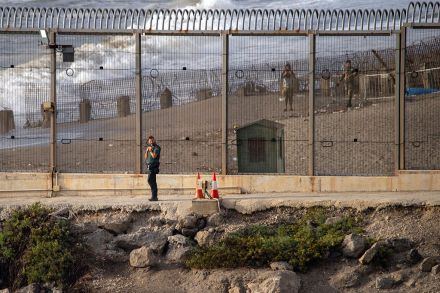
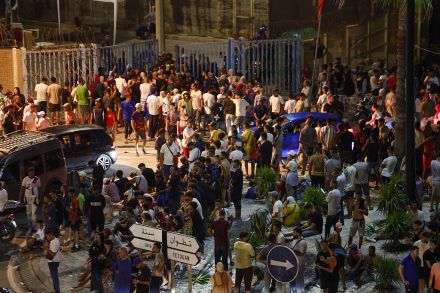
Yesterday, thousands of young Moroccan men – as well as women, children and non-Moroccans – entered Ceuta, one of Spain’s tiny North African enclaves, swimming around a breakwater or breaching border fences. Police sources estimate that so far more than 40,000 – some reports are suggesting 50,000 – people have already entered Spanish territory during this wave. Today the influx continues and the situation is critical. One resident is reported as saying, ‘We are frightened tonight. We have lowered the shutters and turned off the lights. We are afraid that they may try to enter the houses.’ The temporary stay centre for immigrants, and other emergency reception and health facilities are overwhelmed.

Is making Joe Root England captain such a good idea?

From our UK edition

Joe Root is to be the new captain of the England Test team. The England and Wales Cricket Board (ECB) has appointed him just over a month after Ben Stokes announced his retirement midway through a Test match, and almost three weeks before England next take the field against Pakistan at Headingley on 19 August. There are, to put it mildly, very good reasons to doubt the wisdom of this appointment. One is that we’ve tried this before and it didn’t work There are, to put it mildly, very good reasons to doubt the wisdom of this appointment. One is that we’ve tried this before and it didn’t work. Root was captain from 2017 until 2022 and early on in his tenure it became obvious that he was ill-suited to the job. Nevertheless, he was kept on for years.

Spain’s response to wildfires has been infuriating

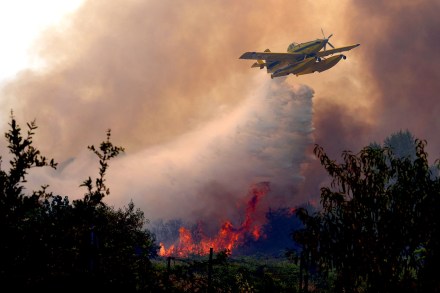
From my home in Ávila I usually have a splendid view of the ancient town’s medieval walls. But yesterday morning the wind changed direction and they were largely obscured by a pall of wildfire smoke. The town hall issued health advice and recommended closing windows. But I’m among the fortunate. Everyone in Burgohondo, 25 miles south of Ávila, has been evacuated. It is the village my wife’s family comes from, and where the fire started. Across the region, tens of thousands have already been forced to leave their homes. And the forecast is ominous. Last year I suggested that Spain’s summer fires are made so frequent and destructive by long, hot, dry summers and by rural depopulation, with the resulting abandonment of farming and grazing.

Could Gibraltar fall to Spain?

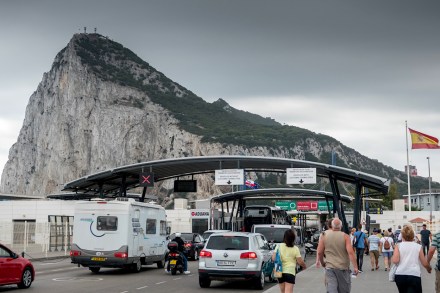
Key parts of the post-Brexit treaty that provides for a fluid border between Gibraltar and Spain will come into provisional effect today. Running to over a thousand pages, the treaty took far longer to negotiate than the entire Brexit Withdrawal Agreement. It has still to be ratified by the House of Commons and the EU parliament. The treaty effectively makes Gibraltar part of the EU’s passport-free Schengen area. Both Spain and Gibraltar were anxious to avoid long waits at the border: the 15,000 Spaniards who cross every day are half of Gibraltar’s work force and they are also an estimated 25 per cent of the wage earners in the adjacent region – one of the poorest parts of Spain.

Madrid is introducing benefits for unborn children

From our UK edition

Madrid’s regional parliament has passed what is being called the ‘conceived unborn child’ law. As soon as a pregnancy is medically accredited it will count in determining a family’s eligibility for certain benefits. After the fourteenth week of the pregnancy, if this is their third child, families will be able to access additional benefits such as discounts on public transport, grants and other subsidies. If the pregnancy is lost, families will not have to repay the benefits already received.

Who should replace Ben Stokes as England captain?

From our UK edition

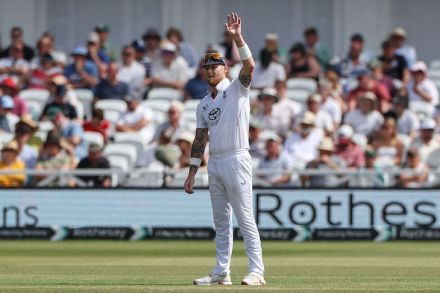
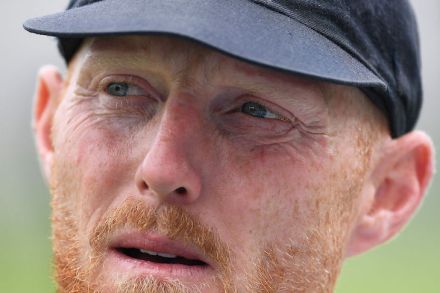
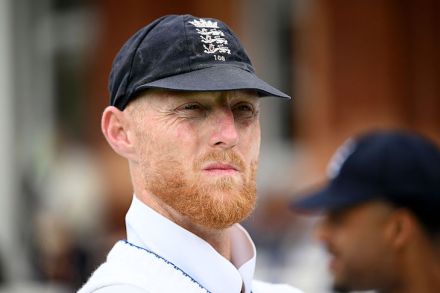
Ben Stokes, the England captain, has announced his retirement from international cricket. There will be plenty of time to celebrate his glittering career, his force of personality and his refusal to admit that a lost cause was lost. There will also be time to discuss the reasons for his decision and the wisdom (or otherwise) of making the announcement in the middle of an important Test match. The most pressing question now is: how should England go about replacing him? England lost the game badly and it looks extremely unlikely that Joe Root will be asked to return to the captaincy full time The answer is: carefully.

The problem with Ben ‘Stokesy’

From our UK edition

Ben Stokes, until very recently captain of the England cricket team, isn’t playing in the second Test match of the series against New Zealand which starts at The Oval on Wednesday. His misdeed? Breaching the team’s midnight curfew at the Rex Rooms nightclub in Chelsea when celebrating victory in the first game. Stokes’s new nickname should also capture the essence of the man Let others argue about discipline, a captain’s duties, team culture and the stern machinery of something that calls itself ‘the Cricket Regulator’ (no, me neither). What troubles me is something much more fundamental. If English cricket really is serious about standards, then the clean-up has to start where standards have fallen furthest.

The disgrace of Juan Carlos of Spain, a modern-day Don Juan

From our UK edition

The life of Juan Carlos I, Spain’s 88-year-old former king, who reigned from 1975 until his abdication in 2014, falls into two parts: richly deserved triumph followed by richly deserved disgrace. Building on his 2004 biography, Juan Carlos: A People’s King, Paul Preston’s account of this extraordinary life is magisterial. The son of Don Juan de Borbon, the exiled heir to the Spanish throne, Juan Carlos was born in Rome in 1938. With a view to the eventual restoration of an authoritarian monarchy, he was sent to Spain, aged ten, to be indoctrinated in General Franco’s political tenets. He also had to endure the dictator’s long lectures on the mistakes made by previous Spanish monarchs.

Ben Stokes’s troubles are a blessing in disguise for English cricket

From our UK edition

The England cricket captain, Ben Stokes, was involved in an altercation at a night club in the early hours of Monday morning. Also present was his team mate, Gus Atkinson. The players were celebrating England’s victory over New Zealand in the first Test match of the summer. Full details of what exactly took place are yet to emerge but since they were clearly in breach of the team’s new midnight curfew, both players seem likely to miss the second match of the series which starts at the Oval on Wednesday next week.

Can a new national selector save English cricket?

From our UK edition

The England Cricket Board is appointing a new national selector: the window for applications closes today. If they get a good man in position quickly, it’ll make all the difference: a team’s performance is determined, obviously, by the 11 players on the field so it’s essential to get the right ones out there. Crass errors in selection led to an embarrassingly poor England side being comprehensively outplayed, yet again, in last winter’s Ashes series. Against an Australian side lacking several of its best players, we were 3-0 down – the five-match series already a dead rubber – after barely 11 days of cricket.

Will Spain’s migrant amnesty backfire?

From our UK edition

Spain’s cabinet has just approved a law that allows over half a million undocumented migrants and asylum seekers already in the country to regularise their status, giving them temporary residence and the right to work. Applicants now have until 30 June to prove that they do not have a criminal record and that by the end of 2025 they had either been in Spain for at least five months or had sought international protection.

I lost the will to live watching The Rest is Politics and Pedro Sánchez

From our UK edition

If Alastair Campbell and Rory Stewart’s recent interview of Spanish Prime Minister Pedro Sánchez is anything to go by, I don’t think I’ll be watching The Rest is Politics again. The interview started off okay. After noting Trump’s threat to punish Spain for refusing to let the US use military bases for attacks on Iran, Campbell invited Sánchez to speculate about what the punishment will look like. So far so good: it’s an important question that many of us here in Spain are asking. But instead of answering it, Sánchez talked about Greenland, Ukraine, the EU’s relationship with the US and the pressing need to strengthen the transatlantic relationship.

Is it wise for Spain to goad Donald Trump?

Spain’s refusal to allow the United States to use its military bases at Morón de la Frontera (Seville) and Rota (Cádiz) for its war on Iran, arguing that the US-Israeli attacks are ‘unilateral military actions outside the United Nations charter’ has brought the simmering conflict between Pedro Sanchez, Spain’s socialist Prime Minister and President Trump to a head.   Sanchez’s carefully calculated strategy has been to position himself as one of the US president’s leading opponents on the world stage On Wednesday Sanchez followed up by delivering a stunning rebuke to Trump. Speaking for ten minutes on national television, he said that his government's position could be summed up in four words: ‘No a la guerra’ (No to war).

Why Iran is applauding Spain

From our UK edition

Spain has refused outright to support the United States and Israel’s military operation against Iran. The move has been applauded by Iran’s ambassador to Spain: ‘They have rejected the aggression and that is valuable to us.’ The Pentagon meanwhile has withdrawn aircraft deployed at its bases in Morón de la Frontera (Seville) and Rota (Cádiz). Pedro Sánchez, Spain’s socialist prime minister, rarely misses an opportunity to goad Trump Justifying Spain’s refusal to cooperate, José Manuel Albares, the foreign minister, insisted that, ‘A logic of violence, as we are seeing, only leads to a spiral of violence, when unilateral military actions outside the United Nations Charter… have no clear objective.

Growing up with thieves, murderers and heroin addicts

From our UK edition

‘You can’t pick your parents, but they get to pick your life,’ Jonathan Tepper points out at the beginning of this extraordinary coming-of-age story. And: ‘If your parents are missionaries, it changes everything... They decide where you’ll live, when you’ll pack your bags and go, and you’ll get roped into their work saving the lost.’ In the 1980s and 1990s Jonathan’s parents, Elliott and Mary, were American missionaries in San Blas, then the poorest part of Madrid: ‘Our neighbourhood was the biggest drug supermarket not only in Spain but in all of Europe.’ At a time when Spain hadn’t started spending on prevention or rehabilitation, Jonathan, aged seven, along with his two older brothers – all of them blond and blue-eyed – saw junkies lying dead in ditches.

Don’t expect England to learn anything from their Ashes drubbing

From our UK edition

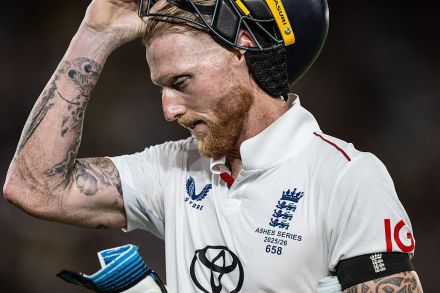
England’s cricketers have just lost the final Test match in Sydney. So the five-match series, a dead rubber ever since the Aussies retained the Ashes over a fortnight ago by winning the first three games, has ended 4-1 in Australia’s favour. This drubbing was entirely predictable: we lost the previous series ‘down under’ 5-0, 4-0 and 4-0 and we never learn. Our bowlers may be inexperienced but our feckless batsmen have no such excuse Nevertheless, as Sir Geoffrey Boycott says, ‘There is every chance that the suits at the ECB will… carry on as normal.’ Attempts will be made to explain away and put a positive spin on England’s performance.

The diminutive dictator who ruled Spain with an iron fist

From our UK edition

General Franco died on 20 November 1975, and with the 50th anniversary just passed, this biography – the first in years – of the man who ruled Spain with an iron fist for nearly four decades is timely, incisive and authoritative. Written by a former Madrid correspondent of the Economist, it’s also an up to date and highly accessible introduction to 20th-century Spanish history. Born in 1892 into a middle-class family, Francisco Franco shared a bedroom with his younger brother Ramon, who later won international fame as Europe’s ‘equivalent of Charles Lindbergh’. There were few signs, however, that eminence also awaited Francisco. A weedy child, who dutifully got by at school, he had a difficult relationship with his domineering Freemason father.