Bruce Anderson

Bruce Anderson is The Spectator's drink critic, and was the magazine's political editor

My fellow drinkers feel pity for Peter Mandelson

From our UK edition

We had gathered to discuss wine, but lesser topics intervened. During the Suez crisis, Clarissa Eden complained that it seemed as if the Suez Canal was running through her drawing room. Today, it is more a matter of the Strait of Hormuz, but that is an undeniably important matter. No one could accuse Mandy of being a stainless character. But what you see is what you get Other subjects which are receiving huge coverage have lesser claims on our attention. An American who had just flown in raised one of them. ‘What has this guy Mandelson actually done?’ Rem acu tetigisti. There is a short answer. He has embarrassed the Prime Minister. But whose fault was that?

Is it time for me to renounce the Devil?

From our UK edition

As I spent much of January in dry dock in Tommy’s hospital (‘dry’ being doubly appropriate), other avocations were needed. One friend said that it sounded as if I had spent much of the time gazing at the glories of Barry and Pugin, reading poetry or teasing pretty nurses: all pleasant activities. But there was one disappointment. Geoffrey Elton helped to introduce the civilisation of the Rhineland to East Anglia Assuming that hospital wards were good stalking grounds for chaplains, I would have been happy to discuss the Trinity, the meaning of the first verse of St John’s Gospel, or whatever. But only one clergy creature appeared. There is a good old Scots word, ‘mouthless’ (pronounce ‘oo’); that poor fellow fitted the description.

Hell is Dry January

From our UK edition

‘Earth has not anything to show more fair.’ I have always believed that the notion of a Dry January must have been launched on the world by von Sacher-Masoch: one of his more obscene fantasies. I would no more subject myself to it than to any of the other 11 months. They all deserve better. This year, however, malign fate intervened. On 3 January I was strolling along (as it happens, stone-cold sober) when I suddenly felt rotten. I sat on a fence to work out what was wrong and promptly passed out, falling a few feet while bumping and bashing on the way. A neighbour spotted the fall and dialled 999 virtually before I landed. A few days later, on the phone, he told me: ‘When I first saw you, mate, I thought you was fucking dead.

One of the joys of wine is the people who make it

From our UK edition

Towards the end of the war, a young Guards officer met some Italian aristocrats. They had much in common. Robert Cecil was the heir to a marquessate. The Principe di Venosa’s daughter was married to an Italian marchese. Lifelong friendships have ensued down the recent generations. Nevertheless, the English family would be the first to concede that when it comes to generations, the Italians are a couple of centuries ahead. In 1385, Giovanni di Piero joined the Florentine winemakers’ guild. The easy movement between the Florentine bourgeoisie and the aristocracy helps to explain that great city’s long success: the Medici are the obvious example, as are the Antinori, who have been making wine for 26 generations, and are still gaining momentum.

A Frenchman who does not drink wine is a disgrace

From our UK edition

The world is in an even greater mess than was apparent. I am not referring to Ukraine, Gaza, Sudan or other swamps of mayhem and misery, although they are bad enough. No: the new crisis is in France, and it has two malign and reinforcing aspects. First, large numbers of the younger French have given up drinking wine. It is not clear what they are substituting: Coca-Cola, perhaps. If so, God help us (and them). A Frenchman who does not drink wine is a disgrace to his history and heritage. After the liberation in 1944, and in order to punish collaborators, the new French government created a crime: indignité nationale. As it is presumably still on the statute book, it could surely be used to bring condemnation on those who collaborate with teetotalism, or Coke.

Wine to toast the fallen

From our UK edition

Solemn, moving, serious: British. As silence fell and the wreaths were lain, even teenagers joined in the mood of reverence. Suddenly it did not matter what the gossip columns were saying about Andrew Mountbatten Windsor, or what latest mischief might arise from the Duchess of Sussex. The great ship of state and of history sailed on serenely. The sacrifices of a previous generation were saluted. They had paid the price for their Britishness. We, their successors, unworthy as we might feel, could at least salute them, especially as good bottles were about to be opened, to toast the fallen. Yet there was a problem far more important than princely indiscretions. We British won the war. Since then, we have defended the peace. Hard fighting is a tough business.

How to drink sake

From our UK edition

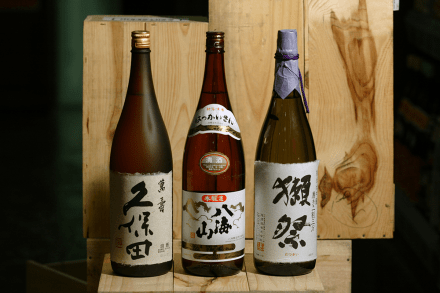
There is a fellow called Anthony Newman who is fascinated by drink, as a consumer, a producer and an intellectual. That said, he spent some years supplying Australians with craft beer, which does not sound very intellectual. But he insists he paid for his own passage and was able to return without a ticket of leave. While living in Oz he visited Japan, and found himself captivated by many aspects – not least sake, the rice wine which is its national drink. Nearly 90 per cent of sake is consumed locally. Anthony decided the potential export market was enormous. I have heard it persuasively argued that Japan is the most complex of all the world’s great countries.

A sip of Israeli history

From our UK edition

We were drinking Israeli wine as the talk ranged from frivolity to seriousness: from Donald Trump to the tragic paradoxes of the human condition. Some would claim we were discussing the same topic, yet this may not be the time to disrespect the US President. I once described Ariel Sharon as a bulldozer with a Ferrari engine. It was one of the many tragedies to have afflicted Israel/Palestine that just when he had decided to bulldoze for peace, he should have been stricken with a massive stroke. One reason I love being in Israel is that one is never more than 50 yards from an argument Now a new and mighty piece of earth-moving equipment is dominating the landscape.

Drink early, drink often

From our UK edition

As readers will be aware, and without sounding too immodest, this column is absolutely committed to diversity. In an earlier era, that might have seemed unnecessary. A British oenophile did not need to search out bottles from great distances. He could merely take his pleasure from the first growths of Bordeaux and the grands crus of Burgundy, with perhaps a little dalliance on the Rhine or the Rhône. Nor was this only a British modus operandi. I covered the French election of 1981 from Burgundy (there were good political reasons for doing so, as well as other ones). The Burgundians knew that wine was made on the banks of the Gironde, but when I assured them the best of it was excellent, there was polite scepticism.

The glory of the Goring

From our UK edition

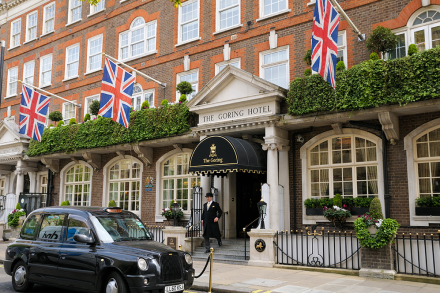
Last weekend, I was in England: among two very diverse aspects of the nation. In recent months, every Saturday, central London has been plagued by demonstrations. I suppose that there must be a right to protest. But what about the right to mosey around Westminster and Whitehall without blocked roads and with any hope of peace and quiet? Last Saturday saw the largest manifestation of all: less of a protest than an English uprising – a flag-waving two-fingered revolt against the liberal intelligentsia. I kept well clear, having no wish to be caught up or kettled, and later there were attacks on the police. This should lead to jail sentences. Two conclusions could be drawn.

Is God a Thatcherite?

From our UK edition

Autumn: surely one of the most beautiful words in the language. All the other seasons are expressive, almost even onomatopoeic, worthy of being serenaded by Vivaldi, but autumn has a gentle resonance. Mists and mellow fruitfulness, not to mention the grouse season. School and university accustomed most of us to think of the year beginning at the Michaelmas term rather than in January. This is reinforced now that parliament is back – though with Sir Stumbler in charge, it is more a matter of fogs and sour fruitlessness. That brings up memories of a different era, one which was immensely fruitful though never mellow. The 100th anniversary of Margaret Thatcher’s birth is approaching. I was having dinner with my old friend John O’Sullivan and of course we talked of the Lady.

Vodka that makes an excellent aperitif

From our UK edition

Jack Gervaise-Brazier is a restless romantic. He was brought up on Guernsey, which filled him with a love of islands, but also a desire for wider horizons. As Jack was a head boy and a good historian and classicist, his schoolmasters assumed that he would move on to university and he was offered a place at Durham. Had he visited, he might have fallen under the seduction of its cathedral and other glories. As it was, he headed for a different City to pursue stockbroking and trading. Although he turned out to be a more than useful performer, he always intended to use this as a ladder, enabling him to start up his own ventures. These included a brewery on Guernsey and a rum company. But the restlessness persisted. This was all an interim.

North Uist’s whisky is one to watch

From our UK edition

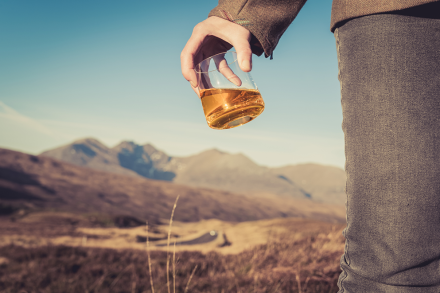
There are at least two Long Islands. One of them, eternally famous for The Great Gatsby, is a fascinating blend of glamour and meretriciousness. It is separated from the other one by 3,000 miles of ocean and a totally different culture. In this Long Island – actually about 70 islands of various sizes, also known as the Outer Hebrides – Sabbatarianism is frequent, but glamour and meretriciousness are as wholly absent as anywhere in Europe. Over many centuries, the Hebridean Long Island was often beset by conflict. Viking raiders, Scottish kings, great clan chiefs: all fought for supremacy. The Scottish Crown eventually won, though the clan chiefs exercised subsidiary kingships, until the old Highland order was broken after the defeat of Bonny Prince Charlie.

The English pinot noir that rivals Burgundy

From our UK edition

England is now and history. The other day, in the Weald of Kent, now was England and pleasure. We were visiting the Balfour Winery, near Staplehurst, on an enticing midsummer day. This was a quintessential English landscape. To the left, a wood with classically English trees. To the right, a country house. In the distance, an oast house. We were viewing all this from a balcony, after an excellent lunch based on local ingredients, with wine pairings, that I reckon was worth a Michelin star. The scallops were as good as I have ever tasted. The locals are aware of the neighbouring asset: the previous Saturday, the restaurant had served 750 guests. But the kitchen has a problem. Jake Goodsell, the chef, is only 25. A splendid fellow, he is full of ambition.

Wine to pass the cricket Test

From our UK edition

What to drink while watching cricket? Beer or even Pimm’s for the village green, but I think that a Test match on television demands wine. What a series we are having: likely to go down in the record books as a great example of the greatest of games. Cricket incites memories. The current Indian side have a claim to be world champions. In this last Test, they thumped England even though they rested Jasprit Bumrah, probably the best bowler in the world today. But I recall earlier days when they were usually easy victims in England, with one exception: Sunil Gavaskar’s match. This was in 1979 at the Oval and Mike Brearley set the Indians 438 to win. That was a nominal target. In reality Skipper Brearley was giving his side plenty of time to bowl India out.

To rehydrate, drink beer

From our UK edition

‘The nuisance of the tropics is/the sheer necessity of fizz.’  Over the past few days, during which England endured sub-tropical sweltering, it was more a matter of beer. I do not wish to denigrate water, which is all very well in its place. I often drink it. But for urgent, nay life-saving, rehydration, nothing beats beer. Now that almost all beer is properly made, I just tend to order any pint that catches my eye. In recent temperatures, the eyes have been busy. As I may have written before, there is one curiosity about beer. The Belgians, Czechs and Germans – plus other European countries – produce lager-style beers that are both satisfying and potent. In the UK, lager has often meant some of the worst beer ever made.

The lure of St James’s 

From our UK edition

Procrastination may be the thief of time, but in the right circumstances, it can be fun. The other day, I was enjoying myself in St James’s, my favourite London arrondissement. There are delightful contrasts, from the grandeur of the royal palaces and the St James’s Street clubs to the charming, intimate side streets and alleys with their pubs and restaurants. The late Jacob Rothschild would often cross from his palatial office in Spencer House to Crown Passage, in order to lunch at Il Vicolo (regularly praised here). His Lordship never bothered to reserve a table. Instead, he would send someone across with his form of booking: a bottle of Château Lafite. Crown Passage is also home to the Red Lion, one of the oldest hostelries in London.

The loveliness of Ligurian wine

From our UK edition

We were talking about Italy: where and when to sojourn. I confessed to so many gaps. It is years since I visited Genoa and I know that the Ligurian coast has innumerable hidden treasures. There are the well-publicised places, such as Portofino and San Remo, which I am sure are pleasant enough out of season. But for many months they are likely to resemble an eastern extension of Monaco. Small is the key word. We are not dealing with the mighty names from Piedmont. In Liguria many of the local wine producers have tiny plots, sometimes only a couple of acres. They will supply the local restaurants which also draw on local ingredients and recipes: just as nonna made it. Visitors are welcomed. These people are confident in their own way of life.

The art of the political lunch

From our UK edition

We had been discussing Ukraine, Gaza, Iran, the possibility of a nuclear exchange across the Punjab and other trifling matters. It was decided to change the subject. A youngster was planning to write a piece on lunching and suggested I might know something about that. I did not disagree. In the old days, lunching was a vital part of the political process. It was a good way of getting to know politicians, so that contacts would ripen into friendships. That said, it was not an efficient method of discussing complex matters. Lunch was forgossip and general political impressions. If detailed rumination was necessary, the place for that was in the minister’s office, equipped with a notebook. The 1980s were particularly fruitful.

My new-found love for Marsala

From our UK edition

Western Sicily is one of the most wonderful places on Earth. From the Greek temples in the south to the Arab-Norman architecture and frescos around Palermo, there are endless treasures and glories. There are also records of fascinating characters, especially the Emperor Frederick II Hohenstaufen, Stupor Mundi. Historians still argue whether he was a prototype of a Renaissance ruler, with a distinct flavour of the Enlightenment, or merely among the most remarkable men of the high Middle Ages. He was a polymath, but one of his most distinguished qualities ultimately limited his inheritance. He found it impossible to stop fighting, not least against a succession of popes. In that particular phase of the conflict between papacy and Holy Roman Empire, Frederick could not win a decisive victory.