Druin Burch

Druin Burch is a consultant physician, a former junior doctor, and the author of books on history and medicine.

We cannot stop the small boats

From our UK edition

This April, we agreed another deal with France to stop migrants coming across the Channel. The Home Office has explained it is ‘bearing down’ on small boat crossings, and that this latest £662 million deal would ensure ‘enforcement action on beaches and put people smugglers behind bars.’ Over the last Bank Holiday weekend, almost a thousand migrants were recorded as coming across the English Channel. This is regrettable, but there is no alternative. Small boat crossings began at scale in 2018. Since then, the total number of recorded arrivals comes to about 200,000. We have to accept that they are now a fact of life.

Gene-editing drugs are opening a new frontier in medicine

From our UK edition

Older readers with bulging medicine cabinets, or parents eyeing their children’s distant futures, are not encouraged to read the New England Journal of Medicine – despite its prestige. A paper just published there, however, matters to them and to me. ‘In Vivo Base Editing of PCSK9 with VERVE-102 for Hypercholesterolemia’ is not a catchy title, but what it describes is going to catch on. VERVE-102 is a combination drug designed to edit the bases of a gene – PCSK9 – using a development of CRISPR technology, all packaged so the edit reaches the cells that matter in the liver. Some of those born with superior versions of the PCSK9 gene have their lifetime risk of coronary heart disease – the world’s biggest killer – halved. For others it is all but abolished.

I’ve found the perfect pregnancy diet

From our UK edition

The world is full of people fierce in the belief that they know the right diet to make your children glow with superior health. Few are shy about saying so. Fortunately, I’m here to help. I happen to know exactly what should go into your mouth, and into theirs, and, although you haven’t asked, I’m happy to tell you. My confidence comes from the psychology department at Durham University, which has just published the results of a long-running experiment on getting children to eat their greens. Our broadsheets have summarised their findings with due reverence: ‘getting children to eat their vegetables starts in the womb’ (to quote the Guardian). ‘The secret to giving toddlers a taste for greens may start in pregnancy,’ agreed the Telegraph.

Will Labour’s sick note crackdown work?

From our UK edition

‘Can I have one last present?’ my daughter asked earlier this week, having turned 15 and covered the kitchen floor with torn wrapping paper. ‘Can I have a sick note for PE?’ Doubtless she’d pored over that morning’s news before charging up and down the corridor at dawn to wake her parents. She must have noted that the government is planning to trial reforms of the sick note system that has been failing this country for decades.  She didn’t mention it when delightedly seeing if her squeezy pickled cucumber lamp would work (it did), or when she opened her new records (my wife having binned my several hundred, a timely few months before my daughter discovered vinyl). But she rarely asks for sick notes, or to miss school; she has the idea you shouldn’t.

Streeting’s NHS record is nothing to boast about

From our UK edition

“Leaders take responsibility,” Wes Streeting wrote, in what has already been called his Wesignation letter. The charge against Keir Starmer was that he hadn't; the boast, gift-wrapped in NHS statistics, was that the outgoing Health Secretary had. “The only question that matters in government is whether we leave our successors a better situation than we inherited.” As he angles for the top job after almost two years running the NHS, what does his record amount to? Streeting’s no wild success, but no abject failure Streeting’s letter is heavy with figures. Ambulance response times for heart attacks and strokes have improved, A&E waiting times too, and GP recruitment is up.

Mary Seacole is celebrated for all the wrong reasons

From our UK edition

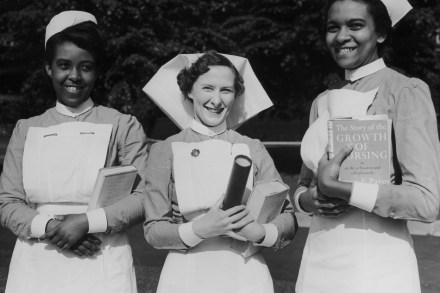
Florence Nightingale, born in Florence on this day in 1820, made her world measurably better. She counted the dead until the living had to listen. Her contemporary in Crimea, Mary Seacole, is now zealously celebrated alongside her – and for the wrong reasons. Nightingale acted from duty, Seacole from entrepreneurial ambition Seacole, Jamaican and mixed-race, improved her world because she was a successful small-scale capitalist: brave, exuberant, and possessed of a chutzpah that tended toward creative fiction. Nightingale was part of the Whig advance of history. Her work in data science and sanitation underlies the health improvements we enjoy today.

Why Scottish whiskey is worth the effort

From our UK edition

‘The King and Queen got me to do something that nobody else was able to do, without hardly even asking!’ Donald Trump announced on Thursday. In their honour, after their White House visit, he is removing tariffs on Scotch whiskey and bourbon, ‘two very important industries within Scotland and Kentucky’. A few more visits from His Majesty, and who knows what might follow. The obvious next gifts would be Virginia and the Carolinas. In the meantime the US is open for business, and our whiskey no longer faces tariff headwinds. Trump’s announcement pleased me more than my own drinking tastes justify. Like many another Englishman, I did not take naturally to whiskey. Despite the best efforts of a wine-loving stepfather, I went the traditional route.

Politics is making us more unhealthy

From our UK edition

Wes Streeting has said women have been treated like 'second-class citizens whose voices don’t matter'. 'The blunt reality is the NHS is failing women and girls on even the most basic measures of healthcare,' he added. The Health Secretary's new women's health strategy promises £72 million. The problem is that his new men's health strategy promises £79 million. The gap is small, but quite enough to put him in trouble. Athena Lamnisos, CEO of a gynaecological cancer charity, has deployed herself across an eager press to protest the inequity. 'Acknowledgement is not enough,' she has said. 'Ring-fenced funding is what we need.

Should doctors be banned from striking?

From our UK edition

Kemi Badenoch has said she will ban doctors from striking. Yesterday, asked if he would do the same, Health Secretary Wes Streeting refused to rule it out. The police aren’t allowed to strike and nor is the military. Why should doctors be different?  The junior doctors are now on day four of their six-day strike; I have lost track of which number strike this is. Since I’m doing 13-hour days covering for them and have worked through Easter, I’ve also lost track of what day it is and fervently wish the legislation to ban the strikes was already in place. I’m being paid well above my normal rates, and my part of the hospital is running smoothly. I deal only with emergencies, so am one step removed from the costs of cancelled clinics and operations.

Why junior doctors are back on strike

From our UK edition

In the emergency department, and on my wards, the strikes sit lightly. My specialty of internal medicine never closes; Easter Monday was a normal working day. The only difference from today until Monday next is that junior doctors will be scarce. Not terribly scarce, in truth, since many are as disenchanted with the strikes as you might hope. They prefer work to the picket lines. Yet lots are aggrieved by how far their pay has fallen below what they feel they deserve. Many more are furious that their training posts have been awarded wholesale to foreign applicants with no obvious superior merit. If I have worked with any junior in the past year who is enthused about these strikes, they have kept it to themselves – and the young are seldom shy of a grievance.

What the death of my beloved son taught me about Easter

The hawthorn hedges are white with blossom; the countryside looks set for a wedding. Even in the small garden of my hospital, spring is inescapable. Cherry and magnolia bloom. Viburnum scents the air, young leaves come to the trees. Hospitals are where most lives begin, and where many end. Hospices shepherd only a small minority of deaths, about one in twenty, often those of the middle aged whose diseases are more predictable. Frailty is less orderly, and the fitful hazards of age bring many to the general wards where I work. More of us die in hospital than anywhere else. What sort of spring wakes the hedgerows and the weeds, but not my boy? In the Emergency Department I met the woman who became my wife.

Is it time to scrap the NHS?

From our UK edition

Nigel Lawson said the NHS was the closest we had to a religion. What’s needed today is someone willing to declare that this church has become corrupt, self-protective, and hostile to its own founding purpose. In the latest demonstration of its chronic failure, the NHS has all but certainly missed a range of targets, from A&E performance to elective waiting times. The NHS England constitution aims for 92 per cent of patients to receive their non-urgent hospital care within 18 weeks. In January last year, the actual figure was 59 per cent. Starmer has repeatedly said that the NHS is a top priority. 'We will fight for the NHS,' he proclaimed. 'We will fix the NHS.' This year the figure is 62 per cent. A&E waits remain dreadful, ambulance delays dire.

The absurdity at the heart of the junior doctors’ strikes

From our UK edition

Immediately after the Easter weekend, junior doctors are planning a six-day strike. Unless they call it off, Starmer has said today, they’ll be punished. They have been offered a deal. On the table is an above-inflation pay rise, along with government funding for postgraduate exams that doctors have historically paid for themselves, and an offer of 4,500 additional specialty training places. ‘There are still 48 hours left to choose a better path,’ said Starmer. After that, the offer disappears. The strikes are being driven by those who are most radical in support of state healthcare in its current model.

My daughter’s living my football dream

From our UK edition

Next door to Jeremy Clarkson’s farm, behind spiked steel fencing and overlooked by edge-of-town bungalows, are the grounds of my daughter’s football team, the Chipping Norton Swifts Under-15 Girls. On cold, leaden Saturdays, I stand and watch. The clubhouse does cups of instant coffee for a pound but they take only cash. I don’t bring it because the urge to drink the coffee has never yet found me. What does find me, as I watch the girls’ match, is the urge to play.

NHS Online won’t cure Britain’s creaking healthcare system

From our UK edition

What is it that doctors actually do? The answer is not obvious and I say that as a physician who has spent the past 30 years in hospitals. But the question matters. Which tasks can be done better or more cheaply by nurses, paramedics or AI depends upon it. So, too, does the government’s push to create NHS Online. Trailed last September in Sir Keir Starmer’s speech at the Labour conference, the service is due to open in 2027. 'The NHS’s new online hospital will see a huge shift in the way we deliver care,' said Stella Vig, clinical director for elective care at NHS England. What she doesn’t say – what nobody says – is how anyone could know such a shift will be an improvement. NHS Online will provide 8.

Should teenagers be vaccinated against meningitis B?

From our UK edition

Two people have died of meningitis in Kent: an eighteen year old year 13 student named as Juliette, and an unnamed 21-year-old. The outbreak has centred on a nightclub, Club Chemistry, and on a private party. Since news of the outbreak broke, the newspapers and television have been full of images of students queuing patiently for prophylactic antibiotics. Concerns have been raised that the UK Health Security Agency could have raised the alarm hours, or perhaps a day, earlier. Some of the cases have been confirmed as meningitis B, a strain for which adolescents are not vaccinated. Infants are offered the vaccine at eight and 12 weeks and at one year, but protection wanes after about five years.

The BBC cannot tax Netflix viewers

From our UK edition

The BBC has described itself as being set to enter ‘managed decline’. The government is currently reviewing the broadcaster’s charter, and yesterday the BBC issued a response to its green paper saying that if the status quo remains, public service broadcasting will die. ‘Huge changes in the media market, audience behaviours, and an outdated funding model’, have apparently caused the BBC’s licence fee income to drop by a quarter. What the BBC didn’t acknowledge was that these ‘audience behaviours’ amounted to people concluding it was no longer worth paying for. That isn’t because ‘huge changes in the media market’ mean people feel paying for broadcasting is ‘an outdated funding model’. Instead, they’re choosing to pay for something else.

Can Wes Streeting get the sick back to work?

From our UK edition

Health Secretary Wes Streeting has tried using the NHS for social engineering before. Previously, he’s suggested that weight-loss jabs could get people back to work. This week he’s gone further. Yesterday, Streeting said that ‘for the first time’ he would be ‘making the NHS accountable for patients’ employment outcomes’.  Streeting is right that ill health is contributing to unemployment. Economic inactivity due to long term illness runs at a record level. The rise has been steep post-Covid, with assessments shifting from face-to-face to virtual. And what’s most striking is that the surge has particularly affected those between 16 and 34.  There are 1.9 million people unemployed, and another 2.

Pity the fool with a nonsense name

From our UK edition

‘If there is one thing I dislike,’ said P.G. Wodehouse, ‘it is the man who tries to air his grievances when I wish to air mine.’ His grievance was conversational, mine is nominative: I pity those with made-up names. There was a time when names came from a modest catalogue: the Bible, aunts and uncles of fond memory, a wider culture that worshipped the royals. Maturity involves a conservative deference to tradition. One learns to presume that norms have more value than drawbacks: dress in an ordinary style, have the manners people expect – and bear a name that connects you to others. Beware any job that requires new clothes, said Thoreau. He meant coats and trousers but it applies to birth certificates, too.

Is it a surprise middle-class women are using Ozempic most?

From our UK edition

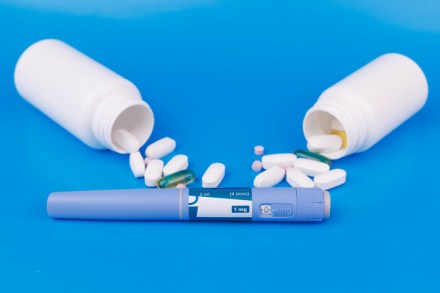
New research reveals a startling truth about the people paying thousands for weight-loss drugs: they're mostly middle-aged, wealthy women. In other news, February is cold and the snowdrops are here. The Health Foundation, a British health charity backed by a billion-pound endowment, confirmed today what most people would have guessed: those paying thousands of pounds a year for these drugs are not the poorest and most deprived, nor the fattest, nor the most in need: People living in deprived areas already face poorer health outcomes than those in more affluent areas, and men experience worse health outcomes than women. Yet these are the groups that have the lowest uptake of GLP-1 treatments. GLP-1 agonists are in the news so much because they work.