Roger Alton

Roger Alton

Roger Alton is a former editor of the Observer and the Independent. He writes the Spectator Sport column.

Declan Rice is an island of decency in modern football

From our UK edition

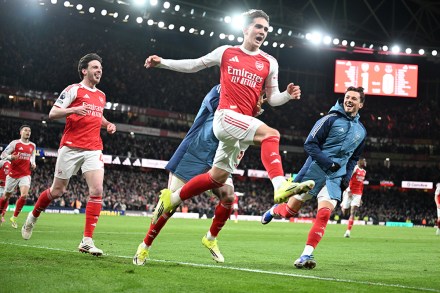
As all but the most tribal fruitcases would agree, Arsenal’s Declan Rice is an island of decency in the rather foetid river that is modern football. But even he seemed to be performing the Heimlich manoeuvre on a West Ham forward in the grapple-fest that was the epic 95th-minute corner last weekend. Like everyone else, Rice joined the all-in wrestling, bullying, grabbing, judo throw-downs and fouling that have disfigured so many of the corners we have seen this season and made these moments such a dreadful spectacle. As at an orgy, it is hard to see who is doing what to whom. After an eternity, the referee judged that West Ham’s Pedro had his arm across the Arsenal goalkeeper David Raya’s throat and disallowed the West Ham equaliser. Should the goal have stood?

In London, Sabastian Sawe demolished the impossible

From our UK edition

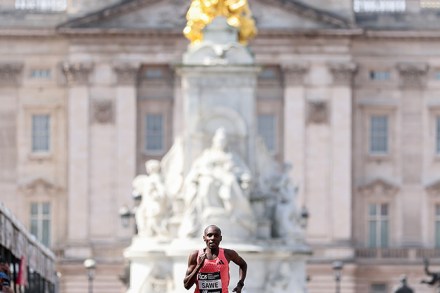
Suddenly last Sunday in London nearly 60,000 amateur runners were able to say they had competed in a race in which one of the world’s greatest athletic achievements of all time was finally accomplished. Sabastian Sawe’s demolition of the two-hour barrier for the marathon ranks with Roger Bannister’s cracking the four-minute mile in 1954, or Hillary and Tenzing conquering Everest, the world’s highest point, the previous year. These epics test human performance to its very limit and are moments that should be celebrated for as long as human greatness is acknowledged. He revealed that before the race he had breakfasted on bread and honey, with a mug of tea.

The inner secrets of Rory McIlroy

From our UK edition

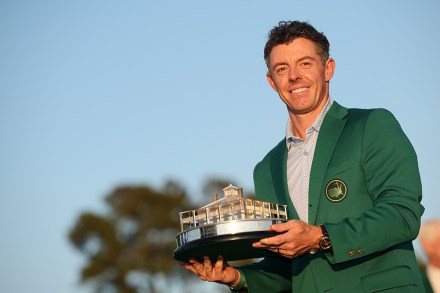
It’s easy to be sceptical about top sportsmen turning to psychologists for help. A bit precious, no? After all, what’s wrong with the good old Fergie hairdryer treatment to unmuddle the thinking of some bewildered player? But when you hear Rory McIlroy extolling the virtues of the man who gets inside his cranium you start to think a little differently. Dr Bob Rotella, a craggy sports shrink from Vermont, is, it turns out, one of the key members of McIlroy’s team and they have been working together for years. McIlroy paid a very handsome tribute to Rotella after his second successive Masters victory.

It’s time to let go of Tiger Woods

From our UK edition

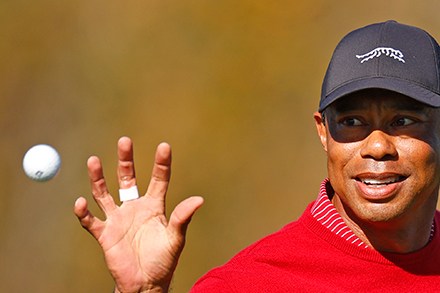
It’s not the newest joke in the world, but worth a quick rerun right now after the latest in a stream of near-fatal road accidents. What’s the difference between a Range Rover and a golf ball? Tiger Woods can drive a golf ball straight for 300 yards. The extraordinary story of Woods’s decline is written in his face: how the lean, mean athlete of the 1990s has developed into a puffy-faced drug user and sometime drunk is something we once associated with former footballers and boxers. Woods is evidence that no one, not even the prodigiously rich and talented, is immune to the destructive power of addiction.

Arsenal’s boy wonder is the future of English football

From our UK edition

It certainly never happened to me when I was a lad – even after a particularly insightful essay on the causes of the English Civil War – but there’s a remarkable TikTok film purportedly showing Max Dowman, the Arsenal boy wonder, arriving at school on Monday (don’t forget he’s still only 16), and being applauded to the rafters by pupils and staff. It might of course be AI nonsense, but if it’s not true, it should be. Dowman has long been talked about for his extraordinary ability, and he finally burst into the public’s mind on Saturday with 23 minutes as a substitute in Arsenal’s nervy 2-0 win over Everton. Nervy, that is, until Dowman came on. His balance is sublime, he seems to glide over the pitch and he has a staggering footballing brain.

The endearing Englishness of Harry Kane

From our UK edition

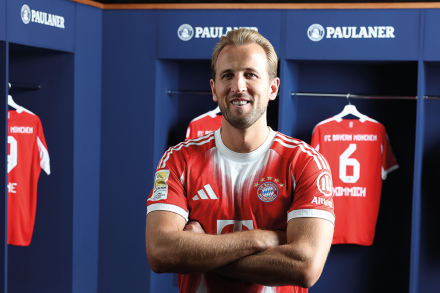
There’s something ineffably endearing about Harry Kane (though I am sure plenty of Bundesliga defenders would disagree), a sort of old-fashioned Englishness that was apparent in Captain Mainwaring. But unlike Mainwaring, he clearly gets on well with Germans. Even more important, he combines an apparent guilelessness with a canny understanding of how to do his job with distinction, which has made him the second most famous old boy of Chingford Foundation School after David Beckham.

The real problem with Welsh rugby

From our UK edition

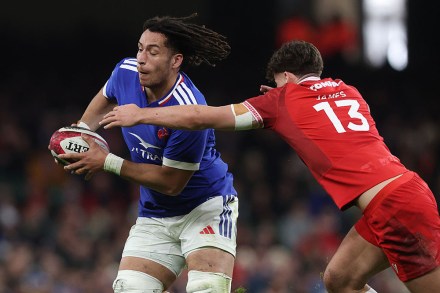
Wales rugby coach Steve Tandy must have the most difficult job in sport, apart maybe from Jim Ratcliffe’s public--relations whizz. In a Churchillian moment, Tandy has called for national unity after Wales were humiliated by a sublime France in front of their lowest Six Nations home crowd in Cardiff. But here is a simpler solution. Ditch those red shorts. Wales have always played in red shirts and white shorts and who wears red shorts away from the beach? It might sound like a footling point, but it is symptomatic of the ease with which great national organisations are willing to turn their backs on their past, doubtless at the say-so of a few kids from marketing rifling through a laptop. Winter sports people are so admirable.

The lost brilliance of football’s Pink ’Un newspapers

From our UK edition

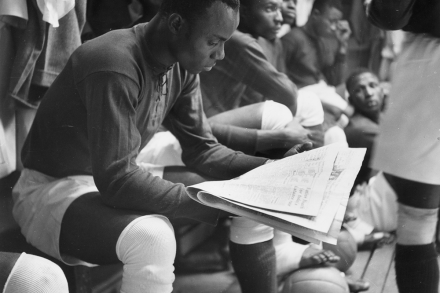
If you can remember Pink ’Un newspapers and the days when FA Cup shocks really were shocks, then God bless you, you’ve got a few miles on the clock. Pink ’Uns (occasionally Green ’Uns, as in Sheffield and Bristol) were Saturday evening regional newspapers carrying results and reports of Football League matches that, in a miracle of newspaper production, mesmerising to behold, were on sale on the streets while spectators were still leaving the grounds after the final whistle. All closed now of course, along with the demise of the Saturday 3 p.m. kick-off. Who needs papers anyway when football fans can discover the state of play in matches at any time, anywhere?

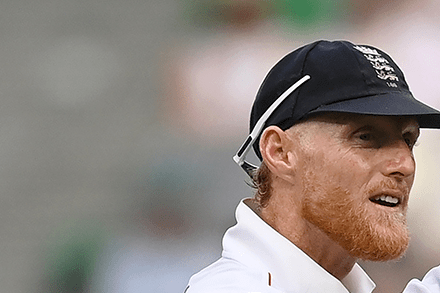
Don’t blame Ben Stokes

From our UK edition

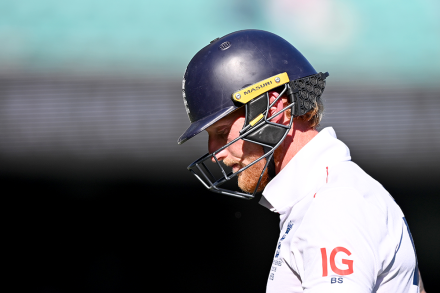
So what was the best bit of this dispiriting Ashes series? Lucky you if you’ve found one, but for me – at the time of writing, before Jacob Bethell was belatedly allowed to unfurl his brilliance – it was the moving homage to the heroes of the Bondi massacre at the start of the Sydney Test. It was flawlessly executed, unlike a great deal of the cricket: a group of first responders, including paramedics, lifeguards, police and Ahmed al-Ahmed, the shopkeeper who disarmed one of the terrorists, were given a guard of honour as applause and cheers flooded the ground. If it didn’t bring a tear to the eye, check your pulse. Otherwise, what have we learned?

Could two great managers bring us two World Cup wins?

From our UK edition

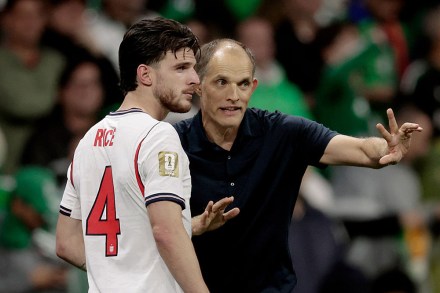
Maybe it’s the time of the year, or maybe it’s down to my sad little life, but surely I can’t be alone in feeling my spirits lifted by the example that Steve Borthwick and Thomas Tuchel are setting. The managers of England’s rugby and football teams have displayed courage, vision and a higher morality that could usefully be followed in other areas – politics, certainly, or business. Both came under fire in the early days of their management and stood resolutely firm. Model stuff surely. What Tuchel has done with his England side is a proper lesson for life. He has decided on a course of action – picking the best team but not necessarily the best players – and is sticking to it, ignoring all the off-stage squeals and drama.

Ben Stokes’s run-in with Aggers

From our UK edition

There’s tetchy, and then there’s Ben Stokes ‘tetchy’ – pulling out his mic and stomping off cursing, or so I’m told, after Jonathan Agnew asked a disobliging question. Admittedly it’s hard not to feel some sympathy for Stokes, an inspirational leader on the pitch who had just seen his team skewered in two days in Perth in one of the most brutal (and thrilling) Ashes Tests in history, and then had to do a live BBC interview. But this was the ever-courteous Aggers, for heaven’s sake, the nearest thing to a secular saint for TMS.  There’s no need for a four-letter outburst.

Ben Stokes will go down as the greatest captain of modern times

From our UK edition

And so it begins, as Donald Trump likes to say, though not usually about cricket. He was offering his thoughts on the New York mayoral elections, which is not as much fun as the Ashes. Pleasingly, the goading is reaching volcanic levels as the Perth Test gets ever closer. Who needs Trump? The West Australian is not a paper many readers will be familiar with but its pages have been plastered with pictures of English players making their way through arrivals at Perth airport.

The maverick magnificence of Henry Pollock

From our UK edition

‘Gosh he seems full of himself’ was how my friend’s wife reacted when she came in to see Henry Pollock celebrating his stunning try against the Aussies at the weekend. And she was spot on too: 20-year-old Pollock, England rugby’s latest prodigy, whips up emotions, not least the desire from anyone who has played against him – and plenty who haven’t – to give him a good belting. He’s swaggering, confident, brash, with rockstar charisma and a bleached blond mop, and he can wind up opponents until they need a bomb disposal expert to calm them down. Referees might soon want to tell him to rein it in. That’s youth for you: who gives a damn?

From South Africa to Saracens, two rugby stars are born

From our UK edition

Moments when a 24-carat superstar bursts on the scene are few and far between, but always something to cherish. And we rugby fans have had two in the past few weeks. First came the dazzling performance by Sacha Feinberg-Mngomezulu, the Springbok No 10 who tore apart a powerful Argentina side in Durban in September, scoring a record 37 points with three tries, eight conversions and two penalties. With his effortless running and velvet touches all over the field, he suddenly gives the traditional raw power of the Boks an explosive new dimension. He is compellingly watchable, only 23, and will soon be as much of a benchmark of rugby excellence as the French scrum-half Antoine Dupont.

Does it matter that the BBC lost the Boat Race?

From our UK edition

So we won’t be watching the Boat Race next year on the BBC, but on Channel 4. Never again will we hear the likes of John Snagge commentating on the fogbound 1949 race: ‘I can’t see who’s in the lead but it’s either Oxford or Cambridge.’ It’s a funny thing the Boat Race: an eccentric contest between the country’s two most distinguished academic institutions, rowed against the flow of the Thames along a tidal stretch with winds as ungovernable as a nursery school class, taking place at a time of year when the water can be in ferment. It’s a cranky British institution whose natural home should be the Beeb, another cranky British institution.

There’s nothing quite like the Ryder Cup

From our UK edition

It’s never been easy to warm to golfers, an overpaid, self-obsessed bunch who rarely fail to ask for more. And it’s even harder to warm to American golfers, who have now insisted on picking up half a million or so for playing for their country in the Ryder Cup. Nice, eh? And this weekend’s Ryder Cup, at the savagely hard Bethpage Black course on Long Island, could, in Donald Trump’s hyped-up MAGA-land, go over the top as it did in Brookline in 1999. On that occasion beered-up US fans (and players) behaved outrageously, swarming over greens, heckling Europe’s players and generally being obnoxious. Well, with a bit of luck this year will be very fruity, too. There’s nothing in sport quite like a Ryder Cup: it’s a team event for individuals.

Why three is the magic number in these Ashes

From our UK edition

And so it begins, the Great Debate: no, not who will be deputy leader of the Labour party but the infinitely more important – and certainly more interesting – matter of who will be trudging out at No. 3 to bat for England in the first Ashes Test at Perth, which is now ominously close. Almost as close as the moment the first bars of Slade’s ‘Merry Xmas Everybody’ starts plinking round the supermarket. For some, the choice of Ollie Pope or Jacob Bethell is like saying whether you’d rather be buried or cremated. And sure, the days of Jonathan Trott, Ian Bell and the great Nasser Hussain might be long gone. But No. 3 could be the key position in these Ashes.

Good riddance to the traditional sports bar

From our UK edition

They used to be places that reeked of testosterone, sweat and male egos, their floors sticky with lager spilled by big boys with big biceps. Well, that’s all changing. As the Women’s Rugby World Cup powers through its early stages, the latest spin-off from the rise and rise of women’s sport is women’s sports bars. As such innovations tend to, this one started in America when, according to the Economist, a former chef called Jenny Nguyen opened the Sports Bra (ho ho!) in Portland, Oregon in 2022. She did so after having to watch a top women’s basketball match in a traditional sports bar with the sound on mute, presumably so as not to compete with the small talk of the male customers not interested in what was happening on TV.

Nothing can save test cricket 

From our UK edition

Forgive me if I don’t join the general ‘Make mine a treble’ hoo-ha about the future of Test cricket after the theatre of the final day of the Oval Test against India, as an injured Chris Woakes made his way to the crease. Why was Woakes ever allowed to bat? His shoulder was dislocated and he was clearly in agony. Of course he wanted to help his country but he should have been stopped by Ben Stokes or Baz McCullum. This was a game of cricket, not the search for the nuclear codes. We knew the last pair would have to run to try to keep Woakes off the strike. What if he had tripped? That happens on cricket pitches – a lot. And what if he had had to face a ball?

The Ashes just got spicy

From our UK edition

You don’t have to look hard to find swaths of sports fans around the world who dislike England – England’s men’s teams that is. The women are a different matter. Now, surprise surprise, the Australians have come to the party. If they ever left. The trigger this time is Ben Stokes’s surly behaviour to the Indians at the end of the fourth Test when Washington Sundar and Ravi Jadeja chose to bat on to pick up their centuries, rather than march off for the draw that Stokes wanted. All that was left was sledging: ‘Fucking hell, Washi, get on with it,’ said Harry Brook, who never shuts up; ‘If you wanted a hundred you should have batted like it earlier,’ said Jofra Archer. Why they shouldn’t have wanted to collect their centuries is beyond me though.