Spectator Life

Spectator Life

An intelligent mix of culture, style, travel, food and property, as well as where to go and what to see.

How to make the perfect pecan pie

A pecan pie has been on my kitchen table for the past few days, due to circumstances rendering every other surface or shelf unusable, thanks to badly timed building work and an absent fridge. A mixing bowl sits over it, protecting it from dust and sticky fingers. I’ll tell you what I’ve learned: everybody loves pecan pie. Everyone who has walked past it has stopped dead, done a double take, and then rhapsodised unprompted about the pie’s virtues. At one point, excitement was generated simply by the pie being in the background of a video call. Pecan pie, one of America’s traditional celebration (especially Thanksgiving) puddings, is adored by children, but it has a dark, complex sweetness that wins over grown-ups too, and the toasty nuts bring texture as well as richness.


Wine to toast the fallen

Solemn, moving, serious: British. As silence fell and the wreaths were lain, even teenagers joined in the mood of reverence. Suddenly it did not matter what the gossip columns were saying about Andrew Mountbatten Windsor, or what latest mischief might arise from the Duchess of Sussex. The great ship of state and of history sailed on serenely. The sacrifices of a previous generation were saluted. They had paid the price for their Britishness. We, their successors, unworthy as we might feel, could at least salute them, especially as good bottles were about to be opened, to toast the fallen. Yet there was a problem far more important than princely indiscretions. We British won the war. Since then, we have defended the peace. Hard fighting is a tough business.

How Browns lost the battle of the brasseries

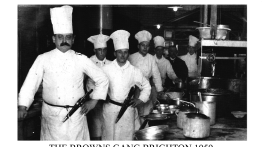
Last month, the founder of the Browns restaurant chain was charged with killing his mother. Shocking news, but it feels somehow appropriate. Browns is the traditional lunch spot for families looking to feed their student child, the place where 2.2s are revealed and doomed university girlfriends introduced. Many parents have found themselves spending hundreds on lunch only to be told their far greater investment has been wasted on dreams of becoming a club promoter. Steak frites, please, with a side order of murderous intent. Browns began in Brighton, but only really got going when it spread to Oxford and Cambridge in the 1980s. Bristol got one in the early 1990s, decking out a neo-Byzantine library next to the Wills Memorial Building.

The rise of the on-the-day party drop-out

A new drinks-party-shirking method has taken hold in British society. I call it ‘Lastminute.non’. Previously, the way of not going to someone’s party was to write a polite message of refusal at least a week in advance, giving the host or hostess ample time to absorb the sad but inevitable fact that various friends would not be able to attend – usually for copper-bottomed reasons, such as that they had other plans for the evening or would be away on holiday. The new trend seems to be to accept an invitation, and then, mere hours before, to duck out of it. This means that from breakfast time onwards throughout the day of the party, the host will receive a steady stream of apologetic messages.

Teen Vogue and the end of woke

Teen Vogue published ‘9 Climate Activists of Colour You Should Know’ in January 2020. The article already seems like it belongs to a lost world, which is perhaps why Teen Vogue ceased publishing this month. It is an artefact of those frantic Metternichian years from 2020 to about the end of 2023, when Donald Trump was pulled from office and the first wave of populism was declared to have failed. There were firings, criminal investigations, vaccine mandates. ESG was enthroned in the boardroom. Little Amal, a giant frowning puppet of a refugee, made wordless progress through the globe’s capitals, as if on patrol. Superintending all this were activists such as those listed by Teen Vogue.

Am I being haunted?

Asked if he actually believed in ghosts, M.R. James, author of the greatest ghost stories in the English language, answered equivocally that he was prepared to consider anything for which there was sufficient evidence. It’s the time of year when Monty James used to invite students to his rooms at King’s College, Cambridge, and turn down the lights. The students would listen to him read the terrifyingly chilly tales that he created every winter, set in the sedate surroundings of cathedral cloisters, country houses and East Anglian seaside towns. Now that I too live in an ancient cathedral city, I also want to see a ghost.

The small-town world of a Bohemian giant

Nearly everywhere you go in Nymburk, a small Bohemian town an hour or so from Prague, there are reminders of its most famous son, the novelist Bohumil Hrabal. The Czech writer, who died nearly 30 years ago, grew up here, amid the coopers and maltsters at the local Postřižinské brewery, where his stepfather was manager. Beer accompanied Hrabal throughout his life – much of his adulthood was spent sinking mug after mug at the Prague tavern U Zlatého tygra (‘At the Golden Tiger’). Terror stalked him too. He lived through Hitler’s occupation, grilled and harried by the Nazis who came very close to killing him.

The scourge of the cultural inheritance tax

Remember when history cost a few shillings? We wandered through romantic ruins, wondered who painted that dusty landscape above the fireplace, brushed lichen off carved stone and got shoes muddy spotting weeds in herbaceous borders. Visiting was about letting the quiet authority of age do its work; the place spoke for itself. After a financially bruising encounter with a sequence of heritage attractions in the past month, I’ve realised this experience is no longer available in Britain. Accessing our history today means a digital entrance gate, a logo, a QR code and a moral message – plus a fee that makes your eyes water. At St Paul’s Cathedral, the entry price for an adult is £26. A couple fork out £52 even before the gift shop. It cost £9 in 2007.

The lost world of paintball parties

I’m 11 years old, and I’m crouched inside the broken shell of a former London bus. It’s my friend’s birthday party. He turns 12 today, and he has just been shot. Not by a real bullet, of course, but by a paintball. I look over at his father, who is busy reloading his gun’s hopper. ‘This is my paintball gun,’ he murmurs. ‘There are many like it, but this one is mine. My paintball gun is my best friend. It is my life. I must master it…’ Without warning, his father springs up like a sleeper agent given their activation trigger and unleashes a barrage of bullets (paintballs) on a fleeing group of squealing ten-year-olds. ‘Ooh-rah!’ he shouts. ‘Get some!’ Welcome to the strange world of paintball parties.

How to make five dinners for £5

No matter how much the cost of convenience food rises, the idea that it’s still cheaper than cooking fresh food at home somehow refuses to go away. People can fool themselves as much as they like. But it’s (overpriced) pie in the sky.  To be economical, choose chicken thighs over breast; lamb shoulder over leg. Veg offcuts such as broccoli stalk (for soups) and ginger peel (to flavour Asian stock). Leftovers for egg fried rice. Stale bread for croutons. The freezer is your friend: not just for peas and berries, but spinach and an ice cube tray of leftover wine for cooking too. Oxo over refrigerated supermarket stock; Bird’s over fresh custard; lard over butter. It's handy to also use ingredients that don’t differ wildly between basic and premium versions.

Jennifer Aniston and the allure of woo-woo

There was a time when, whenever the gossip mags wrote about Jennifer Aniston, they’d always preface her name with ‘Sad’. Sad Jen Aniston – it became one of those three-part names, like Sarah Jessica Parker or Sarah Michelle Gellar, only condescending rather than smug. For someone who was allegedly one of the most desirable women on earth, this must have been extremely annoying, recalling the line purred by the courtesan played by Marlene Dietrich in the 1932 film Shanghai Express: ‘It took more than one man to change my name to Shanghai Lily.’ It took more than one man to change Aniston’s moniker to Sad Jen: Brad Pitt, John Mayer and Justin Theroux, for starters.

Give Andrew Miller the Booker

The winner of this year’s Booker Prize will be announced tonight. Of the six shortlisted novels, Andrew Miller’s The Land in Winter looks like a good bet for the £50,000 award. It might even be a contender for best Booker novel ever. The prize’s judges have been known to make strange calls – and always bet responsibly! – but the odds on Miller are good. The story takes place against the backdrop of snowbound Britain’s ‘Big Freeze’ between December 1962 and February 1963. ‘For a mile from the Kent coast,’ Miller writes, ‘the sea had turned to pack ice.’ This was the time of Beeching, Babycham, Benny Hill, Acker Bilk, Dr Kildare, the Daily Herald, the Kray twins, London smog, shillings in the meter, the H-bomb and flying saucers.

How we saved our local pub from closure

You won’t find it in any of the ‘best pub’ guides that seem to appear every other week, but our local is the best pub simply because it’s, well, our local. And that is why our village has come together to save it from permanent closure. The White Horse Inn in Westleton – one of around a dozen pubs in Suffolk with that name – was put up for sale last year by the county’s foremost brewery, Adnams, as they looked to slim down their estate. It was hoped that, as with other pubs in the area, some enterprising new owners would come and take it over, tart it up and give it a new lease of life. But the longer it failed to sell, the more it seemed that it would end up, like so many others in Britain, falling into the hands of developers.

In defence of American sport

This afternoon, just shy of 75,000 fans of American football will flood in to watch the Atlanta Falcons take on the Indianapolis Colts, in what is set to be the Colts’ largest attendance for a home game this season. A few weeks ago, more than 86,000 turned out to watch the Jacksonville Jaguars face the LA Rams in what was the Jaguars’ best-attended home game this year. The most surprising thing about this? Both games were taking place more than 4,000 miles from the NFL’s heartland – one in Berlin, one in London. Recently, Sean Thomas claimed on Spectator Life that America has failed to export its ‘laughable’ sports.

Enough with the Aga-shaming

The headline smacked me between the eyes. ‘I can’t afford to turn my Aga on this winter,’ a nice writer called Flora Watkins whinged in the Telegraph last weekend (she once wrote a Spectator piece about the sublime awfulness of cockapoos that I wished I’d written myself). The sub-head continued: ‘Our writer’s once cosy Norfolk home is feeling the chill as energy bills rise – how will she and her family cope?’ There was a fetching picture of our tragic protagonist in cardi and layers clutching a mug in front of her Aga and an impressive batterie de cuisine. Watkins had also swathed her pretty neck in the Diana-sheep-jersey scarf (white sheep on red, and one dear little black sheep).

Two bets for the big Aintree chase tomorrow

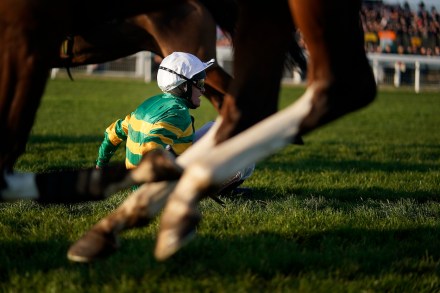
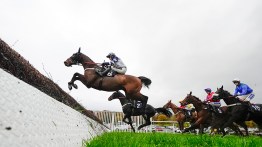
The first race of the season over the Grand National fences at Aintree takes place tomorrow when 17 runners are due to line up for the William Hill Grand Sefton Handicap Chase (2.40 p.m.). A good case can be made for the first three in the betting: King Turgeon, White Rhino and Johnnywho. The former won this race a year ago before showing further improvement later in the season, whereas the other two have clearly been targeted at this contest for some time and are potential improvers. If one of them wins at around 5-1, then so be it but I would prefer to look for value elsewhere. At first glance, OUR POWER was not an immediate pick for this race having been running well at distances of up to four miles last season, whereas tomorrow’s contest is over only two miles five furlongs.

The headphones that play the future

I have arrived in Naples, Italy, after an arduous flight from a chaotic London Gatwick Airport. I’m settled in a glamorous top-floor apartment in the Quartieri Spagnoli – the romantic old ‘Spanish Quarter’ – where Vespas fizz over cobbles and laundry hangs across alleys like flags of endless surrender. Most importantly, I’m clutching my Apple AirPods 3 in their shiny new capsule. Because I’ve come here to do a grand, futuristic experiment using their much-heralded ‘live translate’ function. Does it really work as smoothly as Apple says? Can I actually slot them in my ears and have them translate the Italian speaker in front of me, in real time? Is it really like the sci-fi Babel Fish from The Hitchhiker’s Guide to the Galaxy?

Mamdani will hand New York’s restaurants to the rich

There’s no shortage of catastrophic predictions for New York under Zohran Mamdani’s leadership. While the city probably won’t see breadlines, the wildly expensive, exhaustingly derivative restaurants that dominate its food scene are likely to become more dominant. Mamdani’s big pledge on food is to ‘make halal eight bucks again’. But it’s a ‘false promise’ of street-food affordability according to Heritage Foundation economist Nicole Huyer. She says Mamdani’s economic programme, which includes higher taxes, steeper leasing regulations and a pledge to raise the minimum wage to $30 an hour by 2030, will effectively make restaurants even more expensive.

Save England’s apples!

On a grey autumn morning, the apples in the National Fruit Collection look vivid. They pile up in pyramids of carmine, salmon and golden-orange around dwarf trees, which have been bred to human proportions. Their branches are well within reach but picking fruit is forbidden. These trees are part of the world’s largest fruit gene bank. Neil Franklin, an agronomist and a trustee of the National Fruit Collection in Kent, describes it as ‘the Victoria and Albert Museum of the fruit industry’. The collection holds several types of fruit, but the apple is queen of them all: of the 4,000 or so fruit varieties here, more than 2,200 are apples. They’re used mainly for research into breeding and resistance to pests and diseases.

How not to train a truffle dog

For the first time in decades, King Charles has a new pet dog, a lagotto Romagnolo called Snuff. Queen Camilla is said to have given him the puppy, perhaps more for her benefit than his. She is thought to be mad about foraging for fungi, especially in the area surrounding her home in Wiltshire, where the chalky terroir is famous for an abundance of Burgundy truffles. Snuff is the perfect breed to find them. The lagotto hails from my home region of Emilia Romagna, and in recent years the dogs have surpassed pigs as the go-to tool for truffling. I can only surmise too many fingers were lost retrieving a precious truffle from a 200lb swine.

Bagels that even New York can’t beat: Panzer’s Delicatessen reviewed

That Panzer’s Delicatessen in St John’s Wood is called Panzer’s – for the instrument of Blitzkrieg – is mad, until you remember that Jews love to eat near catastrophe, and then it is merely funny. I love Panzer’s so much I am reluctant to share it, but we need all the friends we can get. I keep telling non-Jewish friends: when we burn, you will burn with us. Though I mean it as consolation, they tend to run. St John’s Wood has always existed on the edge of hysteria. Edwardian psychopaths put their mistresses here, and I once went to a children’s birthday party where Peppa Pig couldn’t park, and there was a fight with recriminations. The high street sells corsetry and facial reconstruction.

After 30 years, it’s farewell to The Turf

It was Frank Johnson who as The Spectator’s editor asked me to mix my then day job as the BBC’s political editor with writing this column. For someone starstruck by racing as a 12-year-old, bicycle propped against the old Hurst Park racecourse wall to watch the jousting jockeys in their myriad colours flash by, the opportunity was irresistible. It felt like a pass into a magic world: mingling in the winners’ enclosure with the titans of the sport, arriving at bustling stable-yards in the early hours amid the swish of brooms and clatter of buckets, relishing frosty mornings on downland turf as strings of skittish two-year-olds learned their trade.

Just how sick are Gen Z?

Anyone who has allowed themselves to spend time on TikTok – to say nothing of those who have ever looked at porn on the internet – will have an inkling of the vortex that lurks. Even for those of us who have so far resisted full-blown internet addiction, the ever growing appetite can never be satisfied for more than a second or two. Gen Z, as we know, has been more shaped by these dynamics than anyone else. This has produced well-documented traits such as extreme sensitivity and apparent inability to cope with criticism or challenge; social anxiety leading to a lack of interest in spending time with others in person, ready hostility, a failure to mature emotionally and economically, and a complete estrangement from the old go-to escapist pastime of reading printed words.

Why the authorities hate Lewes bonfire night

One of the first articles I wrote for The Spectator back in 2011 described the explosive celebration of Bonfire Night in Lewes, the ancient county town of East Sussex where I then lived. Today, such is the relentless march of purse-lipped Wokedom, it is necessary – in writing about this eccentric folk festival – to defend its very existence as well. The simple survival of ‘Bonfire’ (as it is known to Lewesians) every 5 November is in fact something of a miracle in our painfully politically correct age.

Germany still feels divided

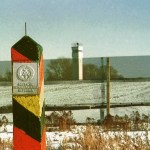
As the S-Bahn tram slid along Bernauer Straße, through its windows I could see tourists posing for photos beside the remains of the Berlin Wall. Everyone fixates on the border that cut through West and East Berlin. We forget that Berlin itself was deep in the GDR and that hundreds of kilometres to the west another border ran down the entire seam of West and East Germany. Observation Post Alpha, the West’s most important military observation post on that border, still stands today as a memorial to the folly of geopolitical games. It was erected to overlook the so-called Fulda Gap, an area of land deemed strategically vital by the Allies. This was where hordes of Russian tanks would charge through in the event of a full-scale attack on the West.

The unravelling of Tom Daley

Poor Tom Daley. The cherubic diver, who dazzled as a 14-year-old at the Peking Olympics, turning the heads of Chinese girls like spinning jennies, seems to have banged his head on the board once too often. He won friends everywhere with his easy manner and Colgate smile. The boy next door, people thought, who ran errands for neighbours and lit candles on feast days. But it gets them all in the end, celebrity. He’s gone bonkers. Daley is now 31 and based in California, where he claims to have found a contentment which eluded him in his sporting endeavours, despite grabbing a gold medal at Tokyo five years ago. The pup from Devon has become a transatlantic crasher.

Airlines are finally making an effort

Economy fliers everywhere, rejoice! After a long stint of what can only be described as tight-fisted meanness, British Airways and other short-haul carriers including Virgin Atlantic have started to compete on service again. The trolley-dolly is officially back. Now, once you are (semi) comfortably seated in economy and cruising at altitude, you will be offered tea or coffee and maybe even a biscuit. Airlines have long competed in a race to the bottom on price but are undergoing something of a volte face. This new customer service strategy is driven by competition from the state-subsidised airlines in Asia and the Gulf. This can only be good news for those of us who fly economy but believe that we belong in another part of the plane. I include myself in this number.

Hands off my wood-burning stove!

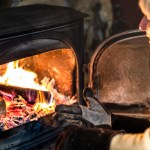
Now that the clocks have gone back and the evenings draw in, those of us lucky enough to own a log burner start thinking about cranking it up. One of the few benefits of returning to GMT, as far as I’m concerned, is the chance to get primal – and have a real fire. Yet, as sure as eggs are eggs, this is also the time of year the media trots out scare stories about the supposed perils of wood stoves. For example, articles have recently appeared in several papers about a report commissioned by the climate charity Global Action Plan and Hertfordshire County Council, which claims that wood-burning stoves and open fires are a significant source of ‘particulate matter’.

Winter is coming. Thank goodness

The leaves on the oak tree in the park are three-quarters brown and bring to mind the two-tone hair of a model in the ‘before’ picture of a dye advert. The tiny leaves on the apple tree over the garden wall look as though they have been individually removed and stuck in an air fryer to crisp up nicely before being painstakingly reattached. The sky is leaden, the colour of Sunday afternoons on the box in the 1970s, when the grey screen swarmed with Messerschmitts, Heinkels and Spits… It can only mean one thing. Winter is coming. And just in the nick of time. Because winter is wonderful – easily the best season, no matter what others may claim. How so?