Kristina Murkett

Kristina Murkett is an English teacher, private tutor and journalist

The plague of bad behaviour in primary schools is getting worse

From our UK edition

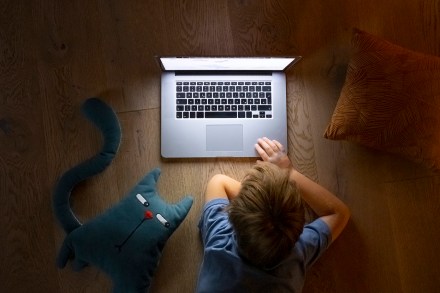
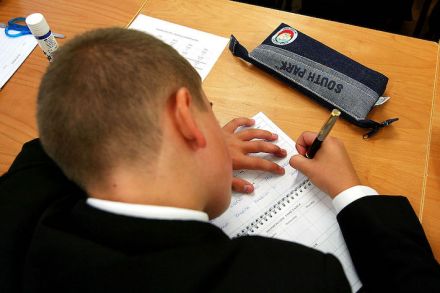
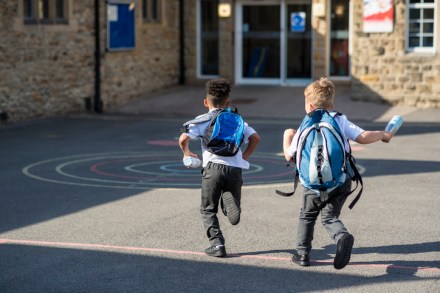
In 2023, I wrote an article about the epidemic of bad behaviour plaguing British schools, blaming screen-obsessed kids and tuned-out parents for the rise in persistent low-level disruption since the pandemic. At the time, almost half of pupils said that they felt unsafe each week because of poor behaviour: a worrying but unsurprising statistic given the rise in permissive parenting styles means that behavioural boundaries are never properly established. Too many children never learn to properly respect teachers because their will always overrides the authority of the adults (or, dare I say it, adult) at home. Three years on, and little seems to have changed; in fact, things have worsened.

The problem with Labour’s toddler screen-time guidance

From our UK edition

As a parent of an 18-month-old, the glorious weather last weekend could mean only one thing: a tour of the various playgrounds on offer in Oxford. Amidst the joyful scenes of children digging in sandpits, rocketing down slides and queueing to buy ice creams, there was one particularly depressing image that summed up this strange, screen-obsessed world we live in. On the swings was a child, around 3 or 4-years-old, silently swaying back and forth, eyes glued to an iPad mere inches from his face. He was completely oblivious to the fun, laughter and play going on around him, and his mum? She was on her phone too, of course. This eerie, almost dystopian image of a toddler fixated on a screen, outside on the sunniest day of the year, may seem like an extraordinary exception.

Harry Potter is for infantilised millennials

Nostalgia is often seen as a positive emotion, but the word actually derives from the Greek nostos, meaning ‘homecoming’, and algos, meaning ‘pain’. Nostalgia is really a type of homesickness, an ache for something lost. As audiences watch the new trailer for the HBO Harry Potter television series, the algos may hit pretty hard: those tantalising two minutes are the reminder we need that you can’t catch lightning in a bottle twice.  The first thing you notice is simply how bad everything looks.

Please stop telling me your ‘sleep score’

From our UK edition

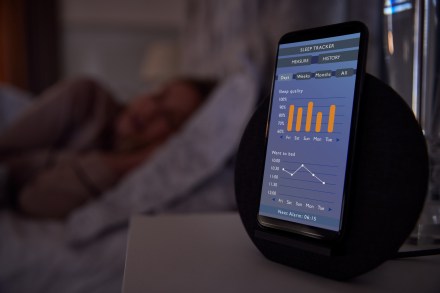
People say that there is nothing as boring as listening to someone tell you about a dream they have had. I think there may now be something even more tedious: someone telling you about their sleep score.  Since my husband bought himself an Apple Watch, he has become a sleep swot. Our morning conversations have become a one-way monologue in which he proudly tells me about his resting heart rate, his time spent in deep slumber, the number of wake ups (with a 16-month-old next door, I am quite aware of the latter already).  Honestly, is there anything less romantic than waking up to a breakdown of your spouse’s biometrics?

The rise of the Oxbridge AI admissions cheat

From our UK edition

‘This is the future, my wife says./ We are already there, and it’s the same/ as the present.’ So begins Ciaran O’Driscoll’s poem ‘Please Hold’, about a husband talking to a telephone robot and becoming ever more frustrated at the mind-numbing automation of modern-day life. There’s a lot of ‘Your call is important to us’ and Eine Kleine Nachtmusik and ‘We appreciate your patience’, until eventually the speaker resigns himself to the fate of growing old while on hold. This same reluctant acquiescence can be seen with AI: this is the future, and we are already there. Except instead of asking us to hold, it’s always asking us how it can help, how it can further infiltrate our lives. AI has already transformed how students learn and schools evaluate.

Screen time is rotting the brains of Britain’s toddlers

From our UK edition

As I try to wrestle my 15-month-old son into a nappy, or stop him from throwing himself down an escalator, or teach him not to spear himself with a fork, I remember that slightly lesser-known Winston Churchill quote: 'I am always ready to learn, although I do not always like being taught.' It appears, however, that children are increasingly not ready to learn, and parents increasingly dislike doing the teaching. The results of the annual survey of primary school teachers are not just mildly depressing reading on a rainy January day: they are a stark and shameful indictment of the failures of so many parents. Teachers claim that 37 per cent of children starting reception class are simply not ready, the highest on record.

The truth about the surge in home-schooling

From our UK edition

Historically, home-schooling has been seen as a niche or eccentric choice of education: an option only really considered by hippies, conspiracy theorists, religious fanatics or socially awkward geniuses. Its reputation has not been a positive one: critics argue that home-schooled children are at risk of abuse and radicalisation; that it is a form of social imprisonment, keeping students away from their peers; and that it is more about pleasing over-protective, paranoid parents than doing what is best for the child. Banning home-schooling is not the answer Not anymore. Despite the stigma, an ever-growing minority of parents are choosing to home-school their children: 175,000 students were home-schooled in 2024/5, an increase of 15 per cent from the previous year.

Misogyny lessons for schoolboys will backfire

From our UK edition

All parents and teachers of teenagers will know two things. The first is that teenagers are the human equivalent of seismometers when it comes to perceived unfairness: they are acutely sensitive to any injustice or unequal treatment, and if they feel they are not being treated the same as their peers, this can quickly erupt into an outburst of outrage or denial. The second is that, try as we might, parents and teachers are not cool. We are not cool at the best of times, but we are definitely not cool when we are telling teenagers not to do something – and there is always the risk that lecturing them about how dangerous or transgressive something is only makes it all the more appealing.

In praise of learning German

From our UK edition

The University of Nottingham, one of the most prestigious Russell Group universities, is preparing to close its languages department, as well as 48 undergraduate courses across music, nursing, agriculture, theology, microbiology and education. It seems strange that at an institution which claims to be a ‘global university without borders’, students will no longer be able to study French, German, Spanish, Chinese or Russian. My reaction to this news is one of head vs heart. My head tells me that in order to survive and provide high-quality education, universities need to be solvent, and so perhaps this is a pragmatic decision – a hard one, but one that reflects our hard times.

Daylight savings is anti-feminist

From our UK edition

It is, officially, ‘cosy’ season. My social-media feeds have suddenly become very homely and wholesome: full of pictures of chunky knitwear, crisp leaves, soft blankets, flickering candles and crackling fires. I want to embrace this romanticisation of winter, I really do. I want to enjoy this slower routine of fluffy pyjamas, Christmas movies and aesthetically pleasing pumpkin lattes. I want to say that I love coming home from work, drawing the curtains and snuggling on the sofa with a glass of red and a paperback. I want to laugh that it doesn’t matter if I don’t see direct sunlight for the next four months because I can wear cashmere socks or buy new fragranced bubble bath. The problem is that I have a toddler.

Motherhood is tougher and lovelier than I could imagine

From our UK edition

My son’s first birthday has arrived, which feels like a much bigger milestone for us than it is for him. I had to let go of any expectations around motherhood early. At eight months pregnant I learnt that I could not have the calm, candlelit water birth I had planned (does anyone actually have one of those?). It transpired that I had a condition called placenta previa, and so would need a planned caesarean. The midwife cheerily told me not to worry about him ‘coming out the sunroof’ – a rather grating expression as it implies an easy way out, when I am, as it happens, a car without a sunroof. Then came the rather startling announcement from the surgeon that my baby was ginger (my husband and I are more Draco Malfoy than Ron Weasley).

State school kids will pay for Labour’s International Baccalaureate crackdown

From our UK edition

It appears that Labour is determined to ensure that choice in education is only for those who can afford it. The government has just announced that it is slashing funding for the International Baccalaureate (IB) in state schools, meaning the qualification may now only be offered in the private sector. What choice do parents of these children now really have? Just like the mid-year cancelling of the Latin Excellence Programme, this is yet another example of Labour’s utilitarian fear of excellence and difference. The IB Diploma differs from A-levels in that it is a much broader course: rather than studying three subjects post-16, pupils study six.

Why kids won’t learn languages

From our UK edition

The English have always had a terrible reputation when it comes to learning languages. Think of the stereotype of the sunburnt Brit abroad butchering ‘una cerveza, por favor,’ or P. G. Wodehouse’s description of the ‘shifty hangdog look which announces that an Englishman is about to talk French.’ It appears, however, that our monolingualism is worse than ever, at least in schools. New data has revealed that a third of state sixth-forms in England do not have a single person studying French, German or Spanish A-level – in the West Midlands the rate was as high as 47 per cent. The requirement to study a language at GCSE level was scrapped in 2004, and since then entries have plummeted: the number of pupils taking French GCSE has dropped by two thirds in two decades.

Free childcare shouldn’t just be for working mothers

From our UK edition

This week, we had a rare example of a family-friendly policy coming into effect: working parents of children aged 9 months or over will now have access to 30 hours of free childcare a week during term time. I should be elated by this news: I went back to work part-time after 11 months of maternity leave on Monday. My son is now at a childminder 3 days a week, and so this policy is saving me roughly £360 a week (a full-time nursery place in Oxford, where I live, will easily set you back £2,000 a month without any funding).  Yet my feelings are mixed at best. Partly this is because I know that the government has promised the moon but has in reality only paid for a small asteroid.

ChatGPT is a narcissist

From our UK edition

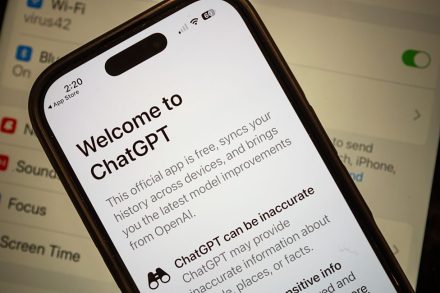
In Isaac Asimov’s 1956 short story ‘The Last Question’, characters ask a series of questions to the supercomputer Multivac about whether entropy – the universe’s tendency towards disorder, and the second law of thermodynamics – can be reversed. Multivac repeatedly responds ‘INSUFFICIENT DATA FOR MEANINGFUL ANSWER’, until the ending, which I won’t spoil here. If I were to put the same question into ChatGPT, it would be a very different story. I’d likely get some fawning pleasantries, some ooh-ing and aah-ing about how deep and wise my enquiry is, before a long, neatly bulleted summary, rounded off by a request for further engagement (‘Let me know if you want to go deeper into any of these cases!’).

GCSE English language isn’t fit for purpose

From our UK edition

Today is GCSE results day, and as ever that is cause for celebration: one in five entries got at least a grade seven (equivalent to an A). However, despite all the headline photos of smiling faces, proud parents and carefully open envelopes, the GCSE pass rate for English and Maths has hit a record low: only 58 per cent of students achieved a four or above in Maths, whilst only 60 per cent did in English.  GCSE English Language is a strange subject. To understand why so many people fail it, you need to understand that it isn’t really a test of English Language How have we ended up in a situation in which two in five of all pupils – and four in five of white British children on free school meals – are not achieving a pass in the only two compulsory subjects?

Teachers deserve their long summer holidays

From our UK edition

What’s the best thing about teaching? July and August! Or so the old joke goes. The long school holidays are an easy riposte to teachers’ complaints about the profession. Below inflation pay rises? At least you get the school holidays. Lack of flexible working opportunities? Six weeks off over summer. Disruptive behaviour? At least you don’t have to see the rugrats over Christmas and Easter. Teaching is clearly a labour of love, but it is not an inexhaustible one. Shortening the summer holidays would be a disaster No-one really wants to hear it, but most teachers still feel a knee-jerk need to justify their summer holidays: to explain how hard they work; the hidden hours of marking, planning, report-writing; the free time lost to parents’ evenings and away sports fixtures.

Every boy needs a strong male role model in their life

From our UK edition

Imagine you are the parent of a primary-school aged boy. Outside of family, how many men do you think your son would interact with, compared to women? The answer is unlikely to be balanced. In the UK, 98 per cent of childminders and nursery workers are female - as well as 99 per cent of health visitors, 87 per cent of social workers, 79 per cent of librarians, 96 per cent of speech therapists, 89 per cent of nurses, 58 per cent of GPs, 61 per cent of paediatricians, and 63 per cent of youth club workers. Your son is unlikely to come across many men at school either.

Labour owes it to special needs children to reform SEND

From our UK edition

They say that history repeats itself, but the Labour party won’t be expecting it to happen quite so quickly. Last week, a ‘Starmtrooper’ rebellion forced the government to make a series of last-minute concessions and compromises on its welfare bill for fear of a humiliating defeat in the House of Commons.  Now, Labour is facing a similar battle, but this time over special educational needs (SEND) provision. MPs are criticising ministers’ refusals to rule out cuts as part of its SEND overhaul, the details of which will be unveiled in the autumn. As one Labour MP warned, ‘if they thought taking money away from disabled adults was bad, watch what happens when they try the same with disabled kids.

The biggest reason people aren’t having babies? FOMO

From our UK edition

In his book Selfish Reasons To Have More Kids, economist Bryan Caplan notes that, due to modern conveniences and our better quality of life, parenting should be easier than ever. Plus, in theory, as society grows richer, people should have more children. Instead, we have fewer, and parenting seems harder than ever.  Why is this? Caplan argues that it is because we have placed many new requirements and expectations on parents that previous generations never had. He contends that parenting has morphed into a suite of ever-changing, high-pressure social obligations – many of which are neurotic, consumerist and status-obsessed, such as saturating your child’s timetable with extracurricular activities to ensure that they are never bored.