Rob Crossan

My Chernobyl holiday

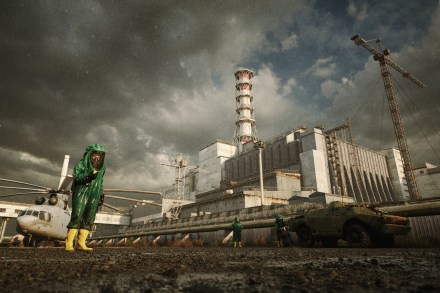
There are few things that look sadder than an abandoned football ground. I spent longer than I meant to sitting on a decaying bench looking out over the forest that was once the intended playing surface for the Stroitel Pripyat football club. The sky above was cerulean, cloudless and entirely still. The only life came from my hand-held Geiger counter which spluttered and crackled, telling me that I was in a territory that wasn’t fit for a stroll, let alone 90 minutes of lung-bursting athleticism.  Stroitel Pripyat ceased to be a club 30 years ago, just as they were about to move into the purpose-built Avanhard Stadium where I sat that afternoon.
Where would you put a blue plaque?

From our UK edition

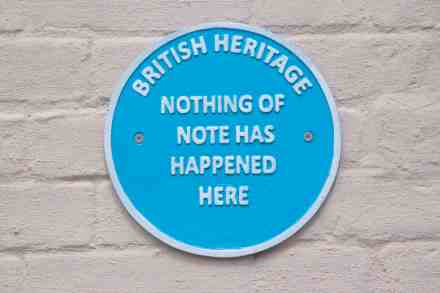
Beulah Hill in Norwood is an overwhelmingly uninteresting stretch of South London road; the kind of anonymous thoroughfare that can induce mild depression on a day of drizzle and delayed buses.   Yet, as is often the way with these tedious parts of suburbia, visual perseverance can reap rewards. It was only last week, on my hundredth trudge down the hill towards home, that my fiancée spotted a blue sign above the doorbell to a typically fusty looking mansion block.   Stalking up the driveway to look closer, I read that this was the spot where, 60 years ago, the Jules Rimet trophy (aka the World Cup) was found in a hedge by a mixed border collie dog named Pickles.

I have a bad case of northern homesickness

From our UK edition

I’ve long held firm to the adage that you can’t truly call yourself a local in the town, city or village you reside in until you’ve spent over half your life there.  By my own calculation, I’ve just tipped over into becoming a Londoner: as of this year, I have spent 24 of my 47 years in the capital.   Not only that, but I’m marrying into the clan too. My fiancée – whom I’ll be tying the knot with in the spring – is a born-and-bred Chelsea girl whose proximity to the sound of Bow Bells has never strayed further than Crystal Palace.

Why do guide dogs need ID to go to the pub?

From our UK edition

I’ve long clung hold of one small crumb of comfort from my encroaching blindness. Namely that if and when my deteriorating vision (I have albinism and nystagmus) packs up completely, I can become one of those blokes who takes his guide dog to the pub and teaches it to drink beer from an ashtray.   But I won’t be doing that at any branches of J.D. Wetherspoon as things stand. As of this week, flyers alighting at Alicante airport can get a morning pint at the first branch of the chain to open on Spanish soil. Back at home, however, the issue facing the pub concerns hounds, not holidaymakers.

We don’t need to see radio DJs’ faces

From our UK edition

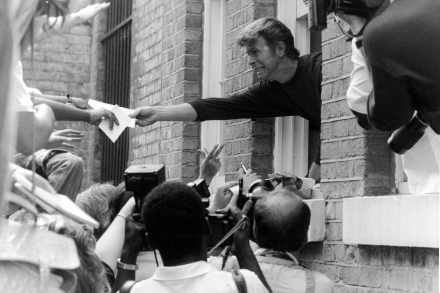
In a week in which embarrassing and damaging revelations about past misdemeanours are very much in vogue, let me reveal one of my own. When I was seven years old, I wrote in to Jim’ll Fix It. My request was to play a giant Wurlitzer organ, preferably the one in the Blackpool Empress Ballroom. To my retrospective relief, Savile didn’t respond to my letter. But I did purchase a second-hand, two-tier Hammond organ when I was at university, which I played as part of an acid jazz group. No tapes of our band’s songs or gigs survive I am delighted to state. I was reminded of my rather strange and atavistic early love of organs last week when I read of the death of Nigel Ogden, the presenter of the long-running Radio 2 show The Organist Entertains.

Heard the one about the MP who thought he was a comedian?

From our UK edition

There are so many ways to mangle brilliance. If you’re a present or former member of Take That, you’ll know what I mean when it comes to taking the sweet essence of the Bee Gees and turning their hits into something as bland and devoid of colour as an Ikea Billy bookcase. And if you’re James Cleverly, you may have learnt last week that members of parliament using comedy catchphrases invariably turns the gag from gold into something that floats at the top of a storm drain.  Referring to Housing Secretary Steve Reed, Cleverly asked in the Commons: ‘What was it about the Labour party’s collapse in the opinion polls that first attracted him to the cancellation of local elections?

The vivid legacy of Martin Parr

From our UK edition

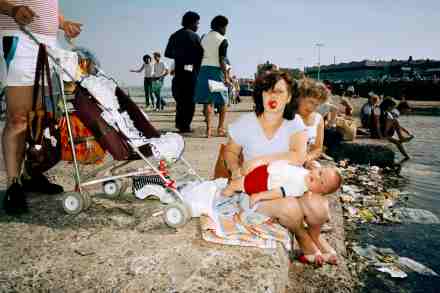
Four decades ago, a man took lots of photos of some working-class people having a day out at the seaside. The resort was New Brighton on Merseyside, and the photos showed that the sun shone, the ice creams were runny and lots of people fell asleep in their deckchairs, resulting in their faces turning fire-engine red. What ‘The Last Resort’ – the most famous photography project by Martin Parr, who died last month at the age of 73 – also showed, and continues to show, is that there is nothing that the liberal-artistic-media-elite loathe more than seeing ordinary people having a good time and not giving a hoot what anyone else might think of them.

Take Back Power is no Robin Hood movement 

From our UK edition

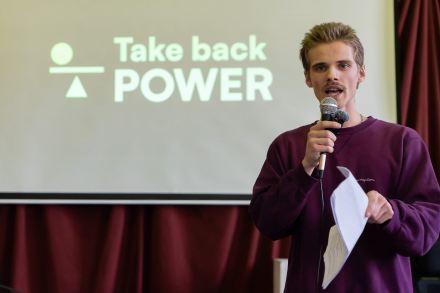
The biggest rebel in my year at school (a pretty raggedy state comprehensive near Chester) was a guy called Paul. He had very long hair, wore a trench coat and was regularly told to ‘have a bath’ by the more boorish elements of the playground. Paul railed against the system in the way that only teenagers who have experienced nothing of life but have read at least half of The Catcher in the Rye and The Outsider can. The more militaristic tranche of our teachers also hated him for the permanent odour of weed that followed him around and the crude drawing of Che Guevara on his rucksack. He was one of my best friends. Paul cut his hair and stopped reading Noam Chomsky in his mid-twenties.

It’s all been downhill since Concorde

From our UK edition

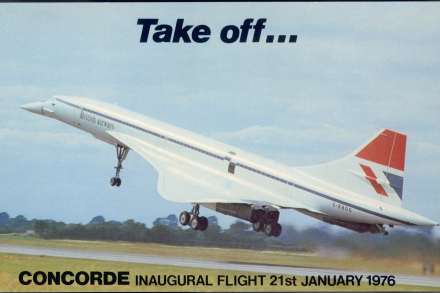
Half a century ago today, the Duke of Kent, Anthony Hopkins and 97 other diners had a meal of caviar and lobster canapés followed by grilled steak, all washed down with Dom Perignon. There was nothing too unusual about this slightly ostentatious menu, one that was a typical example of 1970s British fine dining. But it was a lunch that cost more than £1 billion to serve up. It was the first meal on board the very first scheduled flight on Concorde – the plane that, for close to three decades, made it possible to have breakfast in Belgravia, a meeting in Manhattan and still be home for supper in Soho.  That’s not a schedule that appeals to me (there’s nowhere decent to eat of a morning in Belgravia).

David Bowie and why we love working-class pop stars

From our UK edition

The only time I ever saw David Bowie live was at a ropey festival in an old airfield near Stratford-upon-Avon in the latter half of the 1990s. Frankly, I thought he was pretty awful. It was the peak of Britpop, electronica and trip hop were in the ascendency and the campsite and smaller stages that weekend were fervent with fast beats, French crops and chemical ingestion. Bowie, to my late-teenage eyes and ears, seemed like an embarrassing dad, attempting to remain ‘with it’ via his recent drum and bass-infused song ‘Little Wonder’. I sloped off before the end to go and watch Goldie instead. I’ve listened to much more Bowie since then, and although I maintain that at least 50 per cent of his vast output is distinctly average, the best bits are transcendent.

‘Doomer jazz’ and the strange afterlife of Taxi Driver

From our UK edition

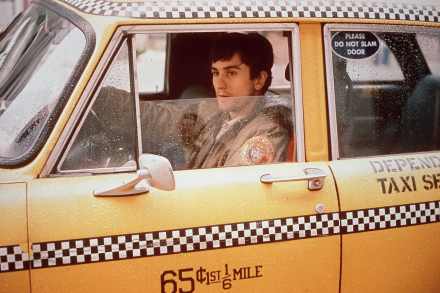
Bernard Herrmann died 50 years ago this month. He only just lived long enough to complete the suite of instrumental jazz that’s now regarded as not only his finest work across many decades as a movie composer, but one of the greatest celluloid soundtracks of all time. There are very few movies which you can honestly state simply wouldn’t have got out of the traps were it not for the soundtrack. Taxi Driver is one of them. There’s more than enough available film critic geekery about Martin Scorsese and Robert De Niro’s finest hour to plough through already. But the curious afterlife of the Taxi Driver soundtrack was something I had no idea about until a recent Spotify sleuthing session. You’ve heard the main siren call theme of the movie.

Britain’s lack of trains on Boxing Day is shameful

From our UK edition

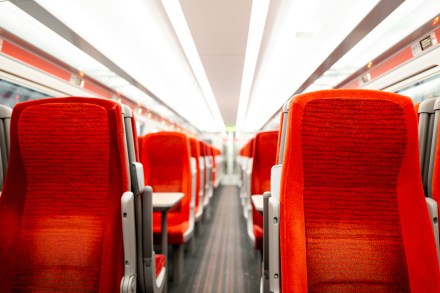
Among all the perfidies of public transport in Britain (a nation that can build a £40 billion railway based on the premise that the outskirts of Acton counts as a ‘central London’ terminus), perhaps the most ludicrous of all is this. On 26 December, a day when millions of us need to move about, no trains run. HS2 makes me angry. But I’ve spent every festive period of my adult life feeling positively dyspeptic about the meek acceptance with which we tolerate the almost complete lack of trains departing or arriving at any UK railway stations on Boxing Day. We are an absolute, solitary outlier in this regard. Even in Italy, where Christmas stretches lazily from Christmas Eve until Epiphany, there’s a skeleton timetable on 26 December.

The quiet joy of spending Christmas alone

From our UK edition

The first thing I should tell you about my relationship with Christmas is that I’m not saturated in essence of humbug. My approach to a big family Christmas is the same as my relationship with Mexican food: if it’s put in front of me I’ll enjoy it, but I probably wouldn’t ever purposely seek it out for myself. With no family to speak of within 200 miles and with a fiancée who usually has to work on Christmas Day at her job as an NHS intensive care unit nurse, I’ve spent quite a few recent Christmas Days on my own in London. On the first year in particular, I admit I did slouch around the house with a face like a farrier’s anvil.

King’s Lynn is a town fit for a former prince

From our UK edition

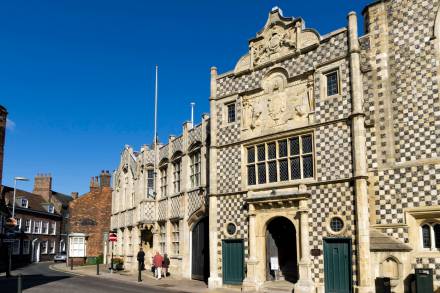
There’s a trading estate, which might possibly need an envoy. There’s a Pizza Express, whose user ratings online are the equal to the Woking branch. And there’s also a branch of Boots which has a solid range of deodorants. Should Andrew Mountbatten-Windsor ever acknowledge any perspiration issues, desire a pepperoni or feel like taking on a part-time job, he’s moving to a most suitable neighbourhood. At only around seven miles from Sandringham, King’s Lynn will be Andrew’s nearest town when he takes up residence in his new home.

Table manners are toast

From our UK edition

Food courts appear to be everywhere in London at the moment and, for reasons too boring to go into here, I found myself at three of them across the capital in the space of four days last week. (Yes, before you ask, I am beginning to question my life choices as a result.) Not that there is anything innately wrong with food courts as a concept, of course. If you’ve been to one, you’ll know the drill, which is essentially that they are semi-industrial spaces lined with vendors plying all manner of street food from locations that aren’t too challenging to the average British diner.

Football is a masterclass in monogamy

From our UK edition

Back in the early 1990s, I was a teenage visitor to an array of dilapidated Victorian cow sheds masquerading as third and fourth division football grounds as I supported my team, Wrexham FC, on their travels. There were still many pre-Hillsborough fences in place, some of which (most notably in the away end at Crewe Alexandra’s Gresty Road ground) successfully blocked around 90 per cent of the view of the pitch for visiting fans. The catering usually only extended to ‘botulism in a bap’ burger vans and it was always, always cold. But what I remember most clearly from those far-off days was the voice register of the fans when things went wrong.

Let the Beatles be

From our UK edition

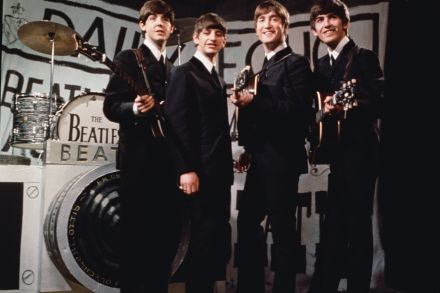
Like most freelance writers, I have a notepad full of jottings which come under the loose category of ‘Ideas I Probably Won’t Get Round To Doing As I Doubt Anyone Will Be Interested, They’re A Bit Rubbish Anyway And It Probably Wouldn’t Pay Much’. Around halfway down this list is a book provisionally entitled A Hard Day’s Fight, in which I espouse my opinions on a plethora of Beatles-related debates, and add a few new ones of my own.

Would you pay for your office Christmas party?

From our UK edition

If Christmas is a time for giving then it seems the message isn’t getting through to nearly enough office managers. For the umpteenth year running, I’m getting the annual stream of resigned-sounding complaints from friends who have office-based careers. Office life has its perks, of course; unlike my mostly-bed-and-airport-based freelance life, you actually know what you’re going to be paid at the end of each month. But my decision to accept the Faustian pact of being a sole trader never feels more validated than when my pals tell me about the plan for their office Christmas party – and the demand that they pay for it themselves.

So what if Nigel Farage was the school bully?

From our UK edition

There may well be, somewhere in this nation of ours, a long-established succession of sensitive, emotionally aware 14-year-olds who can appreciate and denounce the impact of bullying. But, honestly, none of them went to my school.  It doesn’t sound like there were many of this cadre at Dulwich College half a century ago either. At least, not if we believe the recent Guardian ‘scoop’ which claims, thanks to the testimony of Nigel Farage’s fellow pupils (much of which was made public years ago), that the Reform leader was a racist, hate-fuelled youth who taunted anyone of a different faith or ethnicity.

Have we learned anything in the 30 years since Leah Betts died?

From our UK edition

In the mid-1990s, ecstasy was a drug of the suburbs. My friends and I, all A-level students and shortly to become beneficiaries of the final years of higher education that didn’t come with tuition fees, did not fit the model of ‘drug users’ that the media, still in thrall to 1980s heroin hyperbole, fixated on. When we took ecstasy, it was in the clipped gardens of semi-detached houses that had been vacated by parents for the weekend. We popped pills in beer gardens, in rickety small-town clubs with swirly carpets and fogged mirrors or, in summer, in the sun-bleached parks of central Chester. We cared not for the risks, judging them to be inconsequentially small compared with necking a bottle of vodka or even driving without a seatbelt.