Spectator Life

Spectator Life

An intelligent mix of culture, style, travel, food and property, as well as where to go and what to see.

Labour’s eco-towns threaten our heritage

‘He leaped the fence, and saw that all nature was a garden’. So goes the famous Horace Walpole quote about William Kent, the 18th-century landscape designer who saw the garden and its surrounding views as single and unified. Were he alive today, Kent might very soon leap over the ha-ha he designed at the Grade I-listed Rousham House in Oxfordshire and tumble head-first into one of Labour’s new eco-town developments. His breeches rumpled, Kent might observe with some sadness that the coherence of his design is no more. Built in 1635 by Sir Robert Dormer, Rousham continues to be occupied by his descendants Charles and Angela Cottrell-Dormer.


Do supermarkets really make us sick?

I contemplated this piece over a bowl of porridge; not a ready-mix concoction but the raw stuff: porridge oats mixed with milk and water and eaten without any adornment whatsoever. That will win me brownie points among many nutritionists and policymakers because I was not eating an ‘ultra-processed food’ (UPF). I have a gut feeling that raw porridge is more nutritious and less full of nasty stuff. It is also much cheaper. A few years ago, while I was on a walking holiday with my son, I pointed out to him – not least because he was about to go off to university and could do with a bit of guidance on living frugally – that while my porridge for the week had cost about £1.50, his prepared breakfast cereals had cost him – or rather me – upwards of a tenner.

When did bakeries develop literary pretensions?

I became sick of bakeries when I lived in Berlin. I alternated between a few of them, doing most of my work in a café-bakery in the then-trendy Neukölln district amid other somewhat directionless snackers and typers. After a while, I felt that commercial premises hawking cakes, pastries and cookies were no place for the would-be scholar, as I then was. I began to feel grossed out by other people’s crumbs under my laptop, depressed by the pressure, partly caused by my own boredom, to keep ordering and paying for cake and coffees. Eating cake began to seem antithetical to serious work, not its handmaiden. Eventually I discovered the charms of the Berlin State Library, where my then-boyfriend always stationed himself, and never looked back.

How to save the King’s English

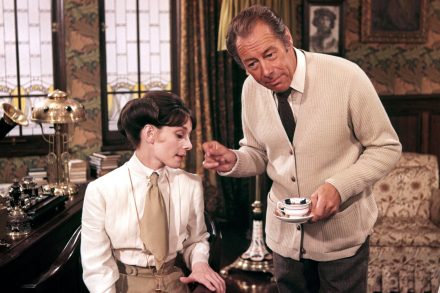
When a survey of 10,000 teachers revealed this month that Britain’s primary school pupils are increasingly relying on Americanisms (the Times front page declared ‘Trash-talking children are sounding like Americans’) I realised immediately what we needed. Rex Harrison. And if not Rex Harrison himself, then a dose of arguably his greatest role – that of Henry Higgins, the cantankerous professor of phonetics who first burst into the national consciousness in 1914 with the London premiere of Pygmalion.

The rise of the performative chef

Let me introduce you to the performative chef. The performative chef is a man. He is between 23 and 29 years of age. Both of his arms are covered in fine-line tattoos. His favourite tattoo is a quote from Philip Larkin that reads: ‘They fuck you up, your mum and dad. They may not mean to, but they do.’ His parents are in fact lovely people, but he’ll never tell you that. He sports a mullet (or buzzcut depending on the season). He rides a fixed-gear bike to work. He exclusively wears oversized clothes. He talks to every stranger that will listen about getting an eyebrow piercing. He studied classics at a Russell Group university, not that it matters; he did the degree just because it was something to do.

Why would anyone live in a listed building?

When Zoë Cave Hawkins bought a run-down townhouse in the heart of the cathedral city of Winchester, she was fully aware that getting permission to update the Grade II-listed property was going to be a bit of a hassle. But the reality was far worse than she could have imagined. As fast as her architects could draw up plans, a phalanx of planning officers, listed building officers and conservation officers would descend to rip them up.  A proposal to build a terrace above the new flat-roofed kitchen extension was nixed because it would mean replacing a series of original windows on the first floor with modern French doors. A new door to an en suite bathroom was vetoed because it meant taking out a section of batten and horsehair wall.

The joy of small airports

There’s a saying – the kind seen on ‘inspirational’ posters on the walls of HR departments – that claims: ‘It’s about the journey, not the destination.’ Clearly it was dreamed up by someone who has never flown from Stansted and found themselves jostling through crowds of stag and hen parties, newly arrived Polish workers (there’s even been an Essex-based Polish taxi service to pick them up) and the hordes descending on Burger King as soon as they come through arrivals like John Mills and co. supping their first lagers after trekking through the desert in Ice Cold In Alex. It’s not just Stansted, of course. Gatwick – or ‘Chavwick’, as I’ve heard it called – is just as bad.

How I drove away the Range Rover bullies

A few weeks ago, I was driving four of my children to school in my tinny, battered Toyota. We were running late – as per usual – and were speeding – or, rather, chuntering – down a particularly treacherous road. Of all the questionable surfaces in my area of rural Essex, this one is notorious: marked by a huge pothole the size of Snoopy the dog’s head, which bleeds into a smaller, gloopier crater. As I was trying to navigate it, however, a large shadow zoomed into sight in my rear-view mirror. With a jolt and a tremendous bang, it pushed me, my family and my poor, beaten-up Toyota into the crater. Who would be so sadistic as to do such a thing, you may wonder? Was it a vengeful ex? A drunk driver? Another parent running late and pushed from road rage to road insanity?

Three bets for Haydock and Ascot

Herefordshire trainer Tom Symonds has his string in fine form with four winners from his last eight runners for a strike rate of 50 per cent over the past fortnight. Even his supposed no-hoper Gaelic Saint comfortably outran her odds at Warwick yesterday when second at 50-1 in a mares’ novices’ hurdle. Tomorrow one of Symonds’s stable stars NAVAJO INDY will try to keep up the good work for the yard at Haydock when he contests the Betfair Stayers’ Handicap Hurdle (2.25 p.m.) in search of a first prize to winning connections of nearly £57,000.

Long live the yummy mummy

Yummy mummies everywhere, put your Veja trainers and frill-collar shirts away, because last week the Times issued a stinging broadside. Being labelled a ‘yummy mummy’ is apparently now so derogatory as to be an ‘almost cancellable offence’. The Yummy is dead, the headline declared, while my phone blew up like the fourth reactor at Chernobyl as Yummies far and wide forwarded me the article. ‘We are not dead!’ many fulminated, while others were more concise: ‘That’s just bollocks; I’ve never worn barrel jeans in my life.

Inside the mind of a modern-day heretic

When I was growing up, it was generally accepted (unless you were a football hooligan) that, however much you disagreed with someone, they were entitled to their opinion. You listened, occasionally interjecting, and then made your case – sometimes forcefully. In the end, you might agree to disagree, but you didn’t harbour any enmity. These days, the idea that a person is free to hold their own beliefs, especially if they run contrary to your own, is considered laughably old-fashioned. The aim now is to silence that individual. If necessary, you eviscerate them, figuratively – usually online. Sometimes, tragically, their views are deemed so unpalatable that they’re silenced for good.

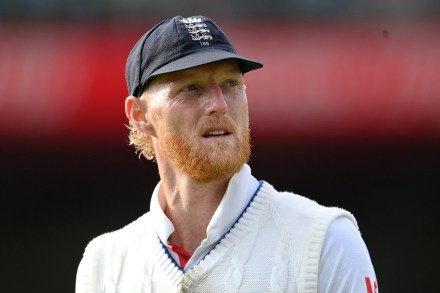
Ben Stokes will go down as the greatest captain of modern times

And so it begins, as Donald Trump likes to say, though not usually about cricket. He was offering his thoughts on the New York mayoral elections, which is not as much fun as the Ashes. Pleasingly, the goading is reaching volcanic levels as the Perth Test gets ever closer. Who needs Trump? The West Australian is not a paper many readers will be familiar with but its pages have been plastered with pictures of English players making their way through arrivals at Perth airport.

Only the Tote can save British racing 

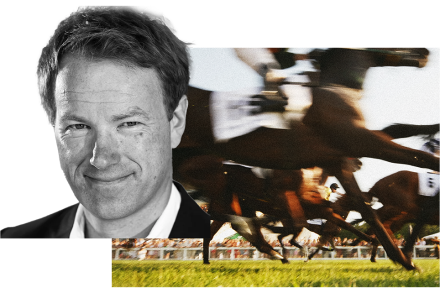
For the past 30 years Robin Oakley has taken you through the front door of the horse-racing world and kept you in the best of company. There’s not a chance of me lasting that long, and more often than not when I try to shine a light on the sport’s brilliant mix of heroes, narcissists and geniuses it will be via the back door. Alex Frost falls firmly into the genius category, so I went to see him in London last week – and I arrived bang out of sorts. My Oura Ring informed me that I had 26 low blood oxygen incidents during the night and my sleep apnea mask is making weird noises. And combining microdosing Mounjaro with getting soaked in the wrong gear at the Countryside Day at Cheltenham had made me ‘a bit off’.

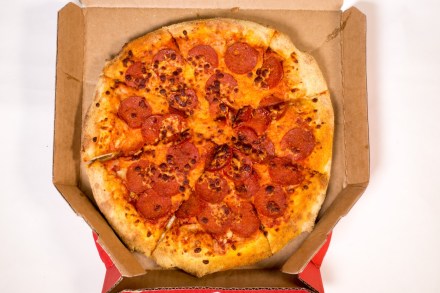
Domino’s has fallen

There are few culinary experiences like the first bite of a Domino’s pizza. The finest N25 caviar or a perfectly seared lobe of foie gras surely can’t compare to the ecstasy that comes from that mouth-cutting cornmeal that they sprinkle all over the base, or that sweet, cloying ‘cheese’, or those tart, dancing cups of pepperoni. In these moments, resistance is futile. It’s not a question of whether this is the best takeaway pizza there is, or even the best food there is. It’s a question of whether this is the best thing there is. Of course, we know how it ends. Fifteen minutes later, caked in sweat, parched, filling yourself up like a swimming pool. And then, if you’re unlucky, an awakening in the middle of the night. You wheeze against the table.

The death of the bloke film

If you saw the Edgar Wright–Stephen King adaptation The Running Man in the cinema last weekend, with Glen Powell as the eponymous fugitive in a dystopian future, then you were one of the relatively few. The film has flopped at the box office, with audiences resistant to Powell’s charms and Wright’s visual pizzazz, and in a tricky year for King adaptations. It’s not been helped by some idiotic remarks the author made at the time of Charlie Kirk’s assassination; there will probably be fewer big-budget films based on his work in the future. Yet The Running Man’s failure also suggests that there is a wider issue at hand, and that is the death of the ‘bloke film’.

The best American band you’ve never heard of

Earlier this month, the best rock band to have come out of America in decades played London’s Roundhouse in front of 3,000 very excited British fans, all of whom sang along to every song the Alabamans played. It was the best gig I’ve been to in years, mainly because the Red Clay Strays are musically so damned good and that smart British audience got everything they were offering. It had that rowdy, joyful atmosphere that Faces gigs did in the early 1970s. Stay with me, Spectator readers.

My murderous, malfunctioning Aga

People always divine themselves through material goods: hence the obsession with the Aga, recently detailed by my friend Rachel Johnson in these pages. Rachel loves her Aga – well, her Agas, she has two – because it needs to be defended from bourgeois socialists who don’t have Agas: they just want them, because self-deception is the defining characteristic of the bourgeois socialist. Me, I hate mine. I used to love her because she made me feel upper middle-class, which I’m not, and now I know I’m not, and I’m glad I’m not, please take her. Of course, Agas are class signifiers. An Aga is like the last vestige of the country estate left after the fire sale. As in: ‘We lost the Titian but kept the Aga’.

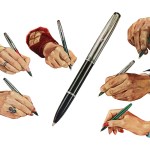
Pens have gone extinct

Gone are the days when I always had a pen in my pocket. Gone are the days when I needed a pen to go to work. The NHS does not now always require a pen, and the NHS is not quick to abandon old technology. Ten years ago I worked in a hospital where a ward computer still had a floppy disk drive. Older readers will understand – and wince – when I say it wasn’t three-and-a-half inches but five-and-a-quarter. I remember writing my university finals with a pen, and I remember it because I recall how it felt. The pressure of time and the pressure of the pen made the ache in my writing hand memorable. I rewrote each sentence several times, and sometimes the whole paragraph, before it reached the paper.

The scammer in the sitting room

It began when one of the care home residents I look after asked me to take her picture for her Facebook account. Harmless enough – until I noticed the photo had been requested by Michael Bublé. The messages were affectionate and convincing and before long she was being asked for personal information. I had to find a way to gently break it to her that this was very unlikely to be Mr Bublé, which led to tears, disbelief and embarrassment. In the end, I blocked the scammer on her account – along with several other suspicious profiles. The Mental Capacity Act’s third principle states that everyone has the right to make a bad decision. However, it’s best to stop such things before we start discussing the law. This story isn’t unusual.

Robert De Niro has a serious case of Trump envy

The past few weeks has seen the pleasing spectacle of beautiful female film stars (Sydney Sweeney, Keira Knightley – even the previous Trump Derangement Syndrome sufferer Jennifer Lawrence, who once said that an orange victory would be ‘the end of the world’) refusing to toe the accepted Hollywood line on politics, be it by not kowtowing to trans activists or not accepting that everything is racist. Lawrence actually said: ‘Election after election, celebrities do not make a difference whatsoever on who people vote for’ – or as I wrote here in the spring: ‘How dim would a political party need to be to understand that not only do celeb endorsements not work, but have an actual repelling effect?

Have we learned anything in the 30 years since Leah Betts died?

In the mid-1990s, ecstasy was a drug of the suburbs. My friends and I, all A-level students and shortly to become beneficiaries of the final years of higher education that didn’t come with tuition fees, did not fit the model of ‘drug users’ that the media, still in thrall to 1980s heroin hyperbole, fixated on. When we took ecstasy, it was in the clipped gardens of semi-detached houses that had been vacated by parents for the weekend. We popped pills in beer gardens, in rickety small-town clubs with swirly carpets and fogged mirrors or, in summer, in the sun-bleached parks of central Chester. We cared not for the risks, judging them to be inconsequentially small compared with necking a bottle of vodka or even driving without a seatbelt.

Why I’d take a close Ashes defeat over an easy victory

The Ashes start this week. If, as an England supporter, you were given the following two choices, which would you pick? First: England win the series 5-0. Second: the series ebbs and flows, the teams arrive in Sydney locked at 2-2, the match goes down to the final hour of the final day, and England lose. If you went for the second option, you’re my kind of fan. I’ve always preferred to see my team (or player) lose narrowly than win easily. Sport is there to entertain us. This is the supporter equivalent of ‘It’s not the winning, it’s the taking part that counts’. As a fan, you get excited by the process rather than the result. Nowhere is this truer than in Test cricket.

Nobody Wants This could learn a few things from Seinfeld

Nobody Wants This, the Netflix romcom that brought us the ‘hot rabbi’, recently returned for its second season. For the uninitiated, the first series introduced us to sex and relationships podcaster Joanne, played by Kristen Bell, who meets Noah, played by Adam Brody (of The O.C. millennial crush fame), a reform rabbi who has just broken up with his long-term girlfriend. The premise felt fresh and original: a romcom that dared talk about religion and even made it the key part of the plot. It’s undoubtedly a hit, with season two racking up more than eight million views in its first four days of streaming, taking it to the number one spot on Netflix’s chart.

I’m the heir to Manhattan

I’m owed around $680 billion. Some 77 acres of downtown Manhattan belong to the Carter family, according to a letter written in 1894. Wall Street, Broadway and One World Trade Center – they all sit on a plot that is, by rights, mine. Yet here I am, grumbling about what ought to be in the pages of The Spectator. What went wrong? The story goes something like this. Shortly before independence, a pirate called Robert Edwards was licensed by the British to hunt down Spanish ships. He was so successful that the Crown gave him a slice of Manhattan as a reward. Edwards leased the land for 99 years to two brothers and subsequently died, lost at sea. That lease expired in 1877 and was supposed to be apportioned off to Edwards’s heirs. But that never happened.

Three wagers for Cheltenham’s November meeting

Fairly heavy rain fell at Cheltenham overnight and there is a lot more to come today. If there is anything near the predicted 30mm of the wet stuff over 24 hours, the ground could easily turn to heavy which, whether racing is over jumps or the flat, tends to make the results something of a lottery. Of course, punters have to concentrate on horses that have won or run well in very soft conditions but it is not always as simple as that. Today’s Grade 2 Schloer Chase (2.55 p.m.) is an intriguing contest and sees the return of Jonbon, who is trying to win this race for the third year running. Nicky Henderson’s admirable chaser will not mind the soft ground but he has never been his best at Cheltenham.

Hotels are still hopeless at accommodating disabled guests

I was sitting in a hotel restaurant in Cheshire a while back: one of those rambling country manors, full of mock Jacobean wood panelling and fake Tiffany lamps, beloved of football-and-property enriched couples with gravy hued fake tans, sports cars parked outside and more signet rings than GCSEs. I was hungry and alone, aside from, as always, travelling with my own disability in the form of severe visual impairment, aka ocular albinism and nystagmus – or the Rolls-Royce Silver Shadow of very bad eyesight, as I prefer to call it. I’d asked in advance for an accessible room which, predictably, was ‘not yet ready’ for me to check into when I arrived.

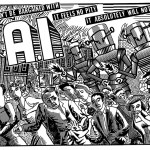
What happens when there’s nothing left for AI to scrape?

There are several class actions going on against developers of Large Language Models. Jodi Picoult, George R.R. Martin, John Grisham and several other well-known authors are among those engaging in long-drawn-out lawsuits with tech companies such as Meta (who developed the chatbot LLaMA), OpenAI (who developed ChatGPT) and Google DeepMind (who developed Gemini). These companies, without seeking permission (imagine!), used books, newspapers, websites and other text sources to generate datasets to train their machines. The lawyers for these tech companies claim it was ‘fair use’. No one actually copied and resold anything, they say; it was used to train, and only to train.  One of my novels was ‘scraped’ by Meta, and features, in a tiny way, in the lawsuit.

Was Elgar really a snob?

There’s not much point pretending to be an expert on Elgar (or so The Bluffer’s Guide to Music assures us) because everyone already thinks they are. And there’s definitely no point getting hung up on the historical accuracy (or otherwise) of Alan Bennett and Nicholas Hytner’s new film The Choral. It’s set in a West Riding mill town during World War One and the plot pivots around the local choral society’s performance of The Dream of Gerontius. This being Bennett, of course, there’s rather more to it than that, but in any case – spoiler alert, and there’ll be more – Sir Edward himself makes a cameo appearance: Simon Russell Beale, looking oddly like the late Ken Russell in a white fright-wig. So here we go again: imaginative fiction collides with historical reality.

How to get Britain eating healthily again

Another week, another government offensive against childhood obesity. This time it’s a fresh round of pleas for new levies on junk food. And right on cue, out come the sympathetic pundits with a familiar lament: the poor simply can’t afford to eat well. Carrots are unaffordable and broccoli is a luxury that only the middle class can stretch to. It’s a predictable narrative. It’s also wrong, or at least, far from the whole truth. I say this having lived the messy reality of fostering, where I’ve had the privilege, and sometimes pain, of stepping into lives different from my own. For more than 20 years, I’ve cared for children pulled from homes where parenting skills are scarce and where ‘dinner’ might consist of a handful of sweets and a packet of crisps.