Burnham’s Gogglebox appearance shows he is not serious




All the latest analysis of the day's news




An intelligent mix of culture, food, style and property, plus where to go and what to see.



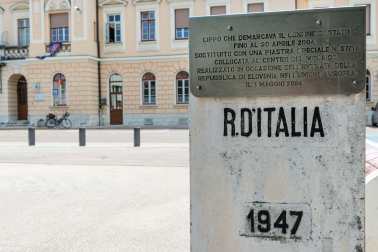
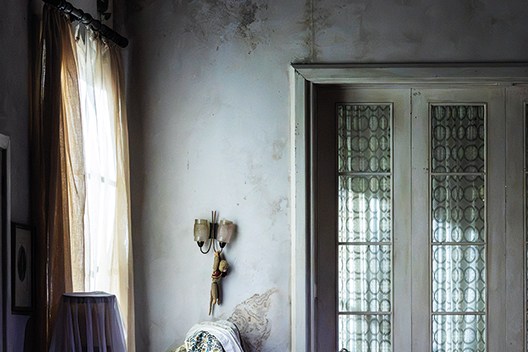
Have you ever heard of Gorizia? Probably not, and yet it is decidedly pretty. It sits in the far north-eastern corner of Italy, where the Latin map frays into the Slavic. The centre is all pink arcades, pistachio green shutters, and palazzi painted in faded yellow. Beyond everything is the great pale wall of the Julian Alps. The town has had at least three names - Gorizia, Görz, Gorica - because for centuries it was Habsburg, then Austro-Hungarian. That is to say: it was a quintessentially multilingual city, full of Italians, Slovenes, Friulians, Germans and Jews, halfway between Trieste and Vienna. Some called it the ‘Austrian Nice’. Imperial officials came here to die of tranquil old age.

This week's magazine
Paris The wonderful thing about electric bikes, if you are fighting with French riot police, is the way they burn. You skid your Lime or Vélib’ into the middle of the Boulevard de Magenta, which leads from the Gare du Nord down to the Place de la République, and set it alight along with a pile of ordinary bikes, and soon you have a conflagration of rubber and battery chemicals. During the weekend’s street protests, the fires provided cover for rioters breaking into mobile phone, vape and jewellery stores and the money-transfer shops which serve the many immigrants who work in eastern Paris. By Monday morning, a vicious guard dog stood outside an Intermarché supermarket, snarling at customers coming in one by one.
Paris The wonderful thing about electric bikes, if you are fighting with French riot police, is the way they burn. You skid your Lime or Vélib’ into the middle of the Boulevard de Magenta, which leads from the Gare du Nord down to the Place de la République, and set it alight along with a pile of ordinary bikes, and soon you have a conflagration of rubber and battery chemicals. During the weekend’s street protests, the fires provided cover for rioters breaking into mobile phone, vape and jewellery stores and the money-transfer shops which serve the many immigrants who work in eastern Paris. By Monday morning, a vicious guard dog stood outside an Intermarché supermarket, snarling at customers coming in one by one.
The good, the bad and the ugly in books, exhibitions, cinema, TV, dance, music, podcasts and theatre.
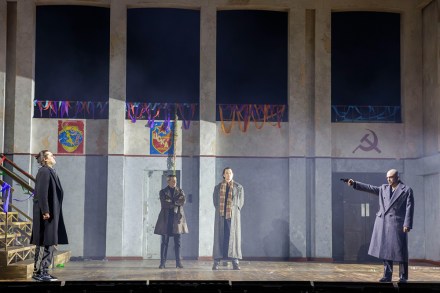
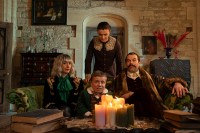
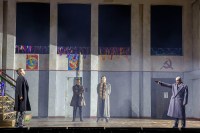
Where are we? That’s the question raised by Ian Rickson’s version of The Cherry Orchard adapted by Conor McPherson. The setting appears to be a capitalist Russian society that never existed. The young characters wear casual 1950s gear – T-shirts, wristwatches and sunglasses – but the older men can recall a time before the emancipation of the serfs in 1861. Slightly confusing. Has the revolution happened or not? It might be simpler to set the play in 1903 when it was written. The high-status characters use posh Home Counties accents while the servants and hangers-on seem to hail from Scotland, Ireland and Germany. That chaotic set-up works better than it might. The show never fully coheres and it almost feels like three separate plays.

Cartoon

Cartoon
Cartoon