Klaus Dodds

Klaus Dodds is Professor of Geopolitics and Faculty Dean at Middlesex University London.

Trump’s armchair geography is costing him in Iran

In the 19th century, the geographer and explorer David Livingstone was scathing of what he described as 'easy chair geographers' – authors and mapmakers who produced maps and treatises about the non-European world without ever leaving their learned society or personal office. Donald Trump is a latter-day armchair geographer. Or judging by photographs repeatedly released by the White House, a president comfortable convening meetings in the Oval Office with large maps displayed by his desk. But whether it is a case of acquiring Greenland or blockading the Strait of Hormuz, maps can be poor substitutes for in-field knowledge and understanding.

Trump’s quest for a ‘Greater North America’ is in full swing

With world attention focused on the US-Israel assault on Iran, US Secretary of War Peter Hegseth delivered a speech last week at the inaugural Americas Counter Cartel Conference in Florida. Hosted in a part of Miami that shares its name with an addictive benzodiazepine (Doral), the event on 5 March brought together 17 'American' countries who were urged to sign a joint declaration on the need for direct action against criminal cartels. Notable drug-affected countries such as Brazil, Colombia and Mexico were not present. Hegseth was clear that if those countries lacked the resolve to tackle the drugs menace head on, the US was prepared to go it alone.

Trump is playing geopolitical Monopoly with Greenland

Donald Trump is playing hemispheric monopoly. Depending on what day of the week it is, the President's focus alternates between Venezuela, Canada, the Panama canal – and for the last twelve months or so, Greenland. Given what Trump and his team have said over the past week, their acquisition plans for the island are well advanced. But why exactly does he want Greenland? The world’s largest island is an integral part of the Kingdom of Denmark and is about three times larger than Texas. While the term du jour is geopolitics, perhaps the most plausible reason for why Trump is gunning for Greenland is ego-politics. We have a president eager to make America great again and complete the task that his predecessor President Monroe started some 200 years ago.

The battle for Antarctic krill is about to get uglier

From our UK edition

Krill – the small, shrimp-like crustacean – is a keystone species. It underpins the marine ecosystem of the Southern Ocean, where it is estimated that between 300 and 500 million tonnes of them live. They are consumed by marine animals, including whales, seals and penguins, as well as fish and squid. But is krill now at risk of being overfished? And are the warnings of conservationists being ignored by countries more interested in making a quick profit? Nowadays, krill features in dietary supplements, livestock food and pet food. It is also processed to produce fish food for use in aquariums and aquacultures. The global krill industry was valued at well over $1 billion (£750 million) last year and is forecast to grow in the next five years to around $2.5 to 3 billion (£1.

Britain urgently needs an Antarctica strategy

From our UK edition

Now that a deal has been struck with Mauritius over the Chagos Islands, the government's focus should be on the UK’s southernmost overseas territories. There are three of them: the Falkland Islands, South Georgia and the South Sandwich Islands (SGSSI) and the British Antarctic Territory (BAT). As increasingly tense geopolitics make the world more hostile, these territories are becoming ever more vulnerable. If Britain wants to secure its presence here in the face of the looming shadows of Argentina, Russia, China and the US – to name a few – Labour urgently needs to start thinking about how it does so. The Strategic Defence Review (SDR) for 2025 is expected to be published this coming week.

The hitch in Trump’s plan for Arctic dominance

From our UK edition

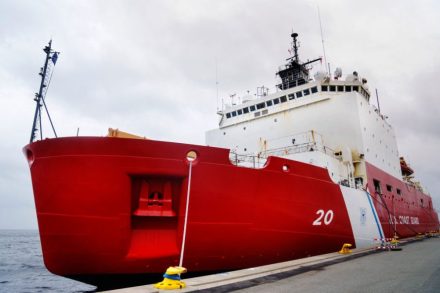
There is an 'icebreaker gap' between Russia and the United States. For decades, the Soviet Union and now Russia have recognised that icebreakers not only allowe their remote northern settlements to be resupplied by sea but also ensured that the waters north of this vast country were navigable. Moscow can boast that it has a fleet of over 40 vessels, eight of which are nuclear-powered. The latest vessel is called Yakutia and is a sobering example of how sanction-hit Russia has, despite everything, demonstrated a capacity to source parts and equipment for its fleet domestically. Icebreakers perform an essential service for both transit and destination shipping in the Gulf of Finland and along the Northern Sea Route (NSR).

The race for Arctic dominance has entered space

From our UK edition

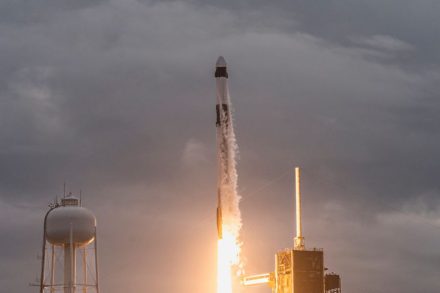
In the years since Russia’s invasion of Ukraine, the west has been forced to tackle the question of national defence with a renewed sense of urgency. As Cold War strategic planners appreciated in the last century, hostile forces can approach not just from underwater, land, sea and air, but also through space. On 9 August in the US, Elon Musk’s Space X launched a Falcon 9 rocket from a space force base located in California. Dubbed the ‘Arctic satellite broadband mission’ (ASBM), the rocket itself was transporting two Northrop Grumman-built satellites, built for Space Norway in collaboration with the Norwegian Ministry of Defence and designed to orbit above the North Pole.

Are we heading for a new Cold War in Antarctica?

From our UK edition

Russia’s reported discovery of 510 billion barrels of oil in Antarctica has led to warnings of a new 'Cold War' of sorts. 'Russia could rip up a decades-old treaty and claim oil-rich Antarctic land,' Yahoo News told its readers. The Daily Telegraph said 'Russia (has) sparked fears of an oil grab in British Antarctic territory'. Russia is a major polar player The reaction to the find – which was made in evidence submitted to the House of Commons Environment Audit Committee – suggested there was potential for conflict.