Alexander Horne

Alexander Horne is a barrister and visiting professor at Durham University. He was previously a senior parliamentary lawyer.

Mahmood will struggle to push through her migration reforms

From our UK edition

Against the backdrop of the current leadership chaos engulfing Labour, in Wednesday's King’s Speech the government announced new legislation that would ‘increase confidence in the security of the immigration and asylum systems’. A briefing document published shortly afterwards put some flesh on the bones, revealing that a package of contentious measures first floated by the Home Secretary, Shabana Mahmood, in November last year would be taken forward in a Bill. No. 10 has described the proposals as the 'most significant' on asylum 'in a generation’. They include plans to ‘introduce a new asylum model based on contribution, integration and respect for UK laws’.

MPs should get a say on Starmer’s trade deals

From our UK edition

Sir Keir Starmer has been busy talking up his trade deals with the US and India, while also planning 'reset' talks with the EU next week. Yet are these agreements all they are cracked up to be? The simple answer is that it is hard to tell because MPs are unlikely to get an opportunity to scrutinise them adequately. However, with all these deals, the devil is likely to be in the detail – and there is every chance that each one may prove to be politically contentious in the coming weeks and months. Over the past year alone, Labour has proposed a controversial new deal with Mauritius over the sovereignty of the Chagos Islands, which could have security implications for our dealings with China.

Could Starmer’s ‘return hubs’ work?

From our UK edition

Yesterday, following the publication of Labour’s immigration white paper, Sir Keir Starmer tried to pull a rabbit out of the hat by announcing what he described as ‘return hubs’ for failed asylum seekers. On a visit to Albania to discuss measures to crack down on organised crime and illegal immigration, Starmer said he was in talks with a number of countries about the idea and that he saw return hubs as ‘a really important innovation’. It is hard to see Starmer’s ‘return hubs’ announcement as anything but an embarrassment Unfortunately, he was left like a stage conjuror with a malfunctioning prop when his host – the Albanian PM, Edi Rama – immediately discounted the idea of Albania hosting any such project.

Labour needs Europe to strike a deal on ECHR migration reform

From our UK edition

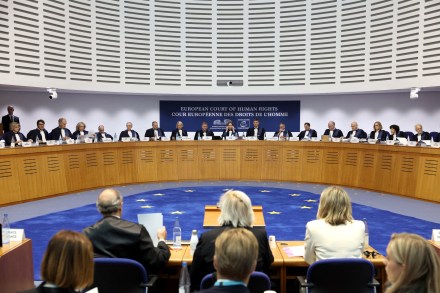
It might seem odd, amid the domestic political crisis currently engulfing the Labour party, to turn one’s eyes to Chișinău, the capital of Moldova. Yet, today it will host the committee of ministers representing the 46 members of the Council of Europe (a different body to the EU) to discuss the future of the European Convention on Human Rights (ECHR). This pivotal two-day conference is aimed at adopting a political declaration concerning the future of the ECHR. It is focused on addressing challenges related to migration and asylum. Human rights lawyers and NGOs see the process as an attempt to erode universal human rights standards and have opposed it accordingly.

Why the ban on Palestine Action should be upheld

From our UK edition

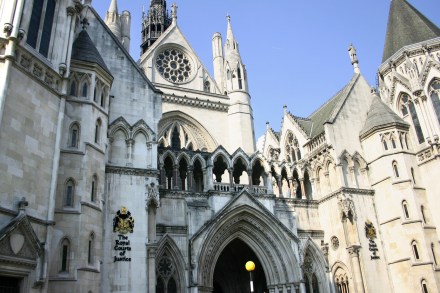
Next week, the Court of Appeal will hear Home Secretary Shabana Mahmood’s appeal against a High Court decision that the proscription of Palestine Action last summer was unlawful. The case will be hugely consequential. Earlier this month, more than 500 people were arrested at a Palestine Action demonstration. In total, more than 2,700 people have been arrested for expressing support for the group since they were banned in July last year by Mahmood's predecessor Yvette Cooper. Prosecutions against these individuals were put on hold following the High Court's judgment in February. I have previously argued that the High Court’s decision was both unfortunate and unwise.

Palestine Action shouldn’t have been unbanned

From our UK edition

This morning, the High Court ruled that the proscription of Palestine Action was unlawful as the group’s activities had not yet ‘reached the level, scale and persistence’ necessary to justify it being banned. A panel of three judges, including Dame Victoria Sharp, president of the King’s Bench Division, found that the ban, which made membership of and expressions of support for the group illegal, had been legally flawed as the Home Secretary had failed to follow her own policy on proscription. It also ruled that it constituted a ‘very significant interference with the right to freedom of speech and the right to freedom of assembly’ under the ECHR and was ‘disproportionate’.

How to remove Peter Mandelson from the Lords

From our UK edition

There was considerable pressure on Sir Keir Starmer this morning to indicate what action might be taken against his former US ambassador, Lord Mandelson. In addition to his ill-advised friendship with Jeffrey Epstein, Mandelson has been accused of leaking confidential government information to the convicted paedophile. Despite his previous, improbable, resurrections it is impossible to imagine the Prince of Darkness bouncing back from this disgrace The matter has been referred to the Metropolitan Police, and it has been alleged that it could potentially mean Mandelson being prosecuted for misconduct in public office, a criminal offence which carries a maximum sentence of life imprisonment.

Keir Starmer’s call for ECHR reform is a risky gamble

From our UK edition

Ahead of a Council of Europe summit in Strasbourg today to discuss the future scope of the European Convention on Human Rights (ECHR), Keir Starmer has called for ‘practical action’ to fix the asylum system and deal with irregular migration. In a joint letter with the Danish prime minister, Mette Frederiksen, Starmer argued that ‘modernisation’ of the ECHR is essential and that the Convention system needs to ‘evolve to reflect the challenges of the 21st century’. The two leaders acknowledged that responsible progressive governments need to ‘control our borders’ in order to ‘protect our democracies’.

Why the ‘Gaza family’ weren’t entitled to asylum in Britain

From our UK edition

The Court of Appeal has delivered a judgment on the so-called 'Gaza family' claim, which sparked such outrage at Prime Minister's Questions back in February. The row related to a decision of the Upper Tribunal to allow a Palestinian family from Gaza, who had a relative living in the UK, to enter the country. The family had initially applied under the Ukraine Family Visa Scheme and also relied on Article 8 of the European Convention on Human Rights (the right to a family life). Their claim was initially refused, but they were allowed to stay, on appeal, after the Upper Tribunal determined that they had demonstrated 'a very strong claim indeed' and that there were 'compelling or exceptional circumstances' to justify the appeal being allowed.

Shabana Mahmood plots illegal migration overhaul

From our UK edition

The Home Secretary, Shabana Mahmood, is set to announce a series of new measures in the Commons today to combat illegal migration. The new laws are said to be based on measures introduced in Denmark which have significantly reduced the number of asylum seekers arriving there. In 2014, 14,792 asylum seekers went to Denmark; in 2024 the figure was 2,333. The Danish laws have been described as some of the toughest in Europe, but still it remains a signatory to the European Convention on Human Rights (ECHR). Mahmood’s proposals include new rules under which people granted asylum in the UK would have to wait 20 years to settle permanently (rather than the current five).

Can the European Convention on Human Rights survive?

From our UK edition

Today is the 75th anniversary of the European Convention on Human Rights. In spite of its longevity, the Convention faces a number of challenges, and this is perhaps not the happiest of birthdays. In the UK the Convention faces a significant challenge. For the first time, both the Conservatives and Reform will enter the next general election pledging to withdraw from it The development of the ECHR was, in part, a response to the aftermath of the second world war and the serious violations of human rights which occurred during the conflict. Much is made by its supporters of the fact that British lawyers, such as Sir David Maxwell Fyfe (a Nuremberg prosecutor), were heavily involved in drafting it. It is frequently described as ‘Churchill’s legacy.

This is Labour’s last chance to save the ECHR

From our UK edition

One of Kemi Badenoch’s biggest announcements ahead of Conservative party conference was her pledge to leave the European Convention on Human Rights (ECHR). On Sunday, she said that exiting the ECHR would be a manifesto commitment at the next general election. On the same day, a legal opinion by the shadow attorney general, Lord Wolfson KC, was circulated by the Conservatives. Lord Wolfson’s advice runs to 185 pages, and he acknowledges the support of a team of barristers, solicitors and academics (I declare an interest here, having contributed part of a section on the mechanics of leaving).

Palestine Action shouldn’t be unbanned

From our UK edition

Yesterday, the High Court allowed Palestine Action to challenge the Home Secretary’s decision to ban it. Since its proscription, under terrorism legislation, it has been an offence to be a member of the group, or to invite support for it. There is absolutely no need for peaceful protestors to associate themselves with a group concerned in unlawful acts While it was not a final determination, the High Court hearing was revealing.

How could Britain deport more foreign offenders?

From our UK edition

Barely a week passes without headlines about the UK’s ongoing issues deporting foreign national offenders (FNOs). Foreign offenders are estimated to make up around 12 per cent of the UK prison population and many are not deported upon release. While some stories may be exaggerated or misrepresented – such as the well-known case of an Albanian offender who initially avoided deportation due to his son’s aversion to foreign chicken nuggets (a decision later overturned on appeal) – there’s little doubt that the current system is both inefficient and somewhat unpredictable.

Can we go back to calling terfs ‘women’ now?

From our UK edition

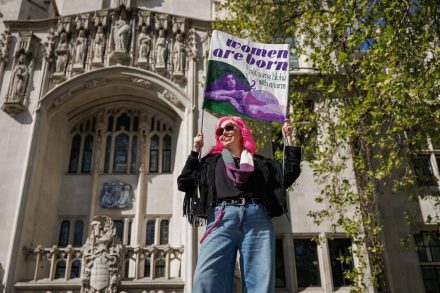
In a landmark judgment, after years of controversy, the Supreme Court handed down its decision in the case of For Women Scotland v Scottish Ministers today. The issue the court had to determine was enormously significant, namely the meaning of 'woman' and 'sex' in the Equality Act 2010. In a detailed and compelling ruling, the UK’s top court unanimously concluded that the terms refer to biological sex. The case arose following a decision by the Scottish government in 2022 to introduce revised statutory guidance which stated that a trans woman with a gender recognition certificate (GRC) would be considered a woman for the purposes of the Gender Representation on Public Boards (Scotland) Act 2018 (which was designed to increase the proportion of women on public boards).

Will Hamas’s human rights challenge succeed?

From our UK edition

Yesterday, it was reported by the Daily Telegraph that British lawyers, acting on behalf of Hamas, were threatening to bring a legal challenge under the European Convention on Human Rights (ECHR) to end the group’s proscription under terrorism legislation. They claim that the ban on supporting or assisting Hamas breaches human rights to freedom of speech, as well as the right of Hamas supporters to protest. At first glance this seems remarkable. The military wing of Hamas was proscribed under the Terrorism Act 2000 in March 2001. The entire movement was subsequently banned by then Home Secretary, Priti Patel, in 2021.

Parliament will be relieved Philip Green has lost his human rights case

From our UK edition

In a decision that will be welcomed by many in Parliament today, the European Court of Human Rights dismissed a claim by prominent businessman Sir Philip Green. Green had argued that his right to a private life and a fair trial had been infringed when a Labour Peer, Peter Hain, made a statement on the floor of the House of Lords claiming Green had been accused of sexual harassment and bullying by former employees. The employees in question had signed non-disclosure agreements (NDAs) and so Green had obtained an interim injunction (pending a trial) and anonymity order from the Court of Appeal after he learned that the Daily Telegraph planned to report on these allegations. These orders effectively prevented the Daily Telegraph from reporting on the claims against him.

Britain has little influence over Israel’s war in Gaza

From our UK edition

As the world focused its attention on a possible peace deal between Russia and Ukraine, it might have been easy to forget that the fragile truce between Israel and Hamas did not mark an end to the crisis in the Middle East. This morning, that ceasefire looked near collapse with Israel ramping up pressure on Hamas and reportedly killing 300 people (including Hamas deputy interior minister, Mahmoud Abu Wafah) overnight. In addition to the resumption of air strikes, Israel has also sought to use other tactics to compel Hamas to release the remaining hostages, including restricting the flow of aid into the territory and cutting off supplies of electricity.

How to fix our immigration laws

From our UK edition

Almost every day there seem to be new headlines about abuses of the asylum and immigration system. The latest involves the case of a Gazan family who were granted the right to remain in the United Kingdom after they applied to enter the country under the Ukraine Family Scheme visa. Unsurprisingly, the Home Office determined that the Gazan family did not qualify for the Ukrainian scheme. The government also concluded there were no compelling, compassionate circumstances to justify the family remaining in the UK. The family’s initial application was dismissed by a first-tier immigration tribunal judge in September last year.

Labour’s cynical House of Lords reform

From our UK edition

This week, the House of Commons is focusing its attention on proposed reforms to the House of Lords. MPs backed plans to get rid of the remaining 92 hereditary peers on Tuesday, while a second bill which will increase the number of female bishops in the Lords had its second reading on Thursday. The contrasting nature of the two bills highlights the rather problematic way Labour is pursuing constitutional reform. The Labour party’s 2024 manifesto made a number of promises on House of Lords reform. It pledged to remove hereditary peers, instate a mandatory retirement age, and included a commitment to introduce ‘an alternative second chamber which is more representative of the regions and nations’.