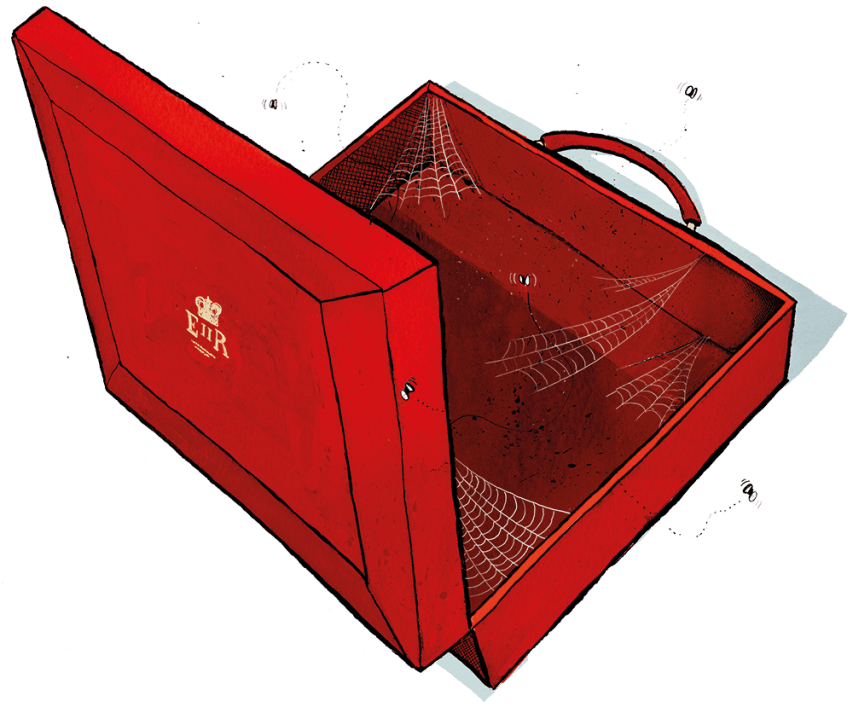
Don’t tell John Healey this is a boring Budget. ‘We have to get people out of this frame of mind that the only way to judge a Budget’s significance is the size of its tax line,’ complains one Treasury official of what is being billed as a ‘steady as she goes’ statement by the Chancellor next Wednesday. With green shoots of growth finally showing themselves after back-to-back Budgets by Rachel Reeves, which hiked tax by £75 billion, Healey’s team is making a virtue of fiscal minimalism.
‘The worst thing to do at that moment would be a Budget that pulls huge levers and risks shutting off some of that economic growth,’ one aide says. Another has had the history books out. ‘George Osborne had a Budget where there was under half a billion of revenue raising and no one accused him of having a small Budget,’ he says. ‘We don’t think it would be the right strategy to have a third large revenue-raising Budget in a row.’
‘There is going to be a big focus on doing immediate action today and setting up the action to follow’
What Osborne did always have on Budget day was a strong political narrative and Healey has been working hard to form his. An ally recalls how, on a recent flight to Bangkok for IMF meetings, ‘he was working on the plane, scribbling away while everyone else was watching movies’. And when Healey landed back home at 7 a.m., he did a full day at the Treasury, then sped to south-east London in time for last orders at the wedding reception of his special adviser Rachel Smethers. ‘He was determined to buy a round,’ the ally notes.
Such small but symbolic gestures will be the order of the day in the Budget as well. Just as Andy Burnham has spent the week making pointed, but small, interventions on issues such as people playing music without headphones on public transport, so Healey will aim to map out a direction of travel for the economy with policies that signal intent without a multi-billion-pound price tag.
Healey’s catchphrase with his officials is that this will be a ‘breathing space Budget for households and businesses’ providing ‘hope for the future’. What he really wants is to give the government a bit of breathing space from the bond markets. He and Burnham will offer some targeted help with the cost of energy bills to families (likely to involve a boost to the Warm Homes Discount), ditch planned rises in fuel duty and introduce some tax cuts for business. The buzzword you’re going to hear next week is ‘the Budget and beyond’.
A Whitehall source explains: ‘We’re realistic that you can’t solve all the problems in one Budget. But there is going to be a big focus on doing immediate action today and setting up the action to follow, the down–payments for things in the future.’

Details are far thinner on the ground than they were under Reeves, whose last Budget leaked almost completely in advance. Healey, who was defence secretary under Keir Starmer until he resigned over the Treasury’s refusal to find the money for the Defence Investment Plan, has imposed military-style secure compartmentalisation on the Budget. This includes the use of classified computer systems.
A memo doing the rounds in the Treasury shows that previous pre-Budget leaks have cost the government. Speculation about Capital Gains Tax (CGT) rises in 2024 led to a 56 per cent surge in the sales of buy-to-let properties and meant ministers banked far less at the higher rate.
In order to fund help for the cost of living, Healey will raise taxes on banks and landlords, and is expected to increase levies on gambling. He has ruled out increasing CGT – something both Burnham and his deputy Louise Haigh have campaigned for – after looking at Scotland where raising the top rate of income tax cost money. The Chancellor is also leaning against cutting the threshold for a proposed mansion tax to £1.5 million.
Healey will seek public support for the tax rises he is planning by spelling out what they will pay for. ‘John’s been quite keen to make that clear in some of these more high-profile measures that there is a clear benefit to British families and businesses,’ says an insider. One proposal would see online retailers such as Amazon collect VAT at source for sellers turning over more than £90,000, a £1 billion windfall which would fund a business rates cut for high-street shops.
That approach is very simpatico with Burnham’s nostalgic 1970s community socialist vibes, but Healey is conscious he needs to use his Budget speech to give the Prime Minister’s calls for reindustrialisation a modern edge too. ‘In the 1970s, we were making the things the world wanted – that was the steelworks, and mining,’ a source explains. ‘Now we’ve got to make the things the world wants again. Reindustrialisation doesn’t mean reopening things that are outdated. It means new industries. He is going to try to take people like the trade unions on the journey that we have to embrace artificial intelligence.’
One policy decision to be unveiled on Wednesday has its origins in a meeting Healey had with defence tech firms while he was running the Ministry of Defence. They told him it was difficult to get funding to scale up new businesses, with the inevitable consequence that they sought venture capital backing from the US instead. ‘He’s really keen to see that Britain is able to turn that incredible ingenuity and innovation that we’ve got into businesses that scale up and stay in the UK,’ an ally says. This points to tax breaks for investment.
There is also buzz around a return to meaningful entrepreneurs’ relief, which once allowed start-up owners tax breaks on £10 million of gains, a limit since slashed to £1 million. A Treasury insider says there will be recognition of the sacrifices that entrepreneurs make and the risks they take.
So will there be rabbits from Healey’s hat? ‘There needs to be two rabbits,’ says one Labour strategist. ‘He’s got to cut some taxes, as well as put them up. And he’s got to do defence spending, having resigned over it.’ Healey has said the money to spend 3 per cent of GDP on defence by 2030 will not be found until the spending review next autumn. But many expect him to make a down-payment next week and map out the timescale for getting there. A senior figure in another department says: ‘If they aren’t doing anything on defence, John is spending an awful lot of scarce pre-Budget time working on something they’re not announcing.’
One Burnham ally warns that the pursuit of a larger state could trigger a Liz Truss-plus financial crisis
What is certain is that shortly after the Budget, Healey will outline a new defence ‘offsets’ policy: when kit has to be bought that is not made in Britain, the company will be required to create a portion of the value in the UK by using British supply chains.
Sources in the Department for Work and Pensions also expect the Budget to show that welfare spending in 2029/30 will have been reduced from the current expected peak, signalling a pathway to cuts once initial spending on the reforms outlined in Alan Milburn’s report on youth benefits dependency have kicked in. They will be announced after the Budget.
But the ability of government to find savings is in grave doubt and fresh figures on the state of the public finances show Healey’s room for manoeuvre is drastically limited. Treasury officials are climbing the walls at the failure of some ministers, many new in their briefs, who seem unable to ‘reprioritise’ existing spending as instructed. ‘Everyone has got very territorial,’ says a Whitehall source. ‘Some of these departments have got to grab reform much more aggressively in things like tech and AI.’
On Wednesday, government debt hit £3 trillion for the first time and borrowing reached £98 billion for the year so far, £6 billion more than was forecast in March. Debt interest payments hit £11 billion in September – overshadowing higher than expected tax receipts (£5.8 billion ahead of forecast) due to the inflationary effect on wages. The £24 billion of ‘headroom’ Reeves left Healey has shrunk to between £10 billion and £12 billion. Experts say the bond markets will be calm if there is at least £15 billion in headroom next week, so expect the number to be around that mark. ‘Headroom is there for a rainy day,’ says an insider. ‘And we’ve hit a rainy day. But we’ll look to build it up quickly afterwards.’
The Chancellor might get lucky if the Office for Budget Responsibility (OBR) revises up tax receipts quicker than it revises up debt interest, potentially handing him a windfall. James Smith, economist at the bank ING, explains: ‘Based on previous OBR analysis, a one percentage-point upgrade to the level of wages after three years can add £8 billion a year.’ Changes to the way the OBR values migration, previously overvalued, could also affect the headroom as a reduction in net migration would lower the forecast for tax receipts, even if it lifts GDP per capita.
Whether or not he has a rabbit, Healey will try to get his Budget working within the fiscal rules by deploying a ‘puffin’. That’s the nickname for Public Financial Institutions, such as the National Wealth Fund, which can borrow to build and invest in infrastructure or high growth companies. Such borrowing does not count against the fiscal rules, allowing the Chancellor to funnel cash to key areas such as tech and defence investment while staying on the right side of the markets.
Burnham and Healey are a contrast in styles – the big-picture dreamer and the punctilious pursuer of the bottom line. But they are close, bonding over ‘beerlateral’ meetings or a Sunday evening curry. The Chancellor sees his job, Mao-like, as beginning Burnham’s reforming crusade with a single Budget step, followed by a ten-year plan in late November or early December.
But the big question is whether caution is the best policy when spending and debt are running rampant. Andy Haldane, the former chief economist of the Bank of England and Burnham ally, warned on Tuesday that Labour’s ‘pursuit of a larger state’ could trigger a ‘Liz Truss-plus’ financial crisis.
‘Andy Haldane’s article is a giant five-bell alarm,’ says a prominent figure on the Labour right. ‘This is a man who is inclined, both personally and politically, to support the Prime Minister. And he is saying, “No, Prime Minister.”’
The same source warns, on the Budget: ‘Boring does not prevent it from being dangerous, because it means Labour is not doing what it really needs to do. If you do boring, and the frog continues to boil slowly, you still end up with a boiled frog.’ And no amount of rabbits or puffins will save it.




Comments