Robin Simon

The truth about artists’ optical aids

From our UK edition

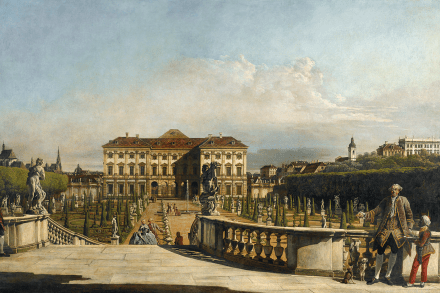
The first thing you see on entering this major new Viennese exhibition is not one of Canaletto and his nephew Bernardo Bellotto’s majestic paintings of London, Venice or Vienna, but a camera obscura. The magical art of both artists depended upon this simple but effective device, which exploits pin-hole projection – an optical phenomenon that had been known since antiquity.  The decision to open the show at the Kunsthistorisches Museum with a deceptively boring little wooden box amounts to a curatorial throwing down of the gauntlet. Because – although I find it hard to fathom – there are still art historians and critics out there who refuse to countenance the fact that great artists used optical aids.

How Greece carried the arts to rustic Rome

From our UK edition

‘Cultural cringe’, that lovely Aussie coinage, perfectly describes the Roman attitude towards Greece. The curators don’t say so, but it is the theme of this inspired exhibition. By the time the Romans finally took control of mainland Greece in 146 BC with the Battle of Corinth, they had long admired everything Greek. That date marks roughly the middle of the Hellenistic period, during which Greek culture and language dominated the Mediterranean and the Middle East. In comparison with Greeks, Romans were oafs – and knew it. In comparison with Greeks, Romans were oafs – and knew it After the battle, Corinth was flattened – quite an oafish thing to do – and emptied of all its works of art, which were sent to Rome.

The alt-right are clueless about neoclassicism

From our UK edition

The adherents of the American alt-right are not known for their delicate aesthetic sensibilities, but there is an exception. They love neoclassical architecture and are calling for it to be deployed in the 250th celebrations this year of what they still call ‘the country of liberty’. Judging from the desecration of the Oval Office and its surroundings, and the plans for the world’s most expensive dance hall, what they have in mind is a style derived not from ancient Greece and Rome but 1950s Technicolor movies. Donald Trump’s White House interior reminds me of Hogarth’s crisp verdict on French 18th-century rococo interiors: ‘All gilt and beshit.’ Expect more of the same.

Constable changed the course of painting, not Turner

From our UK edition

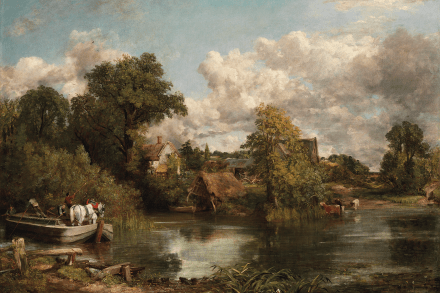
Flanders and Swann; Tom and Jerry. Some things come in pairs. Like Turner and Constable, even though our two most famous painters were more like chalk and cheese than cheese and pickle. They were close contemporaries: Turner was born in 1775, Constable a year later. Both painted landscapes. But that’s almost all they had in common. In every other way that matters, personal and artistic, they could hardly have been more different. Turner was a prodigy, a student at the Royal Academy Schools from the age of 14 and an associate (ARA) at 24. That same year, Constable had only just enrolled in the Schools, and was not elected ARA until he was 33. Constable did not become a full RA until the age of 52, while Turner had been one since he was 27.

Meeting point

From our UK edition

I prepared for this exhibition in Düsseldorf by taking the short train journey down the Rhine to Cologne, which would hate to be thought of as a twin city. Its gigantic cathedral is as I first saw it some 40 years ago, still black with soot (but where would you start to clean it?), and the streets still remind me of Swansea, but without the sense of space. The same low-rise blocks of anonymous postwar buildings are on every side, with the same seemingly temporary shops and takeaways, only with Würstel as well as burgers. Where Swansea has the fine Glynn Vivian Art Gallery, Cologne has the Wallraf-Richartz, now in a handsome new building adorned in the old-fashioned manner with the carved names of artists whose works are held within.

Masters of the artistic universe

From our UK edition

On The Courtauld’s 75th anniversary, Robin Simon looks back at its colourful and distinguished history The Tate Gallery ...sorry, I’ll start again. ‘Tate’ spent £100,000 a few years back just to lose its ‘the’. Staff are strictly instructed by the gallery’s Oberkommando to refer to it according to the brand name, as in ‘I’m at Tate’. It sounds as if they come from Mars — or Yorkshire. It doesn’t work, and I enjoy the announcement on the Victoria Line at Pimlico which gets it all wrong: ‘Alight here for the Tate Britain.’ The Courtauld Institute of Art turns 75 on 6 October this year and has also undergone a rather expensive ‘brand refreshment’.

On the trail of Hogarth

From our UK edition

‘All gilt and beshit’. That was Hogarth’s crisp verdict on French interiors when he visited Paris in 1748. As an image it is hard to fault, conjuring up gilded boiseries and the bird-droppings of rococo plasterwork. ‘In the streets [of Paris],’ the eye-witness report continued, ‘he was often clamorously rude.’ Hogarth sounds like a modern-day football fan. And he characterised the French in his pictures, if not as cheese-eating surrender monkeys, then as scrawny frog- and fish-fed skeletons, victims alike of a tyrannical monarchy and a grasping Roman Catholic Church. In contrast, as a proud member of the Society of Beef Steaks (motto, ‘Beef and Liberty!’; song, ‘O The Roast Beef Of Old England!

Turin’s jewel-box in the sky

From our UK edition

It is not every day that an exhibition of just 25 works of art is officially opened by a head of state. But this is Italy - and the art belongs to the legendary Gianni Agnelli, head of the Fiat empire. The little gallery containing it is designed by Renzo Piano; and it is perched above the roof of the visionary Lingotto car factory at Turin, one of the most extraordinary industrial buildings ever made. As Signor Ciampi made his way across the red carpet on 21 September, he passed a display of historic Fiat cars which had been driven up the purpose-built ramps that wind through the guts of the factory.

Bringing the dead to life

From our UK edition

Osbert Sitwell tells a story in Left hand! Right hand! about visiting a country house and sitting on a hall chair which promptly collapses. 'Don't worry, Osbert,' his hostess tells him, 'it was a very old chair.' Indeed it was, as Sitwell later discovers: Egyptian and about 3,000 years old. Fortunately, more 'very old' objects have survived from ancient Egypt than from any comparable period, because the Egyptians set such store by filling the tombs of their pharaohs with chairs, sculpture, jewellery, wall paintings, gold, alabaster, model boats, board games - anything that might come in handy for the after-life in which they so firmly believed.