Culture

Culture

The good, the bad and the ugly in books, exhibitions, cinema, TV, dance, music, podcasts and theatre.

W.H. Auden’s virtuosity masked careful craftsmanship

More from Books

‘Begin with the name,’ begins Peter Ackroyd. ‘Wystan is singular and arresting. Auden himself... confessed that he would be furious if he found that anyone else possessed it.’ It is certainly a name on which much ink has been spilt. Ackroyd’s biography comes barely 18 months after Nicholas Jenkins’s The Island, an exhaustive study of the poet and his work up to 1939 and his flight to America. Unlike Jenkins’s book, Ackroyd’s has the advantage of being a life rather than a half-life, though it accelerates through the later years as Auden tipped into ‘premature old age’. The frequent quotations also help the pacing, though we might have wanted chunkier extracts from, say, ‘September 1st 1939’.

A revival of Alan Bennett’s early work is long overdue

Lead book review

It is a curious literary form, the published diary. A surprising number of the classic diarists did write for eventual, usually posthumous, publication – Chips Channon under a 60-year embargo, A.C. Benson, Samuel Butler, in his wonderful notebooks, and surely the possibility was in the minds of Samuel Pepys and the Duc de Saint-Simon. More recently, great diaries have been published within the author’s lifetime. James Lees-Milne’s first instalment came out 30 years after the period it described. Alan Clark’s initial offering, covering 1983-92, appeared in 1993. Tony Benn’s hilariously tedious volumes emerged on a rolling programme which slowly caught up with the events they described.

Fractured loyalties: The Tribe, by Michael Arditti, reviewed

More from Books

Michael Arditti’s impressive and immersive family saga begins in Salonica (now Thessaloniki) in 1911 and follows the fortunes of the wealthy, powerful Carrache family who are part of the Sephardic Jewish community. They have lived in the city for two centuries and employ more than 1,000 people. The father of the family, Jacob, is ‘a well-known liberal’ who ‘would never compel his children to do anything against their will’; but he is outraged by his daughter Esther’s flirtations with socialism. So what will happen when he discovers his son Leon’s relationship with a nightclub singer? He also worries about his other three children: Ruben is reckless, Bella is artistic and Irène is overlooked.

Blockchain fantasies: My Bags Are Big, by Tibor Fischer, reviewed

More from Books

If you long for that far-off time when novels were prepared to be hilariously funny, vulgar, caustic, wildly politically incorrect and highly improbable you are going to love My Bags Are Big. Tibor Fischer has always been happy to write against the pieties of the age, whatever they might be. He has often been compared with Martin Amis, but he’s Amis without the pose. If anything, as he ages, he’s more like a very funny, very British Michel Houellebecq. You get the sense he really means it: he feels it; the rage is for real. His astonishing debut novel Under the Frog (1992) turned postwar Hungary into a carnival of grotesques and established the mode for a lifetime of books that treat plot as scaffolding for his riffs and reflections on life, the universe and everything.

Nintendo and the plumber who conquered the world

More from Books

It’s not more than a parlour game, perhaps, to speculate about history’s most crucial inventions. One invention often makes the next possible. Electric light revolutionised human productivity, allowing us to work well beyond sundown. The combustion engine and later the turbine engine collapsed our sense of distance, putting other continents within a day’s travel. We’re still debating what the internet’s done; how social media offers the double-edged sword of instant communication and addressability for good and ill; how it encourages the avatarisation of ourselves as online presences. We’re both ourselves online and not quite ourselves, entirely embodied and yet psychically elsewhere. But then again, we’ve always experienced this on some level or another.

Lloyd Blankfein – guiding light of Goldman Sachs

More from Books

Goldman Sachs inspires awe and envy in equal measure. Those who survive the Wall Street investment bank’s annual cull earn fortunes. Leavers join an alumni network that makes the Freemasons look like plodders. The ‘Government Sachs’ roll call includes prime ministers (Mark Carney, Mario Draghi, Rishi Sunak and Australia’s Malcolm Turnbull); US Treasury secretaries (Bob Rubin and Hank Paulson); and central bank governors galore, not to mention two recent BBC chairmen (Gavyn Davies and Richard Sharp).  After the global financial crisis, which Goldman navigated more adroitly than rivals, Rolling Stone compared the bank to ‘a vampire squid wrapped around the face of humanity’. New York magazine ran a cover story which asked: ‘IS GOLDMAN SACHS EVIL?

Frederic Prokosch – the man who seemed to know everyone

More from Books

One day Frederic Prokosch wrote a novel. He was 27 years old, living with his parents in New Haven, Connecticut, and desperate to be published. Leafing through an old atlas, he had visions of Lebanon and Syria, of the apricot trees of Damascus, the pilgrims travelling from Transcaucasia, and the Orontes River flowing among the rocks. His visions grew more vivid and the voices clearer: ‘I leaned forward in my chair and started to write as though mesmerised.’ The resultant book, The Asiatics, was an immediate success, praised by the likes of Thomas Mann, Albert Camus and André Gide. Others, however, were less sure. How could one write about Asia without ever having been there? Prokosch, it seemed, had quite the imagination.

Caught between Hitler and Bomber Command – the Berliners’ cruel predicament

More from Books

Can you be a true, thoroughgoing patriot and still want your country to lose in a war? It’s a dilemma that faced countless thoughtful people in the past century who lived under totalitarian regimes, and I know is torturing many Russians today. It’s the stark question at the centre of Ian Buruma’s subtly nuanced and beautifully written book about the lives of Berliners in the second world war as their city was being destroyed by a combination of aerial bombardment and the manic cruelty of their own leaders.

Chasing happiness: The Daffodil Days, by Helen Bain, reviewed

More from Books

Is there anything more to be said about Ted Hughes and Sylvia Plath? I didn’t think so, but Helen Bain’s debut novel The Daffodil Days proved me wrong. I did not expect to be absorbed, on the first page, by a woman cleaning a house (Court Green in Devon), the home Plath had just vacated with her two young children for London, where a couple of months later, in February 1963, she would gas herself.               Working backwards from December 1962, the novel describes the last 18 months of Plath’s life, glimpsed through some friends – writers and poets such as Al Alvarez, Bill Merwin and Marvin and Kathy Kane – but mostly through local people in or near the small Devon town of North Tawton.

When did you last see your siblings?

More from Books

I recently arranged to have dinner with my brother and sister. No big occasion. Just a casual pub meal on a normal weeknight. As the eldest, my sister naturally chose the venue. As the youngest, my brother kept us entertained. Me, the middle child, I mostly sat and listened. It was fun. We caught up on news, reminisced, laughed and, true to form, studiously avoided any old hurts. As Catherine Carr reminds me in this lively and revealing book on the ins and outs of siblinghood, these two people have known me longer than almost anyone on the planet. When my parents pass, no one but them will understand what I mean by ‘guggy’ (a ragged baby blanket that never left my side) nor recall the giddy excitement of spending our sweetie money after Sunday morning swimming.

How an illiterate peasant changed the course of modern history

Lead book review

There lived a certain man in Russia long ago. He was big and strong, in his eyes a flaming glow. You know the rest. Antony Beevor’s telling of the story of Grigory Rasputin will surely be the greatest literary chart hit of the year. That the life and death of one of history’s most extraordinary charlatans is a well-known and often-told morality tale doesn’t matter. Beevor makes no claim to have uncovered any great revelations. Rather, he carefully sifts Okhrana surveillance logs, court diaries, memoirs, the Empress’s correspondence and contemporary press accounts and, with his characteristically sharp eye for telling detail, extracts enough gems to decorate a whole Romanov party dress. For instance, the Empress’s letters to Rasputin make for startling reading.

The curse of gold for the Asante nation

Lead book review

As a metal, gold never corrodes. As a possession, the reverse is too often true. It has the power to warp morality, destroy decency and tarnish humanity. This duality – entrancing beauty alongside corrupting potency – lies at the heart of this magnificent book that engagingly blends African history with a current relevance that reaches far beyond the continent. The history is laid out with clarity and conviction. The Asante nation (Barnaby Phillips wisely settles on this spelling over a variety of homophones including Ashante, Ashanti and Achantis) is a component part of the modern west African nation of Ghana. Much like the Zulus in South Africa, their foundational history dates back only a few hundred years and is underscored by military prowess bordering on barbarism.

The glory and tragedy of Trafalgar

More from Books

The historian of naval warfare is to be envied by his land counterpart. The Duke of Wellington wrote to a confidant after Waterloo: The history of a [land] battle is not unlike the history of a ball. Some individuals may recollect all the little events of which the great result is the battle won or lost, but no individual can recollect the order in which, or the exact moment at which, they occurred, which makes all the difference as to their value or importance.

The sorrows of the young Melvyn Bragg

More from Books

The leaves had yet to fall as Melvyn Bragg left his native Cumbria and arrived in Oxford by train in the autumn of 1958 to read Modern History at Wadham College. Weighed down with suitcases, the grammar-school boy admired the town’s medieval core; but his first impression was of ‘effortless wealth and privilege everywhere’. Oxford was still largely dominated by public schoolboys, but it also featured those who had served in uniform, which added a note of gravitas to the atmosphere. On both counts, it was foreign terrain to Bragg, who pined for the familiar sights and sounds of his close-knit hometown of Wigton: ‘I could close my eyes and walk through it – as I often did to get to sleep.

Seeing the trees for the wood

More from Books

You’re up an oak tree somewhere between Ashtead and Epsom in Surrey. Wet lichens glow as you hunt for a footing on slick limbs. From the top of the canopy, the land turns to sea and glades appear as ‘oceans between continents of trees’. A ghostly armada of dead oaks lies becalmed in a clearing – a bleached collection of hulks left from a fire that happened decades ago. Like the titular character of Dr Seuss’s The Lorax, Luke Barley speaks for the trees, and his ambition is to make armchair woodlanders of us all. Ancient is his history of British woodlands – which turn out to be a lot more ancient but a lot less wild than the neophyte reader might expect. And if the history doesn’t grab you, there’s always the memoir.

Ghastly middle-class materialism: The Quantity Theory of Morality, by Will Self, reviewed

More from Books

In ‘Ward 9’, the central story of Will Self’s lauded debut collection, The Quantity Theory of Insanity (1991), it is posited that a society can only contain a finite supply of sanity, and that when it comes to marbles we’re all playing a zero-sum game. His latest novel suggests a limited amount of morality must exist in a world where the avaricious prosper and the meek inherit the debts of those who live unscrupulous lives. In the milieu of the book, these debts are mainly school fees, coke bills and the cost of renting an Italian villa for two weeks every summer.

A nasty little tale about a marriage: Look What You Made Me Do, by John Lanchester, reviewed

More from Books

Adultery and betrayal have always been richly rewarding subjects in fiction, as John Lanchester’s Look What You Made Me Do confirms. Set in contemporary London and featuring architect-designed homes, book groups and the Oxbridge-educated middle-class, it comes perilously close to being that dread thing, a Hampstead novel – only to subvert it. For after one chapter, Kate’s husband Jack is dead. Her long marriage and comfortable life are cast into turmoil, first by bereavement and then by a hit TV series which suggests that Jack had been having an affair with its scriptwriter, Phoebe. Interleaved with Kate’s account of agonised grieving is the TV script of Cheating.

‘Evil visited that day and we don’t know why’ – Dunblane 30 years on

More from Books

Shortly after 9.30 a.m. on 13 March 1996, a man walked into the gymnasium at Dunblane Primary School, near Stirling, Scotland. He was armed with two 9mm Browning self-loading pistols, two .357 Smith & Wesson revolvers and 743 rounds of ammunition. Within three or four minutes, he’d fired 105 rounds, resulting in the deaths of a teacher, Gwen Mayor, and 16 children. A further three teaching staff and 14 children were injured. He then took his own life. It could have been a great deal worse.  There was a suspicion that he intended to kill most of the school’s 600 pupils but that he’d arrived a few minutes late for assembly, by which time most of the children had dispersed to their classrooms.

‘He never drew a peaceful breath’: the tormented life of Henry VII

Lead book review

Have we ever had a more successful yet somehow forgettable king than Henry VII? A century ago, the Dictionary of National Biography could still hail him as the ‘Solomon of England’. But if he is remembered now it is almost solely for the dynasty he founded, with the domestic and international achievements of his own long and prudent reign largely ignored in the country’s bizarre obsession with the later Tudors.    There must have been an unusual mix of calculation and audacity to Henry’s character, because calculation alone could never have brought him to the throne.

Nights at the Lutetia – the dark history of a luxury hotel

More from Books

The saga of the rise and fall of the Third Reich could be traced by following events in any one of the countries occupied by the Nazis. Jane Rogoyska has refined this approach by focusing on what happened in a single building, a fashionable ‘grand hotel’ in central Paris, between 1933 and 1945.  The Lutetia is the only luxury hotel in Paris on the Left Bank, where it has always looked out of place – its bulbous, domed grandeur dominating less pretentious neighbours in a district that is still better known for its cultural and academic traditions. Rogoyska tells the story of the building’s wartime adventures in three parts – before, during and after the German occupation of France. The lives recounted fall into three groups, only one of which is French.

The woke wars intensify

More from Books

Nigel Biggar was not an obvious target for cancellation. A New Labourite, a Remainer and a public supporter of gay marriage and abortion up to 18 weeks, he might have seemed almost right-on – for an Oxford Professor of Divinity, at any rate. Nonetheless, when in 2017 he had the temerity to suggest that the British Empire had done some good as well as bad, 170-plus academics signed a letter urging Oxford University to withdraw support for his work. This was one of the first stirrings of ‘cancel culture’, the tactic of quashing wrongthink not by argument or persuasion but by sheer force of numbers.   Unfortunately for themselves, Biggar’s detractors had picked on the proverbial ‘wrong guy’.

Learning from history requires sophistication and skill

More from Books

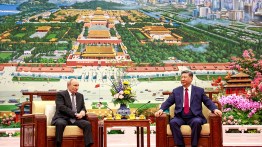
If you reckon you have an understanding of international politics today, you probably haven’t been listening properly. Vladimir Putin, Xi Jinping, Benjamin Netanyahu and Donald Trump are making history too fast for most of us to keep up. Odd Arne Westad’s The Coming Storm seeks to make sense of the current geopolitical chaos by drawing parallels between now and the years before 1914. If you don’t find those comparisons reassuring, you aren’t supposed to. The point being stressed is that, unless we are careful, we risk sleepwalking into a Great Power conflict as terrible as, or worse than, the first world war. Westad is a leading Cold War historian from Yale and his comparisons are always thought-provoking and often accurate.

From enfant terrible to dame: Tracey Emin in her own words

More from Books

On the eve of a major retrospective at Tate Modern comes this portrait of Tracey Emin as a painter, told largely in her own words. It traces a remarkable trajectory, from gobby Margate teenager to one of the UK’s most respected and celebrated artists, and a Dame of the British Empire. At its heart is a series of conversations with Martin Gayford, a critic with a deep engagement with the nature of painting and insights gleaned from close friendships with 20th-century giants, Lucian Freud and David Hockney among them. It is a book full of heart – frank and confessional – and presents Emin at the zenith of her powers, having survived near-fatal cancer and found new purpose and conviction.

Women have never had it so good as now

More from Books

Unfortunately, Zoe Strimpel has a great point in Good Slut. Why unfortunately? Because as much as I sympathise with her basic argument, I cannot see many people being persuaded by this scattershot polemic with its myriad errors and alarming glibness. Team slut deserves a better advocate. Whether I want to count myself as one of team slut is a sensitive point. I’m 44: it feels embarrassing. I had my ‘reclaiming sexist slurs’ phase in the late 1990s when I was an aspiring Riot Grrrl and I realised pretty soon that wearing fishnets and calling myself names was not having the disruptive effect on misogyny that I’d hoped for. Strimpel is 43 and, like me, she’s noted the recent turn to conservatism in sexual politics with some alarm.

Streamlined chic or lacy froth: royal style wars of the 1930s

More from Books

The semiotics of clothes, especially royal ones, can be fascinating, sending out powerful messages. Think of the jewel-studded, pearl-strewn portraits of Queen Elizabeth I or Princess Diana’s revenge-chic black dress. As a fashion queen herself (Justine Picardie was editor-in-chief of Harper’s Bazaar for more than seven years and has an acclaimed book on Chanel under her belt), no one is better placed to unpick the subtleties of royal public couture. So, judging by this book’s title, I was expecting a shrewd analysis of diplomacy dressing, with perhaps some behind-the-scenes vignettes. What happens if a royal lady unexpectedly gets a ladder in her tights at a crucial moment? Is there a colour code if three of them are out together? How do hats stay on in a gale?

Revelling in reading: The Enchanting Lives of Others, by Can Xue, reviewed

More from Books

Can Xue is an oddity in the landscape of world literature. Greeted mostly with bewilderment or indifference in her native China, her novels have gained a following among a certain type of erudite western reader over the past few decades, leading to an annual flurry of Nobel speculation and more works in English translation than nearly any other living Chinese author. The writing can be hard to enjoy. It often takes the form of avant-garde fairy tales populated by nameless characters who genially accept unsettling, inexplicable occurrences around them. When this works, as in last year’s gloriously strange Mother River, you get the disorientating feeling that you are the one who has gone insane, not the characters.