Inspiring, educational, moving, sometimes distressing, this is a riveting visual history of man’s best friend. Thomas Laqueur, from a German Jewish family, whose mother owned boxers, introduces us to many hitherto unexplored facts. Who knew that in 1938 guard dogs, using Bedouin herding dogs, were specially bred for ‘the new Zion’? Or that Darwin thought that dogs have a conscience?
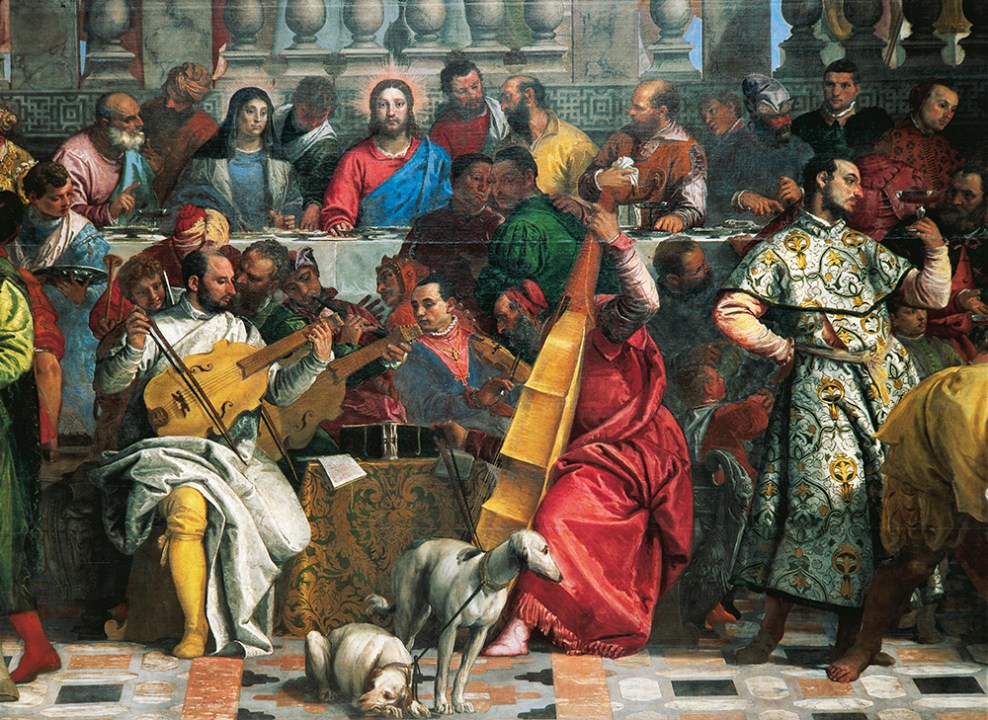
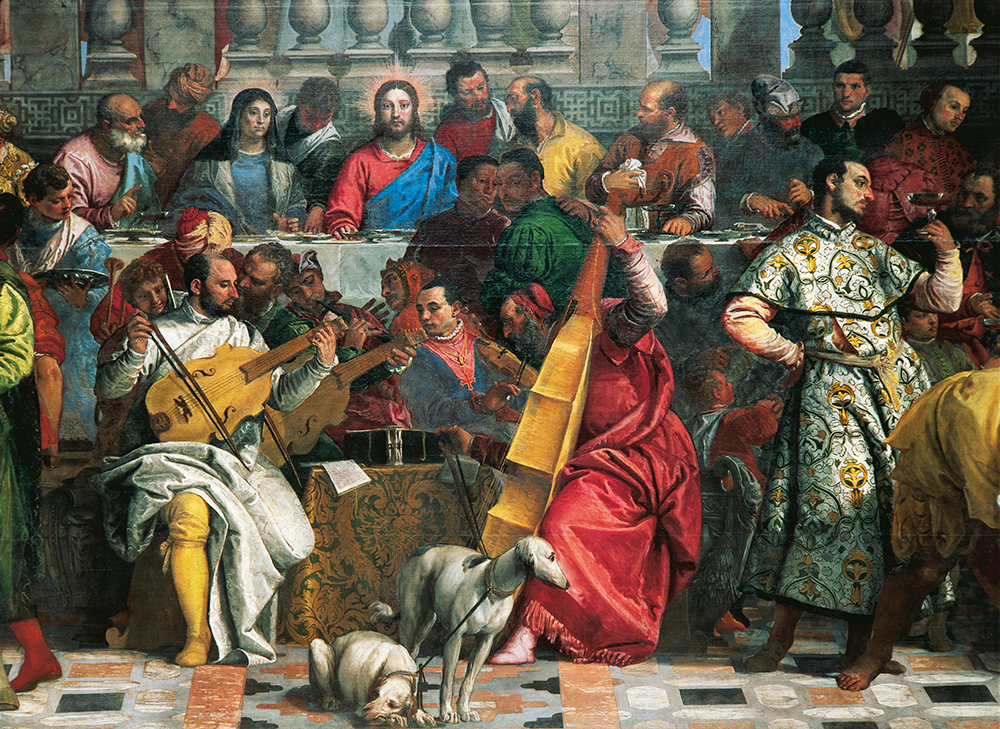
We are encouraged to scrutinise master- pieces of art with a fresh eye. In ‘The Wedding at Cana’ (1563), Paolo Veronese includes one white dog, who is ‘looking up at Jesus’s white shining face and invites us to join it’. Five dogs feature in this painting, and I took some time to spot each. In Jan van Eyck’s formal ‘Arnolfini Portrait’ (1434), says Laqueur, the painter humanises the couple through the little hairy dog at their feet.
In the ‘Arnolfini Portrait’, Van Eyck humanises the couple through the little hairy dog at their feet
The chapter titles are intriguing. ‘The Deep Time of the Dog’ focuses on dogs as our historic companions. From 25,000 years ago, in the French cave at Chauvet, a dog’s paw prints are visible beside those of a boy. A petroglyph in Saudi Arabia c.9000 bc shows dogs and humans hunting together.
‘Dogs and the Moral Imagination’ alerts us to another kind of hunting. Richard Ansdell’s painting ‘The Hunted Slaves’ (1861) shows huge, snarling dogs cornering a terrified fugitive black couple, the man armed with an axe. One dog is dead. Exhibited in the Royal Academy, it aided the abolitionist movement. ‘No one spoke ill of the dogs themselves; like the whip, they were the “instruments” of evil men engaged in an evil system.’ One thinks of drug dealers today encouraging dogs to aggression.
Shockingly, by 1860 major physiology labs were practising vivisection on dogs all over Europe. John Wesley preached against, and we are shown the Anglo-American artist J. McClure Hamilton’s painting of a terrier begging for its life to be spared. Other harrowing pictures show vivisected dogs strapped down by scientists.
More cheerfully, in his ‘Coda’ Laqueur features celebrated dogs in photographs, films and advertising: Queen Victoria’s dog Sharp, the German Shepherd film star Rin Tin Tin (found starving by an American soldier in the Great War’s trenches), the collie in Lassie Come Home, and, of course, Nipper of His Master’s Voice, painted in 1898 by Francis Barraud. His brother, a set designer at a Bristol theatre, had owned the mixed-breed terrier.
This is a fascinating book with stunning illustrations.



Comments