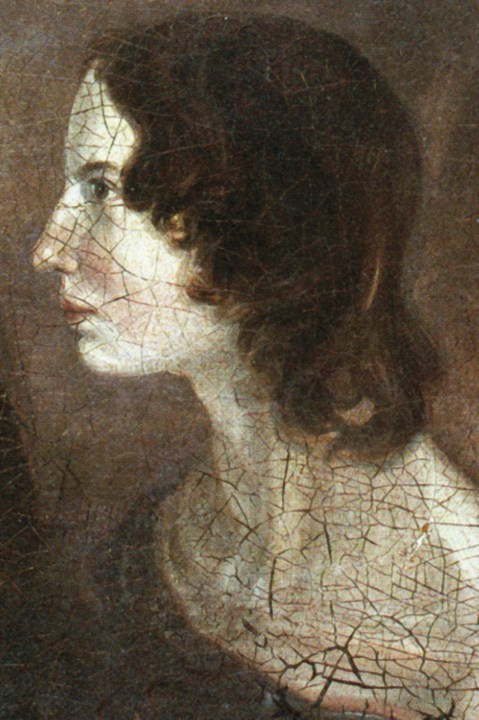
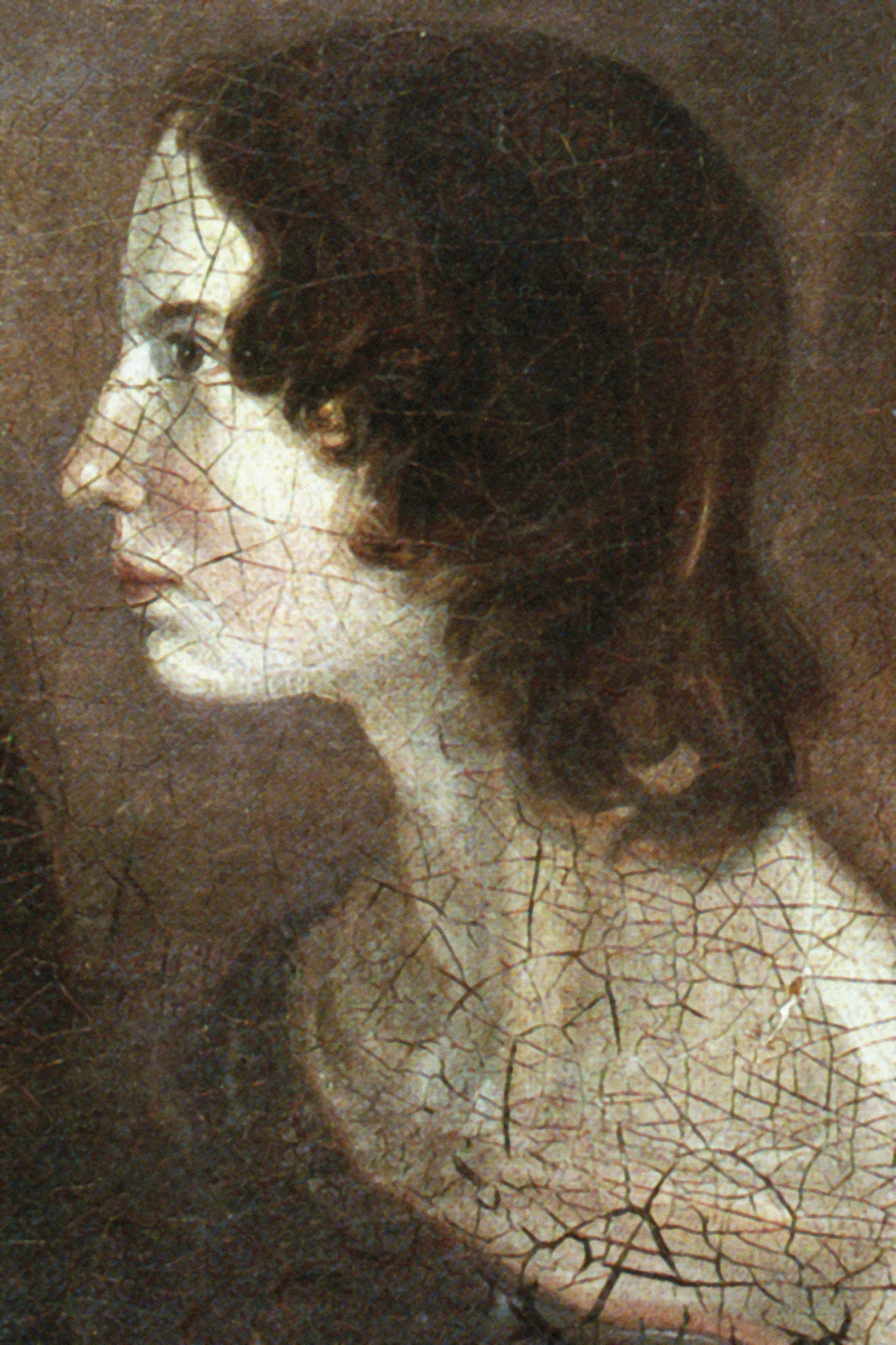
Emily Brontë, who died, aged 30, in 1848, is a source of perennial fascination – and potentially a biographer’s nightmare. Her single novel, Wuthering Heights, has long been recognised as one of the greatest in the English canon, yet it remains a strange anomaly, seemingly unmoored from the wider history of Victorian fiction. Her haunting poems – of which there are 70-odd – can make you catch your breath. Meanwhile, like the ghost of Catherine Earnshaw, the most inscrutable of the Brontë sisters seems to appear only to disappear.
This is primarily – but perhaps not entirely – down to the prosaic fact that so few of her personal papers survive, which is not the case with most Victorian writers, including her older sister Charlotte. None of Emily’s letters are extant, save for two brief, unrevealing notes. The manuscript of Wuthering Heights has gone missing, as, more intriguingly, has that of her second novel, title and subject unknown.

Also lost are the multi-volume prose narratives that she wrote in partnership with her younger sister Anne about ‘Gondal’, the imaginary kingdom they invented together as children and which went on to occupy their imaginations – especially Emily’s – into adulthood. Her surviving poetry is often written in the voices of Gondal characters, including a passionate, imperious queen who seems like a rehearsal for Cathy, though the full saga remains unclear. Without the Gondal prose, we can’t trace the development of the storytelling skill that created Wuthering Heights, which, as a result, seems to burst mysteriously upon the world fully formed.
Julian Barnes once compared a biography to a net: a series of holes tied together with string. How to construct a convincing life out of scraps is a more pressing problem in Emily’s case than in most, especially given the quiet and insular external existence she appears to have led. She is not known to have made a single friend outside her family, and was resistant to going out into the world, preferring to stay at home in Haworth on the edge of her beloved Yorkshire moors.
Over the past century, the lack of data has often invited wild biographical speculation, based on the unfounded assumption that the creator of Cathy and Heathcliff must have been inspired by some secret real-life love affair, though no clinching evidence has ever been found. (The 2022 biopic Emily has her engaging in ludicrously unlikely bodice-ripping sex with a local curate.). So it’s a relief that Deborah Lutz politely refuses to go any distance down that particular rabbit hole. She is well aware – as Emily’s serious biographers have always been – that the more interesting truth is to be found in the few but precious personal documents that do survive, and the glimpses they give us into her idiosyncratic mind.
Emily’s four so-called ‘diary papers’ (two others were written jointly with Anne), produced over the years, demonstrate how at ease she was at living in two parallel worlds at once. Her fantasy life bleeds into the workaday reality of the laundrywoman when she records, as a teen, that ‘the Gondals are discovering the interior of Gaaldine Sally mosley is washing in the back kitchin’. The slapdash spelling and lack of punctuation says much about her utter uninterest in conforming to convention.
Meanwhile, a clutch of French compositions, written in her early twenties when she was studying in Brussels during a rare absence from Haworth, have long since offered critics an opening into what seems like a dark and uncompromising soul. One passage translates as: ‘Nature… exists on a principle of destruction. Every being must be the tireless instrument of death to others, or itself must cease to live.’ Such proto-Darwinian nihilism sums up Emily’s refusenik rejection of Victorian moral sentimentality.
Lutz is in a strong position to approach Emily, given that she has been thinking about the Brontës for a long time. Her 2015 book The Brontë Cabinet is an engaging study of physical objects associated with the family, including the brass collar once worn by Emily’s fearsome bulldog, Keeper. That feeling for material culture carries over into this new biography. It’s intriguing, for example, to be reminded that the very earliest surviving text from Emily’s hand is written not in ink but in thread: the sampler that she stitched when she was eight. The biblical verse it features – ‘Who hath gathered the wind in his fists?’ – uncannily presages Wuthering Heights with its cosmic forces. So, too, does the extreme neatness of the needlework. Emily’s novel may deal with uncontrollable emotions and wild weather but it is a masterpiece of literary control.
Lutz is right to define her subject as a ‘consummate artist’ and ‘masterful writer’. It might be tempting to see Emily’s lifelong addiction to Gondal as mere arrested development. But it’s more meaningful to view it as symptomatic of a determination to cut out distraction: the place where she disciplined herself in the perfectionist demands of making what would turn out, in her best poems and in her novel, to be world-class, timeless art.
The slapdash spelling in the ‘diary papers’ says much about Emily’s uninterest in conforming to convention
Few female writers of her era (perhaps of any) have been able to be so ruthless in protecting their creative space. Yet – unlike her sisters, who took governess jobs so that she could stay at home – Emily was not much interested in feminism as a social movement. She positively enjoyed unpaid housework because its repetitive – even meditative – bodily motions allowed her mind to roam free.
Lutz traces how conflicting images of open and confined spaces flow through Emily’s known writings as the twin poles of her ‘world within’. Dungeons and graves fill her poetry, simultaneously attracting and horrifying her, as much as do the unbounded natural landscapes of the moors that she loved. By the time she was seven, she had seen her mother and two eldest sisters interred in the vault of the church opposite the family home. Heathcliff would later dig up Cathy’s corpse.
By tracing such leitmotifs through Emily’s writings, Lutz creates a through-thread to connect the fragmentary sources. Elsewhere, she compensates for the absences by drawing more generally on the work of social historians to flesh out her subject’s material environment, informing us about, say, Victorian sanitary towels, the smell of tallow candles, or how cold it was in an early railway carriage.
But it’s her interest in Emily’s manuscripts as physical entities that shines out, inspiring her to reconstruct her subject’s working practices. She has the alertness of a true bibliophile when it comes to the quirks of the original paper and ink of Emily’s poetry manuscripts. Lutz draws on the work of the late great Brontë scholar Tom Winnifrith to explain the probable process of Wuthering Heights’s composition. Such textually informed speculation is of a wholly different order to the cautionary tale offered by the biographer who once misread the title of a Gondal poem – in fact ‘Love’s Farewell’ – as ‘Louis Parensell’, and identified the said imaginary Louis as Emily’s lost lover.
Occasionally, Lutz indulges in poetic licence, as when she applies the phrase used of the fictional Cathy – ‘a wild, wick slip’ – to Emily herself; or when she tells us that Emily ‘certainly’ role-played Cathy up on the moors. She also wants it both ways when it comes to the controversy – which got Charlotte’s first biographer, Elizabeth Gaskell, into trouble in 1857 – as to just how bad the boarding school fictionalised in Jane Eyre really was. We’re told that the pupils’ meals were nutritious compared to many of their contemporaries’, but also that the Brontës’ eldest sister Maria died from an infection contracted as a result of the ‘poor nutrition’ provided at the school.
Those very minor cavils aside, it says much for Lutz’s skills as a writer that she succeeds in creating such a seamless and compelling narrative out of her materials. Her insight and sensitivity as a critic, as well her deep knowledge of the sources, allow her to open up the inner life of her famously reclusive subject. The result is a convincing portrait and an impressive achievement.





Comments