Bryan Appleyard

Bryan Appleyard is a Sunday Times journalist and award-winning feature writer. He was awarded a CBE for services to journalism in 2019.

Does a propensity for crime depend on one’s DNA?

From our UK edition

This book begins strangely. Kathryn Paige Harden and her man Travis go off into the Texas desert to take some LSD in the hope that it will provide a ‘hard serotonergic reboot’. They have not so far had sex, but Travis has plans. ‘You’ll come back with your third eye,’ he says, ‘and then we’ll fuck. You’ll be glad we waited.’ At this point you may be tempted to hurl the book across the room. The self-centredness is oppressive. But persist. It rapidly becomes a very powerful read. Harden is a psychologist and behavioural geneticist, and the primary theme of Original Sin is the way in which science raises questions about morality and the law. For example, is a psychotic man who murders his wife less guilty than a sane man who does so with a clear head?

The word ‘artisanal’ has lost its meaning and dignity

From our UK edition

‘Artisan’ is now a word attached to coffee, candles, paper, clothes, rugs etc. It is used to raise prices by giving consumers a warm feeling of being pampered with the solid, ancient virtues of the handmade. It is, of course, a lie. If you want to know about Britain and yourself, read this book. James Fox is an academic and broadcaster. His book is a history of the true artisans that made Britain – the carpet-weavers of Kidderminster, the hatters of Luton, the Chilterns bodgers with their Windsor chairs, the potters of Stoke and the brewers of Burton. The strong, proud feeling of craft locality meant that every town was different, as opposed to now when, as Fox says, ‘every high street looks alike’.

Arabella Byrne, Sean Thomas, Mathew Lyons, Bryan Appleyard & Chas Newkey-Burden

From our UK edition

28 min listen

On this week’s Spectator Out Loud: Arabella Byrne on the social minefield of private swimming pools (1:13); Sean Thomas says that not knowing where you are is one of the joys of travel (5:34); reviewing Helen Carr’s Sceptred Isle: A New History of the 14th Century, Mathew Lyons looks at the reality of a vivid century (11:34); reviewing Tim Gregory’s Going Nuclear: How the Atom Will Save the World, Bryan Appleyard analyses the three parties debating global warming (16:07); and, Chas Newkey-Burden looks back to the 1980s nuclear drama that paralysed his childhood, Threads (20:42).  Produced and presented by Patrick Gibbons.

Why going nuclear is humanity’s only hope

From our UK edition

There are three parties when it comes to global warming. First, the hard right, which says it isn’t happening, and even if it is that we can do nothing about it. Then there are the far leftish Luddites who would smash all power generation systems, allowing only wind turbines, wave power etc. Finally there are the suave centrists who know perfectly well that only nuclear can save us. This book will become their bible. Tim Gregory is a nuclear scientist who works at Sellafield. He has a serious problem defending his conviction that nuclear is the answer: radiophobia, the terror people feel about radioactivity. Superficially, this terror seems well-founded.

Christianity in England is dying – and our national identity with it

From our UK edition

‘Christianity,’ writes Bijan Omrani in his opening sentence, ‘is dying in England.’ Does it matter? His next sentence makes it clear that, for him at least, it does. ‘In this generation, the religion that has defined the spiritual life, identity and culture of the country since its origins as a unified state in the 10th century has come into its death agony.’ This, he adds, is ‘far more profound than anything like Brexit.’ The implication is either that we are nothing without our religion or we are becoming something unrecognisable and untested by history, a people without a story, with no tale to tell themselves. This book is a history of what we are losing. It is compendious, well written and alarming because we are evidently in danger of losing everything.

‘The wickedest man in Europe’ was just an intellectual provocateur

From our UK edition

In Paris in 1740 the hangman publicly burned his most famous book. In England some of the best and brightest – Alexander Pope, Henry Fielding, Bishop George Berkeley, Jonathan Swift and John Wesley – queued up to destroy his reputation. The book was The Fable of the Bees (1714) and the author was Bernard Mandeville, popularly known as the Man-Devil. After Mandeville’s death in 1733, Samuel Johnson, perhaps the wisest Englishman who ever drew breath, admitted that the book had ‘opened my views into real life very much’. And David Hume, the great British philosopher, said the Man-Devil was, in fact, one of the most important figures in the development of ‘the science of man’.

A world history of morality is maddeningly optimistic

From our UK edition

The memory of Tsutomu Yamaguchi will be with me for some time. Though wounded, he survived the Hiroshima atom bomb and returned to his home town, Nagasaki. Three days later, he survived another nuclear attack. He died in 2010, aged 93. This fat, complex, good-natured and intriguing book is full of such memorable material. Hanno Sauer is a German philosopher with an all-encompassing mind and a capacity to entertain. His arguments are sometimes clogged and improbable and I don’t find his primary thesis – basically that things can only get better – credible, but then I feel the same about most philosophers. The thesis is based on Sauer’s belief that moral norms are what made us the dominant species and will continue to do so.

That Trump photo is magnificently real

From our UK edition

A cloudless sky, an American flag and, to the left, something that looks like a music stand. A huddle of men in black suits, one in sunglasses staring straight at the camera, the others, arms stretched, are clustering round a fatter, older man whose face is streaked with blood, his fist raised as if fist-bumping God. This, in Donald Trump’s mind, is just what he is doing for he has survived the assassin’s bullet: something neither Kennedy nor even Lincoln achieved. The composition, taken in near impossible circumstances, is breathtaking both for Evan Vucci, the photographer, and for Trump. It is the dream shot, a hero shot, taken a few months before the election. One or two points on his ratings, mutter the pollsters, but really it’s over and he’s won.

Identity crisis

From our UK edition

28 min listen

On the podcast: In his cover piece for the mag this week, political scientist, Yascha Mounk has written about why identity politics has polarised our understanding of race. And why the left has come to divide groups into oversimplified categories of ‘the oppressors’ and ‘the oppressed’.  Also this week:  Can we trust photographs to paint a true picture of a story? The Israel-Palestine conflict has been one of the most documented wars to date. But with AI manipulation and staged imagery, is there a way of differentiating between real and fake news? Bryan Appleyard CBE and Eliot Higgins from Bellingcat discuss.

No one should trust the camera in the age of AI

From our UK edition

This war is being fought with pictures more than words. The poignant shots, often selfies, of families, children, even babies, who were to become victims of Hamas butchery, the wailing mothers and children on stretchers in Gaza, the missile strikes and collapsed concrete buildings. We know politicians on all sides lie, but photography is a mechanical process; these pictures must, surely, be the truth? Almost all these photos have been taken with mobile phones. To a rough approximation, everybody now has a smartphone. There are said to be seven billion smartphones in use around the world – there are only eight billion people. (Sales of what we used to know as cameras have crashed by 85 per cent.

As art it was terrible but the pre-teens loved it: Teenage Mutant Ninja Turtles, reviewed  

From our UK edition

Teenage Mutant Ninja Turtles (TMNT) began as a joke in 1984, a parody of the superhero culture of the time. It was originally a comic book but the stories have since expanded into toys, TV series and films, both animations and acted. The films have grossed more than a billion dollars and are likely to go on grossing down the generations of pre- and early teens. I am telling you all this because I have only just found out and I have never before seen any other TMNT products. The latest – Mutant Mayhem – is an animated film. It is drawn in a style that suggests the animators were angry as they worked, perhaps because it is set, like all the stories, in an extremely dangerous New York City.

A stunning work of art: Mission: Impossible – Dead Reckoning Part One reviewed

From our UK edition

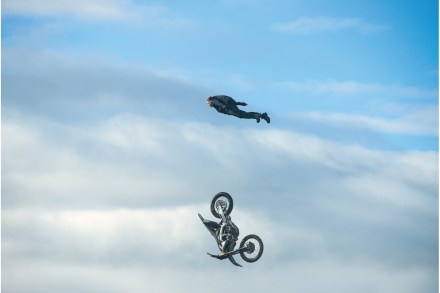
Blockbuster action movies are designed to stun the audience into submissive acceptance. Complexity, humanity, emotion and beauty are reduced to a few flickering lights in the swirling darkness of death and destruction. This is not a criticism. Great art has sometimes been like that and Mission: Impossible – Dead Reckoning Part One is certainly art, though perhaps not great. Anyway, I, for one, was stunned. The film is certainly art, though perhaps not great, and I, for one, was stunned For context, this is the seventh Mission: Impossible movie. The first was in 1996 so the hero Tom Cruise, aka Ethan Hunt, is now in his sixties.

Paper dragons: is Chinese science all it’s cracked up to be?

From our UK edition

At the tail end of last year, Chinese scientists claimed they had achieved something world-changing. In a widely circulated paper, the researchers said they had developed an algorithm run on a quantum computer that is able to break the best encryption that exists today. Modern encryption runs on mathematical problems which take the most powerful computers tens of thousands of years to crack. It has long been theoretically possible that quantum computers could one day be capable of cracking these codes in a practical timescale. If the Chinese claim is correct, then Xi Jinping now possesses a terrifying assault weapon in cyber warfare.  The paper, however, was greeted with derision by many in the West.

A tribute to my friend James Lovelock

From our UK edition

The scientist James Lovelock died this week at the age of 103. He was best known for his Gaia theory, which found that Earth is a self-regulating system formed by the interaction between living organisms and their surroundings. Here, Bryan Appleyard, who co-wrote 'Novacene: The Coming Age of Hyperintelligence' with Lovelock, pays tribute to his friend: James Lovelock died this Tuesday on his 103rd birthday. I had known him since 1988 when I met him at his then home in Devon. He later moved to Dorset where he lived with his wife, Sandy, in a coastguard’s cottage overlooking Chesil Beach. He loved the landscapes of the west of England. In fact, he was a member of that diminishing tribe known as patriots. He was born in 1919 in the immediate aftermath of the first world war.

A compelling, if flawed, example of the new American noir: Red Rocket reviewed

From our UK edition

Mikey (Simon Rex) first appears striding down a road in utterly wrecked jeans and shirt. He is carrying nothing and seems to be going nowhere until he walks up the pathway to the house of the wife he abandoned and her venomously disapproving, chain-smoking mother. Sean Baker’s Red Rocket is a movie set in Texas City in Galveston County. It’s basically an oil town and almost all the action in this film takes place on the perimeter of a vast refinery. Everything is very grainy, especially the dark interiors. This is because the film is shot on 16mm film, a medium which, on the big screen, produces a lively, speckled blur. After several attempts, Mikey charms his way back into his home.

Reality check: could our universe be a simulation?

From our UK edition

Are we all living in a computer simulation? Is the world we imagine to be real simply virtual reality instead, an elaborate computer program? That sounds ridiculous, but nonetheless it’s what many clever people actually think — or at least, think possible. One of them, the philosopher David Chalmers, has just written a book on the subject, Reality +: Virtual Worlds and the Problems of Philosophy. Chalmers is a serious intellect. He won a bronze medal in the International Mathematical Olympiad as a child and did his undergraduate studies in Pure Mathematics before turning to philosophy. Part of his argument is that we are already building simulated worlds ourselves — computer games as well as virtual environments like Second Life.

Lumpily scripted and poorly plotted: Cry Macho reviewed

From our UK edition

Clint Eastwood is 91; Cry Macho may well be his last film. Or maybe not. He has, after all, been directing himself as majestically craggy old guys for decades. Craggiest and most majestic of all, he was, in 1992, Will Munny in Unforgiven and, in 2008, Walt Kowalski in Gran Torino. In both those films, and now in Cry Macho, he is not just craggy, he is also broken. Munny is an old, widowed gunfighter barely surviving on his pig farm in Kansas. Kowalski, also widowed, is angry with America and missing, bitterly, the great days of the Detroit car makers. And now, in Cry Macho, he is Mike Milo, widowed and a ruined rodeo star-turned-horse breeder. He has been looking old but tough for 30 years; now he really looks old and not so tough.

The bleak brilliance of Hud

From our UK edition

Hud is a film that has haunted me for decades. I was never sure why. It seemed to be something about the bleakness of the setting and the story but also the extravagance of the hero and his car. I recently watched it as research for a book, and then, immediately, I watched it again. It is that good. There are two stars of Martin Ritt’s movie: Paul Newman and a 1958 Cadillac Series 62 Convertible. Out there in the ranchlands of the Texas Panhandle Newman looks just fine — big hat, jeans, cowboy shirt and boots — but the car looks all wrong. It is long, low and wide with an absurd pair of tailfins. Moreover it is pink. Though the film is in black and white, the Caddy’s pinkness is mentioned twice in the dialogue.

Comic genius

From our UK edition

For the hundredth, possibly the thousandth, time, Lucy van Pelt offers to hold the football for Charlie Brown so he can kick it. She cajoles him with the innocence of her eyes. He falls for it; he falls for it every time. Lucy, as she always does, whips the ball away. Charlie loops into the air and crashes to the ground. ‘What you have learned here today, Charlie Brown,’ she explains, ‘will be of immeasurable value to you for many years to come.’ Lucy is a cynic, a sadist, a huckster, a realist. Nevertheless, she would be right but for the fact that nothing is ever of ‘immeasurable value’ to Charlie Brown. He is too battered by life to be an idealist but he clings to hope, to the possibility that there is justice somewhere in the cosmos.

Ways of seeing

From our UK edition

‘Radical’ is like ‘creative’, a word that has been enfeebled to the point of meaninglessness. Everybody seems to want to be both, but nobody has any clear idea of what might be involved. In the case of this exhibition, radical could refer either to aesthetic or political themes; neither seems quite right. Never mind, ’modernist’ has, with the passage of time, become more firmly anchored. We now know it was a movement in the arts that began in about the 1880s and ended in, very roughly, the 1950s or ’60s. It was a period in which art became preoccupied with form as a determinant — rather than the servant — of content.