Paul Levy

The doyen of the France’s culinary scene is unmasked

From our UK edition

For some reason it took nearly a decade for the news of a revolution in the restaurants of France to reach the British media. The Americans were much quicker off the mark. In March 1972, Raymond Sokolov reported in the New York Times that a chef near Lyon named Paul Bocuse, along with several of his colleagues, including Michel Guérard and Alain Senderens, were serving their customers ‘a radical simplification of the grand cuisine of the 19th century, the heavy, formal style of cooking codified by Escoffier’. Luke Barr, whose latest book is a compelling history of this culinary earthquake, last wrote about the crook, embezzler and fraudster who curiously remains the patron saint of professional cooks in Ritz & Escoffier (2018).
A sensory awakening: the adventures of a cheesemonger

From our UK edition

Food memoirs, as distinct from cookery books, and from the relatively new genre of ‘biographies’ of ingredients, used to fall into three rough groups: foraging, hunting or gathering food; producing or cooking food; and eating. Like the restaurateur Keith McNally’s recent I Regret Almost Everything, Michael Finnerty’s The Cheese Cure adds a fourth category, memoirs of those who sell or serve food. These foodie books often blur at the margins and merge at the borders but usually share the characteristic of being narrated in the first person – and if recipes are given they are often incidental. (Of course, many of these authors also write cookery books.) There is a canon of such tomes by writers including Elizabeth David, M.F.K.

Nothing rivals a traditional Chinese banquet for opulence

From our UK edition

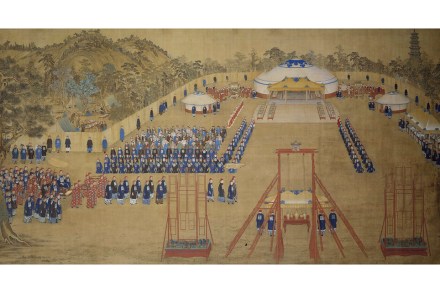
In February 1985 I had the good fortune to be a guest in Hong Kong at the Mandarin hotel’s 21st birthday celebration, a lavish three-day reconstruction of the sort of imperial banquet given during the Qing dynasty by the Kangxi emperor (1654-1722) and his grandson the Qianlong emperor (1711-1799). Kangxi started the custom of banqueting during his tours of southern China – he made six between 1684 and 1707. These provincial feasts were relatively informal affairs, often held in a tent, quite different to the stifling protocol of the imperial court at Beijing, and combined some aspects of the ruling Manchu ‘Man banquet’ with the native Han Chinese ‘Han banquet.’ The full three-day Manchu-Han feast was mostly restricted to Beijing.

On the road with Danny Lyon

From our UK edition

A Google search for ‘Danny Lyon’ produces more than eight million results in 0.30 seconds, yet the celebrated American photojournalist and filmmaker is little known in the UK. This superb, quixotic, bare-all memoir ought to change that. Starting in 1962, Lyon not only photographed the heroes of the US civil rights movement as staff photographer for the Student Non-Violent Coordinating Committee (SNCC, pronounced ‘snick’), but in a way was one of the heroes himself, risking jail, beatings and abuse. He’s had prizes galore and two solo shows at the Art Institute of Chicago.

In defence of foie gras

From our UK edition

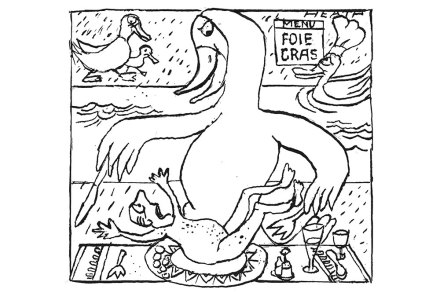
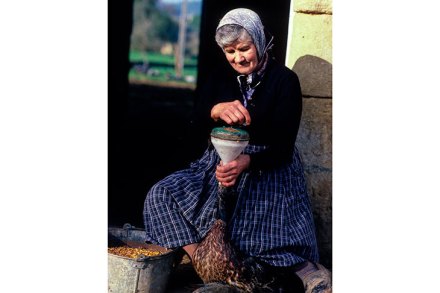
Apoll shows that nine out of ten Brits want to ban the import of foie gras. Crumbs! Haven’t they got anything more important to worry about? The Times says about 200 tons are imported from Europe every year. I only wish some would come my way. Though the same article says Waitrose stocks this greatest of all delicacies, I can’t remember seeing it in our local branch. The trouble is that the campaign against these large, buttery duck livers (goose liver is rare) is based on Yahoo-worthy ignorance and antique disinformation, such as the fading photographs that used to circulate of webbed feet nailed to the shed floor.

A single meal in Rome is a lesson in Italian history

From our UK edition

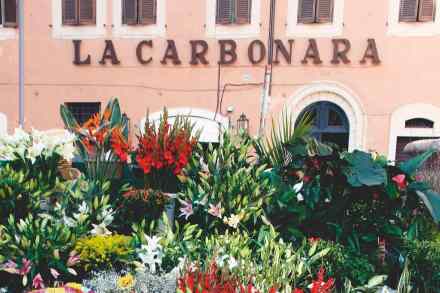
Farmer, restaurateur, critic, foodie activist, traveller (he’s worked in Zimbabwe as well as South Africa), cookery book writer, longtime TV presenter of New Scandinavian Cooking, food columnist for a couple of Norwegian papers as well as formerly for the Washington Post, Andreas Viestad’s belt has many notches. He lives between Oslo and Cape Town and for 25 years has been a regular visitor to Rome. His favourite restaurant there is La Carbonara, by the Campo de’ Fiori, and he has had the strikingly good idea of writing a foodie history of the world by examining a single meal eaten there. Early in the narrative we get a few lessons in geography, economic history and even contemporary mores.

Bisexuality was the Bloomsbury norm

From our UK edition

It’s been a century since the heyday of the Bloomsbury group, and now Nino Strachey, a descendant of one of the key families, has written a superb, sparky and reflective book charting the doings of the younger members of the artistic and intellectual coterie. While it is easy to identify Old Bloomsbury – familiar names include Lytton and James Strachey, Duncan Grant, David ‘Bunny’ Garnett, Virginia and Leonard Woolf, Vanessa and Clive Bell, Roger Fry, John Maynard Keynes, E.M. Forster and Desmond and Molly MacCarthy – naming the younger ‘Bloomsberries’ is a slippery task. Do we count Dora Carrington, who loved Lytton to distraction, and after his death found she could not live without him?

Don’t be seduced by fake truffle oil this Christmas

From our UK edition

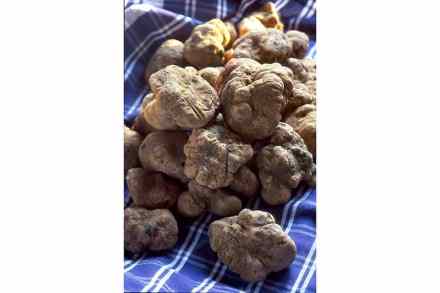
Truffles smell of sex. Even if we can’t quite say what we mean by ‘smell’ or ‘sex’ in this sentence, the much sought-after underground fungi emit something analogous to the pheromones that subconsciously attract us to other human beings. On the conscious level, these members of the family Tuberaceae release aromas ranging from floral to garlic to petrol to old socks, which pigs and dogs also find appealing. It can be faked, too. Most so-called truffle oil gets its scent from the chemical 2,4-Dithiapentane. In Truffle Hound, his pacy travelogue-cum-foodie manual, Rowan Jacobsen deals with about a dozen species of truffles (or other near-truffle fungi).

We shouldn’t be so squeamish about eating foie gras

From our UK edition

In his excellent, brief chronicle of foie gras, Norman Kolpas lists Kate Winslet, Ralph Fiennes, Thandie Newton, Ricky Gervais and the late Sir Roger Moore as among those who don’t want you to eat it, as well as Fortnum & Mason and the state legislature of California, which declared its production and sale illegal in 2019. Why do they care about something so petty as the making and consumption of this buttery, savoury age-old delicacy? There is, of course, a hint of class warfare about advocating its prohibition, along with caviar and other treats of the well-off and indulgent. But the main opposition claim is that the production of the hyper-fatty livers of ducks and geese is physically cruel and therefore immoral.

Unpleasant smells can actually enhance pleasure

From our UK edition

Harold McGee’s Nose Dive: A Field Guide to the World’s Smells is an ambitious and enormous work. Indeed it’s so large, at 654 pages and weighing nearly a kilo, that I could only manage to read it at the kitchen table — which made me appreciate its wipe-clean binding. Its distinctive new-book smell (there is such a thing) contrasts mightily with the musty, familiar old-book scent of my study. As I walk through the house, I detect the not entirely agreeable whiff of last night’s wood fire in the sitting-room, but this gives way to the snap-to-attention aroma of just-made coffee, the fragrance of the sliced banana and apple in the morning muesli, the scent of the loaf just out of the oven and the unmistakable redolence of toast.

The West’s industrial-sized chicken farms could be as dangerous as any wet market

From our UK edition

It wasn’t Henri IV’s Sunday poule au pot or Herbert Hoover’s less sexy-sounding chicken in every pot, but even in the mid-20th century chicken was a rare treat, not a cheap meal. What has happened to transform the noble Gallus gallus domesticus into what Paul R. Josephson startlingly calls ‘a genetically formed meat machine’? Chicken is a serious subject, even when it’s not the chlorine-washed kind the US President wants to foist on us. I can remember buying a distressingly uneviscerated chicken in a Co-op in Cornwall in the late 1960s; and even ordinary supermarket fowl then came with neck and giblets neatly packaged inside them. You can still buy tubs of chicken livers, but what has become of all those gizzards?

Kashrut dietary laws are ill-suited to lactose-intolerant Jews

From our UK edition

Until fairly recently, all over the western world there were specialised eating places catering largely for Jews who respected the kashrut dietary laws. From family caffs to white tablecloth establishment, these called themselves ‘dairy restaurants’. They were nearly, but not quite, vegetarian, since they allowed (the kosher-defined) fish with fins and scales. This wondrously weird, heavily illustrated book is a threnody to the now almost vanished dairy restaurant, seeing it as a kind of paradise — though as its author, the artist Ben Katchor, writes: ‘This pleasure garden, Eden, was open to the public and naturally attracted a crowd.

Gluttons for punishment

From our UK edition

Do you regard fat as a noun, a food substance all humans eat and need? Or as an adjective, denoting something you want to avoid being? Though the subtitle seems to indicate that this disturbing, closely argued book has the olive oil vs lard culinary axis as its subject, Christopher Forth dispenses with the food attributes of fat in his first few chapters. For the ancient Hebrews, fat was usually olive oil. But for ritual sacrifices, Yahweh seemed to prefer animal fat, as do the Ashkenazi remnant of His chosen people, with their relish of salt beef and schmaltz. Much the same was true of the Greek and Roman religious rites, whose gods were offered not much more than the mouth-watering aroma of roasting meat.

Bagels, borscht and brisket

From our UK edition

In matters of culture and ethnicity, I take my lead from my old friend and guide Sir Jonathan Miller. Like him, I count myself as Jew-ish, and, as every Jew-ish person knows, you are what you eat; these traits are expressed most poignantly in our food. Not in the ancient (and incoherent) Hebrew dietary laws, which make it impractical, impossible even  —  for the few observant Jews who remain on this planet — to eat an everyday British or American diet; but in the foods that we relish, cherish and feel nostalgia for.

Lies born from fantasy

From our UK edition

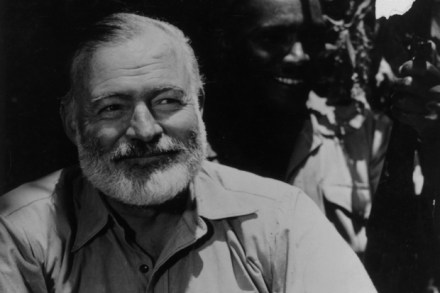
What is the most repulsive sentence in English/American literature? Even as a 12-year-old American boy, I cringed when reading, in Ernest Hemingway’s For Whom the Bell Tolls: ‘But did thee feel the earth move?’ At school I bought the myth of Hemingway as the master craftsman of American letters, teaching us to keep our sentences short and our syllables few. At university, however, I was privileged to be taught by R.S.

The human chimera – part lion, part goat

From our UK edition

Richard Wrangham embraces controversy, and appears to enjoy munching apples from carts he upsets himself. While his new book seems to be the history of an amalgam of moral and political virtues and vices, its thesis is actually the large claim that these have evolved; and he has no compunction about writing that the foundation stone of good behaviour is the possibility of capital punishment (against it though he is in today’s world). It’s not just that the logic of his argument requires this hypothesis; he has found examples of premeditated (‘proactive’), co-operative (‘coalitionary’) killing in the Pleistocene record, providing an empirical basis for his claims about our evolution. Chimpanzees have (reactive) murderous rages.

Trump Notebook | 12 July 2018

From our UK edition

For more than 40 years we’ve lived in a beautiful, listed, Cotswold stone, Stonesfield slate-roofed farmhouse in Oxfordshire. The trouble is it’s an ex-Blenheim house, within earshot of the palace, and the current duke is having Potus — that unlovely acronym for ‘President of the United States’ — to dinner. Locals are muttering about this World Heritage Site being used to fete a pantomime villain. On Thursday we’re invited to a friend’s 70th birthday party at the Athenaeum, and there’s also a press night at the National Theatre. I wonder whether we’ll be able to manage either of these, as our village is almost certain to be in lockdown then.

Loving in triangles

From our UK edition

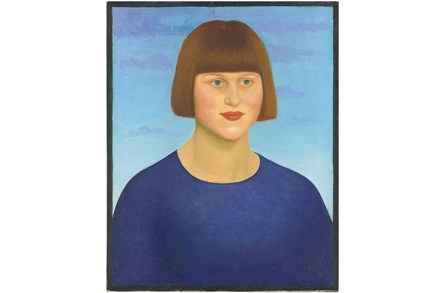
Dora Carrington (1893–1932) was at the heart of the Bloomsbury story. As an art student, she encountered the love of her life, the homosexual biographer Lytton Strachey; and this pair of Edwardian virgins actually managed to consumate their relationship in 1916. She loathed her given name, and insisted on her new friends, such as Virginia Woolf, Maynard Keynes, Duncan Grant and the entire large clan of Stracheys using her surname alone. Whatever her merits as an artist, the dramatic story of her life with the Bloomsbury group, and death by her own hand, is so enthralling that it was made into a film, in 1995, with Emma Thompson playing the title role. Like her frustrated suitor and fellow Slade student, Mark Gertler, she painted at least one masterpiece.

Alice’s restaurant

From our UK edition

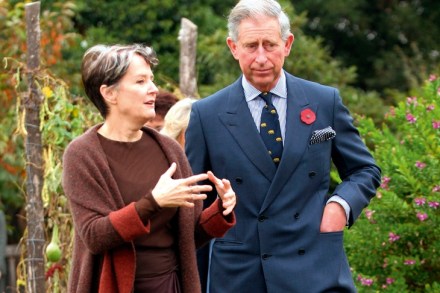
Though Alice Waters is not a household name here, that is precisely what she is in America — the best-known celebrity cook, the person who inspired the planting of Michelle Obama’s White House vegetable garden, the recipient of the National Humanities Medal, the Légion d’Honneur, vice-president of Slow Food International, the founding figure of California cuisine. She is the mentor of Sally Clarke and, claims Wikipedia, of René Redzepi and Yotam Ottolenghi. It all began in 1971 with a simple French restaurant in Berkeley, California, which she called Chez Panisse in homage to the films of Marcel Pagnol. It served a no-choice menu, costing $3.95, consisting of the traditional dishes she’d tasted during her year abroad in France.

Pleasure palaces and hidden gems

From our UK edition

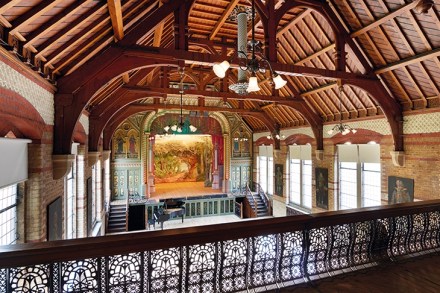
Theatre buildings are seriously interesting – as I ought to have appreciated sooner in the course of 25 years writing about theatre and opera. This coffee-table whopper, weighing in at just under a kilo, dazzles: Michael Coveney’s text is even better than Peter Dazeley’s remarkable photographs. And in a luminous foreword, Mark Rylance sets out the not-so-obvious difference between theatre and cinema: ‘In a theatre you need to hear the truth. In a cinema you need to see it.’ Most of the theatre audience can’t see the actor’s eyes, and have to rely on hearing emotion in the voice and, to a lesser extent, detecting emotion in body language. Hence the importance of lighting.