Sinclair McKay

Were the lies we told to combat communism so shameful?

From our UK edition

This, we might imagine, is the Age of the Fake. AI videos; TikTok fascists; the Joycean mind-fragments of a US president for whom truth itself is an ever shifting quantum concept. Surely no other generation has had to navigate such a disorientating landscape of deceit. Or perhaps they have. Our old friends the Russians gave the world The Protocols of the Elders of Zion at the start of the 20th century – a lethal, widely circulated (and still circulating) hoax outlining the world-dominating plots of Jewish people. Meanwhile, a still unidentified forger composed the Zinoviev Letter, which was published by the Daily Mail a few days before the 1924 general election.

Seeds of hope in the siege of Leningrad

From our UK edition

The idea was revolutionary – yet there was something ancient at its heart. The scientist Nikolai Vavilov, arriving in Petrograd in 1921 to take the helm of the Bureau of Applied Botany and Plant Breeding, was on a sacred mission: to make, in his words, ‘a treasury of all known crops and plants’. The world’s first seed bank would shape the future of agriculture – possibly even eliminate failed harvests and hunger. This was gleaming scientific idealism, but there was also an element of the Old Testament Ark about it. Throughout the siege, the botanists had to find the superhuman strength not to eat the seeds themselves The vision would collide with the brute reality of Stalin’s own efforts to bend nature to his will, and then the nightmarish Nazi invasion of Russia in 1941.

What progressives get wrong about Winston Churchill

From our UK edition

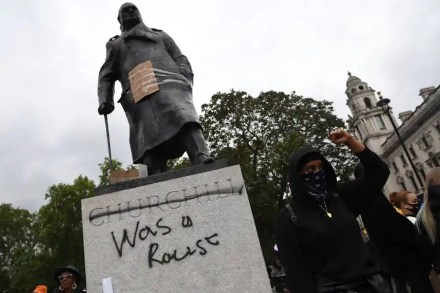
Please be advised that the following article contains outdated racial representations and views some readers may find distressing. Only joking! Yet that always seems to be the unspoken line running through modern academia’s head whenever the subject of Winston Churchill is raised. This year sees the 150th anniversary of Churchill’s birth; it will also see cohorts of academics jostling to tell us just how horrifically racist, imperialist, sexist and probably transphobic he was. As though that could be a surprise. Yet what might genuinely surprise many now is to learn that in certain respects, Churchill was in the vanguard of the woke movement. He was a progressive pioneer.

The World at War is the greatest documentary series ever made

From our UK edition

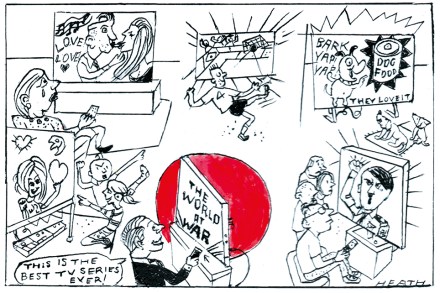
To present a TV history documentary these days, one must first have access to the full Angels and Bermans dressing-up box – everything from britches to bonnets. The past must be experienced as pantalooned immersion: throw in some CGI cavalry charges or naval battles, plus artfully dressed period locations, back-alley washing-lines fluttering with greying rags, and you are just about ready to go. This is not necessarily to complain. Every generation finds its own way of exploring complex historical questions. Nothing dates faster than history. Yet The World At War retains a freshness and a capacity for surprise But there is one television series that stands as a monument to the virtues of focused seriousness, and that is still being streamed today.

The real Dick Whittington and the folklore legend

From our UK edition

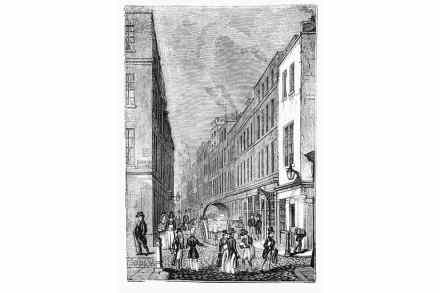
In that dark world the air pulsed with the melancholy clangour of bells. If, as legend has it, the chimes of St Mary-le-Bow told Dick Whittington to turn again, then what were they saying to all the other medieval Londoners, dwelling in houses so crowded on fouled streets that the sun could not break through? In the shadow of implacable plague, even London’s super rich were piercingly aware of life’s fragility. Their homes were scented with lily, lavender and the smoke of applewood. They had to be. The city was a close maze of abattoirs and tanneries and streams sluggish with excrement. Yet here, too, were brightly ornamented religious houses and gardens rich with symbolism and medicinal herbs.

Sex and politics in the precincts of St Paul’s Cathedral

From our UK edition

In the tight dark maze of alleys that wind between the Thames and St Paul’s the pleasures of the living are intertwined with those of the distant dead. Try it for yourself on a late Saturday afternoon. Start by immersing yourself in the eerie darkness of the Temple of Mithras (ancient stones, reconstructed Roman voices calling for strong drink, a pagan pit beneath the guileless Bloomberg building); emerge and cross over to the Roman Watling Street, where you will see tribes of Essex women – Boudicca’s spiritual daughters – with faces of bronze, brandishing not fire but fags and lighters outside busy pubs and bars.

City of gold: Peter Ackroyd on the undimmed spirit of London

From our UK edition

The silenced city has been, for some, uncanny. Deserted evening streets, darkened pubs, shut shops and the absence of fellow footsteps might suggest that some essential spirit has fled. Yet this is exactly the wrong way to look at it, says the novelist, historian and biographer Peter Ackroyd. For him, both lockdown and winter provide opportunities to see London in a different light. ‘The silence and the empty streets are very appealing,’ he says. ‘This is the time when Londoners get to hear distant church bells,’ he adds. ‘The identity of the city changes enormously in the winter and loses some of its majesty — but it retains its life and light.

Behind the veil of secrecy: GCHQ emerges from the shadows

From our UK edition

Is it ever possible to truly see inside the heart of another? To divine hidden intentions and the darkest of thoughts? For a long time — before we all became sourly aware of our own computers spying on us like HAL 9000, and flashing ads for haemorrhoid ointments — this godlike omniscience was ascribed to the secret listeners at GCHQ. Above all other intelligence agencies it held a special place in the imaginations of urban paranoiacs. The organisation itself nurtured this sinister reputation by its insistence upon remaining deep in the shadows, even as its siblings MI5 and MI6 boldly came out. Not all that many years ago, simply publishing the initials GCHQ could invite grief.

Did Britain commit a war crime in Dresden? A conversation

From our UK edition

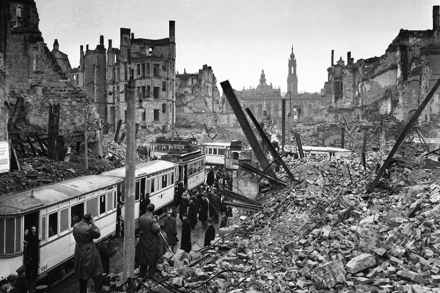
  In February 1945, the Allies, led by Sir Arthur Harris and Bomber Command, destroyed the historic city of Dresden, killing 25,000, most of them civilians. For the 75th anniversary, Sinclair McKay, author of a recent book on the bombing raid, and A.N. Wilson discuss whether it should be regarded as a ‘war crime’.   SINCLAIR MCKAY It was an atrocity. But I hesitate about war crime because war crime is a legal term and not a moral one. It is a legally defined concept.   A.N. WILSON Certainly at one stage of 20th-century history it was a crime to deliberately kill non-combatants and civilians who weren’t in the line of fire for warfare.   MCKAY Indeed, but there are then a number of follow-on questions that come with the label war crime.

Crime of passion

From our UK edition

No matter how exquisitely English —gobbets of blood amid the fireplace ornaments — murder annihilates meaning. Even when the motive is clear and strong, even when the progression to the fatal blow can be analysed step by step, all that is left amid the eviscerated lives of loved ones is an emptiness around the violence itself. In fiction, this void is filled: Agatha Christie understood very well about hatred, and her stories seethe with it. In 1935, as millions of her readers were devouring Murder on the Orient Express — a novel constructed around a biblical act of molten vengeance — the nation was suddenly mesmerised by a real-life shocker: a weird and savage killing in the genteel south-coast resort of Bournemouth.

The tug of the tide

From our UK edition

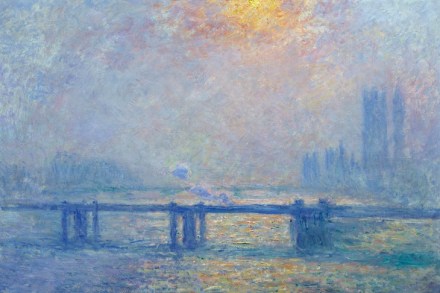
We ought to cherish the haunted landscape of the Thames Estuary while we can. The grey hulks of old power stations, the white domes of oil refineries, the sternly rectilinear factories, all of which once seemed oppressive, are now instead poetic because of their near extinction. Caroline Crampton’s atmospheric and movingly written exploration of the Thames, and that once-industrial estuary, is especially illuminating on the soul of the river; and she investigates satisfyingly what it is in these silent marshes and concrete embanked paths that still generates such an odd sense of unease.

Britain, their Britain

From our UK edition

Here’s a bracing lesson from Victorian history that might possibly help to slice some impossible Brexit knots. In the 19th century, there was complete freedom of movement of people from Europe to Britain. And that was all anyone needed. Europhiles might find it difficult to conceive of a time when the folk of continental Europe ached to get to Britain because it was only here that they could find stability, peace, and freedom from oppression. Remainers might find it impossible to imagine that this wholly independent nation — rather than being xenophobic — welcomed the newcomers, and revelled in the cultural riches that they brought. Not just the brilliant music and exhilarating art and exciting restaurants and delicious wine, but even the light entertainment.

Into the heart of Bow

From our UK edition

Cockney feet mark the beat of history, sang Noël Coward, as if he had ever been east of Holborn. Yet the sugary wartime sentiment finds a moving and resonant echo in Melanie McGrath’s new work of social excavation. The past casts an unusually deep shadow over Bow. And, cleverly, she has found a fresh means of exploring these striated layers of heritage: through the enduring local appetite for minced beef pie, mashed potatoes, and side orders of stewed eels. G. Kelly’s Pie and Mash is the 100-year- old restaurant in question, on the Roman Road in Bow (there are branches elsewhere). Pie and mash served with ‘liquor’ (parsley sauce) and eels might be described as the forerunner of fried chicken: comfort food devised at a time when comfort was badly needed.

The best television ever made

From our UK edition

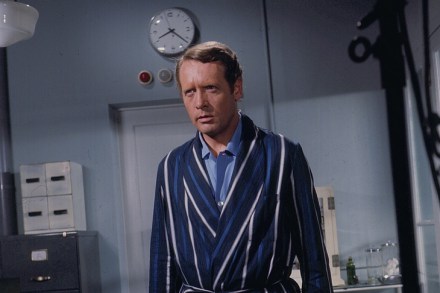
Now, if someone were to spray stun gas through the keyhole of my front door, and I were to collapse on my sofa only to regain consciousness in a slightly kitsch 1960s serviced apartment, outside which lay an exquisite Italianate village, a stretch of sparkling coast, a startlingly cheery populace all speaking in RP accents and social order maintained by means of a gigantic white plastic ball bubbling out of the sea… well, to be frank, I’d be thrilled. Patrick McGoohan’s Number Six, on the other hand, is seething about it from the start; and the film director Alex Cox, who sat watching The Prisoner as a 13-year-old in 1967, does a terrific job of giving a fresh interpretation to what must be the world’s most analysed television series.

Finally tired of London

From our UK edition

Iain Sinclair is leaving London — like the croakiest of the ravens taking flight from the Tower. It is a proper blow: across five decades, he has been prowling the streets, part poet, part satirist, part prophet. Very few authors have fashioned a London more real than the one we see: Dickens, Conan Doyle, Patrick Hamilton, Angela Carter. Sinclair is firmly among them. While his contemporary Peter Ackroyd understands London as a city of eternally recurring patterns and echoes, Sinclair sees something more malign and gangrenous: forces that endlessly conspire to bend perception and bleach the streets of their real meaning. Oh: and he is also extremely funny.

Golden opportunities

From our UK edition

Tudor merchants — shivering in furs in tiny creaking ships, sailing through the ice of unknown winter seas — knew something that today’s careworn EU and civil service officials might be irritated to hear: that despite all travails, trade deals can sometimes be sexy, thrilling and epic. In 16th-century London, plans to open up fresh trading routes across the world were also about vaulting leaps of fantastical imagination, and naturally also about slavering greed. Down by the Thames, men of property would dream of alien Cathay, and of realms where the beaches, they thought, would glitter brilliant red and green with loose rubies and emeralds.

Hack of the century

From our UK edition

To all those computer hackers exulting in pizza-encrusted bedrooms across central Europe — the US presidential election was influenced! The CIA said so! — I would say this: yes, yes, perhaps. But listen: when it comes to altering the course of history through hacking, Britain is waaaay ahead. Indeed, if you want to hear about intercepted communications properly changing the world, there is one incident in particular, 100 years ago this week, that had a much more seismic effect. The hacker hero of this story is a witty Old Etonian, a young publisher with a love for amateur dramatics. And the secret message, obtained by tapping telegraph wires (the hacking of its day) and then subsequent decoding, was from the German foreign secretary to his ambassador in Mexico.

Ghosts of the past

From our UK edition

You find it in the vistas of skeletal metal gangways, the abandoned 18th-century forts, the squat oil holders and rusted pipelines, the pale reeds of the marshes, the barbed wire, the peeling housing estates, the lonely river paths. You hear it in the thick silence by the water, broken only by the wide river slurping and slopping against the embankment. There is something in the landscape of the Thames estuary that is curiously and powerfully uncanny. But how can that be in the otherwise earthy county of Essex? This is one of the subterranean themes of Rachel Lichtenstein’s electrifying exploration of the estuary. What ought to be a grey stretch of post-industrial England is in fact rich in eerie poetry.

Through the eyes of spies

From our UK edition

Spying is a branch of philosophy, although you would never guess it from that expression on Daniel Craig’s face. Its adepts interrogate the surface of reality — people, landscapes, texts — knowing that they will discover extraordinary hermetic meanings. They study fragments of documents, whispers of messages, and from these, they summon entire worlds. Possibly one of the reasons Max Hastings cannot pretend to be hugely impressed by the boasts of wartime spies is the philosophical nebulousness of what constitutes ‘results’ in secret-agent speak. Soldiers fight, shoulder to shoulder; battles are clearly lost and won.

Turing’s long shadow

From our UK edition

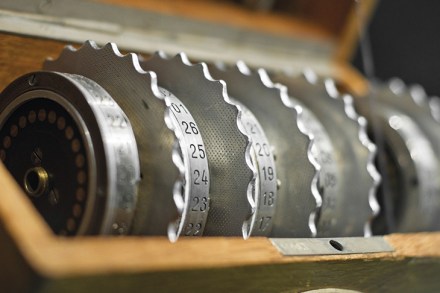
As a young student, the atheist Alan Turing — disorientated with grief over the death of his first love Christopher Morcom — wrote to Morcom’s mother with an atomic theory of how one’s spirit might transmigrate. Years later, he brought the modern computer age into being by positing machines imbued with consciousness. You can’t help wondering what Turing’s shade — whether ethereal or perhaps digital — makes of his posthumous fame. Plays; books; postage stamps. Now, following Benedict Cumberbatch’s doomy big-screen portrayal of the Bletchley Park codebreaking genius in The Imitation Game, David Lagercrantz fictionalises the murky aftermath of Turing’s death. In doing so, he explores questions not only of identity and maths and philosophy, but also of good taste.