Sarah Moorhouse

In praise of uncertainty over hollow conviction

From our UK edition

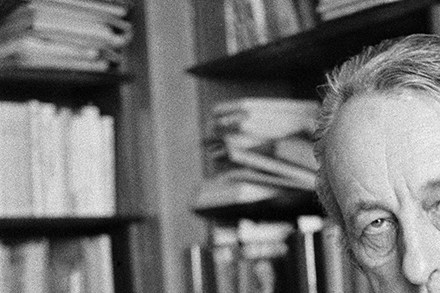
When I met Brian Dillon in February 2023, he seemed to have a lot on his mind. We had arranged to speak about Affinities, the newly published final instalment of Essayism, his sprawling three-part survey of literature, art and aesthetics. That morning, as he sipped decaf coffee in a quiet corner of the Barbican Kitchen café in London, he still didn’t know what his book was about. ‘At this point you don’t,’ he confessed. But even though he hadn’t made up his mind about Affinities, Dillon had already begun to think about his next project. It was to be a memoir of his education, called Ambivalence. This has now come to fruition.

Glamour and intrigue: The Silver Book, by Olivia Laing, reviewed

From our UK edition

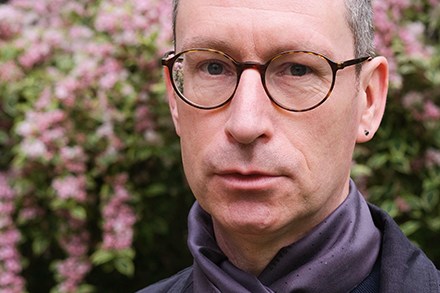
Olivia Laing has had a productive couple of years. The Silver Book arrives hot on the heels of The Garden Against Time, a memoir-cum-environmentalist treatise published in 2024. It is a novel of stunning imaginative power that was apparently written in just three months. Set in 1975, during the making of two great works of Italian cinema, Federico Fellini’s Casanova and Pier Paolo Pasolini’s Salò, it is suffused with the glamour and intrigue of these filmmakers’ worlds. It offers a fictional retelling of the events that led up to Pasolini’s murder – a crime that remains unsolved – on 2 November.

The fragility of the modern city reflects humanity’s vulnerability

From our UK edition

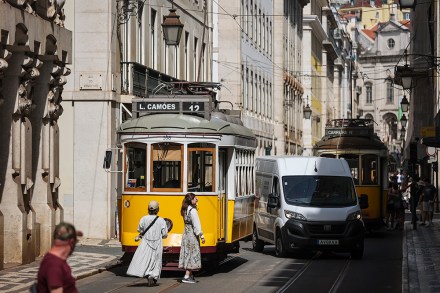
As I reached the final pages of the German writer Gregor Hens’s essayistic travelogue The City and the World, news of the blackout across Spain and Portugal snatched my attention. Madrid and Lisbon were at a standstill. Images of gridlocked round-abouts and commuters rushing out of pitch-dark subway tunnels plunged me into a fatalistic mood. When will it happen here? Hens, I realised, had nailed an important point: the ‘stunning complexity’ of modern cities makes them fragile. The metropolis, he writes, has become so intricate, its limits so stretched, that in it, ‘we are always living on the verge of catastrophe’.

The need to feel seen: Perfection, by Vincenzo Latronico, reviewed

From our UK edition

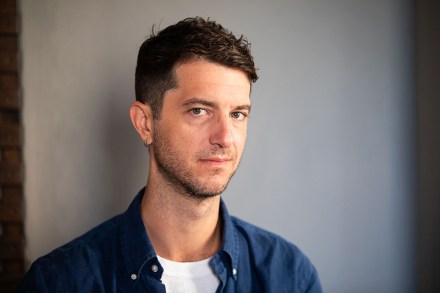
I probably won’t be the only one to say this of Vincenzo Latronico’s Perfection: it made me feel seen, and not in a good way. The novel takes aim at aspects of modern life, from social media to remote working and interior design trends, that aren’t obvious subjects for serious literary attention. Latronico, a philosopher who writes in Italian (this is his first novel to appear in English), suggests that our online profiles and material possessions have taken the place of integrity and community in society. He makes you question whether there can still be such a thing as an authentic personality. The narrative follows a couple whose existence is, to all appearances, very pleasant.