Lucasta Miller

A glimpse of the extremes of Emily Brontë’s imagination

From our UK edition

Emily Brontë, who died, aged 30, in 1848, is a source of perennial fascination – and potentially a biographer’s nightmare. Her single novel, Wuthering Heights, has long been recognised as one of the greatest in the English canon, yet it remains a strange anomaly, seemingly unmoored from the wider history of Victorian fiction. Her haunting poems – of which there are 70-odd – can make you catch your breath. Meanwhile, like the ghost of Catherine Earnshaw, the most inscrutable of the Brontë sisters seems to appear only to disappear. This is primarily – but perhaps not entirely – down to the prosaic fact that so few of her personal papers survive, which is not the case with most Victorian writers, including her older sister Charlotte.
An artist in her own right: the genius of Elizabeth Siddal

From our UK edition

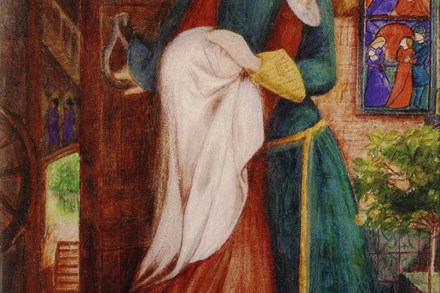
Elizabeth Eleanor Rossetti, as this new book calls her in a break with convention, is better known by her maiden name: Elizabeth Siddal or Siddall (the spelling is uncertain, as is much else about her). The Pre-Raphaelite icon was familiar to the public as the model for John Everett Millais’s ‘Ophelia’ sinking to her watery grave and as the muse of Dante Gabriel Rossetti, who eventually married her. Not long afterwards she died of an opiate overdose in 1862, aged 32. Her early demise, echoing her association with Ophelia, left her ripe for myth-making, as first explored by Jan Marsh in her groundbreaking The Legend of Elizabeth Siddal (1989).

The troublesome idealism of Simone Weil

From our UK edition

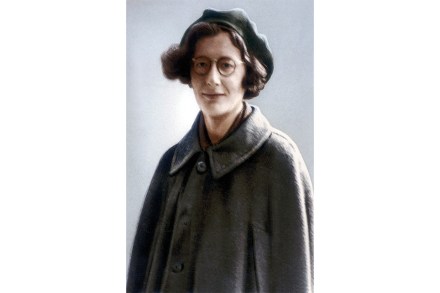
The French philosopher Simone Weil, who died of self-starvation and tuberculosis in a Kent sanitorium in 1943 at the age of 34, remains a conundrum. ‘Mais elle est folle!’ had been the spluttering response of Charles de Gaulle the previous year, during her short wartime period analysing reports for the Free French in London. Her simple brief was to précis the ideas coming in from the Resistance movement on how to reconstruct France after liberation. The result – which was posthumously published, as were most of her writings – turned out to be a major work of original philosophy, Enchainement (The Need for Roots), running to hundreds of pages, a testimony to Weil’s lifelong need to go further than anyone could ever have required into what she saw as the truth of things.

How ‘The Rime of the Ancient Mariner’ plays tricks with the mind

From our UK edition

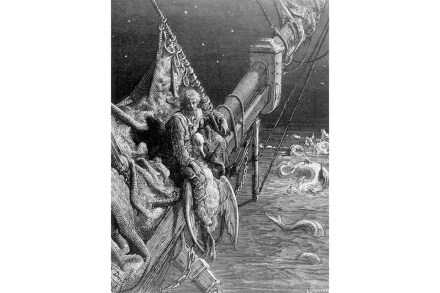
I’ve just returned from five days in the Lake District, attending the biennial ‘Friends of Coleridge’ conference in Grasmere. All the other attendees were seasoned Coleridge scholars, but I was a newbie. The reason for my going was the fact that I’m engaged in a project that has at times felt something of a lonesome road and indeed an albatross: to write a book about Coleridge’s ‘The Rime of the Ancient Mariner’. The poem comes to us with a vast undertow of explicit and implicit cultural and historical baggage, from its self-conscious antiquarian roots in late medieval ballads to its engagement with more currently pressing concerns of environmentalism and how we navigate the story of colonial expansion.

Natasha Feroze, Robert Ades, Lucasta Miller, Sam McPhail, Toby Young and Catriona Olding

From our UK edition

38 min listen

On this week’s Spectator Out Loud: Natasha Feroze reports on the return of ex-Labour MP Keith Vaz (1:10); Robert Ades presents the case against sociology A-level (7:39); Lucasta Miller reviews Katherine Bucknell’s book, Christopher Isherwood Inside Out (15:24); Sam McPhail provides his notes on the lager Madri (23:16); Toby Young explains why he will be voting Reform (26:23); and, Catriona Olding reflects on love and friendship (31:17). Presented by Patrick Gibbons.

A long goodbye to Berlin

From our UK edition

Christopher Isherwood pioneered what is now known as ‘autofiction’ long before it acquired that label. His best known work, Goodbye to Berlin (1939), which later inspired the musical Cabaret, was based on the diaries he kept while living in the Weimar Republic in his twenties. He’d already used the material before in Mr Norris Changes Trains (1935), a brilliant black comedy thriller that deserves to be read alongside more supposedly serious works of modernism. Forty years later, he reworked the experiences yet again in Christopher and His Kind (1977), in which he finally made explicit, for the new gay liberation era, what had been suppressed in the earlier works: his homosexuality, which had previously been outlawed.

‘I always made an awkward bow’: John Keats’s poignant farewell

From our UK edition

On Sunday 17 September 1820, John Keats and his travelling companion, the young painter Joseph Severn, set sail for Italy, where it was hoped that the warmer climate would benefit the poet’s failing health. It didn’t. He died of tuberculosis in Rome the following February at the age of only 25. The last five months of Keats’s life – the sea voyage to Naples, including ten exhausting days stuck in the bay in quarantine; the overland journey to Rome; his last weeks spent in the rooms above the Spanish Steps that are now a museum – are the focus of this enthralling and original new study. Its author, Alessandro Gallenzi, the publisher of Alma Books, is well acquainted with Keats’s letters, having recently translated them into Italian.

Disregarded for decades, Jean Rhys stayed true to her vision of life

From our UK edition

Jean Rhys, who died at the age of 88 in 1979, lived to be forgotten and rediscovered. Like many readers, I first came across her through her novel Wide Sargasso Sea, which imagines the pre-history of Jane Eyre’s ‘madwoman in the attic’, the Creole heiress married off to Mr Rochester and then incarcerated by him at Thornfield Hall. When it came out to great acclaim in 1966, it marked the rebirth of a writer who hadn’t published a book for more than a quarter of a century and who had even been presumed dead.

W.G. Sebald’s borrowed truths and barefaced lies

From our UK edition

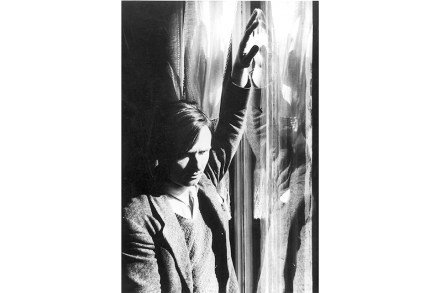
W.G. Sebald is the modern master of the uncanny — or perhaps that should be ‘was’, as he died in a car crash near Norwich in 2001 at the age of 57. Deciding which tense to use depends on whether you mean ‘W.G. Sebald’ as a shorthand for his body of work, which outlives him, or to refer to the man who wrote it, known to his acquaintances as Max. The question poses its own Sebaldian conundrum, reflecting his strange crepuscular writings with their meditations on the dead and the living, past and present, culture and identity. His ghost lives on in the flickering half-light, the most enigmatic, perhaps, of his characters.

Lives unlived: Light Perpetual, by Francis Spufford, reviewed

From our UK edition

Francis Spufford was already admired as a non-fiction writer when he published his prize-winning first novel, On Golden Hill, in 2016. Set in 18th-century America, it was a tour de force of historical imagining, its prose skilfully suffused with the writerly tics of that era yet not overly so, leaving it pedantry-free and compulsively readable. His new book, Light Perpetual, is also a historical novel, but with a difference. It follows the arc of the 20th century through the stories of five working-class Londoners, but its central conceit is a clever counterfactual. The opening scene sees all five, then young children, being killed in an air raid during the second world war. How, asks Spufford, might their lives have panned out had they lived?

The audacity of verse

This article is in The Spectator’s January 2020 US edition. Subscribe here. Shelley famously and optimistically proclaimed that poets were the unacknowledged legislators of the world. Adorno famously and pessimistically declared that poetry was impossible after Auschwitz. In The Music of Time, his new study of poetry in the 20th century, John Burnside makes a rather more modest claim: that to write a poem at all is an act of hope. By any standards, Burnside’s own career seems cause for hope in poetry’s capacity to transform at least one individual life.

Johnson

Where are Yeats, Eliot and Plath in a new survey of 20th-century poetry?

From our UK edition

Shelley famously and optimistically proclaimed that poets were the unacknowledged legislators of the world. Adorno famously and pessimistically declared that poetry was impossible after Auschwitz. In The Music of Time, his new study of poetry in the 20th century, John Burnside makes a rather more modest claim: that to write a poem at all is an act of hope. By any standards, Burnside’s own career seems cause for hope in poetry’s capacity to transform at least one individual life. Born in 1955, into a working-class family in Dunfermline, he did not start publishing until he was in his thirties, following an addiction-fuelled breakdown and a subsequent attempt at a commuter-belt career in computing.

Rushdie at his best – Quichotte reviewed

From our UK edition

It’s hard to get your head around Salman Rushdie’s latest novel Quichotte, which has been shortlisted for the Booker. It’s a literary embarras de richesse, whose centre can’t really hold, yet it’s written with the brilliant bravura of a writer who can really, really write. More to the point, it’s also funny and touching and sad and oddly vulnerable, rather like its eponymous hero. His name is taken from Cervantes’ Don Quixote, via its Frenchified version, courtesy of the composer Massenet (one cultural allusion at a time is never enough for Rushdie, whose references range from Prospero to Pinocchio, from Ionesco to Oprah, from Wordsworth to The Wizard of Oz).