Culture

Culture

The good, the bad and the ugly in books, exhibitions, cinema, TV, dance, music, podcasts and theatre.

Hart-felt praise

More from Books

‘I don’t profess this tome to be one of deep reflection or profound, serious thinking,’ writes Miranda Hart, which may or may not come as a surprise to her readers. ‘I am nowhere close to one of them French philosophers; I basically lollop through life like an amiable hound.’ If self-knowledge tends to be hard won, Is It Just Me? (Hodder & Stoughton, £20) suggests that Hart has won it mainly by saying the wrong thing and falling over a lot. Whether you like this book, or even open it, probably depends on how much you enjoy her work on TV, although it’s unlikely you will have read even this far if you didn’t.

Little house on the pampas

More from Books

It’s hard to tell Argentina’s story without moments of despair. Even those who are fond of this country — like me — can struggle to identify the bright spots in its history. It’s been a tale of genocide, shrinking borders, pointless wars, hyper-inflation and vicious dictators. Even the end of the second world war brought little joy, given that Argentines had spent much of it egging on the Nazis. Part of the problem has been one of grandiose expectations. A century ago, Argentina believed itself on the brink of greatness, its fortune built on meat. Immigrants arrived in their millions, and a few — like Aristotle Onassis — became unhealthily rich.

Mother of sorrows

More from Books

This novella tells the story of the Crucifixion from the point of view of Mary. Contrary to art historical belief she was not, we are now told, kneeling at the foot of the Cross nor cradling her son’s broken body in her arms. Instead, she left the scene early, slipping away to save her own skin, stealing to meet her needs as she fled. It’s the sort of idea Carol Ann Duffy might make a poem about, except she’d do it with humour, and without Tóibín’s faintly sententious tone. ‘Memory fills my body as much as blood and bones’; there’s a lot of that kind of thing. Mary is now an old woman, living out her days under surveillance, somewhere far from her native land. It’s probably Greece.

Burning his bridges

More from Books

They have mostly achieved eminence, the original cast members who appeared on stage or in the film adaptation, 30 years ago, of Julian Mitchell’s homoerotic spy fable Another Country. Kenneth Branagh has his coveted knighthood, Daniel Day-Lewis and Colin Firth have won Oscars — and Rupert Everett? I’m not quite sure what has happened to Rupert Everett. He never quite caught on as a leading man, despite being strapping. He was so languid, you felt his co-stars had to organise their movements in order to nudge him awake, jostling him into coming up with a reaction. It was only when in drag as Miss Fritton, Alastair Sim’s old role in the St Trinians films, that his eyes began to sparkle — and Everett at last came alive as an actor.

The winning streak

More from Books

Fortunately the author explained how he came to make the choices for this book in his column here (29 September), because otherwise your reviewer might have wasted words in debating the criteria for inclusion. These are the 100 of the top racehorses that Robin Oakley admires the most and which he thinks are particularly popular. I will not argue the merits of what he has included, nor suggest horses which he should have made room for, but I must comment on the way the little histories are presented, and the disappointing errors. Clearly this book is written for aficionados, employing racing jargon without much explanation — ‘jamstick’, ‘a nursery stakes’, ‘only the size of a pony’.

Old palaces for new plutocrats

More from Books

Having lived in London for 35 years, I thought I knew its architectural highlights pretty well, but this book is a revelation. It shows an aspect of the city that I hardly realised existed. I had always believed that, in what must now be called the Downton years, Britain’s grandest families preferred to sacrifice their London palaces in order to hang onto their country seats. The French had their priorities the other way about, our attachment to rural life being one of the things that made us British. Devonshire House, on Piccadilly, which was demolished in the 1920s, along with so many other Georgian buidlings, symbolised this retreat from the capital.

The whole kitchen caboodle

More from Books

Pretentious, effeminate, sinister and even obscene, the fork of folktale was a sign of loose morals, silly decadence or sexual deviancy. To insist on eating with a fork was a very bad sign until the 17th century. Italians were the first to relax their stance on ‘furcifers’ (fork bearers, like the devil) when they recognised that three prongs were better than one for twirling spaghetti; but even up until the end of the 19th century British sailors were still demonstrating their manliness by eating without forks. Consider the Fork is a delightful compendium of the tools, techniques and cultures of cooking and eating. Be it a tong or a chopstick, a runcible spoon or a cleaver, Bee Wilson approaches it with loving curiosity and thoroughness.

Miami vice

More from Books

This is an exhilarating novel. Its general gist is that in a multicultural society so-called honour often trumps virtue, political expediency frequently wins out over inconvenient truth, and comforting illusion tends to be preferable to disagreeable reality. And assimilation is very hard, especially in Miami, where the entire story is set. The two central characters are Nestor and Magdalena, second-generation Cubans, who begin the book as a couple. Each has a difficult journey to its end, both have to combat monsters (Nestor literally) and both learn a little more about themselves and a lot more about the wider world as a consequence.

Just a guy who writes songs

More from Books

There is a famous piece of film — well, famous to those of us who know more about the Beatles than is possibly good for our health — where John Lennon encounters a fan who has broken into the star’s Berkshire estate. Clearly a lost soul, the fan is searching for meaning, signficance, some sort of connection with his idol. Lennon replies, very calmly and kindly: ‘I’m just a guy, man, who writes songs.’ Sadly, this book proves him right. The good stuff first. It looks beautiful: the cover is ‘Imagine’-white, the pages carefully designed to weave Hunter Davies’s commentary around both the letters themselves and their transcripts.

Colossal windbags

More from Books

‘Senior British diplomats really knew how to write,’ declares Matthew Parris in his introduction to The Spanish Ambassador’s Suitcase, a collection of ambassadorial despatches about funny foreigners and filthy, far-flung climes. Well, up to a point. The pieces in this collection, a successor to Parting Shots, are often elegantly phrased and colourful, but at the same time there’s a weird sense that they were all written by the same person — someone peering down a very long nose beneath which lies an indulgently curled lip. In 1962, Sir John Russell, the then ambassador to Brazil, writes that his plane had to make an unscheduled stop in a place called Belem. ‘The usual scruffy Brazilian airport,’ he notes.

Another bleak house on the Fens

More from Books

Some years ago, Susan Hill stated in an interview: ‘It’s not plot that interests me but setting, people in a setting, wrestling with an abstract subject.’ In her ghost stories, of which Dolly is the latest, Hill exploits the impact of setting on character: the role of atmosphere and environment in shaping human suggestibility and the dramatic and sensational possibilities of this encounter. Hill’s ghost stories are consciously literary creations. Beginning with The Woman in Black, she revels in the long shadow of Henry James’s The Turn of the Screw.

Ace of bureaucrats

Lead book review

Thomas Stamford Raffles (1781-1826) is a man whose name is now better known than his doings. Its syllables conjure a world-famous hotel, a prep-school, the former business class brand of Singapore airlines, a shonky packet of fags, E. W. Hornung’s Raffles the Gentleman Thief, and Viz comic’s Raffles the Gentleman Thug. He also gave his name to a tropical flower that has the largest bloom on earth, and which gives off ‘precisely the smell of tainted beef’. Most of us will have had the vague sense that he founded modern Singapore (we’re half right about that), and a still vaguer sense that his was a life of glamour, buckle and swash. About that, we are a bit less than half right.

Plein-air pleasures and the great indoors

Some say it’s the walk there that does it. The promenade down a rambling city path and through a crowd of coffee-swigging commuters that fuels the inspiration that can only be spat out when one is positioned at a desk before a blank library wall. In the fourteenth century in Italy the poet Petrarch rekindled classical ideas about the merits of a space not so dissimilar to this in character. Best to make one’s desk in a room adjoining the bedroom, he said. That way, the writer need not leave his cell at all. In ancient Rome, even more so, nature was often considered a distraction. Both writers and artists since have honed the skill of mixing a little hibiscus with their hermitude.

Cash prizes

A veritable 'who's who' of SW1 has been lined up to judge the inaugural Political Book Awards. Sky’s Adam Boulton, the Mail’s Simon Walters and Labour’s Chris Bryant will be joined by that nice Mary Beard. The awards are being run by Total Politics, the magazine published by Biteback Media, which, completely coincidentally, also publishes political books. Lord Ashcroft, who put up most of the cash for the Biteback venture, will sit on the judging panel. And so will a number of Biteback contributors, including Edwina Currie and Deborah Mattinson, although they will be awarding prizes in different categories from their own work. Unusually for an awards ceremony, and despite sponsorship from bookmakers Paddy Power, tickets to the event will be charged.

Shelf Life: Anton du Beke

Stalwart of Strictly, winner of Rear of the Year 2011 and author of B is for Ballroom: Be Your Own Armchair Dancefloor Expert, dancer Anton du Beke is on this week's Shelf Life. He tells us what he's reading and which self help book would make him foxtrot for the hills. He tweets @TheAntonDuBeke 1). What are you reading at the moment? The Big Miss: My Years Coaching Tiger Woods, by Hank Haney Lady Blue Eyes: My Life with Frank, by Barbara Sinatra Steps in Time: An Autobiography, by Fred Astaire 2). As a child, what did you read under the covers? The Famous Five, by Enid Blyton 3). Has a book ever made you cry, and if so which one? No, I don’t cry! 4). You are about to be put into solitary confinement for a year and allowed to take three books. What would you choose?

Jobs for the girls

Unless you're a twenty-something year old woman, you probably have no idea who Lena Dunham is. Well you will soon. Until now Dunham's cult followers have been downloading her HBO series, Girls, illegally but at 10pm tonight viewers will get a chance to see it on UK TV. Lena Dunham is the latest pin up for those of us young women who think Caitlin Moran (a drooling fan of hers) is a little too old, a little too Wolverhampton and a little too successful to be a figurehead for our rudderless ship. Happily married since she was twenty-four, Moran isn't exactly representative. Girls seems to have hit a nerve with young women who are nearer the norm: waiting for their career to kickstart, sleeping with reluctant inappropriate men and all the while still believing the world owes them one.

Back to the start – Train Dreams, by Denis Johnson

Train Dreams, the Pulitzer nominated novella by playwright, poet and U.S National Book Award winning novelist Denis Johnson, is the life story of Robert Grainer, a man who ‘had one lover... one acre of property, two horses, and a wagon... [had] never been drunk... never purchased a firearm or spoken into a telephone.’ Born at the end of the nineteenth century and dead a year before the Summer of Love, Robert labours in the American West, cutting timber for railroad tracks and then, when he’s too old for that work, carting people’s possessions around the countryside. The book’s chronology is loose, or, rather, Grainer’s whole life comes at us at once.

Route to conflict? David Priestland’s Merchant, Soldier, Sage

David Priestland is worried. Towards the end of his recently published book Merchant, Soldier, Sage, he warns: ‘[The crash of] 2008 has set the world on a course towards potential conflict, and the domestic and international forces that brought us the violence of the 1930s and 1940s are with us today – albeit still in embryonic form.’ It is fashionable, especially in heavily indebted Europe, to compare the uncertainties of the present with those of the 1930s. The Second World War is passing out of living memory and entering popular historical consciousness. Angela Merkel appeals to this when she warns that only the European project can guarantee peace; and Greek protesters who equate her with the Nazis assert the opposite view.

To take or not to take a pseudonym

Literary pseudonyms have been on my mind lately, for a couple of reasons. The first is Salman Rushdie’s revelation that he chose ‘Joseph Anton’ as his cover name when in hiding during his fatwa, in tribute to Messrs Conrad and Chekhov. The second (and brace yourself, because this is going to hurt like pluggery) is that my own literary alter ego, Charlie Croker, has a new book out. Why do writers use pseudonyms, and how does it feel to see a book you’ve written get published with someone else’s name on the cover? Strictly speaking this isn’t what happened to Rushdie. Joseph Anton was his actual pseudonym rather than his literary one; his fictional books continued to appear under his real name, while his real life was lived under a fictional one.

Killing as entertainment

‘The history of our love affair with violence’ is how Michael Newton describes his new book, Age of Assassins. In fact, its scope is much narrower: assassination in Europe and the US from the murder of Lincoln in 1865 to the attempt on Reagan’s life in 1981. So, no Gandhi, no Allende, none of the killings carried out in the name of militant Islam. Even some of the assassinations within the author’s time frame are not considered – Olof Palme’s, for example, or the murders in Italy’s anni piombi in the 1970s and ‘80s. Newton’s central argument is that in the period covered assassination became less about political causes and more about the deed itself; and the framework of the book is essentially chronological.

Gielgoodies

More from Books

Timothy Bateson Richard Burton was playing Hamlet at the Old Vic, but he was very nervous and not at his best. John came round to his dressing-room afterwards, to find him stark naked. ‘I’m so sorry, Richard,’ he said. ‘Shall I come back later when you’re better — I mean when you’re dressed?’   To Vivien Leigh, after she suggested playing a scene from Romeo and Juliet for a wartime concert party: ‘Oh no, Vivien! Only a great actress can do that sort of thing.’   To Alec Guinness, then a rising young star, on meeting him in Piccadilly: ‘I can’t think why you want to play big parts. Why don’t you stick to the little people you do so well?

Our most exotic bird

More from Books

The Black Grouse (Merlin Unwin, £20) is Patrick Lurie’s first book and the first ever on the the subject. Lurie is a freelance journalist but his mission is to save tetrao tetrix britannicus (the britannicus added in 1913). He devotes much of his time protecting a black cock and a couple of  its grey hens on 1,600 upland acres in Galloway; and has written a diary combined with a history of the species, touching on the evolution of landscape and shooting, as well as conservation politics. Sterile tree farms (forest too good a word) now carpet a quarter of once nature-rich Dumfries and Galloway.

… the bad, and the ugly

More from Books

At Oxford in 1960, I had history tutorials from Alan Bennett. Just before he shot to stardom in the revue Beyond the Fringe, he was writing a thesis on the retinue of Richard II. Another of his pupils was David Bindman, later a professor of art history at London University. I was collecting pottery and Bindman already had an impressive collection of drawings. In his book Untold Stories (2005), Bennett wrote: David Bindman would show me Old Master drawings he had picked up for a song, and Bevis Hillier would fetch along ceramics. I knew little of either and could neither confirm nor deny the confident attributions both boys put forward. But they taught me a more useful lesson than I ever taught them, namely that my own taste was for surfaces.

The good …

More from Books

Edna O’Brien would obviously never write a typical Irish ‘misery memoir’, though she has experienced more misery than is quite fair, even to the point of planning suicide. Country Girl is an emotional roller-coaster of a book, beginning with two disturbing dreams of her old home, setting the elegiac tone. Family life was a ‘ragbag of anecdote, hearsay, allegory and consternation’ in a large two-storey stone house among fields in Co Clare, every room and every object in which is summoned up on the page. Father had been prosperous, but was so no longer, and he drank. Mother, whose ways and sayings are recalled as if yesterday, was of poorer country stock and fervently devout.

Eager for the fight

More from Books

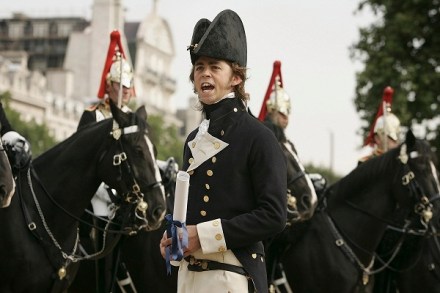
Horatio Nelson is England’s most loved military hero. Marlborough is remote from our view, and the aristocratic Wellington was perhaps too stiff and unbending a Tory for popular taste. Nelson, by contrast, had an engaging personality and a colourful private life. The disabling wounds that he suffered and the affecting circumstances of his death in the midst of the country’s greatest naval victory have secured him in the national memory. The navy, at any rate, has deeper roots in national sentiment than the army; it was seapower, after all, that carried Great Britain and its empire to pre-eminence in the world. The second volume of John Sugden’s biography, covering the last eight years of Nelson’s life, might have been shorter.

One dank October dawn

More from Books

Gertrude Stein and Alice B. Toklas, Greta Garbo and Cecil Beaton, Mrs Keppel and her daughter, Natalie Barnard and Romaine Brooks …. Diana Souhami has proved herself a peerless author of dual biographies, lives entwined, empathies shared. Her latest book, Murder at Wrotham Hill, tells of two lives, but their conjunction was fleeting and fatal: it probably took seconds for Sidney Sinclair to murder Dagmar Petrzywalski, strangling her with a darned man’s vest that she was wearing as a scarf, on a dank October dawn on the grass verge of the A20 in Kent in 1947. Sinclair was a middle-aged, recidivist, bigamist lorry driver.

Recent crime fiction | 18 October 2012

More from Books

Like mists and mellow fruitfulness, Val McDermid novels often arrive in autumn. The Vanishing Point (Little, Brown, £16.99) is a standalone thriller whose central character, Stephanie Harker, is a ghost writer who compiles the autographies of celebrities. Her relationship with Scarlett Higgins, a foul-mouthed reality TV star known to the nation as the Scarlett Harlot, begins on a professional level but soon lurches towards the personal. The novel opens after Scarlett’s death from cancer. Stephanie, now the guardian of Scarlett’s five-year-old son Jimmy, is held up by security at O’Hare Airport, Chicago.  A kidnapper walks off with Jimmy and vanishes into the blue.