Stephen Mcewen

Xiaolu Guo interview: ‘Westerners have to read more non-western materials’

From our UK edition

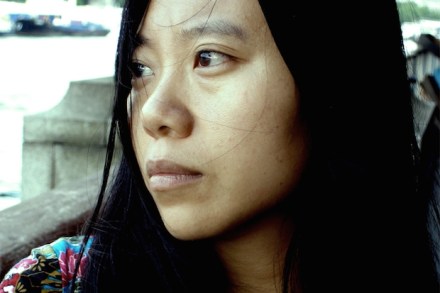
Born in a remote fishing village in south eastern China during the Cultural Revolution, Xiaolu Guo is now known as an artistic 'one-woman industry'. Producing both films and novels, her work has made her one of the most successful Chinese writers published in Britain today, being listed in the Granta Best of Young British Novelists last year. Her first novel Village of Stone was originally written in Mandarin and portrays a young migrant who has moved to Beijing as she comes to terms with her difficult rural past amidst the sprawl of the megacity. It was following her own move to London in 2002, thanks to a British Council film scholarship, that Guo decided to start writing in English.
Ben Fountain interview: Lies are an affront to writers because lying is the corruption of language

From our UK edition

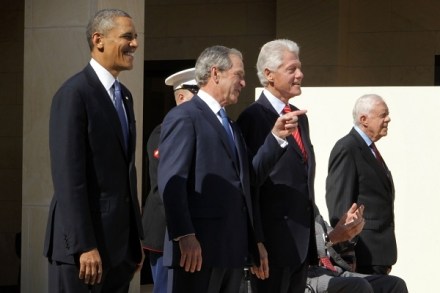
Ben Fountain's debut short story collection, Brief Encounters with Che Guevara, was published in America eighteen years after he left his job at a Dallas real estate law firm to become a writer. It would appear that it was well worth the wait, as it immediately met with praise, awarded both the PEN/Hemingway and Whiting Award. This success continued when his first novel, Billy Lynn's Long Halftime Walk, was published five years later. In the last six months alone, it has won two awards in America, including the prestigious National Book Critics Circle award, and nominated for a further two here in the UK.

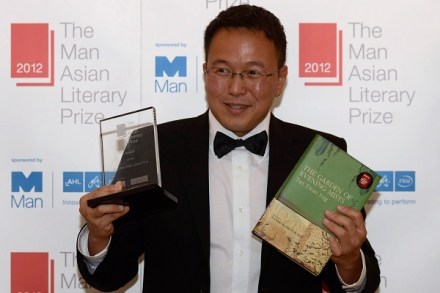
Tan Twan Eng interview: ‘I have no alternative but to write in English’

From our UK edition

Tan Twan Eng's first novel was long-listed for the Man Booker Prize, his second was shortlisted and then won the Man Asian Literary Prize. To say that his work over the past five years has received praise and attention would be something of an understatement. Likened to Ishiguro and Ondaatje, his work explores the point at which untold personal history collides with the bellicose history of mid-twentieth century East Asia. In The Gift of Rain the elderly Philip Hutton is living out his days as a postcolonial remnant in his childhood home of Penang, with little but his memories to keep him company. These are revisited with arrival of Michiko, the former lover of Japanese diplomat Hayato Endo, with whom Philip had developed a strong relationship in the 1930s.

An unwanted relation

From our UK edition

In June 1981, the United States' Centers  for Disease Control noted in its weekly report that five 'previously healthy' young men in Los Angeles had been treated for pneumonia. Two of them had died. On the other side of the country lived soon-to-be third grader Marco Roth, the son of a doctor and musician. Receiving an 'experiment in nineteenth-century "middle-class" European education', he was surrounded by classical concerts, classic literature and medicine in Manhattan. Oblivious to the fact that that summer's bulletin included some of the first officially recognized deaths brought about by the AIDS epidemic, Roth was also unaware that his own father had been infected by the HIV virus at around the same time.

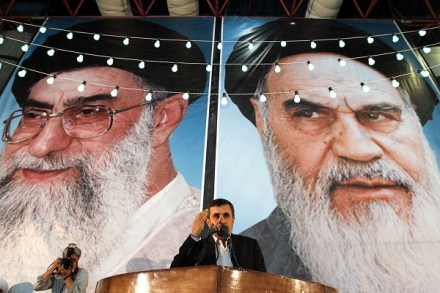
Simin Daneshvar, Persia’s first female novelist and hope for Iran’s future

From our UK edition

There is a Persian proverb which states that 'books are a man's best friend.' Persian literature from the kings of antiquity to the last Shah of the Peacock Throne has, for the most part, been dominated by its proverbial male companion. When presented with today's Islamic Republic, an unfamiliar Western reader can easily believe that a female literary voice cannot possibly exist underneath the seemingly anonymising chador, the Islamic female dress most closely associated with Iran. Instead, all that would appear to emanate from Iran is a male voice: Ahmadinejad defending arms programs; the Mullahs dictating morality; Khomeini, father of the nation, ever-present from beyond the grave, still influencing the country he theologically revolutionised thirty-three years ago this winter.

Eastern promises – the rediscovery of Stefan Heym

From our UK edition

A German Jew fleeing Nazism to America; a soldier in the D-Day landings; a US citizen moving to the GDR for the socialist cause; a writer denounced by the Party; a Berliner politician in a newly reunified Germany: all sound like separate characters in a novel, yet all apply to Stefan Heym, the pseudonym of Helmut Flieg, whose strikingly under-celebrated life would appear to intercept a myriad of major twentieth century historical gradients. Despite being written in the 1960s, The Architects comes to us posthumously following years of state suppression in the GDR – Erich Honecker's attack on Heym during a Party conference prevented the novel from seeing the light of day - and rejection in the West.