Daisy Dunn

​A charmingly bold food podcast

From our UK edition

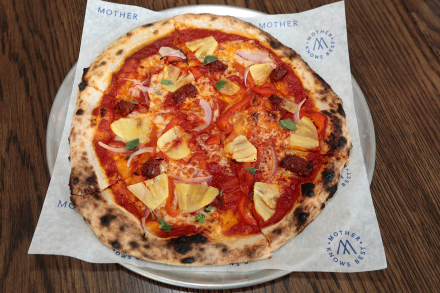
It takes some gumption to name a podcast History’s Greatest Dishes and proceed to offer episodes on pizza, blancmange, balti, gooseberry fool and Victoria sponge. Where’s the rarebit, the pottage, the pigeon pie? But the boldness of the podcast is one of its charms, and the choice of topics isn’t terribly important. Food historian Annie Gray and podcast host Emily Briffett chew over some fascinating material on each of the dishes they have selected and provoke surprisingly heated debates. Pineapple on pizza ought to be accompanied by Spam instead of ham It was suggested, for example, that pineapple on pizza ought to be accompanied by Spam instead of ham.

The first woman to climb Mt Blanc took 18 bottles of wine and 24 roast chickens 

From our UK edition

The dark side of the Moon, a broken loo and a floating jar of Nutella: such was Artemis II. When Helen Sharman joined the Mir space station in 1991, becoming the first Briton to visit space, the appetite was rather for oranges. Not only were they ‘rare in the Soviet Union then’, Sharman recalls on a new podcast, but they lent the cramped space a reassuringly fresh aroma. The Art of Adventure hosts an interview about a different exploration each week, from George Mallory’s expedition to Everest in 1924, to Ernest Shackleton’s ill-fated Endurance, and Sharman’s space flight. It has been steadily climbing the charts, which is a feat in itself, given that it’s hosted by a shop, rather than the likes of Goalhanger.

China wants robots to look after the elderly

From our UK edition

An AI data centre – imagine a factory of buzzing wires and computing equipment cooled by industrial fans – can consume as much power as a city. It has been estimated that, not too long from now, we’ll require 92 cities’ worth of extra power just to meet the demands of artificial intelligence. Ergo, the heat is on – but so, it is said, is a new cold war. On Radio 4 last week, Misha Glenny was exploring how the rapid evolution of technology is shaping the rivalry between the US and China. It turns out that the race for pre-eminence – in AI, at least – is as close as the 1973 Grand National. Red Rum (China) has the current lead, but that lead is ‘razor-thin’ and is thought to owe something to the nature of American tactics.

The problem with books podcasts

From our UK edition

The Rest Is History has a new spin-off podcast called The Book Club. If you listen to the former, you’ll know Dominic Sandbrook but perhaps not his producer Tabby Syrett, who has joined him as co-host for the new venture. Tom Holland had presumably nipped off early to feed the cats. The release follows, slightly unfortunately, on the heels of a Sunday Times article in which the current crisis in sales of non-fiction is attributed in part to the boom in factual podcasts. If people are no longer buying history books because they’re ‘getting their history’ from Spotify for free, then ought we to be wary of a podcast about novels, lest we stop buying those as well?

Gavin Mortimer, John Campbell, Mark Piesing & Daisy Dunn

From our UK edition

32 min listen

On this week’s Spectator Out Loud: Gavin Mortimer reports on the battle between the EU and farmers; John Campbell explains Lord Haldane’s significance to politics today; reviewing Polar War by Kenneth R, Rosen, Mark Piesing ponders who will rule the arctic; and, Daisy Dunn celebrates the history of poems on the underground. Produced and presented by Patrick Gibbons.

Gavin Mortimer, John Campbell, Mark Piesing & Daisy Dunn

Three cheers for Poems on the Underground

From our UK edition

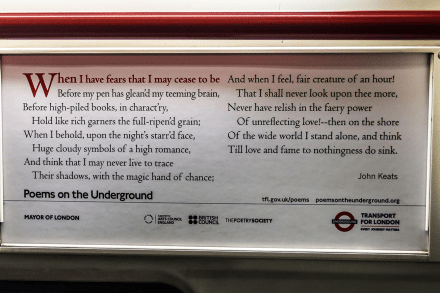
The idea for Poems on the Underground was thought up by a New Yorker 40 years ago this month. This may surprise you, given that the posters are synonymous with London. But then again, the creative possibilities of a transport system tend to be lost on its native commuters. Judith Chernaik, a lecturer in English literature, had recently relocated to the capital when she fell in love with the Tube: ‘Compared to New York it’s bliss – clean, safe and fast, too… if things are working of course.’ Ozymandias was soon riding the lines from Aldwych with Robert Burns In As You Like It, Orlando goes around the Forest of Arden dangling sonnets for Rosalind from trees.

Was Queen Victoria’s doctor the first psychoanalyst?

From our UK edition

Queen Victoria began to experience dark visions after giving birth to her second child. Concerned that she might have inherited the madness of her grandfather, George III, Prince Albert summoned her doctor. Robert Ferguson was not the obvious man for this scenario – he was an obstetrician – but the doughty queen had heard that he ‘paid much attention to mental disease’, and willingly consulted him. It wasn’t until 2009 that the precise nature of Victoria’s ‘mental disease’ came to light. Dr Ferguson’s diaries, formerly kept in private hands, came up for auction that year and entered the collection of the Royal College of Physicians. Their contents made for sad and startling reading.

Condoms in 18th-century painting

From our UK edition

Waldemar Januszczak and Bendor Grosvenor’s art podcast has returned after nearly five years. It is, says Januszczak, ‘the podcast they could not stop – but they did have a jolly good try’. What happened? It isn’t clear; there are teases that it revealed too much, which is anyway a good ploy for attracting listeners. ‘Subversive’ is not the first word that springs to mind when tuning in to the two unlikely chums. Their regular feature, ‘Shocking News from the Artworld’, is more Apollo than Nigel Dempster. For example: Christie’s has closed the digital art department that dealt in NFTs, the crypto tokens going the way of the dodo.

R.S. Thomas – terrific poet, terrible husband

From our UK edition

Love’s Moment is one of those quiet radio programmes you’re unlikely to have read about. It aired without fanfare at 4 p.m. on Tuesday, an understated yet engrossing one-off, half-hour documentary. It can now be found in the recesses of BBC iPlayer. It opened with a compelling question: ‘What happens when two artists fall in love and marry, and as one’s reputation soars, the other’s is slowly forgotten?’ Narrator Gwyneth Lewis, former National Poet of Wales, might have been alluding to any artistic couple in history, but her subjects were R.S. Thomas and Mildred Eldridge. Thomas was one of the most popular poets in Wales in the last century. He was an Anglican priest, a fervent Welsh nationalist and something of a misanthrope.

The mystical hold of the 1990s over Gen Z

From our UK edition

At some point during the past decade and a half, it was decided that the 1990s were a golden age. While Britpop, New Labour and acid house do not immediately evoke the same spirit as, say, Versailles under Louis XIV or Augustan Rome, compared with what followed they were certainly characteristic of something. Appetites for what the energetic Sawyer calls ‘the last nutty pre-internet age’ have never been greater Members of Gen Z who have known only the colourless, anodyne first years of the new millennium speak of the Nineties in mystical tones. At a party last week, I found myself holding court over some twentysomethings who’d discovered that I am a millennial. ‘What was it really like?’ they asked, as if coming face-to-face with Shackleton or Francis Drake.

The podcast of the summer

From our UK edition

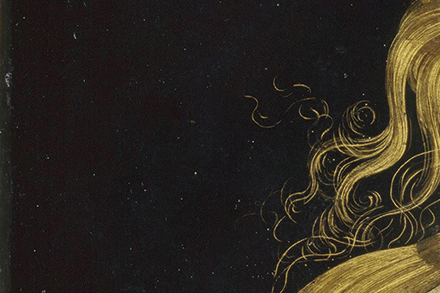
The cover painting for The Specialist, a new podcast from Sotheby’s, looks like a scene from Mad Men. The people are so good-looking and so well dressed that you barely notice how odd they are. One chap’s walking along with a porcelain bowl as if it were a macchiato; a lady holds a plant in her palms in the manner of receiving communion; someone else walks the street with a gavel. The admen have done their job: intrigued, I press play. It becomes apparent that the people who work at Sotheby’s have no interest in persuading anyone that they are normal. I listen to Ottilie, Julian and Gregory, and to mouths that volunteer, with ease, such phrases as ‘the visceral power is undimmed by the passage of time’.

Who’s afraid of Virginia Woolf? The BBC, it seems

From our UK edition

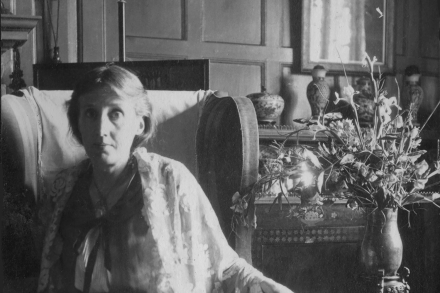
‘What a lark!’ I thought to myself as I rose on a hot June morning to listen to a documentary on Mrs Dalloway. A century has passed since Clarissa bought flowers for her midsummer party, and Radio 4 has commissioned a three-parter, with actress Fiona Shaw presenting. ‘What a plunge!’ The first programme had been playing for all of two minutes before my hopes began to wilt like a delphinium. ‘Her face adorns tote bags and internet memes,’ says Shaw of Woolf in the preamble, which sounds as though it has been lifted directly from the series pitch to the BBC. ‘I’ll be asking what… Virginia Woolf has to say to us today.

Nunc est bibendum – to Horace, the lusty rebel

From our UK edition

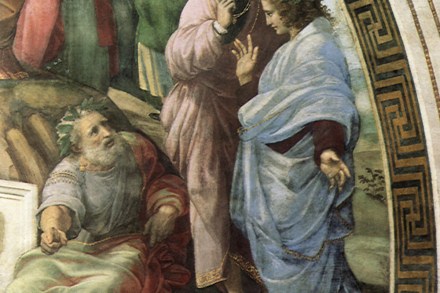
Horace suffers from a reputation as an old man’s poet. Classicists often joke that Catullus and Martial are for the young, and Horace for those of a certain vintage – wine being a favourite Horatian theme. Many lose their thirst for his Odes at school, only to realise their brilliance decades later. Classroom Horace is just a bit too bombastic and patriotic to be cool. The Horace of Peter Stothard’s beautifully written new biography surprises with his sexiness. Not many pages in we find him poring over scurrilous papyri in the libraries of Athens. A verse by the Archaic-era poet Archilochus has caught his eye. It describes a woman with a man, ‘head-down, as she did her work like a Thracian drinking beer through a straw’. Golly.

The best radio at the moment is on the BBC World Service

From our UK edition

Online viewings of Conclave increased threefold following the death of Pope Francis last month. At least some of the traffic was rumoured to have come from the Vatican itself. This raises many questions, but the most pertinent for me this week is, what did the cardinals think of the carpets? Do they really have coffee machines in their rooms like Tremblay? Minibars like Bellini? Their peace spoiled by the sounds of a lift shaft as in the case of long-suffering Lawrence? If any of these details passed you by, it’s worth watching the film again. In fact, after listening to an interview with the production designer, to be broadcast on BBC World Service next week, you will feel positively compelled to do so.

A fabulously entertaining new podcast about ancient Greece

From our UK edition

How did a myth about the consequences of poor judgment become a parable for aspiration? The question is posed by the Greek writer-actor Alex Andreou in his fabulously entertaining new podcast. His topic is the ancient myth of Midas, king of Phrygia, who was granted his wish to have everything he touched turn to gold. Midas’s new world was brilliant for all of five minutes. What is a man to do with piles of metal when every person he comes into contact with is reduced to the same? The Midas myth has been mangled many times; Andreou recalls that Donald Trump co-authored a book in 2011 entitled Midas Touch in which he promised to reveal the secrets to entrepreneurial success.

Perfection: The Rest is Classified reviewed

From our UK edition

Interviewing for MI6 sounds to have been even scarier a century ago than it must be today. Candidates would enter an office to find a man with a ‘large intelligent head’ seated behind a desk and absorbed in paperwork. Everything would appear normal until he picked up a penknife and stabbed his own leg. A prospective agent who flinched at the sight might do himself out of the job. It is brilliant: carefully crafted, closely scripted, immaculately edited and best of all perfectly cast Rather like one of those rumoured Oxbridge interviews (candidates for a fellowship at All Souls were reportedly served a cherry pie at dinner to test what they would do with the stones), the ordeal was intended to weed out the weak.

The fixation on sport at boarding schools is the reason the country is failing

From our UK edition

As a teenager, I very nearly went to boarding school after falling in love with the architecture, the greenery and the sense of freedom. What ultimately put me off was the school’s obscene fixation with sport and my discovery that I would be expected to run around those fields not just once or twice a week, but every single day.  Listening to How Boarding Schools Shaped Britain, a three-part series on Radio 4, I am not convinced that all this sport isn’t the reason our country is failing. Over two-thirds of our Prime Ministers and half of all holders of offices of state went to boarding schools – and a quarter of those to Eton. With some honourable exceptions, this is hardly a crowd that screams 'sports team'.

Katy Balls, Alexander Raubo, Damian Thompson, Daisy Dunn and Mark Mason

From our UK edition

27 min listen

On this week’s Spectator Out Loud: Katy Balls analyses the threat Reform pose to the Conservatives (1:20); Alexander Raubo talks us through the MAGA social scene and the art collective Remilia (6:42); Damian Thompson reviews Vatican Spies: from the Second World War to Pope Francis, by Yvonnick Denoel (12:27); Daisy Dunns reviews the new podcast Intoxicating History from Henry Jeffreys and Tom Parker Bowles, as well as BBC Radio 4’s Moving Pictures (17:50); and, Mark Mason provides his notes on obituaries (22:46).  Produced and presented by Patrick Gibbons.

Booze now has its own Rest is History-style podcast

From our UK edition

Intoxicating History is the perfect title for drinks expert Henry Jeffreys and food critic Tom Parker Bowles’s new podcast. Its theme is alcohol, but its contents are predominantly historical, which is good news if, like me, you are quick to apply the word ‘bore’ to any man who talks about wine for more than eight minutes. The first episodes came out before Christmas but they have been gathering momentum since Dry January. Today’s drinking culture, which has spawned this bizarre annual group sacrifice, has an interesting pedigree. Europeans have apparently been on their guard against boozing Englishmen for nearly a millennium. The Portuguese were certainly left in no doubt as to our reputation when we aided them in their Reconquista.

Why I’m obsessed with Farming Today

From our UK edition

Farming Today airs at an undignified hour each morning on Radio 4. On the few occasions I’ve caught it live I have felt, first of all, relief that I am not a farmer; second, inadequacy; and finally, a surge of evangelism for the farmer’s way of life. I am now reaching the conclusion that getting up early enough to listen to Farming Today is the very least we can all do. Listening to Farming Today helps dispel the romance of living off-grid By no means will everything discussed on the programme hold relevance for your life. One feature last week was dedicated to a project to preserve ten acres of salt marsh downstream from Totnes. Another recent episode explored the Lakeland barns being saved for cultural heritage.