Juliet Townsend

The fairytale life of Hans Christian Andersen

From our UK edition

It has long been my habit, when approaching a new biography, to read the account of the subject’s childhood first, then jump to the deathbed, before settling down to the main narrative between. It was rather disconcerting, therefore, to find that Paul Binding’s life of Hans Christian Andersen eschews the deathbed and ends with the author’s last, not very cheering, written words rather than his last breath: The brewer is dead, Auntie is dead, the student is dead, him whose sparks of ideas ended up in the rubbish bin. Everything ends up in the rubbish bin. It is only in the chronology that we learn that Andersen’s 70th birthday was internationally acclaimed and that his funeral a few weeks later was attended by the King of Denmark and a multitude of admirers.

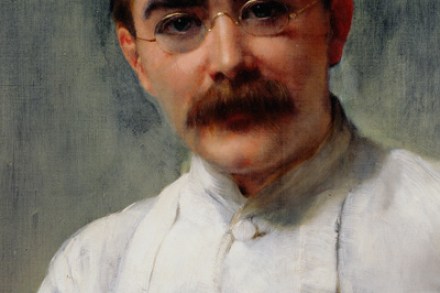
‘The Cambridge Edition of the Poems of Rudyard Kipling’, by Thomas Pinney (ed)

From our UK edition

The last time I heard Kipling read aloud was last week at a Scout Gang Show. It was the grand finale. Centre stage on a dais stood a serving soldier and noble looking ancient veteran. On either side, a group of Scouts, an organisation dear to Kipling’s heart, stood with outflung arms indicating these heroes, while somebody read ‘If’. In the background one was vaguely aware of ‘Nimrod’ playing. All the clichés were there, yet it was strangely touching. One of Kipling’s gifts as a writer, both of prose and poetry, was his ability to connect with his audience, confirmed when, a few years ago, ‘If’ was voted the nation’s favourite poem. This connection was for good and ill.

Children’s books for Christmas | 29 November 2012

From our UK edition

My 20-month-old granddaughter totters into the room. Her eyes are shining with the fervour of St Bernadette. She has caught a glimpse of the divine. Two small stuffed pigs are clasped in her arms. Clearly she has been in heaven. Actually she has just returned from a visit to Peppa Pig World, the most exciting experience of her short life. Anyone who has contact with very small children today will be all too familiar with Peppa, the toddlers’ Harry Potter in her universal appeal. There are two new Peppa books out this Christmas, both published by Ladybird at £4.99. Peppa’s Christmas Wish is a robust board book for the rougher young reader.

A courtly man hunt

From our UK edition

In ‘He Fell Among Thieves’ Henry Newbolt describes a young man’s voyage to service in India: He watch’d the liner’s stem ploughing the foam. He felt her trembling speed and the thrash of her screw; He heard the passengers’ voices talking of home. He saw the flag she flew. And, with any luck, as ‘the moon made a silver path over the smooth sea’, he would find himself on the boat deck with his arm round the shoulders of an attractive girl and the prospect of an enjoyable shipboard romance ahead. The playfully nicknamed ‘Fishing Fleet’ was at sea with its cargo of girls in search of a husband in India or Ceylon, and men returning from leave in England on the lookout for a wife.

Children’s Books: Myth and magic

From our UK edition

It was the second week of term and my grandson’s birthday. He had just started at primary school and the only alternative to social suicide seemed to be to invite the whole class to his party. With a few old friends that made a total of 30. They ran yelling in various enjoyably noisy games up and down the church hall, then they departed, and my daughter was left confronting a table groaning with 30 presents, some of them embarrassingly expensive. How do you give 30 presents to one five-year-old? The same problem comes up every Christmas, and the answer, it seems to me, is books.

Georgette Heyer: Biography of a Bestseller by Jennifer Kloester

From our UK edition

Those of us who have spent an embarrassing number of hours immersed in the Regency novels of Georgette Heyer have learned to live dangerously. We have been overturned in high perch phaetons, held up innumerable times by highwaymen, been kidnapped and spirited across the Channel, lost several fortunes at Faro or Bassett and have even witnessed and survived every moment of the Battle of Waterloo. The same cannot be said of the author, whose life was somewhat less eventful. Heyer was a creature of habit and for many years followed a regular annual routine: two novels published, one detective story and one Regency romance, a summer holiday in the same hotel in Scotland, with golf for her husband and son, a dispute with her publisher or agent and a real or imagined crisis in her finances.

Bad lads and Bogwoppits

From our UK edition

Juliet Townsend selects the best of this year’s reading for toddlers through to teenagers In these straitened times one can only be grateful for the excellent value offered by picture books for young children, which have remained at the same price for several years. Since the migration of their production to the Far East, some have become ever more elaborate, with pop-up versions accompanied by sound effects, resulting in something which is more a toy than a book. There are, however, many excellent writers and illustrators represented this Christmas. For the youngest children, Christmas Time by Alison Jay (Templar, £10.99) with minimal text and colourful and original pictures, takes us on a seasonal journey, full of reindeer, carol singers, polar bears and snowmen.

Round and round the garden

From our UK edition

Juliet Townsend finds that children’s arcane playground rituals have survived television, texting and computer games When Iona and Peter Opie published their groundbreaking work The Lore and Language of Schoolchildren in 1959, they started their preface by pointing out that Queen Anne’s physician, John Arbuthnot, friend of Swift and Pope, observed that nowhere was tradition preserved pure and uncorrupt ‘but among School-boys, whose Games and Plays are delivered down invariably from one generation to another.’ Theirs was the first study to establish that this was still largely true in the mid 20th century.

Fleeing fog and filth

From our UK edition

In a sense, as this interesting collection of his writings makes clear, Rudyard Kipling was always abroad. His first vivid memories were of an early childhood in Bombay, ‘light and colour and golden and purple fruits’ in the market with his ayah, or visits with his bearer to little Hindu temples where ‘I held his hand and looked at the dimly-seen, friendly Gods.’ His descriptive writing is always full of sounds and smells; in fact there is a whole lecture in this collection on ‘the illimitable, the fascinating subject of smells in their relation to the traveller’. Kipling’s first impressions of England were of a grey, dreary place. It was not until he went to school in Devon that he began to appreciate the English countryside.

Recent books for children

From our UK edition

One thing which struck me immediately on surveying the books on offer for children this Christmas is the large number which are really toys, with only a minor bookish element. Walker Books have produced several of these this year. Cars by Robert Crowther (£12.99) boasts moveable pop-ups of cars ancient and modern, with realistic detail and turning wheels, from the Mini to the Bluebird, culminating in a full fold-out model of a Formula 1 racetrack. There is an informative text, but it is definitely subordinate to the models. The same is true of Gladiators by Toby Forward, illustrated by Steve Noon, (£16.99). This includes a book about the Roman games, but the main attraction is the spectacular pop-up model of the Colosseum.

Children’s books for Christmas | 9 December 2006

From our UK edition

December, as far as children’s books are concerned, is the month of the hardback. For the rest of the year the young are fobbed off with soft covers, but the Christmas present book can be an altogether more substantial and permanent friend. This is true of picture books for the very young. Dimity Dumpty by Bob Graham (Walker Books, £10.99) is the story of Humpty Dumpty’s shy little sister, who saves his life when all the King’s horses and all the King’s men have failed, by taking off her T-shirt and bandaging what is delicately called ‘Humpty’s leakage’. The illustrations of the family’s life in the circus as ‘The Tumbling Dumpties’ are delightful.

Acute observations

From our UK edition

In the 1950s, when I was 14, I spent a winter fortnight with my parents at the Villa Mauresque, which Somerset Maugham had lent to them to entertain the recently widowed Rab Butler and his daughter, Sarah. It was an uneasy holiday setting for two teenage girls. As I wrote a little apprehensively in my diary, ‘this house is lovely, but rather fragile,’ a concern which was borne out the next day when, during a pillow fight, I knocked over a full jug of orange juice with disastrous results for the immaculate upholstery. Never was a house more thoroughly permeated by the spirit of its absent owner, who looked down on us in melancholy reproach from the famous Graham Sutherland portrait on the wall. The regime ran with clockwork regularity.

Children’s books for Christmas | 13 December 2008

From our UK edition

In these hard times it is gratifying to find one Christmas present which has remained virtually unchanged in price for the last seven or eight years — the children’s book. Most of the illustrated books for the very young and the increasingly elaborate pop-ups and stories incorporating various pockets, inserts and DVDs are produced in the Far East. They are well made and extremely good value. Christmas represents the last stand for the hardback, with the opportunity for children to enjoy a book as an object, not just for its contents. There are two new titles in Sarah Garland’s series for pre-school children, Going Shopping and Doing Christmas, both £6.99 from Frances Lincoln.

Turning back the pages

From our UK edition

Magic Moments: The Books the Boy Loved and Much Else Besides, by John Sutherland Curiosities of Literature: A Book-lover’s Anthology of Literary Erudition, by John Sutherland John Sutherland’s life has been devoted to the enjoyment of books and the passing on of that enjoyment to others, whether through his columns in the Guardian and Financial Times or through his teaching to the literature students at UCL, or the rather less bookish science buffs at the California Institute of Technology. It is hard to imagine anyone better suited to bringing the pleasures of reading to those for whom it has never been an important part of life.

The county personified

From our UK edition

One of the glories of British public life is the way in which ancient institutions, if left unmolested by officious politicians, can evolve over centuries to become something quite different from their original function, but just as valid. This is certainly the case with the office of Lord Lieutenant. Originally created in Tudor times to take on the military duties of the over-powerful High Sheriffs, the County Lieutenancy was first and foremost responsible for the defence of the realm at a time when the country had no standing army. Over the centuries, from the threat of the Armada to the Battle of Britain, the Lieutenants struggled with a succession of militias and volunteers which were often reluctant, ill-equipped and untrained.

Children’s books for Christmas | 15 December 2007

From our UK edition

Part of the charm of giving books to children at Christmas is that they are so easy to wrap. After an evening spent wrestling with a variety of soft toys with elongated limbs and tails, a large combine harvester, an assortment of weapons and a pogo stick, it is a relief to settle down to all those nice regular rectangles. Christmas is also the only time that many children get given hardbacks, and the opportunity to enjoy a book as an object, not simply for its contents. One agreeable object is the latest edition of Clement Moore’s well known poem The Night Before Christmas, with beautiful black- and-white cut-paper illustrations by Niroot Puttapipat (Walker Books, £12.99.

The view from the nursery

From our UK edition

It was a perpetual source of regret to me at the age of ten that my parents were so boringly agreeable. My attempts to persuade my friends that my father, in reality the mildest of men, was a violent sadist, who regularly whipped me with his cane while uttering the sinister words, ‘I’ve got Tickler here!’ (cribbed by me from the children’s version of Great Expectations) met with a fascinated half belief, but what I really wanted was a Worldly Mother. Children in the Victorian stories to which I was much addicted often boasted one of these. They were generally only seen on their way out to a society dinner ‘in a soft satin dress and pearls, tall and stately but somewhat cold in expression’.

Back to St Trinians

From our UK edition

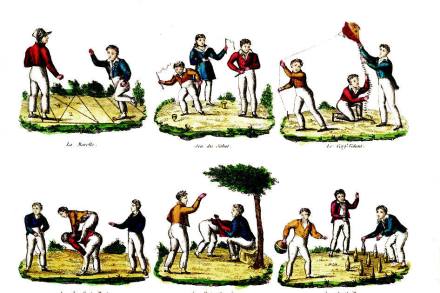
The Great Big Glorious Book for Girls by Rosemary Davidson and Sarah Vine One of the publishing triumphs of last year, The Dangerous Book for Boys, with immaculate timing tapped into a rich vein that combined nostalgia with exasperation at the seemingly unstoppable advance of Nanny State, with her stifling regime of risk assessment and avoidance. It followed a long line of similar books stretching back over 200 years. In fact its objectives were identical to those of the authors of The Boy’s Own Book of Sports and Pastimes (c.

Starting out on the wrong foot

From our UK edition

E. Nesbit once pointed out that, in order to write good books for the young, it is not necessary to enjoy a close relationship with children in adult life. The essential thing is to retain a true and vivid memory of one’s own childhood; not only of events and people, but of feelings and emotions, sounds and smells and all the minutiae of day-to-day life. Jacqueline Wilson, the enormously popular writer and most borrowed author from British libraries, is certainly a case in point. Her childhood covered much the same period as mine, and this account, written for her younger readers, brings back a host of memories. Many of the best descriptions of childhood are written by people whose own experience of it was miserable: Dickens and Kipling are obvious examples.

Recent children’s books

From our UK edition

The bookshop shelves are stacked with the usual bewildering array of children’s books this Christmas, and the first striking fact is what good value they have become, largely because, like almost everything else, most of them are now produced in the Far East, from Thailand to Cochin. The average price of a lavishly illustrated book for young children, £10.99, has remained the same for several years, and even elaborate pop-ups, like Francesca Crespi’s The Nativity, published by Frances Lincoln and printed in China, only costs £12.99. It was good to see a version of one of Arthur Ransome’s Old Peter’s Russian Tales being reprinted in a lively version for young children.