Culture

Culture

The good, the bad and the ugly in books, exhibitions, cinema, TV, dance, music, podcasts and theatre.

Joseph Anton, a brilliant and important book

I’m halfway through Joseph Anton, Salman Rushdie’s memoir of what it was like to be given a death sentence by medieval religious savages. I’m reviewing the book for next week’s magazine. We were, as a country, rather less than unequivocal in our determination to protect Rushdie for his right to exercising free speech; plenty of

Interview: John R. MacArthur on the US election

When Barack Obama entered the White House in January 2009, millions of citizens across the United States believed it was a new dawn for the American political system. Obama promised a presidency that would tear up the rulebook when it came to party loyalty; campaign fundraising, corruption; and the petty issues of partisan politics. But

Where there’s smoke

Features

Rachel Carson’s Silent Spring, published 50 years ago this month, effectively marked the birth of the modern environmental movement. ‘Silent Spring came as a cry in the wilderness, a deeply felt, thoroughly researched, and brilliantly written argument that changed the course of history,’ wrote Al Gore in his introduction to the 1994 edition. Mr Gore

Memories and inspirations

More from Books

I had never come across commonplace books until I met up with my school friend Paul Foot in Oxford in 1958. The idea, he explained, was that you kept a notebook in which you transcribed anything interesting you came across in the course of your reading. I started doing it the following year. The first

Flaws in our national treasure

More from Books

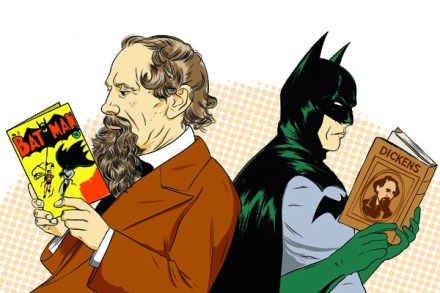
Charles Dickens remains in his bicentennial year as much a national treasure as Shakespeare, and just as deeply embedded in the English psyche as the Bard, declares Michael Slater, an Emeritus Professor of Victorian Literature at the University of London. Among the innumerable Victorians who sanctified domesticity, sentimentalised hearth and home and idealised family love,

Variety was the spice of life

More from Books

Tough job being a disused prime minister. John Major has resisted the temptation to flounce off in a sulk, or to play the international peacemaker, or (as Harold Macmillan was said to do during the 1970s) to fantasise about a glorious comeback urged on him by a despairing populace eager to rediscover its lost greatness.

The writing bug

More from Books

Authors seem to be more unhealthy than most people. Sometimes the sick room simply offers time to read and a sense of grievance or detachment; but the relationship between health and writing may be more complex. John Ross, a practising physician and assistant professor of medicine at Harvard, has happily violated every rule of patient

The bravest of the brave

More from Books

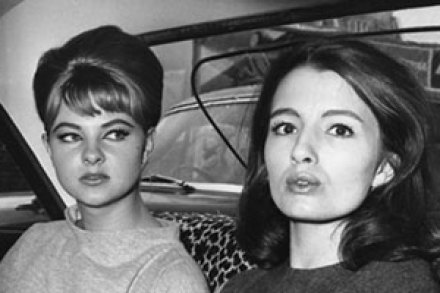
I suppose I may be one of the few people still alive to have known Krystyna Skarbek (aka Christine Granville), though, perhaps regrettably, not as well as many others in her brilliant, stormy but eventually tragic life. Today she would have been over 100. Of all the women agents who risked their lives in Nazi-occupied

This Kohlian abomination

More from Books

In the year when East and West Germany were being reunited Günter Grass felt he must start keeping a diary. He was sure what was taking place was a dreadful mistake: At night I often toss and turn, haunted by images of a Germany that can no longer be mine. This Kohlian abomination: egomaniacal, bombastic,

Finery down to a fine art

More from Books

The Impressionists adored clothes. They delighted in strapontins, polonaises and paletots; fans, hats and umbrellas were an extra treat. They were keen on couture, but they didn’t restrict themselves to painting grand ladies; it was the golden age of flânerie, and Paris had been transformed from a higgledy-piggledy labyrinth into an elegant public space of

…to the other

More from Books

Here’s the paradox. By any standards, Arthur Conan Doyle was an extraordinary man; a doctor, a politician, a keen sportsman (he once took the wicket of W.G. Grace and he was skiing almost before the word was invented), a social campaigner, a spiritualist and of course a very great writer, not just of detective stories

From one extreme…

More from Books

A century ago, Antarctica was a seriously tough place in which to be a scientist. In February 1912, a German expedition established its research station on an ice-shelf in the Weddell Sea, only for that section of shelf to break loose ‘with an explosive boom’, and drift away — pursued by the German ship. When

The authorised version

Lead book review

The first volume of Peter Ackroyd’s six-volume history of England took us from prehistory to the death of Henry VII. Now the great charabanc rattles on. Here is a fat book of old-fashioned, great-man history taking in the second of the Harries twain, Ned the Lad, Mary and Bessie. Things don’t begin well; the speed

Teju Cole meets V.S. Naipaul

If you have five minutes to spare this evening, read Teju Cole’s account of meeting V.S. Naipaul. Writing from the covetable position of a column in the hallowed New Yorker, Cole is man enough to admit feeling awkward when he meets Naipaul, and, worse still, when he is addressed by him as an equal. It’s a winning

Robert Hughes – The novelty of the shock

The real shock of the new came in 1991. It was sobering, and it was reverent, which aren’t exactly the first words one would associate with The Shock of the New art critic Robert Hughes. No wonder it went largely unacknowledged when he passed away last month. While Hughes’ seminal art history series continues to

The poetic lies against Old Ironsides

‘How the War Began’ by Thomas Jordan, 1663. ‘I’ll tell you how the war began: The holy ones assembled (For so they called their party then Whose consciences so trembled). They pulled the bishops from their seats, And set up every widgeon; The Scotch were sent for to do feats With oat-cakes and religion. They

Salman Rushdie’s ‘The Satanic Verses’ revisited

The publication of Joseph Anton (tomorrow), Salman Rushdie’s much anticipated memoir, has given newspapers cause to revisit The Satanic Verses. The commentary focuses on the bloodthirsty and backward response that the book continues to provoke. The novel has become a totem in various political and religious ‘debates’ (a word that is hopelessly misplaced in this perverse

Review: Zoo Time by Howard Jacobson

Winning the Booker can do strange things. For one, critics tend to become noticeably shyer around authors with some bling in their trophy cabinets, hyperbole blunting their edge. But if ever there was a writer primed to dismantle automatic appreciation it is Howard Jacobson. Zoo Time, his first novel since The Finkler Question won the

Review – Sebastian Faulks’s A Possible Life

In a promotional video clip, Sebastian Faulks describes his new novel, A Possible Life, as like ‘a symphony in five movements… or an album in which the tracks are separate but the whole thing adds up to more than the sum of its parts.’ The idea of the musical novel – held together by themes,

The end of men

More from life

Bad news for those of us with only one X-chromosome: men are on their way out. That’s the view of Hanna Rosin, an enterprising young American journalist who has turned an essay she wrote for The Atlantic two years ago into the most talked-about book of the moment — The End of Men: And the

An introduction to Javier Marías

The fundamental purpose of the literary critic is to incentivise his audience to read books of which he approves. He has two means at his disposal. The first of those means is the recommendation by virtue of excellence, which can be reduced to the basic formula ‘look at this, this is very good, to read

The language of criminals

The English language is, as English would have it, an odd duck.  Its nuances are capricious — to the non-native, maliciously so — but its lyricism widely praised. My preoccupation with language possibly stems from my first profession, that of a stage actress (throughout the course of this esteemed career, I made literally hundreds of

Fights of the feminists

Features

Naomi Wolf’s Vagina is not an organ so significant it needs italics; it is a book, and a catalyst for a swiftly assembled feminist lynch mob. In the New Statesman, Laurie Penny wrote, ‘Naomi Wolf’s Vagina is crassly attention-seeking… It’s upsetting to see a prominent feminist having what can only be described as a dramatic

A snake in the grass

More from Books

‘He walked straight past the wolf and picked up the dead garter snake.’ This is the exemplary sentence that young teacher Connie writes out for a good-looking, baseball-loving pupil three grades behind in his studies. ‘Fifteen years old, and thick as a plank,’ the school Principal, Parley Burns considers him. Connie chooses her words to

Pigeonholing the poets

More from Books

Fiona Sampson has produced a vigorous and valuable guide to ‘the diversity and eclecticism’ of present-day British poetry. It isn’t a book for beginners but for those broadly acquainted, at the very least, with the work and influence of important poets of the last century — W.B. Yeats, T.S. Eliot, W.H. Auden, Dylan Thomas, Philip

More vindictive than merry

More from Books

At first I thought this was going to be a terrible book. It starts like a Hollywood B-movie Western on which Ingmar Bergman has done a quick rewrite. This, for example, is how the authors convey the simple fact that Oliver Cromwell died on 3 September 1658: ‘Death finally caught up with Oliver Cromwell on