David Ekserdjian

The Duke of Wellington also invades Christmas art books

From our UK edition

Art books fall naturally into various categories, of which the most common is probably the monograph. Judith Zilczer’s A Way of Living: The Art of Willem de Kooning (Phaidon, £59.95, Spectator Bookshop, £53.95) examines its hero’s career from his extraordinarily accomplished — and resolutely conventional — teenage productions, by way of his glorious middle years, on to the final works, which were created when he was suffering from Alzheimer’s. Lavishly illustrated not only with works by the artist, but also with photographs of him and his friends, it does full justice to his towering — if not always entirely lovable — achievement.
Marble-mania: when England became a spiritual heir to the ancients

From our UK edition

Phrases such as ‘Some aspects of…’ are death at the box-office, so it is not exactly unknown for the titles of scholarly works to promise far more than they actually deliver. Most unusually, the actual reach of Ruth Guilding’s mighty and compelling new study is far wider than the already large subject of ‘Why the English Collected Antique Sculpture, 1640–1840’. There are all sorts of ways in which the author goes beyond her ostensible brief, but it should be stated at the outset that she does indeed examine both why the English collected and what they collected. Guilding begins her introduction with a quote from J.

This former head of the Metropolitan finds Rembrandt boring

From our UK edition

Surely only a double-act of the stature of Philippe de Montebello, the director of the Metropolitan Museum of Art from 1977 to 2008 but also a colossus of the art world more generally, and Martin Gayford, the eminent critic who has doubled as the recording angel of the pensées of Lucian Freud and David Hockney, could have sold the idea of producing a record of conversations about looking at works of art to a publisher. As Gayford succinctly puts it: Philippe and I had embarked on a joint project: to meet in various places as opportunities presented themselves in the course of our travels. Our idea was to make a book that was neither art history nor art criticism but an experiment in shared appreciation.

Google Images can’t spoil the fun — here are the most gorgeous art books of the season

From our UK edition

Good news for the festive season — the inexorable rise of the virtual image on our computer screens, tablets, and mobile phones would appear to have done nothing to diminish the flood of gorgeously produced art books being published. This year’s selection ranges in time from the third century AD to now, and reaches all over the globe. First up is Antony Eastmond’s The Glory of Byzantium and Early Christendom (Phaidon, £59.95, Spectator Bookshop, £49.95), which is in essence a sumptuous anthology of 267 unusually carefully chosen highlights, bookended by a short but profound introduction and an exceptionally useful glossary.

A selection of recent art books

From our UK edition

With one or two exciting exceptions, almost all art books fall into a very limited number of easily identified categories, such as the monograph and the exhibition catalogue. In some cases, of course, they cunningly manage to be both, not least since the authors of some exhibition catalogues seem to feel that the last thing they want to do is to provide a simple guide to the material for visitors to their show. A case in point is The Early Dürer by Daniel Hess and Thomas Eser (Thames & Hudson, £40), which is brim-full of cutting-edge and often revisionist scholarship, but is written by specialists for specialists.

The most Shakespearean of painters

From our UK edition

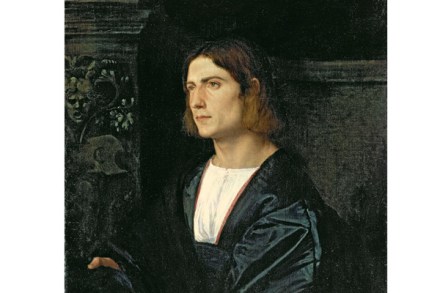
Titian’s paintings have always been both loved and revered, and he is without question the most influential artist who has ever lived. In the 17th century, Rubens, Van Dyck, Velázquez and Rembrandt were all under his benign spell, but even more remarkably over 400 years after his death his power continues to impress. It is not by chance that both the National Gallery and the Royal Ballet are currently celebrating Titian as a source of inspiration for newly created art, ballet and music, because he remains in so many ways the most contemporary of the Old Masters.

Live on in paintings

From our UK edition

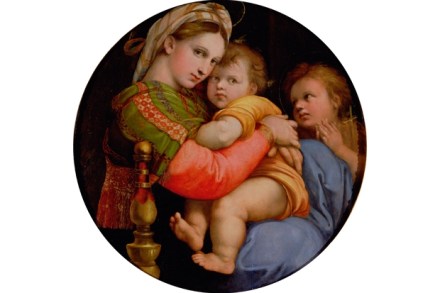
Like all self-respecting geniuses, Raphael (1483-1520) died young at the age of 37. For over a decade, he had been based in Rome, and had enjoyed fame, wealth and success beyond the dreams of almost any other artist of the day (Leonardo and Michelangelo were his only rivals). His standing in the highest circles — and above all in the eyes of the Pope — meant he was accorded the unprecedented honour, for one of his artistic calling, of being buried in the Pantheon. Artistic celebrity of this order did not guarantee the preservation of biographical minutiae, however, and we know almost nothing about what Raphael was actually like.

The king of chiaroscuro

From our UK edition

These days, it is easy to take it for granted that Caravaggio (1571-1610) is the most popular of the old masters, yet it was not ever thus. In my Baedeker’s Central Italy (published exactly 100 years ago), he is acknowledged as having been ‘the chief of the Naturalist School’, but it is pointed out that from the outset ‘it was objected that his drawing was bad, that he failed in the essential of grouping the figures in his larger compositions.’ The first major exhibition of his works — in what has only very recently been established as the city of his birth, Milan — did not take place until 1951.

A choice of art books

From our UK edition

First, and by no means simply by virtue of its weight, is Judy Egerton’s George Stubbs, Painter: Catalogue Raisonné (Yale, £95), which effortlessly combines awesome scholarly authority with what in academic circles is, alas, a far rarer commodity — wit. Seen whole and supported by such eloquent advocacy, Stubbs emerges as a truly great artist, who has been held back by his Britishness and his subject matter. As Judy Egerton rightly observes, it was the subject of the Fitzwilliam’s ‘Gimcrack’ — a racehorse with jockey up — ‘whose seeming triviality had long caused more nervous art historians to twitch their petticoats’.

Christmas art books | 2 December 2006

From our UK edition

The seemingly unstoppable rise of the exhibition catalogue happily does not mean that nothing else gets published, and my selection of glossy delights to drive away the Boxing Day blues has more than its fair share of goodies that were not born in museums. The Royal Tombs of Egypt by Zahi Hawass (Thames & Hudson, £39.95) is a spectacular case in point, which not only contains numerous gorgeous photographs of the paintings and carvings within them, but also some remarkable six-page fold-outs. Hawass is above all concerned with the subject-matter and meaning of these decorations, which were based upon such texts as the Book of the Dead, and proves to be an exemplary guide to their intricate iconography.

Coping with the Van Gogh syndrome

From our UK edition

In the context of the visual arts, the notion of misunderstood genius is a comparatively recent one, and seems to be a by-product of Romanticism. In spite of such exceptions as Vermeer, whose current reputation stands so much higher than it did in his own day, in the main the Old Master canon remains startlingly unchanging. This state of affairs begins to change in the 19th century, and one unhappy consequence of what might be termed the Van Gogh syndrome is that we are now inclined to view artists who were outrageously successful in their own day with downright suspicion. Sir Thomas Lawrence is surely as good a case in point as one could hope to find of this topsy-turvy prejudice.

Christmas art books

From our UK edition

The only halfway festive offering in this year’s crop of art books is Laurence Kanter and Pia Palladino’s Fra Angelico. Even in these secularised times, Angelico is still a favourite in the Christmas card stakes. First and foremost, however, this is a major scholarly reassessment of the artist’s career, but it also doubles as the catalogue of an exhibition at the Metropolitan Museum of Art, which closes at the end of January. For all that it is lavishly illustrated and gorgeously produced, it makes few concessions to non-specialists, but that does not mean it is not worth persevering with.

Recent arts books

From our UK edition

This year’s crop of art books for Christmas is the usual mixed bunch, and if they have anything in common, it is their general lack of festive associations. The one exception is M. A. Michael’s Stained Glass of Canterbury Cathedral (Scala, £25), a beautifully illustrated picture book with an exemplary and truly instructive text, which includes the Magi not having a notably cold coming of it among its panoply of more and less familiar religious scenes. Naturally, the lion’s share of the images is of mediaeval glass, and they are accompanied by handy diagrams detailing exactly which pieces are replaced or repainted, but more recent additions, such as Sir Ninian Comper’s commemoration of King George VI and of the Queen’s coronation, also have their place.

Renaissance man in all his richness

From our UK edition

The major challenge faced by biographers of artists is the almost impossible one of dealing with equal authority with their lives and works. It is tempting to wonder whether this is not one of the reasons why so few of them are written by art historians, although there are of course heroic exceptions, of which John Richardson’s ongoing Picasso is perhaps the most illustrious. In the specific case of Leonardo da Vinci, there is the additional problem of the seeming universality of his range of interests, above all in the direction of the sciences. Charles Nicholl’s approach is explicitly to start from Leonardo’s writings, not just about optics, anatomy, and so on, but also about such less elevated concerns as the day’s shopping list.

A conservative convict

From our UK edition

At the moment, a whole room of the Sainsbury wing in the Nation- al Gallery is devoted to Carlo Crivelli (c. 1430-95), but even the author of this monumental, learned, and absorbing monograph would not claim that he is a household name. Perhaps he is too much of a one-off to merit that double-edged accolade, for all that his ‘Annunciation’ must be one of the most memorable pictures in Trafalgar Square. Long before Caravaggio was kicking up fusses over how his artichokes were prepared or the outcome of a game of tennis, the bad boy artist was a recognised type.

Keeping one’s head above water in Venice

From our UK edition

I have an unusually vivid recollection of the first time I met John Hall. I went to his flat in Chelsea to be interviewed - as I thought - to establish whether I might make a suitable lecturer for his Pre-University Course in Venice. However, when I arrived, he got straight down to the nitty- gritty of how many lectures I would be giving, what titles I had in mind, and so on. I must have been all of 25, and had never given a proper lecture - by which I mean one without a written text - in my life. In retrospect, it strikes me that John must have been mad, or at least that if his trust did not lead to total disaster, then that only proves that he is one of those truly rare people whose guardian angel puts in a lot of overtime.

A selection of art books

From our UK edition

I cannot think of many less festive offerings than Richard Avedon Portraits (Abrams, £24.95), but it has to be admitted that his merciless exposure of such grotesques as a blood-and-guts-spattered rattlesnake-skinner and a Duncan Goodhew-lookalike beekeeper, whose naked body is swarming with the six-legged tools of his trade, makes one sit up and take note. One of the minor pleasures of this collection is that literary and artistic celebrities have the same unflinching treatment meted out to them as drifters, and unless one happens to recognise the likes of William Burroughs, it is hard to tell which is which. After Avedon, the images in Richard Calvocoressi's Lee Miller: Portraits from a Life (Thames & Hudson, £27.