Culture

Culture

The good, the bad and the ugly in books, exhibitions, cinema, TV, dance, music, podcasts and theatre.

Nostalgic nationalist piety

Lead book review

Parish churches are the sentinels of England’s past. They soar over every town and village, pinning it to the nation’s soil. The nave may be empty, the graveyard unkempt and the roll-call of the faithful soon to cede primacy to the mosque. But the Church of England guards our rituals and speaks for our communities. The English still want their local spokesmen to be vicars not mayors. Roger Scruton should have been a bishop. He would have gone to the top, and spared Anglicans their present agony over whom to send to Canterbury. Archbishop Scruton would have gathered up the church’s shattered canticles, creeds and conflicts and marched them to death or glory with learning and charm. This book is an elegant manifesto. It should have been a job application.

Puffing Pamela: Book hype, 18th-century style

There are quite a few candidates competing for the title of the first novel in English literature. You can make a strong case for Robinson Crusoe, published in 1719, or Gulliver’s Travels of 1726, or even – at a push – argue for Sir Philip Sidney’s Countess of Pembroke’s Arcadia, issued over a hundred years before, but one of the super-heavyweight contenders will always be Samuel Richardson’s 1740 novel-in-letters, Pamela. When it first appeared Pamela was as much of a sensation as the X Factor and Fifty Shades rolled into one, a genuine ‘multi-media event’ more than two hundred years before that phrase was even coined.

Shelf Life: Iain (M) Banks

Scottish novelist Iain (M) Banks is this week's Shelf Life provocateur. He tells us how he likes to test his potential lovers and what extreme punishments he exacts on books he doesn't like. 1) What are you reading at the moment? The Hell of it All by Charlie Brooker and Anatomy of the Orchestra by Norman del Mar are by the bedside, but the book I've just started is The Believing Brain by Michael Shermer (at only a year old, this is ferociously up-to-date by my standards). 2) As a child, what did you read under the covers? The Beano 3) Has a book ever made you cry, and if so which one? A few have. Most recently, I got a bit misty-eyed at the end of And The Land Lay Still by James Robertson.

Writing the Tory Wars

On starting a new job at Westminster in the early 2000s, and despondent about my party’s lot, I began to write a political novel. Aspiring writers are told to write about the world around them, and, as an observer on the ‘inside’, there was no shortage of material. Gloom and frustration hung heavily in those days. The standard question was: why the hell aren’t we in government and whose fault is it? The Duncan Smith leadership was evidently doomed from the moment of its conception, but the ‘quiet man’ stumbled on to his inevitable demise. If the party wasn’t going to find a broadly appealing leader, I’d better write one instead.

The Fuhrer was not amused

‘The German sense of humour,’ Mark Twain famously observed, ‘Is no laughing matter.’ Although many Greeks, stretched on the Euro's rack at Berlin's behest, may be inclined to agree, Rudolph Herzog's intriguing study of humour in and against Hitler's Germany, Dead Funny: Telling Jokes in Hitler's Germany, proves conclusively that the Teutonic funny bone, while it may be difficult to locate, definitely exists.

William Rowley and the death of Prince Henry – poetry

‘To the Grave’ Unclasp thy womb, thou mortuary shrine, And take the worst part of the best we had. Thou hast no harbourage for things divine, That thou had'st any part was yet too bad. Graves, for the grave, are fit, unfit for thee Was our sweet branch of youthful royalty. Thou must restore each atom back again When that day comes that stands beyond all night. His fame (meanwhile) shall here on earth remain, Lo thus we have divided our delight: Heaven keeps his spirit stalled amongst the just, We keep his memory, and thou his dust. Prince Henry was the eldest son of James I and VI (that’s first of England, sixth of Scotland). In 1612 he died at the age of eighteen. An extraordinary period of spontaneous popular mourning followed.

Interview: Ciaran Carson on translating Rimbaud

Ciaran Carson was born in Belfast in 1948, and published his first book of poetry, The New Estate, in 1976. Fans of Carson had to wait eleven years for his second book, The Irish for No (1987), which earned him the Alice Hunt Barlett Award. Belfast Confetti (1990) won The Irish Times Literature Prize for Poetry. In 1993 Carson won the first ever T.S. Eliot Prize for poetry, for his collection, First Language; while his 2003 collection, Breaking News, won the Forward Poetry Prize. That same year, Carson was appointed Professor of Poetry, and Director of the Seamus Heaney Centre for Poetry, at Queen’s University in Belfast; a position he has held since. Carson has also proved himself to be an accomplished translator.

Everyone loves a Penguin

Markus Dohle, Chief Executive of Random House, must have had a long hard think about what a booklover could possibly treasure more than a Kindle. The answer is, of course, a Penguin. Everyone loves Penguin. Their paperback covers have become such a design cult that people flock to buy not just their books, but also bags, mugs, postcards, and even deckchairs, trussed up in Penguin livery. If Random House wants to stand up to the mighty Amazon, then this strong brand is a boost to their arsenal. Why else would Random House want to merge with Penguin? Last year Random House reported revenues of 1.7 billion euros, with an operating profit of 185 million euros. This year, they published Fifty Shades of Grey – a phenomenal money-spinner.

Paper talk

The rainforests must be jumping for joy these days. Which is ironic, as they’ve largely got Amazon to thank for it. As the e-book continues its rise, there’ll be less and less demand from publishers for that horrible, immoral, eco-balance-wrecking stuff called ‘paper’. But before the trees get too complacent, they should remember that there’s one group of people who are still curiously insistent that our leafy friends make the ultimate sacrifice: writers. When it comes to one particular stage of the book-writing process, paper remains the only acceptable tool. It’s perfectly possible these days for a book to be conceived, written, edited, published and promoted without a single word of it ever existing on paper. Laptops and e-readers are all we need.

A ladykiller at large

More from Books

Ever since Sergeant Cuff appeared in The Moonstone in 1868, we English have loved our detectives. Moody Scandinavian fiction might come and go, but Peter Wimsey, Poirot, Marple and of course Sherlock Holmes continue to delight us. In Simon Serailler, Susan Hill has created a detective that ranks alongside all these greats. Like Cuff, he has his passion (drawing), like Wimsey he has a personal story, which is built up in each successive novel (this is the seventh in the series). A Question of Identity continues the tale of Serailler’s usually doomed love affairs, his ambivalent relationship with his father, his widowed sister’s single motherhood, and his care for her childen.

Exhibitions of narcissism

More from Books

The summer exhibition at the Royal Academy, with its overstuffed galleries and motley collection of overblown portraits, twee still lifes and garish landscapes has become an event where you go to be seen rather than to see; it’s less about the art than the experience. But the first-ever public show of paintings, sculpture, architectural drawings in London, which opened on 21 April 1760, was a truly artistic sensation. For the first time, it was possible for anyone to see the best of British paintings and sculpture, for the price of a modest entrance fee. Until then, viewing great masters had been strictly limited to those who could afford to travel abroad to the galleries of Florence, Rome, Paris, or who had rich friends with a private collection.

Homage to the Goddess Mother

More from Books

Cometh the hour, cometh the many men (and women). The 2012 centenary of Captain Scott’s death inspired a series of heroic forays into print: glory-hungry (or just plain hungry) authors questing for something new to say about this much-described event. Next year is the 60th anniversary of the first ascent of Everest, and so we might expect more of the same, with an icy blasted peak instead of an icy blasted pole. For those who approach these commemorative sorties with a heavy heart, Mick Conefrey’s Everest 1953 should come as a vertiginous relief.  The book is neither a flimsy reprise, nor a mercenary hatchet job. Instead, Conefrey crafts an exciting, moving account, with a few controversies revisited in an interesting way.

An exhausting mixture of boredom and concentration

More from Books

The wartime code-breaking successes of Bletchley Park are deservedly well known.  The story of how they decrypted German and Japanese codes, most famously the Enigma, has been the subject of histories, novels and films, so much so that Bletchley is glamour. Much less well known, however, and much less glamorous — rarely even thought about — is the story of how those clever cryptologists got the coded radio signals they worked on. Where did their daily and nightly fodder come from?  It certainly wasn’t from sticking an aerial in the attic and waiting to see what came out of it.

Slippery slopes | 1 November 2012

More from Books

Being sent to finishing school in Bavaria in 1936 was a dream for some English girls: there were winter sports and sachertorte, opera and sausages, and troupes of handsome Nazis in shorts. In Rachel Johnson’s new book, Daphne Linden and Betsy Barton-Hill, 18-year-old beauties who’ve never properly met any boys, find themselves at large in Munich. In a museum 70 years later, Daphne’s grand-daughter Francie spots a picture of Hitler with her grandmother. She begins to make enquiries into Daphne’s National Socialist phase. Francie’s life has its own complications (she’s in love with her boss, and wondering whether or not to have children with her husband), and these develop as her investigation progresses.

The worldling’s pleasure

More from Books

Two women are the only heroes of this book. One is Princess Margaret, whom the author points out was far more instrumental in the early years of Colin Tennant’s ramshackle creation of Mustique than merely lending it her unparalleled presence. Quite apart from insisting, after Tennant had fallen out with a slew of architects, that Oliver Messel — now synonymous with the island’s building style — become involved, she advised him on possible investors and operators. She also stuck by him through all his quixotic irascibility. For his part, he flattered, feted, and fawned on this major star of his Caribbean fantasy. The other hero — or heroine —is his wife. ‘How wonderful Anne has been though all this,’ people say.

The darker side of Dawn

More from Books

I like Dawn French when she is playing a sinister nurse much more than when she’s a jolly vicar. As her new novel, Oh Dear Silvia (Michael Joseph, £18.99) is set in a hospital, her darker side is gloriously indulged. We are at the bedside of the comatose Silvia, who has fallen off a balcony. Or was she pushed? Siblings and offspring trot to the ward; each chapter offers an internal monologue or confession — a gallimaufry of recriminations, alliances and reconciliations. What complex interactions there are with somebody who doesn’t move or say a word! Nevertheless, ‘somewhere deep inside the brain of this paralysed body there is life.’ New Age Jo is my favourite character.

Divided loyalties

More from Books

On his first day at boarding school in Kenya in the early 1950s, Ngugi Wa Thiong’o stood to attention as the Union Jack was raised on the school flagpole. Afterwards the boys sang Psalm 51 which contains the line, ‘Wash me Redeemer and I shall be whiter than snow.’ Then came a tour of the headmaster’s house during which they were invited to gaze in wonder at his electric cooker and his gleaming pots and pans. The weirdness of this was not lost on Thiong’o, especially as his brother, Good Wallace, was fighting for the Mau-Mau guerrillas at the time. At the end of his first term, Thiong’o returned home to find that it no longer existed. His whole village had been razed and his family packed off to a detention camp.

The plight of the Poles

More from Books

Was a nation ever so beset by calamity as Poland? During the second world war, Polish cities were bombed, fought over hand-to-hand and crushingly shelled. Beyond their ideological differences, Hitler and Stalin were united in a determination to destroy the country. Without the Nazi-Soviet ‘friendship’ treaty of 1939, Hitler would not have been able to implement the mass killings of Jews in Poland, or Stalin been able to deport thousands of Poles as ‘enemies of the people’ to the frozen immensity of Siberia. Through their opportunist alliance, the dictators worked to undermine Polish statehood. At the war’s end, Poles found themselves dispersed in places as far-flung as India and Soviet Kazakhstan. History had blown them to a harsh lee shore.

A family at war

Lead book review

The Quest for Corvo started something rather peculiar in biography. A.J.A. Symons’s 1934 classic — described as ‘an experiment’ — set out the biographer’s search for his subject, and not just the results. This was justified in the case of an elusive and unusual figure like the ‘Baron’ Corvo. Nowadays, many biographies are written like this, and we have to hear about the author tramping from archive to library to study. Can it really be justified in the case of a 20th-century duke, whose papers are in the order in which he left them?

Shelf Life: Judy Finnigan

Judy Finnigan tells us which Dane she'd take on holiday, which book she found in her mother's bedside drawer and which book had better be on Richard Madeley's reading list. Eloise by Judy Finnigan is published by Sphere. She tweets @judyfinnigan. 1). What are you reading at the moment? I’m currently re-reading American Wife, by Curtis Sittenfeld. 2). As a child, what did you read under the covers? Lady Chatterley’s Lover, by D.H. Lawrence. I found it in my mother’s bedside drawer. 3). Has a book ever made you cry, and if so which one? The Time Traveller’s Wife, by Audrey Niffenegger. Do not judge this wonderful novel by the awful film. 4). You are about to be put into solitary confinement for a year and allowed to take three books. What would you choose?

Review: The Collini Case, by Ferdinand von Schirach

During the Second World War both Germans and Allies routinely shot civilians in reprisal for attacks on their armed forces. One shudders to think that a ratio could even be set at which such killings could be considered legitimate. In 1941 Hitler set the bar at 100 civilians per soldier. How high is too high? This question plagued the defence of an Italian man named Fabrizio Collini some sixty years later. Ferdinand von Schirach’s The Collini Case is based upon that historical trial. Collini, who has lived in Germany since the 1950s, enters the luxury hotel suite of a man named Hans Meyer. They are near the Brandenburg Gate. He shoots him from behind, repeatedly, and stamps in his skull until it no longer resembles a skull. He gets himself arrested, says that he did it.

Thornton Wilder’s theatrics in The Cabala

I was on a date once in Atlanta, Georgia. We decided on the theatre and there was only one show playing, The Skin of Our Teeth by Thornton Wilder. After a night time drive under the arms of blue mossed oaks we made it to Emory University and took our seats and the curtain rose on a Victorian living room. Cautiously, with a canine playfulness, from out behind a sofa, tromped a dinosaur. I kept thinking of this moment as I read Wilder’s first novel, The Cabala.  Originally published in 1926 before he became a renowned playwright, Wilder attempted the same tricks here. He interjects Keats, Virgil, and even incarnate Mercury, into a contemporary 1920s narrative, in order to argue that the human condition has never improved, that culture is only a jacket that fits over a skeleton.

Cult status: an interview with Mike McCormack

Mike McCormack published his first book of short stories Getting it in the Head in 1996. The debut earned him the Rooney Prize for Literature, and was chosen as a New York Times notable book of the year in 1998. McCormack has published two novels: Crowe’s Requiem, and Notes From a Coma, which was shortlisted for the Irish Book of the Year Award in 2006. Forensic Songs, his latest collection of short stories, fuses traditional social realism with elements of science fiction, and the detective genre. While some stories here follow the path of straightforward naturalism; analyzing the difficult relationships within families; or the alienation of emigration, others probe issues that move into the world of futuristic surrealism.

Last chance for the Shiva Naipaul Prize 2012

Hilary Mantel recently won her second Booker Prize, having clinched two Bookers in a row, the latest for the second book of a planned trilogy - surely a first. As we never tire of mentioning here at the Spectator, Hilary was the inaugural winner of our Shiva Naipaul Memorial Prize, back in 1987. Her stunning essay, on living a strange, segregated life in Saudi Arabia, can be found here. The Shiva Naipaul prize, named after the late great Trinidadian author and brother of VS Naipaul, celebrates travel writing but not in the conventional sense. It is awarded every year to an essay that gives the most acute and profound observation of a culture alien to the writer.

The Jimmy Savile scandal and Alexander Solzhenitsyn

‘The line dividing good from evil cuts through the heart of every human being… This line is not static within us; it sways to and fro over the years. Even in a heart imbued with evil, it allows a small bridgehead of good to remain. And it permits a small niche of evil to survive even in the kindest of hearts.’ These words were written by Alexander Solzhenitsyn, seeking to explain why The Gulag Archipelago was necessarily ambiguous. But they also fit elements of the Savile scandal, which is being prejudged in increasingly black and white terms. Charles Moore’s observation that this grim affair is a ‘dreadful warning’ about the perils of fame is compelling: ‘when you are up, no criticism, when you are down (and dead), no mercy.

Something wholesale

I suspect that few – if any – of you have heard of Bertram Books. You could be forgiven for thinking that they are a lesser-known series of P.G. Wodehouse novels, but in fact Bertram Books is a book wholesaler, a large yet overlooked part of the book industry. It strikes me as peculiar that there is this invisible middle man between publisher and bookseller, known about by everyone in the industry, but by nobody outside. No one buying a book from a bookshop would have a clue that Bertram’s has been instrumental in getting it there. Most customers assume that books come to a shop directly from the publishers rather than via this third party.

Disgusting, but not shocking

More from Books

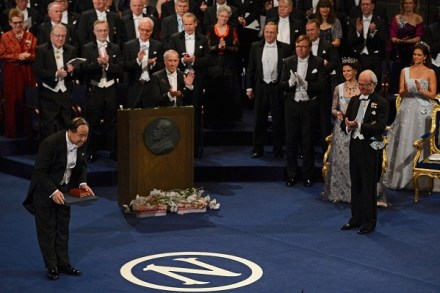
The joke doing the rounds in Beijing is that the Swedes gave the Nobel Literature prize to the wrong Chinese. It should have gone to the Communist Party’s propaganda department, for writing the enthralling fantasy about the Politburo’s wife who (supposedly) pours cyanide into the mouth of a British businessman (or spy, as most people believe). Then, in a country which happily executes people for stealing bicycles, it lets off Neil Heyward’s murderer, Gu Kailai, with a suspended death sentence. Meanwhile, her husband, Bo Xilai, who (supposedly) siphoned off billions by extorting money from private businessmen, has so far only lost his party card.