Culture

Culture

The good, the bad and the ugly in books, exhibitions, cinema, TV, dance, music, podcasts and theatre.

Playing Stalin for laughs

More from Books

Christopher Wilson’s new novel is much easier to enjoy than to categorise. And ‘enjoy’ is definitely the right word, even though The Zoo tackles subject matter that should, by rights, make for a punishingly bleak read. The narrator is 12-year-old Yuri, whose misfortunes start with the fact that he’s growing up in Moscow in 1953 — and that a road accident when he was six damaged his brain, leaving him with a curious set of symptoms that couldn’t be worse suited to life under Stalin: a total lack of guile, a tendency to ask awkward questions and a face so angelically trustworthy that everybody tells him their deepest secrets.

Something in the water

More from Books

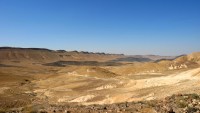
‘It was a shock, and an epiphany,’ says Fiona Sampson, to realise that many of her favourite places were built on and out of limestone: the cosy Cotswold village of Coleshill, the shambolic hamlet of Le Chambon in the Dordogne, the limestone Karst region of western Slovenia, and the honeycombed hills of Jerusalem and the Holy Land. ‘Surely, I thought, this has to be more than mere coincidence.’ From a strictly demographic point of view, it isn’t even much of a coincidence: about one quarter of the world’s population lives in limestone country or depends on it for its water. But the mind of a poet can feed on the slightest chance connection.

The new age of the refugee

More from Books

After years of estrangement in a foreign land, what can immigrants expect to find on their return home? The remembered warmth and blazing beauty of Jamaica have remained with some British West Indians for over half a century of exile. Yet 100 changes will have occurred since they left. Long brooding over the loss of one’s homeland can exaggerate its charm and sweetness. The first mass immigration to British shores occurred in the late 19th century, when Ashkenazim arrived by the thousand after escaping the pogroms in Tsarist Russia. Many changed their names and even their accents. The trappings of orthodoxy — beards, sidelocks — left them vulnerable to anti-Semitic abuse as they settled in cramped London streets north of Whitechapel Road.

A strange vibration

Lead book review

Among the many curiosities revealed in this book, few are more startling than the fact that at the height of the so called ‘summer of love’ in 1967 the British historian Arnold Toynbee, on a visit to San Francisco, made his way to the Haight-Ashbury district — hippy central — to catch a concert by one of the Bay Area’s most popular bands, Quicksilver Messenger Service. Just what Toynbee, who was 78 at the time, made of the group’s epic exercise in free form, psychedelic improvisation, ‘The Fool’, Goldberg does not mention.

Would Jane Austen be amused or bemused by her £10 note quotation?

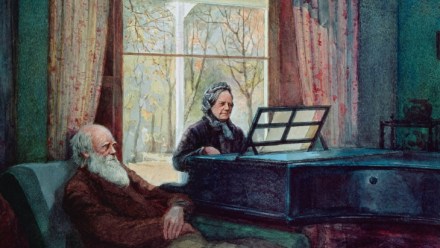
So, the new tenner has been unveiled today. Two centuries after her death, Jane Austen replaces Charles Darwin, who has enjoyed a 25-year sojourn with his hummingbirds. And yet it feels like this new note has been in the air for a while, though obscured by the hazy fug of controversy. First there was the (largely vegan) stew about animal tallow remaining part of the production process. All protests about what we’re doing with the natural world are worth hearing, so long as they are proportional. Quite what percentage of society occupies the intersection of the Venn diagram where strict boycotters of plastic bags, soap and cosmetics overlap with those who shun vehicular transport (tyres), candles and latex, I’m not sure.

Latest crime fiction

More from Books

Wolfgang Herrndorf’s Sand (Pushkin Press, £14.99) is set in 1972 and moves back and forth between a North African city and a small unruly town surrounding an oasis. One man is on the run through the desert regions: he has no name, no memory and no clue as to why he’s being pursued by at least three different parties, all intent on doing him harm. Other characters inter-mingle with this tale of woe: ineffectual detectives, a glamorous sales agent, a commune of hippies, and a paranoid spy whose sense of purpose evaporates in the midday heat. The sun bakes the streets, the sand, people’s faces. And their minds. The amnesiac really does suffer, painfully at times, running blindly from one problem to the next.

Beyond the pale

More from Books

You can tell everything you need to know about what Victoria Lomasko thinks of her homeland by the titles of this book’s two sections: ‘Invisible’ and ‘Angry’. A graphic artist from Serpukhov, just south of Moscow, Lomasko spent eight years documenting people from all walks of life across Russia, producing drawing and commentary about the ‘Russia that is hardly ever seen’. Many of her fellow citizens feel invisible. Almost all of them are angry. The effect of seeing this in cartoon form is disturbing, impressive and fascinating. The subject matter she is dealing with is almost unbearable: juvenile prison wards, sex workers, protesters affected by Russia’s homophobic laws.

China syndrome | 13 July 2017

More from Books

Every day on his way to work at Harvard, Professor Allison wondered how the reconstruction of the bridge over Boston’s Charles River could take years while in China bigger bridges are replaced in days. His book tells the extraordinary story of China’s transformation since Deng abandoned Mao’s catastrophic Stalinism, and considers whether the story will end in war between China and America. China erects skyscrapers in weeks while Parliament delays Heathrow expansion for over a decade. The EU discusses dumb rules made 60 years ago while China produces a Greece-sized economy every 16 weeks. China’s economy doubles roughly every seven years; it is already the size of America’s and will likely dwarf it in 20 years.

Self’s obsessions

More from Books

This 600-page, single-paragraph novel shuttles back and forth across time between the perspectives of an elderly and confused psychiatrist, a tank commander in Iraq, an autistic computer genius, the autistic computer genius’s mother and a closeted MI6 spy who thinks his cock is talking to him — which, for this stage in Will Self’s writing career, is pretty much situation normal. Readers of Umbrella (2012) and Shark (2014) will know the score already, as this is the third instalment in a loose trilogy following Self’s recurring psychotherapist Zack Busner as well as several generations of a family called Death (De’Ath for the posh ones).

Voices of exile

More from Books

During the military dictatorships of the 1970s, exile for many Latin American writers was not so much a state of being as a vocation. Some were given early warning of what might befall them if they stayed. The polemicist Eduardo Galeano remembered receiving an evening telephone call from the Argentine Anticommunist Alliance: ‘We’re going to kill you, you bastards.’ ‘The schedule for calling in threats, sir, is from six to eight,’ I answer. I hang up and congratulate myself... But I want to stand up and I can’t: my legs are limp rags. Other writers were not so lucky. Antonio di Benedetto was rounded up in the first wave of arrests in 1976 and sent to prison, where he was tortured over a period of 18 months.

The first celebrity

Lead book review

It’s quite a scene to imagine. A maniacal self-publicist with absurd facial hair takes off in what’s thought to be the biggest hot-air balloon the world has ever seen. Adoring crowds gather to watch the launch. He rises rapidly and sails off towards the clouds — but in due course the whole thing goes arse-up and he comes clattering to earth, narrowly escaping with his and his crew’s life. Never mind: the catastrophe is reported around the world and has made him even more famous than he was before. It was a ‘semi-unsuccess’. And within weeks he’s back planning another ascent in another giant balloon.

Spectator competition winners: The Book of Nicola Sturgeon

Inspiration for the latest competition came from Anthony Lane’s terrific ‘The Book of Jeremy Corbyn’, an account of the general election that ran recently in the New Yorker and was shared widely on social media: ‘And there came from the same country a prophet, whose name was Jeremy. His beard was as the pelt of beasts, and his raiments were not of the finest. And he cried aloud in the wilderness and said, Behold, I bring you hope.’ You were asked to flesh out the story with a version of either ‘The Book of Boris’, ‘The Book of Theresa’, ‘The Book of Tim’ or ‘The Book of Nicola’.

Barometer | 6 July 2017

Barometer

Banking up the wrong tree The Magic Money Tree is such a neat concept it is a wonder it has not featured more widely in literature. But there is a book of that title by Anna Rashid, self- published in April 2009 — just after quantitative easing began in Britain. In the story, a little girl finds a tree brimming with banknotes, which are given to poor ladies and children at a party. The tree grows back every Christmas but only the girl can see it. The self-published book has not yet lived up to its name — last week it was number 7,413,589 on Amazon UK’s bestseller list. Healthy salaries More nurses left the profession than joined it, provoking claims that they are underpaid.

Always the Superbrat

More from Books

John McEnroe’s father calls. In fact, he calls McEnroe’s manager’s phone, presumably because dad doesn’t have a direct line to the great man himself. John Sr, who is tennis-mad, has a request: can he come with his son to a veterans’ tournament in Belgium? McEnroe is horrified. Having dad around is a major drag. ‘I was about to say absolutely not,’ he writes — when his old rival Björn Borg, who happens to be dining with him, interjects: ‘Let me speak to him.’ Borg, who had lost his own father three years earlier, tells McEnroe Sr: ‘Don’t worry, JP, if John doesn’t bring you to Knokke-Heist, I will.

Crossing the pond

More from Books

What led a person in 17th-century England to get on a ship bound for the Americas? James Evans attempts to answer that question by exploring both the push and pull factors involved. His descriptions are vivid, so the reader can imagine the life choices that would lead to one finding oneself heaving up over the side of a small ship somewhere in the mid-Atlantic, or watching the burial at sea of a fellow passenger, and hoping to God one had made the right choice. God, of course, was a big part of the choice for many of them. The Mayflower pilgrims, who landed at Plymouth Rock in 1620, are the quintessential ‘religious liberty’ seekers, so many of whom headed across the Atlantic.

In defiance of Il Duce

More from Books

The details of Mussolini’s fascism are perhaps not quite as familiar in this country as they might be. Even quite well-meaning people have a tendency to treat him as, in part, a joke. Just how horrible the period was needs to be explained with reference to individual lives. Caroline Moorehead’s book about the Rosselli family, who were central to the principled resistance, has a valuable and sobering subject. They were intellectual and idealistic Jews. The matriarch, Amelia, from an eminent Venetian family, had married a clever and dissolute man. They had three sons together before Amelia had enough of his philandering, and left him with the children. She settled in Florence, and made a place for herself in radical Italian society.

Something nasty in the woodshed

More from Books

I’ve diagnosed myself with early onset cottage-itis. It’s not supposed to happen for another decade, but at 29 I dream of just the smallest bolthole in the country: a bothy, a gatehouse, a folly below the ha-ha in someone else’s stately home. A shepherd’s hut in tasteful shades of prime ministerial greige. Liberated from the city I would be a nicer, calmer, more industrious person. I would write my magnum opus and be self-sufficient in rhubarb crumble. Every morning when the drills start on the cycle super-highway that will speed the passage of Deliveroo couriers through west London, I put my head in my hands and will myself into a gingerbread cottage in the country. Be careful what you wish for, is Amanda Craig’s message.

Hot Spring

More from Books

Imagine if Kathy Lette — or possibly Julie Burchill — had written a feminist, magic-realist saga that sent four women on a road-trip around the broiling hotspots of the Arab Spring. No, not easy to do — yet the intrepid Turkish journalist and writer Ece Temelkuran has, in this novel, come up with just that sort of pantomime chimera. Temelkuran, an outspoken truth-teller whose fearless reportage has jeopardised both her livelihood and security in Turkey, flings together a quartet of ill-assorted travellers — one of whom resembles the author. She whisks them around the crisis zones of the eastern Mediterranean just as revolutions flare and tyrants tumble.

Doctor of humility

More from Books

Henry Marsh’s book Do No Harm (2014) was that rare thing — a neurosurgeon showing his fallibility in public and admitting to the great harm that good intentions can cause. It was a stunning, even revolutionary work, displacing doctors from their traditional ivory towers and showing them to be not only human and vulnerable to misjudgments, but also capable of self-admonishment and regret. At the time, I said it should be required reading for medical students. The follow-up, Admissions, continues the theme of self-examination. Marsh is an atheist, and in many ways his writing is like a secular confessional — hence the dual meaning of ‘admissions’.

A woman of some importance | 6 July 2017

More from Books

It might seem unlikely that a Christian noblewoman could have had influence over a Muslim city in the 13th century, when women were considered by Muslim society as being ‘underlings without complete intelligence’ and by Christian society as ‘a fish hook of the devil… a source of evil… a treasury of filth’. However, Tamta — a woman of Armenian Christian heritage, who travelled extensively and acted as a link between people of various faiths and backgrounds — seems to have governed, influenced taxation, provided passage for pilgrimage and even, possibly, played a role in battles and military negotiations, in Akhlat, a Muslim city in what is now Turkey, in the early 1200s.

Northern exposure | 6 July 2017

More from Books

Amid the shambles that was the Anglo-French campaign in Norway in April and May 1940, a French officer observed that ‘the British have planned this campaign on the lines of a punitive expedition against the Zulus, but unhappily we and the British are in the position of the Zulus’. A month later, many British officers would be pronouncing on French generalship equally tartly during the shambles that was the Fall of France. On the whole it doesn’t do to criticise allies, but soldiers have got to be able to grumble about somebody, and it’s best (at the time, at least) to lay the blame elsewhere than one’s own high command.

Dark night of the soul

More from Books

As bombs fall everywhere in Syria and IS fighters destroy Palmyra, a musicologist in Vienna lies awake all night thinking of the Baron Hotel in Aleppo, where he stayed in 1996, following in the footsteps of Lawrence of Arabia, Agatha Christie and King Faisal. He remembers the hotel’s Ottoman ogival windows and its monumental staircase, with its old, worn-out rugs and shabby rooms where there were still useless bakelite telephones and metal clawfoot bathtubs whose pipes sounded like a heavy machine gun whenever you turned on the tap, in the midst of faded wallpaper and rust-stained bedspreads. In 1996 Franz Ritter was travelling with a fellow student, Sarah, a beautiful French woman, studying for her PhD in Orientalism.

Taking the rough with the smooth

Lead book review

In The Ambassadors, Henry James sends Lewis Lambert Strether from Boston to Paris to retrieve Chad Newsome, the wayward heir to a factory at Woollett, Massachusetts. Strether never names the ‘small, trivial rather ridiculous object of the commonest domestic use’ that has enriched the Newsomes, though he does say that it is not clothes pins, baking soda or shoe polish. In Aspects of the Novel, E.M. Forster identifies this ambiguity with James’s ‘uninvolved’ style, then suggests a button hook. Possible resolutions of the ‘Woollett Question’ also include safety matches, alarm clocks, toothpicks and, in a David Lodge campus satire, a chamber pot.

A choice of first novels | 29 June 2017

More from Books

Patty Yumi Cottrell’s blackly comic and sophisticated debut Sorry to Disturb the Peace (And Other Stories, £10) opens with Helen Moran learning that her brother —adopted, as she was — has committed suicide. Helen lives in New York, working with troubled teenagers who have dubbed her ‘Sister Reliability’. Against familial expectations she returns to Milwaukee to her adoptive parents’ home for the funeral. But Helen has not arrived simply to grieve: Perhaps to investigate his death would revitalise my own life, and if I could communicate my eventual findings to them, it would strengthen and support the lives of my adoptive parents as well.

High flyers

Lead book review

It is conventional wisdom in the publishing industry that, despite the old adage, readers do indeed judge books by their covers. So, it seems, do passengers on the No. 29 bus. For a middle-aged man reading Clare Mulley’s The Women Who Flew for Hitler, some of the looks I got made me so uncomfortable that I took to hiding the cover behind a newspaper. So let’s get one thing straight from the beginning: this is not a niche book for Third Reich enthusiasts, nor a seedy excuse to fantasise about women in Nazi uniforms. Do not be put off by the awful title: it is in fact a serious double biography of two of the most remarkable women in the history of aviation. The first of Mulley’s subjects, and the more famous of the two, is Hanna Reitsch.

Books Podcast: Jonathan Meades

In this week's Books Podcast I'm joined by the great Jonathan Meades. A man of many hats -- food critic, architectural critic, memoirist, polemicist, cultural historian, novelist etc -- and one distinctive pair of sunglasses, Meades is this week talking about stealing food. His The Plagiarist In The Kitchen, new in paperback, is a sort of anti-recipe book; a collection of cookable recipes (well, except the one), an erudite disquisition on the history and theory of cookery, and a slant discussion of the whole idea of plagiarism. Also, it's packed with good jokes.

Life classes

More from Books

It has taken much of a celebrated literary life for Elif Batuman to produce a novel. At the beginning of her wonderful 2010 book The Possessed —a chimera of memoir, travelogue and literary criticism — she declares: I remember believing firmly that the best novels drew their material and inspiration exclusively from life... and that, as an aspiring novelist, I should therefore try not to read too many novels. Selin, the Turkish-American protagonist of her first novel, is engaged in gathering writerly experience at Harvard, reading novels and falling for Ivan, a Hungarian mathematics student with a girlfriend. The pair begin an online relationship at the dawn of email.