Culture

Culture

The good, the bad and the ugly in books, exhibitions, cinema, TV, dance, music, podcasts and theatre.

The fruits of imperialism

Lead book review

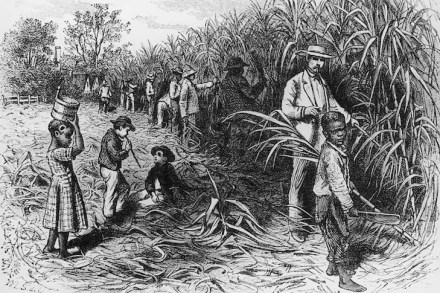
Imagine yourself a middle-class person in England in the 1870s. You sit down to drink a cup of tea while reading The Spectator. It probably doesn’t cross your mind, but in your hand you hold products from around the world. Your tea is from Ceylon, the sugar in it from Jamaica, and your porcelain cup was made in China. Your afternoon refreshment is the culmination of global trade developed over centuries. In A Thirst for Empire, Erika Rappaport traces how tea became a staple of the British diet after arriving in the 17th century, and has not lost its popularity yet. This is a detailed work, at over 400 pages of small print, but provides interesting explorations of the health-giving powers attributed to tea, and how it came to be seen as a wholesome and vital drink.

Rumbles in the jungle

More from Books

A CIA agent, a naive young filmmaker, a dilettante heir and a lost Mayan temple form the basis of Ned Beauman’s latest, and arguably most impressive, novel. Two rival expeditions set off from the United States to the jungles of Honduras to find the temple — one with the intention of using it as a location in which to film an absurd comedy, the other determined to disassemble it and take it back to New York. The two sides clash, each refusing to give way. The weeks roll into years; and life around the temple, populated with a disparate and distinct array of characters, steadily deteriorates into greater savagery. Meanwhile, Zonulet, rogue CIA agent (and primary narrator), under internal investigation, needs to unlock the secrets of the temple to prove his innocence.

Return to the lost city

More from Books

During a press interview in Bombay about his latest book, the author-narrator of Friend of My Youth feels ‘a surge of bile’ against the novel. That imperialist bully of a genre has ‘squatted on the writer’s life’ and defines his ‘sense of worth or lack of it’. Our narrator, as it happens, is named ‘Amit Chaudhuri’. The circumstances of his return to the Indian city of his youth (but not his birth) match in many respects the author’s biographical data. He’s talking, for a start, about The Immortals, the Bombay-set novel about musicians that Chaudhuri published in 2009.

The pleasures of reading aloud | 24 August 2017

More from Books

‘I have nothing to doe but work and read my Eyes out,’ complained Anne Vernon in 1734, writing from her country residence in Oxfordshire to a friend in London. She and her circle of correspondents (who included Mary Delany, the artist and bluestocking) swapped rhyming jokes, ‘a Dictionary of hard words’, and notes on what they were currently reading. Their letters are suggestive of the boredom suffered by women of a certain class, constrained by social respectability and suffering the restlessness of busy but unfulfilled minds. But that’s not their interest for Abigail Williams in this fascinating study of habits of reading in the Georgian period.

Light at the end

More from Books

It’s an irony of our secular age that the more we fear death, the more enticing we find it. The past few years have seen a slew of bestsellers on the subject — Atul Gawande’s Being Mortal, Julian Barnes’s Nothing to be Frightened Of, Paul Kalanithi’s When Breath Becomes Air, Henry Marsh’s Do No Harm (a title taken from the Hippocratic Oath —an oath no doctor actually swears). To this crowded field Robert McCrum brings a book both intensely personal — he reflects not only on his mortality but on the death of his marriage — and coolly objective. It’s proof, yet again, that death makes for lively reading. Twenty-one years ago, as readers of the memoir My Year Out will know, McCrum suffered a near-fatal stroke.

Making sense of an unjust world

More from Books

These three timely works of creative nonfiction explore the question of race: chronicling histories of colonialism and migration; examining the institutionalisation of prejudice; and charting movements of change and the resistance to change. Maxine Beneba Clarke’s memoir, The Hate Race, tempers a tale of schoolyard trauma with gentle humour; Reni Eddo-Lodge’s debut, Why I’m No Longer Talking to White People About Race, is a broadside, a roar of outrage; while Eula Biss’s elegantly structured essays in Notes from No Man’s Land are delivered with a deceptively quiet insistence that nevertheless leaves the reader shaken. They focus, respectively, on Australia, Britain and the United States.

Swine fever

More from Books

‘Rightly is they called pigs,’ says a farmworker in Aldous Huxley’s Crome Yellow as he watches porkers grunt and squelch. Pía Spry-Marqués has no time for such nominative determinism. ‘Pigs,’ she points out, ‘are in fact quite clean animals.’ Wallowing in mud isn’t nostalgie de la boue, merely the only way of keeping cool if no shade or fresh water is available. God disagrees with her. ‘The swine, though he divide the hoof, and be cloven-footed, yet he cheweth not the cud; he is unclean to you,’ he tells Moses and Aaron in Leviticus.

A tidal wave of grief

Lead book review

Most victims of the 1755 Lisbon earthquake — which convinced Voltaire there could be no God — perished not in the six-minute tremor, but in the tsunamis which foamed up the Tagus soon after, causing devastation as far away as Brazil. These towering sheets of water can have an impact greater than that of a nuclear explosion. The most powerful earthquake yet recorded, in 1960 off Chile, sent 80-foot waves across 10,500 miles of ocean — and struck Japan, half a world away, killing 142 people there. Japan is a magnet for super-tsunamis, which recur at intervals of 800 to 1,000 years, with lesser waves striking the north-east Sanriku coast roughly every 30 years. In 1896, 22,000 died after a moderate tremor out at sea; in 1933, 3,000 were killed by waves as high as 100 feet.

The search for meaning

More from Books

He’s not what you’d call prolific, Bernard MacLaverty. Midwinter Break is his fifth novel in 40 years, and his first in 16. And, in that time, it could be argued that Irish writers have moved away from his bare and declarative style into the wildness of, say, a Barry or a Barrett or a Baume; word-typhoons, of an affinity with the febrile and fervid times. What cannot be doubted, though, is MacLaverty’s awareness of, and wide aliveness to, the world’s flux, its writhings in the decades since his first novel Lamb; in his latest, his deep familiarity with, and angry love for, the workings of the UK, and Europe, and the globe are displayed stark and clear, the stylistic precision of their expression becoming a haven from a hot and hyper-active mediated age.

Change and decay | 17 August 2017

More from Books

Writing of his grandmother’s cremation, Kushanava Choudhury reflects in The Epic City that, while his expatriate Indian cousins are separated from the occasion, ‘I was sipping tea in Nimtala, present in the moment at the centre of our world’. It’s Choudhury’s longing to be back in this centre, which might have seemed less than obviously central to a metropolitan American, that takes him to Calcutta after he graduates from Princeton. He spends a few years working at the Statesman, Calcutta’s most venerable English newspaper, and later returns to the city, eventually getting married to his girlfriend, who happens also to be an American of Bengali origin.

A countercultural upheaval

More from Books

‘New York stories in a way are always real estate stories,’ says the journalist Alan Light in Lizzy Goodman’s bustling oral history of the city’s music scene at the dawn of the century. The same goes for all music scenes. Talent clusters and thrives only where there are cheap places to live, hang out, play shows and, crucially, fail. New York in 2001 was such a location. The Lower East Side was still affordably sketchy and Brooklyn far from hip. When Dave Sitek from TV on the Radio moved to Williamsburg and invited his Manhattan friends to visit, ‘It was like I was asking them to go to China on a single--engine prop plane.’ Now Williamsburg, like Manhattan, belongs to the well-heeled.

The man who disappeared

More from Books

Walking out of one’s own life — unpredictably, perhaps even without premeditation and certainly without anything approaching a plan — is a common staple of fantasy, and therefore fiction. But why, when we spend so much of the rest of the time fretting about losing what we have and hatching plans to safeguard it? In this short, powerful novel, the Swiss writer Peter Stamm, suggests some oblique but compelling possibilities. Thomas and Astrid have returned from a holiday with their two children and begun the ordinary business of resettling: unpacking, laundry, a last glass of wine in the garden. As Astrid tends to the house, Thomas walks down the path and, after only a momentary hesitation, through the gate.

A bad taste in the mouth

More from Books

Here is the opening sentence of Karl Ove Knausgaard’s meditation on beds.: With its four legs and its flat, soft surface, the bed gently accommodates one of our most basic needs: it is good to lie down in bed, and it is good to sleep in them through the night. Well, you learn something every day. Actually you do, if you are very young, or at least you are meant to. For this is one of Knausgaard’s letters to his unborn daughter, and he’s written one book for each season, 20 letters per month, for her to be able to see the world, or for Knausgaard to see it again, anew. It is a mission freighted with honourable intent.

The roots of witchcraft

More from Books

Until the mid-1960s many historians believed witchcraft was a pre-Christian pagan fertility ritual, witches worshipping the Horned God, whose consort was the Triple Goddess. The most notable advocate of this theory was the Egyptologist Margaret Murray. Then came revisionists led by Norman Cohn. Examination of witch trials suggested there had been no witchcraft: it was a ‘social construct’ of the Christian patriarchy persecuting innocent women, as it had innocent Jews indicted for the same satanic practices. Professor Hutton is a follower of Cohn.

The end of brotherly love

More from Books

You can never completely leave a religious cult, as this strange and touching memoir demonstrates. Patterns of thinking, turns of mind, will linger with and haunt former members long after they escape. Rebecca Stott was born in 1964 into the Brethren, a low-church sect that had broken away from the Anglican church in the early 19th century and then broken away from itself, bifurcating into factions as movements set on purity and unity usually do. Cult is a strong word, but Stott’s branch of the Brethren really earned it. Her great grandfather, a sail-maker, joined the Brethren in Eyemouth, a fishing village not far from where I grew up in Northumberland. Back then the Brethren there was founded on frustration with the tax-collecting Kirk.

Two enquiring minds

Lead book review

Samuel Pepys, wrote John Evelyn, was ‘universally beloved, hospitable, generous, learned in many things’ and ‘skilled in music’. John Evelyn, wrote Pepys, ‘must be allowed … for a little conceitedness; but he may well be so, being a man so much above others’. Pepys’s assessment of Evelyn was made early in their relationship, in 1665, and Evelyn’s assessment of Pepys was made on the day that his fellow diarist died, in 1703. So rest the reputations of our two great recorders of Restoration England: Pepys, the middle-class son of a tailor, was a man of the people; Evelyn, the heir of a country gentleman, was a notch or two above.

Geoff Dyer: How I write

In the sixth form we’d get assigned essays to be written over the Christmas holidays. I always did these right away, either on Friday night or Saturday morning. Not because I liked writing but because the homework cast such a blight over the holiday that it was best to get it over with. I look back on that period as a precocious summit of self-discipline. I’d love to recapture that iron resolve now, more than 40 years later, when it takes longer and longer to settle down to things, to fight off the dread of having to concentrate, when it seems likely that the only parole from this life sentence of homework will come with dementia or death.

Spectator competition winners: reader, I ate him: literary classics/horror mash-ups

The latest comp, which called for extracts from a mash-up of a literary classic of your choice and horror fiction, was a nod to the recently deceased George Romero but also owes a debt to Seth Grahame-Smith’s 2009 Pride and Prejudice and Zombies, which weaves scenes of ‘ultraviolent zombie mayhem’ into Jane Austen’s original text. Most chose prose classics, but there were a few distinguished exceptions. Here’s what happens when, courtesy of Matt Quinn, the undead get their chops round Shakespeare’s Sonnet 18: Shall I compare thee to a stroganoff? Oh how we zombies joke! I want your heart, but not for lunch – for love! My sweet, don’t scoff, I’ve followed you all night.

Susan Hill: How I write

Of course I began with pen and ink and paper, and paper was expensive in terms of pocket money, so I asked for W.H. Smith tokens for Christmas. Then a neighbour brought up a stash of assorted old office notebooks from hiding somewhere, so the first novel was written in ‘Ledger’ and ‘Salaries’. I wrote by hand, on A4 ruled with feint and margin, for the next 20 years, making notes in whatever was to hand, often those red shiny Silvine ones from Woolworths. Those notebooks and MSs are now safely housed in handsome red boxes in Eton College library. When the books were finished I typed them up on my father’s old Remington. I could never write directly on to it; too much clatter, too much metal coming between me and the words.

Books Podcast: The art of the sequel

We live in an age when sequels to, and re-imaginings of, the classics, seem to be a larger part of the literary landscape than ever before. We're seeing a steady stream of new Ian Fleming, new Agatha Christie, new Robert Ludlum, new Jane Austen, even new PG Wodehouse. What's the attraction of these books? And what does it feel like, as a writer, to step into the shoes of the greats? In this week's podcast I ask Bonnie MacBird, who's now on her second Sherlock Holmes novel, Unquiet Spirits, and Anthony O'Neill, who in Dr Jekyll and Mr Seek takes on the mantle of Stevenson, about the lure of the sequel.... You can listen to our conversation here: And if you enjoyed that, do subscribe on iTunes for a new podcast every Thursday.

The violence of poverty

More from Books

Neel Mukherjee has had a two-handed literary career, working as a reviewer of other people’s novels and writing his own. In 2014, his second novel, The Lives of Others, was shortlisted for the Man Booker Prize. His latest book is a state-of-the-globalised-nation novel which gives human particularity to those deadened concepts we pass around such as migration, inequality and neoliberalism. A State of Freedom breaks into five chapters, each telling the story of a distinct individual in India, whose connection to the others is only fully revealed in the final pages. Mukherjee has observed wryly that due to stereo-typical ideas about the Indian novel, whatever their formal properties, his fictions tend to be read as family sagas.

Holidays with Hitler

More from Books

We don’t usually think of Hitler’s hated henchman Heinrich Himmler, architect of the Holocaust of European Jewry, as a comic turn, but the diary of Admiral Sir Barry Domvile, a former chief of British Naval Intelligence and fanatical admirer of Nazi Germany, proves otherwise. Domvile’s description of his visit to Himmler’s ‘hunting box’ high in the Bavarian Alps in 1935, reproduced in Julia Boyd’s fascinating book, is a treasury of thigh-slapping humour, including hearing Himmler wake him at 3.20 a.m. with his rendition of ‘God Save the King’; complaints about the Reichsführer’s primitive ‘bog’ — a deep hole in the ground; and finishing with a ‘regular Bavarian evening...

Flights of fancy | 10 August 2017

More from Books

Levitation. We all know what it is: the ‘disregard for gravity’, as Peter Adey puts it in his new book, or as the dust jacket states, ‘the long-standing belief that we could float relatively unaided’. The cover of Levitation has an elegant lady in flowing robes apparently hovering in a bubble over New York. Who could resist a good read about a subject like that? The catch lies in the subtitle: ‘The Science, Myth and Magic of Suspension.’ Suspension: we all know what that is, and it’s not levitation. The excitement of levitation clearly attracted Adey and his editor, but when it came to knocking out the copy, it was evidently impossible to produce an entire book.

A feminist trailblazer

More from Books

On the evening of 28 October 1908, two unremarkable middle-class women wearing heavy overcoats gained admission to the Ladies’ Gallery, high above the chamber in the House of Commons. Suffragettes had previously hit the headlines by chaining themselves to the railings at 10 Downing Street and, emboldened by this success, the leaders of the women’s movement planned an even more outrageous demonstration. The Ladies’ Gallery was surrounded by a metal grille, and this had huge significance for the suffragettes, as it symbolised their exclusion from the patriarchal political system. The plot was for two of them to chain themselves to the hated grille. One of the women chosen for the job was an Australian named Muriel Matters.

The German Lion of Africa

More from Books

What’s going on with book reviews? Here is the Pulitizer prizewinning (for ‘criticism’) Michael Dirda in the Washington Post, on this book’s cover: Let me say straight out that if all military histories were as thrilling and well written as Robert Gaudi’s African Kaiser, I might give up reading fiction and literary bio-graphy… Gaudi writes with the flair of a latter-day Macaulay. He sets his scenes carefully and describes naval and military action like a novelist. Leaving aside the extraordinary comparison with Macaulay for the moment, most naval and military novels that I’ve read get the historical detail right. Robert Gaudi’s book is so error-strewn that it would fail to qualify even as historical fiction.

Wool, wheat and wet weather

More from Books

Englishness is big business in the nation of shopkeepers, and not just in politics and tourism. In literature, the gypsy scholars of Clan Macfarlane range freely across the hills and lexicons in search of old England, the dying and undead. This paperchase confirms that a change in the self-image of the English is afoot too. For centuries, the English poured into their cities. Now, they are trickling back out to the countryside. London excites precisely because it is another country, from a future that at least 54.8 per cent of the English prefer not to live in. But what does the returnee know of England who only London knows? In 1997, Little, Brown published Clive Aslet’s Anyone for England? as ‘A Search for English Identity’.