Peter Carty

Haunting images: The Shadow of the Object, by Chloe Aridjis, reviewed

From our UK edition

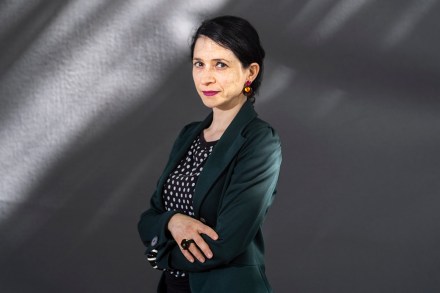
What marks out Chloe Aridjis as a novelist is her ability to create atmospheres and ambiences. These often have hints of the uncanny, but rather than making her writing unsettling they give it an appealing intimacy. Her fourth novel begins as the narrator Flora visits her parents in Mexico City. Without warning, the family’s Alsatian leaps up and savages her hand. In hospital, she suffers from insomnia and wanders from her room to encounter ‘a mysterious figure’ at the end of a corridor. This turns out to be Wilhelmina, an elderly German patient with pneumonia, who befriends Flora. Wilhelmina collects antique toys and instruments, and Flora becomes fascinated by a magic lantern in her possession.
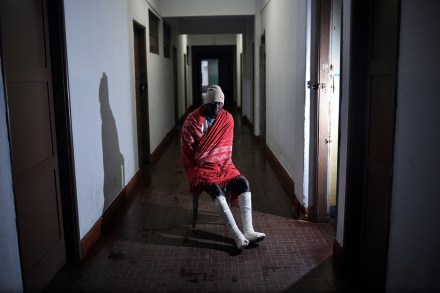
The stigma still surrounding leprosy

From our UK edition

One of the earliest leper hospitals in Britain was built in London near the beginning of the 12th century by Queen Matilda, the wife of Henry I. It was a benign combination of housing, hospital and chapel, with patients free to come and go as they wished. Matilda started a fashion among the wealthy, so that by 1350 there were more than 300 such hospitals across the kingdom. Far from lepers being shunned and feared as outcasts, therefore, their treatment for much of the medieval period was enlightened. ‘The mythology of the “medieval leper” seems no more real than that of the vampire or ghoul,’ writes Oliver Basciano. The author is a journalist who has worked for the Financial Times and the BBC.

Kindness backfires: Sufferance, by Charles Palliser, reviewed

From our UK edition

Charles Palliser’s Sufferance tells us what happens to one family in an occupied country during wartime. What sets it apart is that all the characters are unnamed. The country, region and historical period also remain unspecified. This indeterminacy lends the novel enormous power. The father of the family decides to take in a young girl from a minority ethnic group who has become separated from her own family. ‘I felt for her as if she was my own child,’ he says. Yet his motives are not entirely altruistic, since he believes he will be financially rewarded for looking after the girl. He is a lowly accountant working in the public sector and knows the girl’s father is the wealthy owner of a large department store.

A horrifying glimpse of Syria’s torture cells

From our UK edition

A young Syrian man is walking down a street in Damascus. He is a computer geek who likes rock music and basketball, and he’s enjoying his summer break from university. A car draws up beside him. He’s shoved inside and blindfolded. Shortly after, he finds himself strung up by his wrists in a dungeon. A thick power cable slices through the air and lands on his back. He screams. ‘You want freedom, right?’ yells the torturer. The lash descends again. ‘Here’s your freedom.’ The victim – the authors of Syrian Gulag protect him with the alias ‘Akram’ – had ‘liked’ a social media post criticising the Assad regime. Akram was to suffer through three months’ incarceration and torture at the Air Force Intelligence prison at Mezze military airport in Damascus.

Steam trains make a comeback under the guise of heritage

From our UK edition

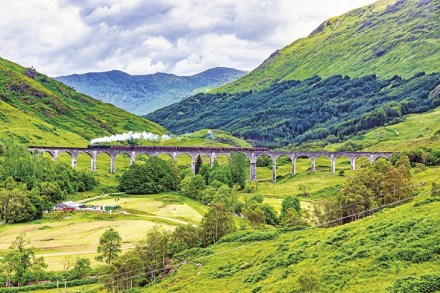
So far as most of us are concerned, steam trains vanished in a puff of smoke back in the 1960s, around the time much of the railway network itself disappeared. Other than a few survivors pulling day-trippers along short stretches of track, the received wisdom is that steam is over. Yet the reality is different. True, there is little or no chance of steam trains replacing electric and diesel trains on our modern rail network. But if steam remains history, it is an unusually active and extensive variety of history. Steam has made an impressive comeback under the guise of heritage, to become an enormous national asset. There are an awful lot of those day-trippers. Steam trains (and some rescued diesel locomotives) are now pulling 13 million passengers back in time each year.

Zimbabwe’s chaotic history has at least produced some outstanding fiction

From our UK edition

Tsitsi Dangarembga’s arresting Nervous Conditions appeared in 1988 and was the first novel published in English by a black Zimbabwean woman. She is now in mid-career, prominent among those writers who have emerged since independence, who include Petina Gappah, NoViolet Bulawayo and Tendai Huchu. The reason for this flowering of talent cannot be nailed down, but it is clear that Zimbabwe’s turmoil provides plenty of dramatic material. It is noteworthy, too, how many of these novelists are female — and they have abundant subject matter all of their own. Regardless of their country’s independence, liberation for most Zimbabwean women remains a distant prospect.

The deadly war game of the Battle of the Atlantic

From our UK edition

My father served in the Royal Navy during the second world war. He drank over-proof rum and smoked unfiltered cigarettes, both free of charge, while wearing a uniform that enhanced his natural attractions. What more could any teenager want? Of course, there were hazards in store when he set out from Liverpool. Worst of all was the weather. Atlantic storms could punch out portholes and bend iron stanchions. But a close second came U-boats, which sank ships in minutes. The U-boats were dangerous not only for sailors. Their depredations almost cost Britain victory. By 1941, the losses of merchant vessels in the Battle of the Atlantic meant we faced starvation. The solution came from an unlikely source.

Guns and poppies

From our UK edition

My uncle Edward did not like talking about his service in Burma during the second world war. When I asked him what fighting in the jungle was like, his response was brief. ‘Grown men were crying for their mothers,’ he said, and would say no more: the worst combat theatre of that war was not a subject for children. Meanwhile, in India, my grandparents were taking in British refugees from Burma who had little to say either, being sick and traumatised after fleeing the Japanese over high mountain passes during the monsoon. Before 1939, Burma was one of Asia’s most prosperous countries. Yangon was the second busiest port in the world (after London) and the country the largest rice exporter. But after the war, its cities were mostly destroyed and its economy ruined.

A sea of troubles

From our UK edition

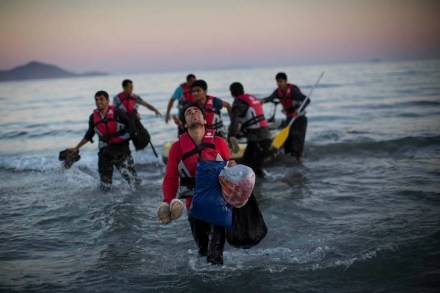
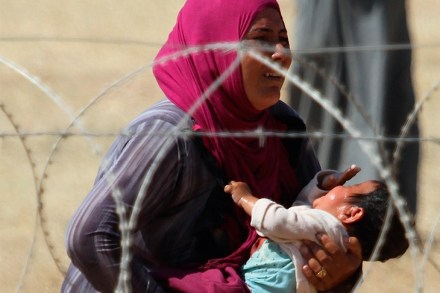
Donal Ryan is one of the most notable Irish writers to emerge this decade. So far he has produced five volumes of fiction set in post-millennial Ireland. What sets him apart is a striking facility for narrative voice as well as a startling diversity of protagonists. His first novel, The Spinning Heart — about a town’s slump when the Celtic Tiger died — had no fewer than 21 narrators, mostly speaking in effervescent vernacular. His latest work revisits tragedy and loss with just four narrative perspectives. With the first, however, he puts aside Irish provincial life to tackle global tragedy. Farouk is a Syrian doctor who is working in a local hospital after his family drowned during a desperate sea crossing to Europe.

Fit for the gods

From our UK edition

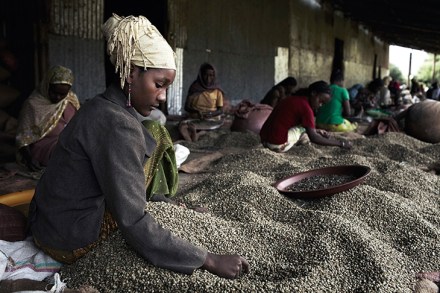
For many of us, coffee is the lift that eases the load of our working day. Yet the sharpened mental focus it offers is rarely directed towards its origins. Coffee’s birthplace is Ethiopia and its beans remain high on caffeine aficionados’ hit lists. They produce smooth brews that carry an extraordinary range of tastes — variously, chocolate, wine, floral, spice and fruit. They have an extraordinary history too. Jeff Koehler travelled extensively in Ethiopia and other coffee producing countries to research Where the Wild Coffee Grows. The arabica species of coffee tree, which yields the finest coffee, first appeared in Ethiopia’s south-western mountain rainforests.

Puffing through the Punjab

From our UK edition

‘I went to a restaurant the other day called Taste of the Raj. The waiter hit me with a stick and got me to build a complicated railway system.’ The comedian Harry Hill’s gag is an acerbic commentary on the British empire, but there can be no doubt that India’s modern history is intimately intertwined with its railways. They grew into a vast realm of their own within the sub-continent and embodied all the vagaries of imperial rule. Who better to chronicle them than Christian Wolmar? He is a railway obsessive who has now produced his 11th book on rail and its history. This time round he has given himself one of the greatest train sets any boy ever had to play with. The story he tells begins in the mid-19th century with a series of formidable engineering challenges.

The last great adventure

From our UK edition

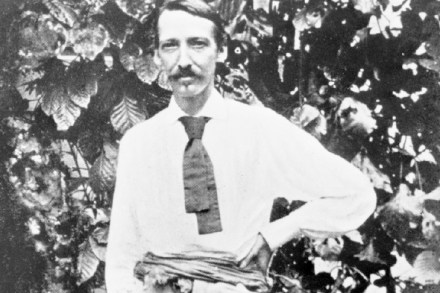
Towards the end of his life, Robert Louis Stevenson travelled widely in the central and southern Pacific Ocean. As well as the region’s exotic reputation, he was drawn by hopes that its benign climate would alleviate his chronic bronchial problems. In 1889 he arrived in Samoa and decided to settle there. He was a hit with the locals. Unlike so many of his peers, he declined to dismiss them as savages. Certainly, he was scathing about their disregard for property rights, which he labelled communism, and he found some of the women’s dancing obscene. But Joseph Farrell tells us that Stevenson was relaxed about extensive tattoos and scanty attire, and that he was a willing participant in kava drinking (kava is a narcotic plant extract, recently banned in the UK).

The last great pandemic

From our UK edition

The symptoms of the Spanish flu could be ghastly. Perhaps Laura Spinney should have chosen her title with more care because rather than becoming pale and interesting, as with tuberculosis, frequently the flu’s victims turned completely black before dying. ‘It is hard,’ one US army doctor observed, ‘to distinguish the colored men from the white.’ The pandemic is often thought of as a forgotten catastrophe. That is despite its monumental scale. The death toll, which peaked in the autumn of 1918, is variously estimated to be between 50 million and 100 million — far exceeding the 17 million fatalities of the Great War. But have we really forgotten the Spanish flu — and, if so, why? Spinney is both a novelist and science writer.

Descent into hell

From our UK edition

In my work as a reviewer, a small, steady proportion of all the books publishers send me concern the Holocaust. With middle age has come a curious foreshortening of my perspective on modern history so that, paradoxically, the Nazis’ inhumanity has begun to seem less distant in time and, therefore, more horrible still. Fortunately I can reassure myself that, objectively, it happened long ago and that even the atrocities of eastern Europe and Rwanda are now a couple of decades safely in the past. Such consolations vanish when confronted by The Raqqa Diaries, which is shockingly of the present. It is a terrible reminder that we are unwise to impute any kind of teleology to history.