Culture

Culture

The good, the bad and the ugly in books, exhibitions, cinema, TV, dance, music, podcasts and theatre.

Of his time

Lead book review

Great novelists come in all shapes and sizes, but one thing they all share is a status of half-belonging. If they had no foot in the world at all, they could hardly understand it; if they completely belonged, they could hardly understand what was distinctive. One of the pleasures of this excellent biography is fully appreciating the peculiar, liminal, not-quite-successful position Powell wrote from, and described with great exactness. In half a dozen social and professional milieux, he was a tolerated, perhaps useful minor presence, like a spare man at dinner. From the standpoint of a rather failed editor, screenwriter, soldier, socialite, he stood by and watched the world. In each case, one suspects, the subjects hardly realised they were being observed.

Learning to talk

More from Books

One of the great achievements of science is that so many of its branches, from astronomy to zoology, have been blessed by such great popularisers — your Attenboroughs, your Sagans, your Dawkinses. Alas, there is one inglorious exception to this marvellous rule — linguistics. A discipline that has produced enormous and enormously important advances over the last century — but not one linguist who has managed to tell the rest of the world about them. Steven Pinker did have a bestseller with The Language Instinct, but he was moonlighting from his day job in neuropsychology.

Demonised by history

More from Books

Some oleaginous interviewer once suggested to Winston Churchill that he was the greatest Briton who ever lived. The grand old man considered the matter gravely. ‘No,’ he replied at length. ‘That was Alfred the Great.’ In his hefty, hard-to-pick-up History of the English-Speaking Peoples, Churchill expatiated on King Alfred’s foremost quality: it was his ‘sublime power to rise above the whole force of circumstances, to remain unbiased by the extremes of victory or defeat, to persevere in the teeth of disaster, to greet returning fortune with a cool eye, to have faith in men after repeated betrayals’. Remind you of anyone?

Muddled in minutiae

More from Books

‘Publitical’ is a neologism worth avoiding. Bill Goldstein uses it to describe T.S. Eliot’s activities when launching and promoting his quarterly review of literature, the Criterion, which had its first issue in October 1922. Eliot wanted an eminent French author as a contributor: ‘the only name worth getting is Proust’, he told Ezra Pound. As the founding editor of the New York Times books website, Goldstein is attuned to cultural fashions, publicity drives and the politicking of literary factions. And so he makes a painfully reductive explanation of Eliot’s remark: ‘The importance of Proust was publitical above all.’ 1922 was the publication year of P.G.

Deep learning

More from Books

Given the brilliance of his career as a fiction-writer, it is easy to forget that J.M. Coetzee has a commensurate career in non-fiction. He trained as an academic (English literature, mathematics, linguistics and computer analysis of stylistics), taught for several years in the US and in South Africa, and continues to translate, write essays and reviews — most notably for the New York Review of Books — and introductions to books. This third volume of non-fiction pieces, Late Essays 2006-2017, gathers a selection mostly from the NYRB and from his introductions to a series of novels translated into Spanish and published by the Spanish-language press El Hilo de Ariadna.

The hunger

More from Books

In 1933 my aunt Lenina Bibikova was eight years old. She lived in Kharkov, Ukraine. Every morning a polished black Packard automobile would draw up to the door of the handsome pre-revolutionary mansion her family shared with other senior Party cadres to take her father to his job as Party boss at the Kharkov Tractor Factory. When he returned in the evening her father would be carrying bulging packets of sausages and meat from the factory canteen. Lenina did not remember wanting for anything. Yet in reality Kharkov, like all Ukraine’s cities in that terrible year, was an island of plenty in a sea of starvation. All over Ukraine millions of peasants were dying of hunger in a massive, man-made famine deliberately unleashed by the Soviet state.

Harsh, but entertaining

More from Books

When millionaires become billionaires they become even greedier and more ruthless. At the highest level, Trumpian economics can be lethal. Edward St Aubyn, in his powerful new novel Dunbar, applies the oxyacetylene brilliance and cauterisation of his prose to bear on the tragic endgame of a family’s internecine struggle for control of a global fortune. St Aubyn is a connoisseur of depravity, yet also shows he cherishes the possibility of redemption. Henry Dunbar is an 80-year-old Canadian mogul who founded and developed the world’s second-most influential media conglomerate. His older daughters, Abigail and Megan, want the wealth and power; his youngest daughter, Florence, wants only his love.

Britain über alles

Lead book review

  David Cannadine was a schoolboy in 1950s Birmingham, which was still recognisable as the city that Joseph Chamberlain had known. In the 1960s the town planners demolished much of Victorian Birmingham. The bulldozing of 19th-century cities coincided with — and helped to cause — a boom in Victorian history, led by Asa Briggs. As a postgraduate student at Cambridge, Cannadine wrote a thesis on Birmingham’s 19th-century aristocratic landowners. Since then, there has been a torrent of academic research on 19th-century history, and this has had a ‘deadening and dampening effect’. The Victorians have gone out of fashion. Historians have migrated to the rich pastures of the 18th century or the newly available archives of the 20th.

Low life | 14 September 2017

Low life

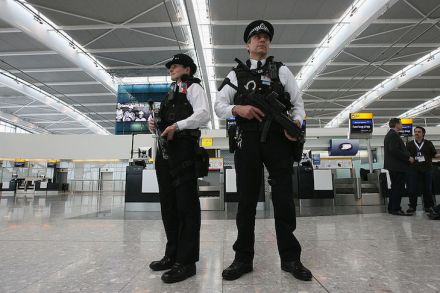
The army patrols at Nice airport go around three abreast, steely-eyed, fingers on the trigger. They walk slowly and scrutinise the passengers carefully, assessing each individual for minute clues to their psychology. They take the incredibly boring job incredibly seriously, or appear to do so, which must be great comfort to those with honourable intentions but a nervous disposition. Contrast, then, these highly disciplined men with the armed pair I saw recently patrolling the floor of the departures lounge at Bristol airport. One had a comic, fall-guy, laughter-prone face, as characterful and funny to look at as George Formby’s. His boon companion looked like a great fellow to sink a few pints of cooking lager with, then go to a football match.

A game of cat-and-mouse

More from Books

All Involved, Ryan Gattis’s breakout novel about the LA riots of 1992, was an absolute blast. Ballsy, vivid and immersive, it took various voices from the gangs, from families left behind and the thin blue line, joining them in a rousing cacophony that made up a frightening mosaic of a hot, heady, violent time. In Safe, he returns to more recent history, choosing the 2008 financial crisis to chart a game of cat-and-mouse between Ghost, a drug-addict turned federal safe-cracker (who has stolen a large amount of money to fund the father of his dead lover’s sinking property business) and Glasses, the gang member tasked with getting the money back. There are two problems with this.

Books Podcast: How not to be a boy

In this week’s Books podcast, my guest is the comedian and writer Robert Webb — whose moving and funny new book How Not To Be A Boy turns the material of a memoir into a heartfelt polemic about what he calls “The Trick”: the gender expectations that he identifies as causing many of the agonies of his adolescence and young manhood. What is it to be a man? Are we doomed to lives of inarticulacy, shagging, fighting and drinking — giving pain and fear their only outlet in anger? Sounds good to me — but Webb thinks there might be a better way… You can listen to our conversation here: And do subscribe on iTunes for a new episode every Thursday.

Sappho in America

More from Books

We are gripped by gossip. Curiosity is a tenacious emotion. In her essay on Push Comes to Shove, the autobiography of the choreographer Twyla Tharp, Joan Acocella acknowledges this in an untroubled way. If you want to know what Baryshnikov was like in bed, she advises, look at p. 208 in a bookshop: ‘Tharp gives him better marks than [Gelsey] Kirkland’ in her 1986 autobiography Dancing on my Grave. On the other hand, we have our settled idea about Elizabeth Bishop, a famously unconfessional poet, marked out from Lowell, Sexton and Berryman by her continence, her wry tone, her meticulous descriptive accuracy and her beautiful containment.

Madness in Manhattan

More from Books

Life has far more imagination than we do, says the epigraph from Truffaut that opens Salman Rushdie’s 12th novel — as though, these days, anyone needed reminding. Set in New York and running between the start of the Obama administration and the rise of Trump, this book about gangsterism, art, dynastic ambition, secret identities and the tragedy of plan-making charts the descent of America into satire-killing oddity and social danger as it follows the lives of the Goldens, a family of larger-than-life Indian squillionaires who come to live in Manhattan in the wake of the 2008 Bombay terror attacks. The Goldens are Nero, a Gatsbyish businessman whose past and business interests are murky, and his sons Petronius (Petya), Apuleius (Apu) and Dionysus (D).

Christianity triumphant – and destructive

More from Books

In the late years of Empire, and early days of Christianity, there were monks who didn’t wash for fear of being overcome by lust at the sight of their own bodies. Some concealed their nakedness in outfits woven from palm fronds. One designed a leather suit that also covered his head. There were holes for his mouth and nose, but not, apparently, his eyes. There was a monk who spent three years with a stone in his mouth to remind him not to speak. Another wept so hard, his tears dug a hollow in his chest. There were those who went about on all fours. St Anthony, one of the founders of monasticism, chose to make his home in a pigsty. St Simeon Stylites stood on a pillar for 37 years until his feet burst open. What are we to take away from all this?

Swagger and squalor

More from Books

This is a monumental but inevitably selective survey of all that occurred in Britain, for better or worse, in the late 19th and early 20th centuries. It is certainly a useful summary, with much illuminating detail to carry the story forward: describing the opulence that was so much in evidence, Simon Heffer mentions the diamond which adorned Lord Randolph Churchill’s cigarette holder. He kicks off with Queen Victoria’s Jubilee of 1877, and Disraeli’s proclamation of her as Empress of India. At home, swagger and squalor went side by side, and living conditions, both rural and urban, were often appalling. The population increased from 35 million in 1881 to over 40 million by 1906.

Raising Cain

More from Books

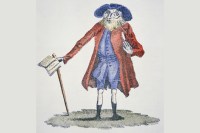
It is a pretty safe bet that for every 1,000 people who know of William Wilberforce, no more than the odd one might have heard of Benjamin Lay. In many ways this is understandable enough, but if anyone deserves to muscle in on the mildly self-congratulatory and largely middle-class pantheon of Abolitionist Saints, it is the gloriously improbable and largely forgotten Quaker throwback and hero of Marcus Rediker’s generous and absorbing act — his own phrase — of ‘retrospective justice’. There was probably only one period of English history in which Lay would have found himself at home, and that period, along with all the hopes and aspirations it had given birth to, had ended 20 years before he was born.

Courting trouble

More from Books

Desmond de Silva was born in the colony of Ceylon in the early months of the second world war, the only son of a barrister. After the Japanese entered the war in 1941, Ceylon was in the front line and it faced an onslaught. Winston Churchill appointed Lord Mountbatten as Supreme Allied Commander South East Asia, based at Peradeniya, just outside Kandy. De Silva’s grandfather George E. de Silva was a member of the Ceylon war council, and Mountbatten, for Desmond, was ‘Uncle Dickie’. Four decades later, he was to marry Mountbatten’s great niece, Princess Katarina of Yugoslavia. De Silva’s life, as seen through these episodic memoirs, has a Boy’s Own quality.

Folk-tale redux

More from Books

Daniel and his big sister, Cathy, do not go to school. They live with their father, a gargantuan former prizefighter, eking out an autarkic existence as squatters on land belonging to the unscrupulous Mr Price; on a typical day they are engaged in woodwork, plucking mallards or tickling trout. Price’s personal fiefdom operates outside the law of the land, with violent henchmen enforcing his will. The children’s father had once worked as a fixer for him before turning renegade, rallying Price’s exploited workers and tenants into collective action to improve their lot. Price’s vendetta against him is pursued with icy determination across the pages of Fiona Mozley’s debut novel: ‘He must return to the fold.

True grit | 14 September 2017

More from Books

As literary editor of the Sunday Times in the early 1980s, when the rest of the editorial staff routinely papered their offices with mildly erotic female images, Claire Tomalin stuck up pictures of sexy men: ‘Some found it hard to believe I could do anything so shocking.’ Double standards, casual sexism and blanket prejudice were normal at the time, even on a relatively civilised national paper. I know because I had the same job a few years earlier at The Spectator. Men ran the world and women answered the phone. Claire had come down from Cambridge with a first in 1955, but the BBC refused her a job on the grounds that it did not employ female graduates.

The journey of Adam and Eve

Lead book review

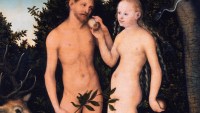
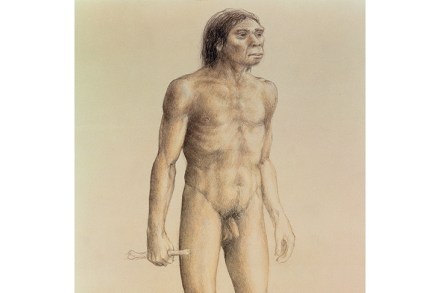
Trying to reconcile a belief in the literal truth of the Bible with the facts of the world as we observe it has never been the easiest of things. But heaven knows, people did try. Well enough known, I suppose, is the work of the 17th-century Archbishop of Armagh, James Ussher, who totted up all those begats to establish that the creation of the earth took place at six in the afternoon on 23 October 4005 bc. (‘He added,’ reports Stephen Greenblatt, ‘that Adam and Eve were driven from Paradise on Monday, November 10.’) In like manner, in the 18th century, a French mathematician called Denis Henrion calculated, from a bunch of what were presumably dinosaur bones, that Adam had been 123’ 8” tall and that Eve had been 118’ 9”.

Man Booker Prize 2017: Fiona Mozley’s debut novel is an old-fashioned portrayal of gender privilege

Elmet by Fiona Mozley John Murray, £10.99, pp. 311 Daniel and his big sister, Cathy, do not go to school. They live with their father, a gargantuan former prizefighter, eking out an autarkic existence as squatters on land belonging to the unscrupulous Mr Price; on a typical day they are engaged in woodwork, plucking mallards or tickling trout. Price’s personal fiefdom operates outside the law of the land, with violent henchmen enforcing his will. The children’s father had once worked as a fixer for him before turning renegade, rallying Price’s exploited workers and tenants into collective action to improve their lot.

Schama, Uglow and Applebaum among the longlisted authors for the Baillie Gifford

The Baillie Gifford longlist – consisting of contenders for the country’s most prestigious nonfiction prize – is out today. A very good list it is, too. For readers’ ease, I’m affixing some links here to the Spectator’s reviews of the longlisted titles. We missed Souad Mekhennet (sorry); and a couple of them – Applebaum, Schama and Uglow – are forthcoming so will be reviewed in the next few weeks. Expect a review of Allan Jenkins’s allotment memoir when we consider gardening books at Christmas.

Books podcast: A N Wilson

A N Wilson’s new biography of Darwin was acclaimed in these pages by Robert Douglas-Fairhurst for having a 'scientist’s forensic skill and a novelist’s imaginative touch'; but, he warned, it was likely to 'put the felis catus among the columbidae' with its portrait of the great man as a publicity-hungry plagiarist who got the science wrong. It certainly has done that.    In this week’s podcast I talk to Andrew Wilson about Darwin’s feet of clay — and the way in which, as Wilson sees it, the theory of evolution was used to license everything from the cruellest excesses of Victorian capitalism to the eugenics programmes of the mid-20th century.

Punks vs. Putin

More from Books

What makes for meaningful political protest? In regimes where ideology was taken seriously (such as the Soviet Union or America during the Cold War), dissidents and dissenters could target rulers’ political ideas, whether communist or capitalist. But in regimes where ideology is used more to distract than indoctrinate (such as Putin’s Russia or Trump’s America), directly opposing the leaders’ ‘narrative’ (one which can change, depending on political expedience) risks playing right into their game.

The magic of maths

More from Books

It’s odd, when you think about it, that mathematics ever got going. We have no innate genius for numbers. Drop five stones on the ground, and most of us will see five stones without counting. Six stones are a challenge. Presented with seven stones, we will have to start grouping, tallying and making patterns. This is arithmetic, ‘a kind of “symbol knitting”’ according to the maths researcher and sometime teacher Paul Lockhart, whose Arithmetic explains how counting systems evolved to facilitate communication and trade, and ended up watering (by no very obvious route) the metaphysical gardens of mathematics. Lockhart shamelessly (and successfully) supplements the archeological record with invented number systems of his own.