More from Books

Helen Fielding has lost her touch

To understand quite how disgruntled the reviews of the latest Bridget Jones diaries have been, you have to recall quite what she meant to her readers first time round. It wasn’t just the way she seemed to sum up the female condition for unmarried women in their thirties — indeed, she put a name on it, the singleton — who were torn between theoretical commitment to feminism and a creeping dread of never settling down and dying alone and getting eaten by Alsatians. It was her eye for the insecurities in which women specialise — the calorie and weight counting, the weakness for self-help books — and the girl-bonding in bars.

After the war — apocalypse

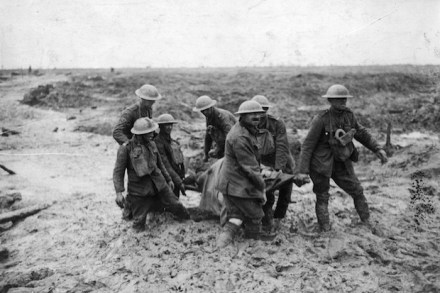
On 12 April 1945 the Berlin Philharmonic gave its last performance. The atmosphere in Germany was apocalyptic, the Allied invasion was expected at any moment. The concert playlist had been devised by Hitler’s architect, Albert Speer, and included Brünnhilde’s last aria and the finale from Wagner’s Götterdämmerung, the ‘twilight of the gods’. There were reports that members of the Hitler Youth offered the audience cyanide capsules at the end. Such was the grotesque theatre of the Nazi death cult; Speer was chief set-designer for the Reich, devising the Nuremberg Parade Grounds and the megalomaniacal concept of ‘Ruinenwert’ (‘ruin value,’ or buildings that decayed ‘well’.

What makes someone the fastest man on earth?

What makes someone the fastest man on earth? The current tenant of the informal title held by such sporting icons as Jesse Owen and Carl Lewis starts with a version of the pastoral. Here is Usain Bolt as a child of nature, running free in the wilderness near the remote village that was his birthplace in Jamaica, plucking yams from the ground and bananas from the trees, body-building by carrying buckets of water home from the stream, and kept on the straight and narrow by regular ‘whoop-ass’ from his father. But nature needed nurture, and life suddenly became more serious. ‘The Champs’, a national competition for schoolchildren which had a profile equivalent to the Cup Final in Britain, was Bolt’s launch-pad.

The Rothschilds, the Spenders, the Queen…

The novelist David Plante is French-Québécois by ancestry, grew up in a remote Francophone parish in Yankee New England and came to London half a century ago when still an avid young man. For 38 years he lived there with the late Nikos Stangos, a cosmopolitan of the Greek diaspora, whose father had been expelled from Bulgaria and his mother from Istanbul. Displacement and asylum were so much part of Stangos’s imagination that whenever he saw an old person in the street carrying a suitcase, tears came to his eyes. Stangos’s sensibility, zest and physical grace provide many of the richest moments in his lover’s diaries. Plante began keeping this diary in 1959.

How to get old without getting boring

When one notices the first symptoms of senile dementia (forgetting names, trying to remember the purpose of moving from one room to another, and so on), books can be wonderfully helpful. At the age of 80, Penelope Lively, the prolific, generally esteemed, novelist, has written an encouraging guidebook for the ageing: For me, reading is the palliative, the daily fix. Old reading, revisiting, but new reading too, lots of it, reading in all directions, plenty of fiction, history and archaeology always, reading to satisfy perennial tastes, reading sideways too — try her, try him, try that.

A badger eats, squats, thieves. But should we cull them?

Lord Arran was responsible for the bill to legalise homosexuality and a bill to protect badgers from gassing and terrier-baiting. One, he said, had stopped people badgering buggers; the other stopped them buggering badgers. The Homosexuality Act had an easier passage through the Lords. ‘Not many badgers in the House of Lords,’ he observed. The badger, Meles meles, a chunky member of the weasel family, is our largest native carnivore, with huge, powerful claws and a ridge on its skull. Familiarly known as ‘Brock’, its history in these islands is chequered.

Is your dog enjoying more than physical exercise when you walk him?

Skip this book if you dislike dogs, or even if you are indifferent to them, or echo an acquaintance of Brian Sewell’s who told him: ‘We expected better of you than such silly, sentimental anthropomorphism.’ If you are such a person, you will be horrified by Sewell’s habits — starting with the one of the title (sometimes he sleeps with four dogs together).

What happens when journalists take sides

This is a curious book. Its title and the name of its publisher suggest that it is going to be an indictment by two journalists of their old profession. These two are now safe and snug in higher education: Stewart Purvis, a former chief executive of ITN, became Professor of Television Journalism at City University in London, where Jeff Hulbert is an honorary research fellow. For here the roll-call begins: up first is W.N. Ewer, who between the wars wrote for the Daily Herald and is mysteriously thought to have been responsible for the lines ‘How odd/ Of God/To choose/The Jews’, though Purvis and Hulbert do not mention this.

Gower vs Boycott

Ask any England cricket fan in his fifties to name his favourite batsman and chances are he will say David Gower. (Unless he says Geoffrey Boycott: the cavaliers and roundheads tend to divide along these lines.) In 114 Tests between 1978 and 1992, Gower’s elegance, timing and grace bewitched us all, not least because we knew that he would probably steer something innocuous to second slip two balls before tea. His latest autobiography, An Endangered Species (Simon & Schuster, £18.99), reveals the vast fluctuations of confidence suffered at the crease by this most apparently nonchalant of characters, who now spends his days fronting Sky Sports coverage and clearly looking forward to a splendid meal a bit later on.

The Empress Dowager was a moderniser, not a minx. But does China care?

For susceptible Englishmen of a certain inclination — like Sir Edmund Backhouse or George Macdonald Fraser — the Empress Dowager Cixi was the ultimate oriental sex kitten, an insatiable, manipulating dominatrix who brought the decadent Manchu empire to its knees. While all seems lost, as foreign troops burn the Summer Palace in Peking, she is to be found, thinly disguised, in the pages of Flashman and the Dragon, locked in our hero’s rugged embrace. More recently, it has suited communist historians to concur with Flashman that she was ‘a compound of five Deadly Sins — greed, gluttony, lust, pride and anger — with ruthlessness, cruelty and treachery thrown in’.

What a coincidence

If you are going to read a novel that plays with literary conventions you want it written with aplomb. In Three Brothers we are not disappointed, as Peter Ackroyd shows a deftness of touch that comes from being a real master. Here his theme is families. Or rather, it is London. Or rather, it is the use of coincidence as a plot device. In fact it is all three, but perhaps the most important is coincidence. As a literary device, coincidence is the presence of the author in the novel acting like an ancient Greek god directing events. This is apparent from the start when, in almost fairytale fashion, Ackroyd tells us that the brothers of the title, Harry, Daniel and Sam, were all born on 8 May, but each a year apart, in the 1950s.

Queen Victoria, by Matthew Dennison – review

When Prince Albert died in 1861, aged 42, Queen Victoria, after briefly losing the use of her legs, ordered that every room and corridor in Windsor Castle should be draped in black crepe. As a result, the country’s entire stock of black crepe was exhausted in a single week. One of the key factors of Victoria’s reign for Michael Dennison is that it was — not always consciously — a ‘performance monarchy’, in which the Queen sat in carefully fashioned stage-sets at Windsor, Balmoral or Osborne being discreetly ogled by the populace. This public posturing helped gloss over Victoria’s ‘dizzying’ contradictions, and the purpose of this short biography is to bring them back out of the shadows.

Donna Tartt can do the thrills but not the trauma

Donna Tartt is an expert practitioner of what David Hare has called ‘the higher hokum’. She publishes a long novel every decade or so. Her first book, The Secret History (1992), was about some highly affected college students who took to studying ancient Greek in a cult and murdering one another in Dionysiac revels. It was a genuinely popular success — chic, macabre and supremely well-constructed. Her second, The Little Friend (2002), pursued a small girl through her attempts to pin the murder of her brother on the wrong culprit. It confirmed Tartt’s gift for an intricate plot, escalating into some furiously exciting action. The handling of suspense in both these novels was first-rate.

Clumsy and heavy, Goliath never stood a chance

When we think of David and Goliath, we think of a young man, not very big, who has a fight with a terrifying opponent, and wins. We think of David as puny and Goliath as towering and strong — not to mention heavily armed. We see David’s victory as something that happened against all odds. The story of David and Goliath is, as Malcolm Gladwell puts it, ‘a metaphor for improbable victory’. Well, that’s how we think about it, anyway. But the thing is, apparently, we’ve got it all wrong. Gladwell, one of the most influential non-fiction writers in the world, often asks his reader to take a closer look at things. In The Tipping Point, his subject was epidemics.

Breakfast with Lucian, by Geordie Greig – review

According to the medical historian Professor Sonu Shamdasani, Sigmund Freud was not the best, nor actually the most interesting, psychoanalyst in early 20th-century Vienna.  Rather, Freud’s genius lay in creating a loyalty cult around himself, collecting a group of acolytes who would ensure his reputation.  This is worth bearing in mind when considering the life of his grandson, the painter Lucian Freud, who died in 2011. Lucian was famous for his secrecy. ‘Devious and secretive. I have been described as that,’ he tells Geordie Greig, not without a certain pride. He demanded a strict omertà of his intimates.

A Strong Song Tows Us, by Richard Burton – review

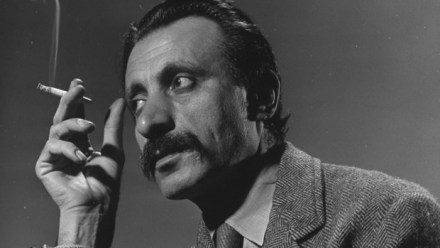
How minor is minor? ‘Rings a bell’ was more or less the response of two English literature graduates, now successful fifty-somethings, when asked what the name Basil Bunting meant to them. It is, after all, a good name, a memorable name. I asked a younger friend, about to start his Eng. Lit. degree at Keble: ‘Nothing.’ I asked a former literary publicist: ‘No, nothing.’ I quizzed a chap from the FCO: ‘Nothing, I’m afraid. Sorry.’ Perhaps not deep research, but I’d be surprised if Basil Bunting’s work was familiar to anyone not a poet or scholar of English modernism. Is this as it should be? Does he deserve a 600-page biography (any more than any other minor poet)? As a matter of fact he does. Tehran, 1951, the Ritz.

Darling Monster, edited by John Julius Norwich – review

It must have been awful for Diana and Duff Cooper to be separated from their only child during the war, but we can be grateful for it because it’s a joy to read the correspondence it gave rise to. The letters in this book span the years 1939 to 1952 and take in the Blitz, Diana’s short spell as a farmer in Sussex, a trip to the Far East, when Duff was collecting intelligence on the likelihood of a Japanese invasion, the couple’s three years in the Paris embassy, and several more in their house at Chantilly, as well as a great number of journeys around Europe and North Africa. The most charming thing about the war letters is how grown-up they are. John Julius Norwich was sent to safety in America and hardly saw his parents for two years.

Making It Happen, by Iain Martin – review

Fred Goodwin’s descent from golden boy of British banking to ‘pariah of the decade’ would be the stuff of tragedy if the former Royal Bank of Scotland chief were not such a rebarbative personality. A bully to his subordinates, obsessed with the wrong kind of detail, driven by an egoistic urge to trample his enemies, he sounds a lot like another once-prominent Scot who has recently disappeared from public view. Indeed the pair used to enjoy regular ‘cosy chats’ before it all went horribly wrong. As someone told Iain Martin: ‘Gordon and Fred are actually quite similar. Both are quite introverted individuals and that expresses itself in sometimes extremely awkward dealings with others.