Jason Goodwin

Bread is the staff of life

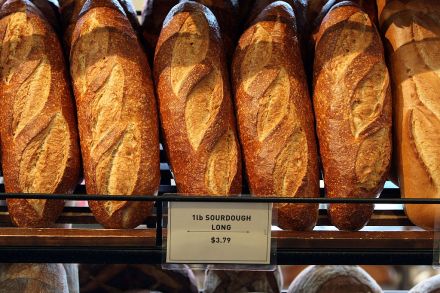
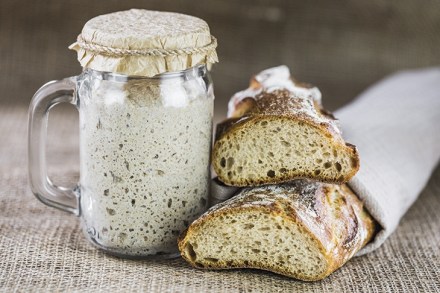
I cannot claim the gift of prophecy, but early in 2020 — before lockdown panic-buying and the warnings of a dire wheat harvest causing bread-price rises — I became a bread-maker. I dug around on the internet for a good recipe for sourdough, and found one padded out with the usual bloggery and waffle. Absent the philosophy and the pious musings, it gives a clear, sensible route to bread self-sufficiency. Sourdough doesn’t need bought-in yeast, only a ‘starter’ of flour and water. This is often called a ‘mother’, and attracts wild yeasts as it develops; after five days in the jar it is a gently bubbling ferment of living yeasts, and you keep it going by adding flour and water to it day by day.
bread

The bliss of proper bread

From our UK edition

I cannot claim the gift of prophecy, but early this year — before lockdown panic-buying and the warnings of a dire wheat harvest causing bread price rises — I became a bread-maker. I dug around on the internet for a good recipe for sourdough, and found one padded out with the usual bloggery and waffle. Absent the philosophy and the pious musings, it gives a clear, sensible route to bread self-sufficiency. Sourdough doesn’t need bought-in yeast, only a ‘starter’ of flour and water. This is often called a ‘mother’, and attracts wild yeasts as it develops; after five days in the jar it is a gently bubbling ferment of living yeasts, and you keep it going by adding flour and water to it day by day.

Consigned to a living tomb: Aziz BineBine endures 18 years in a subterranean prison

From our UK edition

Imagine being on indefinite lockdown, imprisoned in a dark, underground, 6’ x 12’ cell, freezing in winter, boiling in summer and infested with cockroaches and scorpions. The bed is a narrow concrete ledge, where you can only sleep on your side. The toilet has no U-bend, and your cell, No. 13, at the end of a run of cells, receives all the waste and floodwater from the others. There are no windows. Aziz BineBine spent his young adult life there, 18 years from 1973 to 1991. His crime was to have participated unwittingly as a young cadet officer in an abortive 1971 coup against Hassan II of Morocco. He escaped, bewildered, from a bloodbath at the palace without having fired a shot. He turned himself in, was tried and imprisoned.

Pangolins are being blamed for coronavirus – and I’m sorry for eating one

From our UK edition

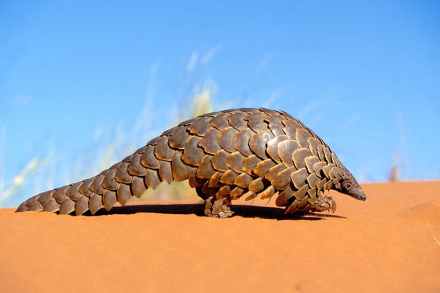
Pangolins are in the news. It may be that the small ant-eating mammal covered in armour plating was the source of the virus striking fear into the heart of the Chinese state and giving us all a nasty turn elsewhere. I rather hope it does turn out to be the pangolin, for if that is the case I may have inadvertently acquired immunity, and the pangolin some timely protection. The Chinese are catholic eaters, free from the taboos we have erected around the food we eat. Try serving tripe to your friends, or tongue to the young, and see what happens. The last truly poly-phagous Englishman was the Victorian naturalist Frank Buckland, who ate everything that crossed his path in his role of unofficial vet to London Zoo. He snacked on puppy, giraffe and fried viper.

Fear of little men

From our UK edition

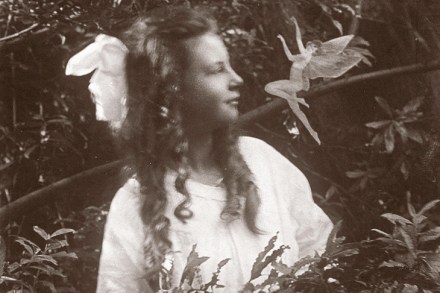
When this survey of British fairydom arrived I turned to the chapter on Dorset to read about the little people of my county. After a survey of place names referring to the ‘puca’, which may or not connect with Shakespeare’s Puck, I received the disheartening news that Dorset wasn’t very good for fairies, and that there was even ‘something surprising about the absence of elves’. So I did what I was supposed to have done first, and read the introduction. Magical Folk is a collection of folklore essays, topographically arranged, and its editors welcome ‘the digitisation of millions of pages of British and Irish newspapers,’ which has allowed researchers to Google fairies from ‘200-year-old pages of ephemera’.

A badger eats, squats, thieves. But should we cull them?

From our UK edition

Lord Arran was responsible for the bill to legalise homosexuality and a bill to protect badgers from gassing and terrier-baiting. One, he said, had stopped people badgering buggers; the other stopped them buggering badgers. The Homosexuality Act had an easier passage through the Lords. ‘Not many badgers in the House of Lords,’ he observed. The badger, Meles meles, a chunky member of the weasel family, is our largest native carnivore, with huge, powerful claws and a ridge on its skull. Familiarly known as ‘Brock’, its history in these islands is chequered.

Spirit of the wild water

From our UK edition

I was sheltering in the dunes on a Hebridean beach, reading this book, when I happened to glance up and see an otter galumphing out of the machair and down onto the sand, 20 yards off. Long, hump-backed and shiny, it was the first wild otter I had ever seen. Such is the talismanic power of this book that I suppose Miriam Darlington must have summoned him for me. Here she is, evoking her own first encounter: I get a flash of the bristling vibrissae, the otter’s extravagant whiskers, and in a split second he catches my scent. He runs and makes a direct gallop for the shoreline. He moves quickly, but with the lumbering gait that, I learn later, otters always have on land.

Saviours of the sea

From our UK edition

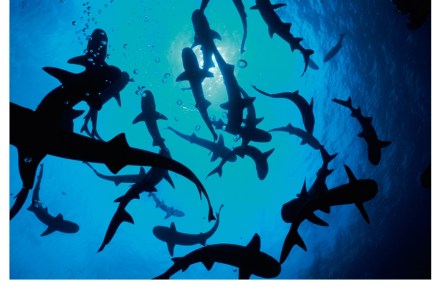
The last time we went out for lobster in Lyme Bay we found a dogfish in the creel.  A type of shark that roamed the seas before dinosaurs existed, a dogfish won’t slice your leg off the way a Great White might, but it is very scratchy to hold onto, thanks to its denticles, the teeth that cover its entire body (Speedo, the swimsuit company, is trying to imitate its streamlining qualities). Ours was about two foot long and snappy, with a wide rictus mouth, and it rubbed us raw thrashing about before we dropped it back in the water. While its 400-million- year-old contemporaries are embedded in the Jurassic cliffs where Mary Anning found ichthyosaurs, dogfish can still be sampled in fish and chip shops as rock salmon, or huss.

Sting in the tale

From our UK edition

Bees are news. The advent of a sinister condition dubbed Colony Collapse Disorder has concentrated many minds on the future of the honey bee, not least in the US where the disorder is prevalent and pollination by bees accounts for billions of dollars’ worth of agricultural produce. Bees are news. The advent of a sinister condition dubbed Colony Collapse Disorder has concentrated many minds on the future of the honey bee, not least in the US where the disorder is prevalent and pollination by bees accounts for billions of dollars’ worth of agricultural produce. Over here, CCD isn’t officially a problem, but numbers appear to be down. Both these new bee books address the issues.

No man’s land

From our UK edition

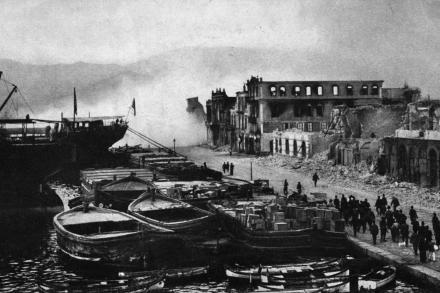
The shores of the eastern Mediterranean, from the eastern Aegean to the delta of the Nile, constitute a region known as the Levant, from the French for the sunrise. The French were first into Smyrna, opposite the island of Chios, which became a boom town in Ottoman times, trading figs and raisins from the hinterland. Far from Constantinople, it was a cheap and relaxed place to do business, encouraged by the Ottoman grants of consular jurisdiction and free trade. European consuls lived like princes in Smyrna, the merchants like lords. Tension between Muslims and Christians, between the many communities of Jews, Greeks, Armenians and Franks who settled there, were generally kept in check, both by the local authorities and by the consuls’ own naval might.

In and out of favour in Iraq

From our UK edition

Nowadays the TV cameras make Baghdad look like a suburban car park, and for Tamara Chalabi, raised in England and Beirut on memories of pre-Saddam Iraq, the first encounter in 2003 was dismal. Her family kissed the very ground as they returned from exile, but initially she felt, and recognised, nothing. She has worked hard to connect with the city where she now lives, and in this absorbing book she has wrapped up much that is important in Iraq’s history in the story of her own family’s development through the 20th century. Of course the reader may want to ask what role Chalabi’s father played in landing Iraq in the mess it is in today.

At Home in Turkey

From our UK edition

If you can’t afford the airfare you might take this delicious guided tour instead. Exploring some of the best contemporary Turkish houses (or caves), the photographer, Solvi dos Santos, divides her subjects by season, as if to emphasise the perpetual variety of Turkey’s terrain — and the successive civilisations that have held sway there. Berrin Torolsan’s informative text explores the inspiration behind such gems as a classical wooden yali on the Bosphorus; a rustic chalet in the mountains; a tea-planters mansion on the Black Sea; a Cappadocian cave-dwelling, with beautifully hewn piers and arches.

In the footsteps of Herodotus

From our UK edition

The Man who Invented History, by Justin Marozzi When Kristin Scott Thomas told a saucy tale out of Herodotus in the film of The English Patient, sales of The Histories shot up 450 per cent, according to Justin Marozzi, who has taken the seemingly inevitable step of travelling around the Herodotean world in the footsteps of the Father of History. Marozzi bubbles with enthusiasm for the man who was, he says, also the first travel writer, the first prose stylist, the first anthropologist, foreign correspondent, ‘an aspiring geographer, a budding moralist, a skilful dramatist, a high-spirited explorer and an inveterate storyteller’. It’s not an easy act to follow, but Marozzi writes with great vigour and his own observations are always sharp.

A long and happy life

From our UK edition

Jason Goowin reviews the memoirs of John Julius Norwich In 1957 John Julius Cooper (later Norwich) was keeping open house in Beirut, ‘the Clapham Junction of the world’s air routes’.Guests were given dinner on the terrace, where the Coopers liked to watch their faces ‘as, promptly at ten minutes past nine, an immense, luminous grapefruit appeared from behind Sannine and climbed slowly up into the eastern sky’. JJ’s passions — for history, for Venice, for music — have always been enlivened by a sense of theatre: his books are erudite and entertaining.