Joanna Kavenna

Stay within the lines to realise your full creative energy

From our UK edition

The title of this book takes the adage about ‘thinking outside the box’ and inverts it. Instead of thinking outside the box, we should think inside the box, David Epstein argues. Which box? How big is this box? Whose box? He discusses these questions as well. The phrase ‘thinking outside the box’ emerges from the nine dots puzzle devised by psychologists before the first world war. There are nine dots on a page, evenly spaced, three on each line. You must connect all nine using four lines without removing your pen from the paper. A common response is to imagine that the dots form a box and to confine your work accordingly. This makes the puzzle impossible to solve; you have to think outside the box. Or not think of a box in the first place.
Joanna Kavenna: How To Play A Game Without Rules

From our UK edition

35 min listen

My guest in this week’s Book Club is Joanna Kavenna, who talks about her witty, philosophically riddling new novel Seven: Or, How To Play A Game Without Rules. She tells me about taking her bearings from Italo Calvino, making up a board game and then being the world’s worst player at it, how AI challenges our sense of ourselves – and how Morten Harket found his way into her fiction.

K2’s fatal attraction

From our UK edition

Take one drug-addled occultist, one forlorn aristocrat, an assortment of urgent colonials and you have, no, not the western canon but the earliest expeditions to K2, the second-highest mountain in the world after Everest. First measured in 1856 by Lieutenant Thomas George Montgomerie, it stands at 28,251 feet, on the present-day border of Pakistan and China, amid the Karakoram range — hence its name, Karakoram 2, now abbreviated. K2 was first climbed in 1954 by the Italians Achille Compagnoni and Lino Lacedelli — a year after Edmund Hillary and Tenzing Norgay reached the summit of Everest.

A book about the ordinary nothings that, in the end, are everything

From our UK edition

We live in a world in which nuance is trampled on and cannot survive. Is that true? I don’t know. But the further point is, must authors now preface their novels with introductory letters, in which they carefully explain the central themes of their work? Epistolary prefaces in general are not remotely new: you often find editors and publicists addressing readers with disinterested solicitude. (‘We care about you dear reader and only want the best for you, Buy this book’). Of course, Jane Smiley, the Pulitzer-prize-winning author of such novels as A Thousand Acres and The Greenlanders, is entitled to communicate with the reader in any way she likes.

Flawed, unproductive and heroic: the real Ernest Shackleton

From our UK edition

Polar explorers are often cast as mavericks, and this is hardly surprising. The profession requires a disdain for pseudo-orthodoxies and, besides, the urge to dwell on a frozen ocean or forbidding glacier is maverick in itself. In the so-called Heroic Age (the late 19th and early 20th centuries) both Poles remained ‘unconquered’ and the margin between glory and opprobrium was slender. Frederick Cook and Robert Peary claimed that they reached the North Pole in 1908 and 1909 respectively. Their accounts were later discredited. When Roald Amundsen beat Captain Robert Scott to the South Pole in 1911, he was accused (unfairly) of concealing his plans and was summarily shunned by the British establishment. Scott meanwhile forced his expedition on, but in doing so condemned it to disaster.

In the steppes of a warlord

From our UK edition

I suspect travel writing was once a fairly simple business: the author travelled somewhere, the reader did not; the author explained what the place was like and the reader was duly informed and even entertained. Dr Uno von Troil, for example, went to Iceland in 1772 and served up lurid descriptions of the devil holes and lairs of Beelzebub (geysers). None of his readers had been to Iceland; no one was inclined to argue with Uno von Troil. Later, with the advent of mass travel in the 19th century, Uno von Troil’s former audience could go by steamer to Iceland (or ‘Hell’) and witness the infernal pools themselves.

After the war — apocalypse

From our UK edition

On 12 April 1945 the Berlin Philharmonic gave its last performance. The atmosphere in Germany was apocalyptic, the Allied invasion was expected at any moment. The concert playlist had been devised by Hitler’s architect, Albert Speer, and included Brünnhilde’s last aria and the finale from Wagner’s Götterdämmerung, the ‘twilight of the gods’. There were reports that members of the Hitler Youth offered the audience cyanide capsules at the end. Such was the grotesque theatre of the Nazi death cult; Speer was chief set-designer for the Reich, devising the Nuremberg Parade Grounds and the megalomaniacal concept of ‘Ruinenwert’ (‘ruin value,’ or buildings that decayed ‘well’.

Niccolo Machiavelli, by Corrado Vivanti; The Garments of Court and Palace, by Philip Bobbitt

From our UK edition

One more anniversary, one more cache of commemorative books. This time we are celebrating the half-millennium since Niccolò Machiavelli produced his notorious work, The Prince. He wrote it after a significant career blip in 1512, when the Florentine Republic fell and the Medici regained power. Machiavelli was not merely sacked from his job — secretary to the Republic — but also accused of conspiracy, imprisoned and horribly tortured. In 1513, he was released into exile, and went to live on his family farm, south of Florence. There he walked, consorted with ‘vulgarity’ (the locals) and read classical writers, including Livy, Tacitus, Sallust, Plutarch, Suetonius and Procopius.

The Long Shadow, by Mark Mills – a review

From our UK edition

Mark Mills is known for his historical and literary crime novels, including The Savage Garden, The Information Officer and House of the Hanged. The Long Shadow is written in a different mode. It is set in a highly recognisable present; it is a clever, teasing hybrid of genres (psychological thriller, dark comedy, Pardoner’s Tale and dystopia); and it is fraught with tensions about money, class and the super-rich. The protagonist, Ben, is a well-nigh washed up screenwriter in his early forties. His wife has fallen in love with a successful businessman; Ben has been forced out into a seedy flat in a demoralising part of London. He passes the time enumerating the opportunities he has squandered and worrying about his relationship with his teenage son.

A Place in the Country, by W.G. Sebald – review

From our UK edition

Within a few years, and in four books — The Emigrants (1996), The Rings of Saturn (1998), Vertigo (1999) and Austerlitz (2001) — W. G. Sebald achieved a reputation as a major international author. He was tipped for the Nobel, seen to supply heartening proof that ‘greatness in literature is still possible’ (John Banville) and that ‘literary greatness is still possible’ (Susan Sontag). Literary greatness it seemed, at times, was Sebald, and for a while after the publication of The Rings of Saturn, it was hard to find a work of fictive non-fiction that wasn’t riddled with grainy photographs of dubious quality integrated into the text.

Everest, by Harriet Tuckey

From our UK edition

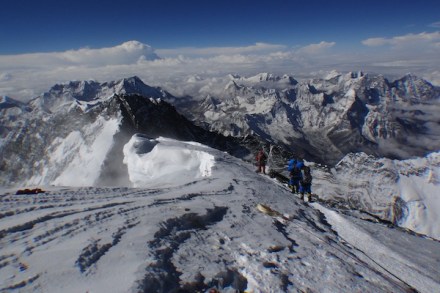
This book, as the subtitle explains, makes a bold claim: Griffith Pugh was the ‘unsung hero’ of the 1953 ascent of Everest, his achievements neglected and nearly lost to posterity. Harriet Tuckey is Pugh’s daughter, so this assertion might be little more than a kindly attempt to revive her father’s flagging reputation. Yet, Pugh was clearly no ordinary father, and Tuckey’s advocacy on his behalf is correspondingly unusual. She casts her father as a ‘uniquely talented, turbulent man,’ ‘truly great,’ ‘difficult, bad-tempered,’ ‘rather cruel’ and ‘totally selfish’.

Diary – 3 January 2013

From our UK edition

I am re-reading D.H. Lawrence’s Sea and Sardinia. The opening line runs: ‘Comes over one an absolute necessity to move…’ He expands on the dilemma (I paraphrase): you are afflicted by wanderlust, you want to move, you don’t have any money, you’ve only recently moved but for some reason you want to move again. It is, for example, England in deep midwinter and it has been raining solidly for six weeks. Deracination is an occupational advantage of being a writer, which is otherwise a pretty absurd profession. Writers can live anywhere, or everywhere, or, at times, nowhere… For a while I lived in an airless flat in Alphabet City, New York, when it was still a seedy neighbourhood, and the only people with mobile phones were drug dealers and pimps.

Homage to the Goddess Mother

From our UK edition

Cometh the hour, cometh the many men (and women). The 2012 centenary of Captain Scott’s death inspired a series of heroic forays into print: glory-hungry (or just plain hungry) authors questing for something new to say about this much-described event. Next year is the 60th anniversary of the first ascent of Everest, and so we might expect more of the same, with an icy blasted peak instead of an icy blasted pole. For those who approach these commemorative sorties with a heavy heart, Mick Conefrey’s Everest 1953 should come as a vertiginous relief.  The book is neither a flimsy reprise, nor a mercenary hatchet job. Instead, Conefrey crafts an exciting, moving account, with a few controversies revisited in an interesting way.

Inflated dreams

From our UK edition

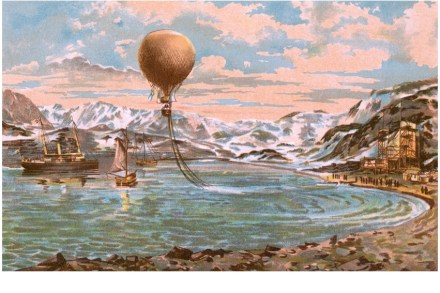
When almost every tale about the Arctic has been told, when the major explorers have been assessed and re-assessed, when even the most obscure bit-players have been drawn into the light, what is a polar-minded author to do? Publishers can be such tiresome sticklers for novelty, always hankering after books to fire off into some perceived gap in the market. Failing that, they often insist on reputational piggy-backing — the author following in the footsteps of a legendary explorer, urgently intuiting the past, like a cross between a hiking holiday and a séance. Alec Wilkinson ignores the fashionable justifications.

Heroes of the Ice Age

From our UK edition

In the early 20th century, explorers were goaded and galvanised by the blanks on the maps — the North and South Poles, and the mist-draped floes and glaciers around them. Ernest Shackleton, Robert Scott, Robert Peary and Roald Amundsen set off with one prevailing purpose: to reach the extremities of the earth. Hardy, maniacal, even at times suicidal, they scattered ‘firsts’ and ‘furthests’ across the ice: the furthest south of Scott’s expedition of 1901-04, Shackleton’s furthest south of 1909, Amundsen’s arrival at the South Pole in 1911.

The trail goes cold

From our UK edition

For centuries, the history of the far North was a tapestry of controversies and mis- understandings, misspellings, dubious arrivals and equally dubious departures. Pytheas the Greek sailed north from Britain in the 4th century BC, found a place where the sea, land and sky seemed to merge, and was trounced by later scholars as a terrible charlatan. The Vikings mingled cartographical details with stories of trolls and hauntings. During the reign of Elizabeth I, Martin Frobisher went north and (mistakenly) thought he’d found gold. Undeterred, successive explorers and treasure hunters ventured into the Arctic wastes, many of them vanishing among the floes. Frederick Cook claimed to have reached the North Pole in 1908; his claim was promptly dismissed.

In deep trouble

From our UK edition

Atlantic by Simon Winchester and The Wave by Susan Casey are, at first glance, very different works. Atlantic is a historical-philosophical-fantastical meditation on the Atlantic ocean, from the ‘post-molten Hadean’ through the ‘cool meadows of today’s Holocene’, to the conjectured end-days of the ocean ‘about 170 million years’ from now. The Wave is a pithy account of some years Casey spent following the elite American surfer Laird Hamilton as he travelled from one storm-lashed coast to another in search of waves.

To strive, to seek, to find . . .

From our UK edition

In 1931, a 23-year-old Englishman called Henry ‘Gino’ Watkins returned from an expedition to the white depths of the Greenlandic ice cap. In 1931, a 23-year-old Englishman called Henry ‘Gino’ Watkins returned from an expedition to the white depths of the Greenlandic ice cap. He was hailed as a precocious talent, even as a worthy successor to Fridtjof Nansen, who had recently died.  When Watkins died the following year, during another expedition to Greenland, King George remarked on the tragedy of his death, and Stanley Baldwin wrote that ‘If he had lived he might have ranked . . . among the greatest of polar explorers’. Yet Watkins had only just begun to establish himself, and his reputation swiftly faded.

The frost giant awakes

From our UK edition

For thousands of years, no one knew what lay in the ice around the North Pole. The blanks on the maps fuelled the imaginations of classical writers, who crafted stories of Hyperboreans living in a gaudy paradise, dancing with Apollo and generally misbehaving. As explorers from southern Europe travelled further north — revealing intransigent and not very Hyperborean locals, the Scrithofini, as Procopius called them, who liked to slide through forests with planks of wood stuck to their feet — everything got mixed up: myth and reality, fable and cartography.

Origins of the human race

From our UK edition

At first glance, a history of running seems a pretty doomed exercise, like writing a history of breathing, or sneezing. For how can anyone really describe and ‘historicise’ an intrinsic physical process, something people do, involuntarily, without thinking? Perhaps alert to this potential pitfall, Thor Gotaas confines himself to a specific sort of running — not the inevitable startling of our limbs when we are about to miss a bus, or be ravaged by bears, but rather running as competitive sport, calibrated by a track or a clock, regulated by officials. In this way, Gotaas crafts a cultural history of a sport, in the same way as he has explained the social origins and ramifications of skiing in his previous works. His structure is anecdotal, his tone often whimsical.