Michael Paraskos

Like Birdsong – only cheerful

From our UK edition

It is difficult to know whether Clive Aslet intended a comparison between his debut novel, The Birdcage, set in Salonica during the first world war, and Sebastian Faulks’s similarly titled Birdsong. Whilst Faulks’s novel sits comfortably within the generally accepted narrative that the first world war was an unmitigated disaster, with lion-like Tommies led by donkey-like officers, Aslet has written what is effectively a panegyric to the officer class. Indeed, so casually heroic is every officer in the book it is almost as though Richard Attenborough’s version of Oh! What a Lovely War never existed.

What would Raymond Chandler do?

From our UK edition

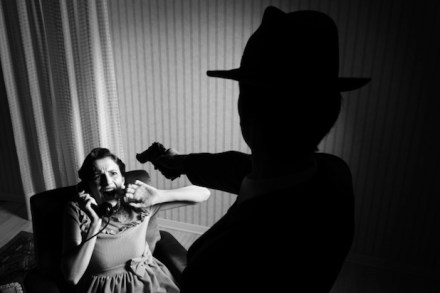
If the inclusion of the erstwhile master of the genre, Raymond Chandler, as a fictonalised character in a pastiche 1930s detective novel is a bit of a gimmick, it is a nice gimmick. In The Kept Girl it keeps us guessing whether the author, Kim Cooper, believes Chandler’s greatest invention, Philip Marlowe, was a self-portrait, or based on someone he knew. The most likely candidate Cooper offers is Tom James, a Los Angeles detective inspector busted down to traffic cop for trying to expose police corruption. But equal billing might go to the fictional Chandler’s secretary, Muriel Fischer, a woman with more pluck than the average Chandler heroine. In this story Chandler is forced to investigate the fate of money that has gone missing from his employer, Dabney Oil.

Philip Marlowe returns with bark but no bite

From our UK edition

With so much Nordic noir around, it’s a relief to return to the granddaddy of them all, the hard-boiled private dick, Philip Marlowe. Perhaps it’s inevitable that Benjamin Black’s reboot of Raymond Chandler’s great creation does not have the bite of Chandler in an age when the casual racism, sexism and downright class snobbery of mid-century America is not easy to articulate if you want to keep an audience sympathetic. But still, Black’s love of Chandler’s harebrained plots, stock characters and corny one-liners produces a tale that is hugely entertaining. Inevitably this centres on a stunning blonde, Clare Cavendish, who walks into Marlowe’s sleazy downtown office with a missing-person case.

What a coincidence

From our UK edition

If you are going to read a novel that plays with literary conventions you want it written with aplomb. In Three Brothers we are not disappointed, as Peter Ackroyd shows a deftness of touch that comes from being a real master. Here his theme is families. Or rather, it is London. Or rather, it is the use of coincidence as a plot device. In fact it is all three, but perhaps the most important is coincidence. As a literary device, coincidence is the presence of the author in the novel acting like an ancient Greek god directing events. This is apparent from the start when, in almost fairytale fashion, Ackroyd tells us that the brothers of the title, Harry, Daniel and Sam, were all born on 8 May, but each a year apart, in the 1950s.

Whirligig, by Magnus Mcintyre – review

From our UK edition

I do not have much time for the idea of the redemptive power of the countryside. I am not alone in this. Even theologians tend to dream of the day they enter the City of God rather than 1,000 acres of nowhere. But I will buy into a modern fairytale extolling the virtues of nature and country folk when told with wit and verve. So it is with Magnus Macintyre’s novel Whirligig. This is the story of Gordon Claypole, an English businessman who finds himself among the singular natives of a Scottish island. Or rather, an almost island. Like much in the novel nothing is clear cut. Claypole is half Scottish, but a childhood holiday to Scotland brings home to him how un-Scottish he really is.

‘Lord Horror: Reverbstorm’, by David Britton and John Coulthart – review

From our UK edition

As the son of the last British artist to be successfully prosecuted for displaying obscene paintings, I have some empathy with David Britton, the last person successfully prosecuted in Britain for publishing obscene literature. Unlike my father, who accidentally strayed into the purview of the police, Britton’s prosecution in 1992 was almost inevitable. His publisher, Manchester-based Savoy Books, was raided by the police with vindictive regularity between 1976 and 1997. Ironically, Savoy has often been reviled as much by the left for its lack of political correctness as by the right for attacking the shibboleths of authority. It embodies a longstanding tradition of non-conformist and essentially anarchist thinking in Britain that also underpins Reverbstorm.

An everyday story of country folk

From our UK edition

It is not a criticism of Philip Almond that The Lancashire Witches, published to mark the 400th anniversary of the Pendle witch trials, is a depressing read. On the contrary, Almond has produced a fine and lively study of the events in 1612 when eight women and two men were tried for witchcraft. What is depressing is how ordinary those involved seem to be. This is not a story of gothic horror or bizarre group psychosis. It is a tale of people being caught out for doing relatively ordinary things. The Pendle witches were not members of some pagan or Wiccan cult, or even genuine devil-worshippers. As Almond makes clear, much of the folklore and superstition that came to be called witchcraft had previously been part of life.

Cracks in the landscape

From our UK edition

Sartre tried to prove that hell is other people by locking three strangers in a room for eternity and watching them torture each other. Similarly Will Cohu seems determined to show that hell is our own families. What is remarkable is that Cohu’s family members were not a collection of horrific monsters. On the contrary, they appear normal and often likeable people. They are almost disturbingly typical of many middle-class families with children who, like Cohu himself, were born in the 1960s. The names and places might change, but the characters and events are surprisingly familiar. The Wolf Pit opens with an evocation of the North Yorkshire moors that is almost kitsch in its flowery prose.

Trouble at mill

From our UK edition

I have some sympathy with the pioneering incomers who moved to the Yorkshire mill town of Hebden Bridge in the 1970s. At the time Hebden was in a near terminal decline, its factories closing in rapid succession. As a result, the town suffered one of the fastest depopulations ever seen in Britain, as the more animated locals left to find work elsewhere. The incomers, called ‘offcomers’ locally, sought to reverse this with a strong dose of middle-class culture, although being for the most part liberal Guardian readers they would probably baulk at the idea they ever sought to engineer working-class Hebden into something more bourgeois. Nonetheless, that is what they did, and it worked.